
Fence & Deck Contractors · Fence and Deck Marketers
From Coding Apps to $160K a Month Marketing Fence and Deck Companies
Alex Danner started out as a software engineer building custom apps, drifted into websites and then SEO, and signed his first client for $200 a month. Today he runs Fence and Deck Marketers at about $160,000 in monthly recurring revenue with 26 full-time team members, and he got there mostly by being uncomfortable in person.
Alex Danner with Josh Nelson, live. Full interview.
Read the full interview transcript
Full transcript of Josh Nelson’s interview with Alex Danner. Lightly edited for readability.
Josh Nelson: Hello, and welcome to another episode of the 7-Figure Agency podcast. We're interviewing highly successful digital marketing agency owners from across the country. And today, I'm really pumped. We're joined by Alex Danner from Fence and Deck Marketers. He's grown his agency to seven figures, on the brink of multiple seven figures, serving that space. So if you're excited, give me a yes, give me a let's go, give me a comment below. Alex, thanks so much for being here, and congratulations on your success.
Alex Danner: Yeah. Thanks, Josh. Excited to chat with you today, and yeah, go through it all and, yeah, the whole journey. Super excited.
Josh Nelson: So before we get started, let's just kinda give us the lay of the land in the agency today. Like, where are you now? Like, what's the situation in the business?
Alex Danner: Sure. So, right now we're at about 160, K MRR, and we have 26 full-time team members. Yeah, we've gone pretty heavily into EOS and learning about that, and gotten to a pretty good point with having the right leadership team in place and, you know, doing L10 meetings, having things, you know, a bit more organized. And yeah, I would say for the most part right now, we have, you know, good leadership across the, across the board. We do websites, SEO, we do, pay-per-click, LSAs, Facebook, kind of the, I guess, the standard suite. But yeah, we've been able to put the leadership in place into those different departments. And, you know, there's always bumps and things you gotta deal with, but it's at, definitely at the, at a place better than it ever has been in terms of the right structure and, you know, the, you know, everyone kinda having their responsibilities and their piece, you know, on the operations side at least.
Josh Nelson: So good. So a really solid organization, obviously growing extremely quickly. Take us back. We'll, we'll get into the lessons along the way, but, you know, how did you get into digital marketing, running an agency in the first place?
Alex Danner: Yeah. So I actually had a software engineering background, so when I first graduated college, and kind of my major was related to that, I wanted to be a coder. I actually heard when I was in college that Instagram sold for like a billion dollars, and I was like, "Whoa." I couldn't believe it. And I was already interested, but that was just kinda mind-blowing, and that's just what I wanted to do. So when I got out of college, that's what I was doing, software engineering. I was building apps and doing some websites, but really custom mobile applications. And then basically, I always wanted to have a business. I was working for somebody else and had a friend that was building custom apps. He had his own business, and I just thought it was really cool. So offered to work for, or work with him for free outside of my normal job, and kinda got better and better from that. Went half and half, you know, half working with him, half working in the other job, then eventually transitioned into full-time. And then, yeah, it kind of evolved from there because we did websites, we were building WordPress, we were doing custom sites. But as we all know, you know, you're basically kinda hit a wall eventually, and you're, you're done with the project. There's nothing really else to make, and it's kinda hard to get that consistent flow. So I don't even remember where, but I started hearing about SEO, and I was like, "Huh, well, maybe that's the route to go." And I started learning about that and learning from like guys like Brian Dean and all that stuff and made that transition. We signed our first client at 200 a month, and we were super excited. We thought that was like a goldmine and couldn't believe it. And, you know, we just kind of progressed from there. And after meeting people like yourself and kinda learning what it was worth if you're doing it right, you know, we kind of increased it from there and, you know, of course, joined, 7-Figure Agency, and that's when things, you know, really started to escalate. So it started with apps and programming, and then it kinda went into websites, and then got into the full SEO digital marketing.
Josh Nelson: Everyone, everyone's, like, struggles with niche selection and like what niche should I do, like how, you know, how's that gonna work. Obviously you're, you're in the fence and deck space, which is a very unique niche. What made you go to that niche? Like, how did you decide on that as where you were gonna cast your focus?
Alex Danner: Yeah. Yeah. Well, basically, I guess rewind a little bit. When I had the agency, we… At, at first I would work with anybody and everybody, which is pretty common. So we would work, you know, work with most types of businesses. And when I learned about your program and kinda the benefits of that, I fought it for a little bit, you know, to be honest. Like it just kind of just, you know, had all these other clients. But I– Once I like really bought in and kinda heard it probably 100 times that that's the way to go, it finally stuck, and that's when I started taking it more seriously. And I actually get asked that question all the time, and I really wish I had a better, like sexier answer, but it's really just I had those clients already, and I'd done some fence work a little bit, but not like as a contractor, just on my farm. But, you know, basically already had those clients. I liked those industries. It didn't seem like one that had a ton of agencies already in it, so it kinda just seemed like the right fit. And yeah, I guess I broke the rules a little bit by choosing two. I figured I'd hedge my bets a little bit. And since they were- They go hand in hand. Sometimes like plumbing and HVAC, right? They- Yeah… They work together in the same vertical. They refer business back and forth. They're in the same industry groups. Yeah. So that's totally… Yeah. So I was like, "Oh, let me try them both and ho- you know, hopefully one of them takes off quick or something like that." So yeah, just went with it and, yeah, was pleasantly surprised how it all worked out, for sure.
Josh Nelson: So in your case, you had this generalist agency. You'd done websites. You'd done some SEO. You had, you know, this pool of clients, and you were trying to say, "Well, if I'm gonna go from generalist to niche, who do I have in my existing client base that we're getting good results for, that I enjoy working with, that I'm just gonna focus on?" It sounds like you kinda, you, you picked from the best of the best you already had some experience in, and that's why you went down that track.
Alex Danner: Yeah. I would say that's the most of it, just liked the clients that I already had in those industries. And, you know, I think when we, when I first joined 7-Figure Agency, you know, we were building case studies and all of these things, so I had to pick clients that I, you know, had, I could actually build those case studies with. So yeah, that was, that was a big part of it too.
Josh Nelson: So talk to us a little bit about that transition, 'cause a lot of agencies wind up, you know, pretty successful as a generalist business, but they realize it would be so much more efficient, so much more scalable. The marketing would be so much more effective. You know, how long did you play both sides? And, and, you know, how did you make that transition to focused on one vertical?
Alex Danner: Yeah. I would say it kind of happened naturally. Actually kind of- An interesting thing, I actually bought an agency from someone I met in Seven Figure Agency. He didn't have a big, a very big agency, and he kinda wanted to get out, so I got it for a good deal. And he had clients across the board. You know, there's no real niche specific clients. So I kinda bought that, and then that was introduced into my other pretty broad, you know, clients that I had. Turns out, luckily, I got it for cheap because ended up losing all of those clients- That hurts… From the agency I bought, but, luckily kept them enough to make a pretty good profit. But yeah, that one, that one kinda stung. So, you know, I guess that piece there and just like I said, I feel like I heard it a hundred times before I bought into it, but once you, like, dive down and realize how hard it is to create websites or SEO or any of that stuff for, like, a law firm or a chiropractor to a contractor, you know, there's just so many industries there. It, it is just incredibly difficult to be great at all of those. I don't even think you really can be, honestly. So, you know, we basically just… I kinda went back and forth for a while. You, you know, you do what you gotta do to survive and, you know, kinda make sure you have enough money to pay for your family and your house and all of that stuff. But, I just slowly, probably too slow, just went more and more all my focus on that one thing, on those two industries and just things started to click. We'd get more clients there. We would lose clients, like the legacy ones, or we would, you know, get rid of them or whatever. And it just kinda… That was kinda the story from the beginning, just probably moving too slow, but, you know, just kinda easing my way in, kinda just going in that direction. And eventually, we picked up the momentum and got enough where we could just be like, "All right, no more," you know, refer other contractors or other businesses to another seven-figure agency and go from there. So it was just, it was pretty gradual, I would say.
Josh Nelson: All right, so you kinda took your time. You're just like, "Okay, I'm gonna focus on this. I'm gonna start to attract the, you know, the people in this space, continue to serve the legacy clients." Some of them will kinda churn out, and it kinda replaced itself over time. Talk to me a little bit about what the, what the program or what the, what the growth programs look like for the industry you serve. Like, what is the deliverable?
Alex Danner: Yeah. So we keep it pretty standard. So we'll have, base packages, website, SEO, AI optimization. Then next package would include pay-per-click ads or local services ads. And then from there, we add Facebook. So we used to do social media. We cut it out, mainly because we we're getting all these, like, problems with clients, and it's, like, the cheapest thing we offer, and they're having issues with… You know, they had their own ideas for what exactly they want it to look like, and it just… I was like, "Why are we even doing this?" You know, we're charging, like, five hundred bucks a month just to get, like, you know, have all these issues. So ended up just cutting that out, and that proved to be a pretty good idea.
Josh Nelson: Awesome. So you kinda, you decided forget the, like, especially an aesthetic niche like decks and fence, like they want it to look pretty. They've got a very specific thing in mind, maybe different than what you were trying to do, and so eliminate that hassle and just focus on what you do well. Can you give me an idea price point wise? Like, like what's the average monthly fee for those clients?
Alex Danner: Yeah. So super easy and basic, it's two, three, four thousand a month. Okay. So yeah, base is two all the way up to, up to four. And then, you know, if there's multiple locations, that's additional, things like that. But, one location, yeah, two, three, four.
Josh Nelson: Got it. So we know, we know the niche. We kinda have an idea what the program deliverables are. Talk to us about how you were able to get your first seed clients 'cause you're at a hundred and sixty thousand monthly recurring now. As you transitioned from the general agency to the niche agency, you had to decide, "Okay, I'm gonna go after these deck and fence companies." What worked well early to get those, let's just call it five or six clients in that space?
Alex Danner: Yeah. I mean, first five or six, probably just the basic stuff like the Facebook ads. I think we did some of that got some traction. Probably referrals, I would say. We never- Mm… Never had a ton of success with Facebook ads, but that was probably what drove it in the beginning. And then, yeah, probably some referrals. It didn't really… It, it was just very, it was very stagnant at that point. We weren't getting a whole lot of traction. I didn't know, like, what we're doing wrong with Facebook ads, basically. But we were just kinda getting by, but we never had, you know, a big breakthrough of what, you know, what we were looking for. So to get to, I guess, to that point where we were actually, like, moving forward and taking bigger jumps, I actually heard, I mean, this is nothing new within Seven Figure Agency, but, you know, getting involved in the niche. You know, I kind of just thought, like, "Hey, I'll be able to figure out a way to do this and, you know, run Facebook ads or run this or that or just good SEO, and I'll get enough leads." But I don't know. Somebody said it one time, one, for the hundredth time probably, and it just clicked. I was like, "All right, I just have to do this." And a lot of the things that you push us to do and, you know, the right things to do are just uncomfortable to me and I would imagine a lot of people, you know, public speaking and setting up booths and shows, and I'm an introvert, you know, big time, I would say. So all of those things just was like, "All right, whatever," you know. "I'm gonna do it. I'm gonna do all the pieces, and I'm just gonna go for it." That's for sure when everything really started to gain that momentum, you know, meeting all the heavy hitters in all the different industries and, you know, getting to know just, yeah, basically the guys that are leading those industries in different ways, you know, the associations or coaches, things like that. And then going to the events is just so huge. You know, it's, it's so hard to, like, rationalize going to the events and, like, getting a booth 'cause you're like, "Oh, I spend five, ten grand on everything to get set up. What if I don't get a client?" You know, that's probably what everybody thinks and what I thought too. But I was like, "Well, hopefully we get at least one," and we would, you know, usually get at least one. But what I realized is if you go to those booths and, you know, you have something fun at the booth to get people to come up to you, and then you spend that extra time figuring out who to talk to and kinda building that network and meeting people in person, I think you have to do that because if you're just, like, some internet marketing guy and they just see your face everywhere, but they've never met you in person, like, to me, it only goes so far. You know, they- Yeah… They're just like, you know, what can you really say about it? So, you know, as I was going to the conferences and getting out of my comfort zone, speaking on stage, it just kinda snowballed from there, and I just kept going to events, you know. I never really said no to anything. Well, in the beginning, I couldn't really afford to do it. But nowadays, you know, pretty much say yes to every show and, If I don't get a client, you know, whatever, as long as I meet people and build that network, that's kinda the most important thing to me anyway.
Josh Nelson: So it sounds like it was the– a big shift point for you was to go away from staying behind Zoom and sending emails and running Facebook ads, but to get live and in person, find out where these deck and fence companies are coming together for the industry conferences, be at the event, have the booth, be uncomfortable, go to the mixers after hours. And it sounds like that blossomed from, like, you going bashfully and setting up your booth to you starting to develop relationships to eventually even being, I saw you speak on a couple of these big event stages. So it feels like that was probably the biggest momentum shift for you in terms of new client gr- Yeah, I would say that for sure.
Alex Danner: And one other piece that's part of, you know, the Seven Figure Growth program or whatever is the podcast. Yeah. So having that podcast and just inviting people on there. I mean, I've– you know, some– a lot of people won't respond, but if I get ahold of them, like, nobody says no, really. You know? Like, everybody pretty much will say yes if you ask in person. You make it easy to schedule and all that stuff, like, it's such a game changer. I mean, you can bring on anybody and everybody onto that thing and, you know, make it good for them, promote them, really sell it in that regard, and you'll just kinda keep stacking up those, you know, those relationships. And I think we have, like, 100 episodes now. If I look back on it, I mean, I don't think there's any way that any possibility of growing anywhere close without having that because just, you know, a Zoom, like, one-on-one call, maybe not as good as in person, but it's pretty close, you know. People can have a pretty good idea of who you are.
Josh Nelson: All right. So, like, it sounds like you leaned heavily into positioning yourself as the expert, getting involved in the industry. The, the big lever for you was the podcast. I could see you've invested in a beautiful podcast setup. You've got the mic. You've got the backdrop. It looks like a great camera. Did you start there? Or d- were you a little bit more basic, and you kinda elevated it as you saw the value?
Alex Danner: We just kinda went off the checklist. So we started with webinars. You know, we still do those today. I feel like we have email deliverability issues so like I, you know, we've gotten clients from it, but I'm always, like, skeptical on who's actually seeing it. But we've done that. We do the nurture sequence. We actually signed a client yesterday that told me we– he's been getting our emails, like, forever, and I was like, "I think you might be the first person that said that was the reason why you like, why you actually signed up or where you found us." But we send them constantly. You know, some of the other members in here kinda said, like, they just need to see your name. So my name, my face is in front of everybody all the time. Like, when I go to the shows, you know, I never really know for sure, but I feel like it's started to become a shift of, like, people started to recognize who I was, maybe as an annoying, like, marketer or something, but, like, just kinda recognized me more. And that along with, you know, meeting the people and being in the same, you know, networks kinda just built it and built that trust where they're like, "Oh, this guy's legit. He's not just some, like, random marketer that, you know, it's just him," something like that.
Josh Nelson: So it sounds like the growth system, you've really executed it. Like, you've got the, the monthly webinar, the monthly podcast. You're doing it more frequent than that and it seems. Quarterly getting out to industry events, shaking hands, kissing babies, and then full positioning. You've got your published book. You've got speaking engagements, and you've kinda, you've got clients now coming to you pre-positioned about it. They're like, "Wow, Alex, I've seen your videos," or, "I saw you speak at that thing," or, "I heard your podcast interview," and that's really paying off at this stage in the game.
Alex Danner: Yeah. Yeah, for sure. That whole omnipresent system, like, you know, we sell it too. It's just so hard to, like, quantify. You know? Y- you can easily do it with SEO, this is your return, the Google Ads, Facebook ads, you know, to an extent. But it really is, like, just kinda doing it all and having it all work in one ecosystem and having a little bit of faith because it's so easy to be like, "Oh, these webinars aren't working. Let's stop them." And you know, we've had webinars where nobody showed up in the beginning, and I'm just talking to myself. But you know, we post it. We run ads. We, you know, chop it up. I would say more than anything, it's just kind of having faith, like it's just gonna work out. And I also just kinda looking at myself like, why would I think I'm smart enough, smarter than you, Josh, to like, you know, be able to outsmart this when you did this and everybody else did this? Like, why would I be special to get to these levels when you didn't? You know, you know what I mean? It's, it's kinda silly to think about, but, I kind of probably put my ego aside, especially in the beginning, and was just like, "All right. They know more than me. Let's go. Let's do it." I love that.
Josh Nelson: Ma-massive uncomfortable action, it seems, 'cause y- an introvert having to go to event and, like, that's not easy to do, but you did the work, and now you're reaping the a- rewards. Talk to me about… S- I wanna go deeper because a lot of people are like, "Yeah, I'm, I'm doing the event thing, but, you know, I feel uncomfortable. I put up the booth. I can't… No one's coming to me." And then they like, "I'm not forming joint venture relationships." When you think about these events, like, how are you approaching them? What are you doing at the event itself? What are you doing in the off hours? And there's no right answer, but I just want to know, kinda think, hear from you so that others can learn, like, how are you approaching it?
Alex Danner: Yeah. I would say, you know, having an idea of who you wanna talk to is a really good idea to, like, see before you go. Not that I'm, like, always great about this, and it's kind of evolved over time. But if you, like, clearly know there's some person that has influence, I would say talking to them and, like, scheduling them for the podcast while you're there- Mm-hmm… Would be an amazing idea. And I think that's kinda the idea is, like, just going to figuring out who you should know, remembering their face, and then, like, having a schedule of going out and looking. But you can't really do that if you don't have somebody at the booth with you. So you gotta get somebody out there. I have Matilde, who's fantastic, and she comes to all the, events with me, and she's much more organized and really good about all this stuff. Frankly, without her, I probably wouldn't even sign up for some of these shows 'cause I would forget. And, you know, that's another big piece there. It's, it's so easy to be like, "Oh, I don't wanna go to the show," but she's like, "No, we're going," pretty much. So, I would say that piece and having something to attract people to your booth, you know? Mm-hmm. My, mentor, Brian, Niebler, he said, you know, he brought a pull-up bar, like a hanging challenge to, when he was, when he, was at the roofing, in the roofing space And we, I found that out, I called the company, and he was actually going out of business. He had only the last one that he used himself, and that was the only one. So we called him up, and he was like, "Yeah, like, I'm getting out of the business. I'll sell you the one I use." So we got super lucky there. But that makes it more fun too and less awkward. You know, you're kinda just standing there, and if you're not, like, real good about talking to people, it's like super weird and awkward to just kind of sit there and be like, "Hey, you wanna talk about marketing?" So when you have the pull-up bar, you get people excited, or you have… You know, there's a million other kind of gimmicks or whatever you could do. But it just makes the day go by faster. It's more fun. You get good content. It's funny. And then, it's easy to have that conversation after. You know, they fall off. Nobody barely anybody does it. It's pr- it's really hard. But at the end, they're more likely to talk to you, and then you kinda say, "Hey, you know, what you wanna do?" If they're interested, sign them up immediately, just like the podcast. Get a discovery call set up or do it in the booth if you want to, one of the two. But don't get an email, don't get a phone number or a business card, and then call them when you get back. Like, that's a guaranteed disaster. You wanna get them signed up. They may show, they may not, but you're definitely more likely to, you know, get them to show up if you do that.
Josh Nelson: I love it. So the principle here is have a reason for them to come to the booth, right? It shouldn't just be, like, you standing behind the booth expecting people to flock to you, like, to come talk to you as the marketer, that no one wants to have that conversation. So could be pull-up contest, putting, could be spin the wheel. It sounds like in your case, Alex, you literally have a pull-up bar set up at the booth, and it's like, "Hey, guys, we're doing a pull-up challenge. Whoever does the most pull-ups is gonna win a prize." Is that… And then there's, like, a leaderboard that's stacked?
Alex Danner: No. So it's actually a hanging challenge, but it spins.
Josh Nelson: Oh, it's how long can you hang. It's pretty cool. Okay.
Alex Danner: Yeah. So, and it's on a bear… It's on bearings, so it's, it spins really easy. So you have to do 100 seconds for $100 cash. So I bring a bunch of $100 bills. Okay. I've had, like, five people do it. Brian told me he had, like- So it's like no one wins, and they just put their try- Yeah. Well, they do, they do. Like, Brian told me he had, like, two or three people ever do it, and I've already had five, and I'm like what is my- This is probably in the, in the- Yeah…. Deck and fence niche and the roofing niche. Yeah. Yeah. So but it… I mean, it's always the same kinda person. You gotta be really light. I actually set a goal for this quarter. I'm gonna put it together, and I'm gonna try to get it so by the time show season, I can do 100 seconds, but I don't even know if it's possible 'cause it's always the really skinny guys that can do it. Mm-hmm. So I don't know. But yeah, anything that's just fun. You know, people go nuts over it. Then they bring their friends, and they're like, "Oh, yeah, let me try it," and so many guys are like, "I can do this. I can do this." And, you know, everybody, like, challenges each other and, yeah, it's a good time.
Josh Nelson: So you create a little bit of a competition, a little bit of, you know, s- fun around your booth as opposed to just being the boring guy that's handing out- Yeah… You know, flyers or your book. How do you transition that? I think this is what be really instructive for everybody is like, "All right. I've got a reason for them to come. They're not coming 'cause they wanna learn about my marketing, but they're at my booth, and they're doing a contest or they're putting." How do you parlay that into, "Let's have a chat," like, "while you're here about how we might be able to help you?" Yeah.
Alex Danner: So I usually just… I don't know if I'm the, that great at this or not, to be honest, but I think all the shows you have some kind of name tag on it, so you can kinda see where they're from and all that stuff. And I don't know, you kinda get an idea of who's who and if they're like a, you know, worker there or if they're an owner. Usually, it's not always right, but I usually kinda start with that to see who they are because if you got a big group, you kinda have to be selective of who you wanna go after. You gotta pick like who's worth the little bit of time here, right. Yeah. Yeah. 'Cause before you know it, the whole group will be gone. So I usually look at that and just, you know, I'm like, oh, I see decks in the name or construction or whatever. And just be like, just ask them, you know, like, "You have a deck company or you have a fence company?" You know, "Are you the owner?" You know, and just ask little questions about that. And then usually we'll talk about, you know, how things are going, how did that, this last year go, things like that. And then if things are going well, you know, probably parlay it into talking about, you know, if you wanted us to look at it, custom audit, you know, that whole pitch there. Usually go about it and, yeah, try to get them signed up from there. I wouldn't say I have, like, an exact script of it and probably should have, be a little bit more organized, but I don't know. I like just having, like, basic conversations with people and just talking about whatever. I'm probably n- actually, I know I'm not pushy enough. Like, I should be better at those shows, but I don't know. I'm just kinda weird about that. I just wanna have a conversation, and if it kind of evolves, great. If not, you know, hopefully, they didn't see me as, like, some sketchy marketing guy or something and might remember me.
Josh Nelson: It's working, right? So, like, that's the key. Have your conversation, parlay that if it makes sense to an appointment. Like, feels like that's, that's working. Two other things I wanted to go deeper on with the, with the events, because the first thing you said wasn't like, "Oh, we do this cool thing at the booth," or, "We try and get them to come." It was try and find someone that is a mover and shaker that you can connect with and have on the podcast. I think that's, that's a great idea. How does… How has that materialized into, like, new business opportunities for you?
Alex Danner: G- absolute game changer. I would say the podcast above all else is probably the best idea because it's just so easy to get them on there, and, like, people think it's cool. And yeah, I guess I do have the numbers, but I didn't…
Josh Nelson: I'd have to bring them up, but- You don't need to pull it up.
Alex Danner: Just a- Yeah… Just a guesstimate. It's, I mean, quite a few. I mean, it was… If you talk about just direct signups, it was, it's probably a pretty good number. But, you know, meeting a coach in the industry and then going to one of their events or, you know… I would say too, like, you know, you'd be amazed at what people say yes to. Like, there's so many things I think in our heads we're like, "They're gonna say no to this," or whatever, you know? It's, it's almost like it goes back to, like, when you're dating in high school. You know, you're, like, worried of, like, somebody saying no, like a girl saying no or something. It's like you have those thoughts that pop in your head like, "Oh, there's no way that it would… He would let me speak at his event. Like, he doesn't even know me." Like, I am amazed constantly at what people allow me to do and, like allow me to go and, you know. Like, it's, it's unbelievable. You know, at the end of the day, if you have something to talk about, I guess that's what they want, and marketing's a hot topic with contractors, so- Hmm… You know, the… I just ask and have, try to have as little shame as possible and, you know- Or if they make it say it's no, right? It's a good start. Or not right now or- Yeah. Yeah… I'll come back to it. And I feel like they respect it too, you know. Like, I would respect the guy that asked me. It's kinda hard to get into that mindset, but they're not gonna be mad 'cause you asked to, like, do something specific. They'll, they'll, they might even feel bad saying no, so they do it anyways, and then you still get an opportunity Yeah So, yeah So, so get to the event. Have a reason for them to come. F-bubble up opportunities. Look for the speakers, look for the coaches, look for the big names, and you're just trying to connect with them, invite them onto your podcast. That's a low next step that can lead to joint ventures, other speaking opportunities.
Josh Nelson: I wanna talk a little bit about speaking, because not easy to get speaking opportunities. And I've s- I know that you've had some at your industry events and conferences. Talk to us about how you approach that and how those opportunities materialized in your agency.
Alex Danner: Yeah. So, again, I'll give a shout-out to Matilde on my team for, like, helping facilitate this, 'cause it would be so hard for me to, like, know the dates and all the topics and put the presentations. Also, Emmet from my team, he helps with creating the presentations. Like, without them kind of coordinating… I guess in the beginning it wasn't really like this, but if you wanna, like, do it at scale, having somebody that can really help you and be organized about that is really crucial. And somebody that can consistently find out who's in charge of the education at these different events, you gotta find out those people, and just like a, you know, a sale, you gotta be kinda relentless about following up without being annoying. So, kinda have to find those people and reach out, try to give them a call. And then, yeah, usually they have s- like, some ability to submit, like, I think it's, like, five presentations at once, and then I just, you know, do my best to, create a good presentation and send it off and kinda hope for the best. But it's, it usually does come down to kinda knowing somebody in there, you know. And if that person who's in charge of education is at the show, you know, find them. You know, like, introduce yourself or send them a gift. You know, we've done that quite a bit. Like, we just send nice gifts out to people. You know, $100 gift or whatever. They're gonna be extremely happy about it. You know, it's not the end of the world to spend 100 bucks on something. So that whole gifting strategy you've taught us all, I try to remember to use it in different, in different ways, not just, you know, new client gifts, so.
Josh Nelson: Mm. Love it. So now let's talk about the podcast because it seems like that's been the big driver. You use it to position yourself. Y- talk to us about the frequency and the format. Like, what, what's, what's the podcast look like in your agency?
Alex Danner: So we try to do one a week, but, you know, we eventually kinda run out of, people, and we gotta, like, reset and things like that. But yeah, we… I don't know what the average was, but once a week is what we hope to do. And yeah, we basically, it's just an interview. Like, I think, I don't know, this might have been, a seven-figure thing, but, like, a kind of a workflow for the podcast. So there'll be kinda standard questions you ask. I have, like, a page for that. I kinda just stop, like, giving information on them because it's usually nev- it's never once been a big deal to just show up. I think I had one person that wanted to do, like, a call before. But- Yeah… Usually you show up and I'm like, "It's just like this. We have a conversation. Like, I didn't have to prep for this. I figured you're gonna ask me questions, and I answer them, you know?" Mm-hmm. So I try to have it as little interactions as possible and then… Or, you know, not give a whole lot of detail, and then just get them on the podcast. And nowadays I'll usually kinda give a bunch of info to ChatGPT and get a bunch of questions. Very– I don't even spend that much time on it. I'm just kinda like, "Okay, these are mostly good." And usually while I'm talking, I type out some things if I have an additional question or I ask, you know, elaborate on the answers that they give me. And that's, that's kinda really it, you know. I don't go a whole lot, further than that, and try once a week, but it's probably more like maybe twice a week. So once a week- Or, once a month… Kind of, you know, a couple times per month.
Josh Nelson: It s- looks like a nice setup. So you invested in that. What's the… Is it always an interview? Are you ever just teaching from the podcast? Are you looking for clients? Are you looking for, like, successful people in the space, joint ventures, or is it a mix of all of it?
Alex Danner: It's, it's everybody. So we bring on… You know, we've had, like, tactical, you know, strategies where we're going after, like, if it was at a, like a manufacturer event where we knew it was, like, high quality, we can get the email list, and then we try to invite any of them on to the podcast and then try to sell them. But we've– I mean, it's been so random. You know, like, anybody that might be able to provide value. It could be a vendor, a manufacturer. We've had any, I mean, any type of person on the podcast. It's really, if it could provide value, that's what we wanna do. Like, I don't… You know, I talk about the company a little bit, but really in all of the things we do, social media, podcast, the webinars, like, yeah, we might add a little bit of a plug at the end, but it's… I kinda went from the idea of, like, provide value, give free content, and then you'll– people will contact you if they need help. That's probably w- that's probably similar to what you told me, you know, way back when. So I really dove into that. I was like, "All right, let's be consistent no matter what. Even if nobody shows up, let's just do it." And yeah, it's, I guess it's, I guess it worked out. It's working great.
Josh Nelson: So, tactically speaking, 'cause this is something that comes up all the time, are you doing this on Zoom, or are you doing it on Riverside or some other platform? And what does the syndication look like after the fact? Like, editing the podcast, how complex are you getting? Are you just keeping it raw? And then, like, what, like, where are you putting that stuff out in order to have it seen and to kinda build that authority?
Alex Danner: Yeah. So I w- actually wanna switch. We use Zoom. Riverside's much nicer, so I wanna, I actually wanna switch really soon to that. But, yeah, we do use Zoom, and basically we'll get the recording, we'll add it to all the… What is that? Buzzsprout? Is that what it's called? The,… Mm-hmm. Yeah, where you can, like, send it to all the podcast platforms. We do that. We record it on video. So we put it on YouTube, we put it on all the, on the channels, and then we also cut up clips from it. So Emmet from our team will basically go in and find, like, little tidbits or useful information and chop it up and do it as a social media post. And actually, another side note on that too. A big thing that we did, this is another one of those, like, I never really know how well it worked, but it seems to be a really good idea, is chopping up those conversations. So if you're talking with the, a very noticeable person in an industry that everybody's gonna know the face of, you know, chop up that ad or that, you know, something good that you're talking about on the podcast, and then run it as an ad. You know, the whole dollar a day strategy. We do that with a lot of different podcasts. And I don't know, in my head it just seemed to make sense. Maybe somebody told me about it, but, I thought I'd just kinda like, just put my face next to somebody that everybody knows and maybe they'll just kinda draw the, you know, Yeah… You know, connect the lines or whatever.
Josh Nelson: Love it. So big picture, it looks like the growth system, like y-you chose your niche, you put together your program packaging, you started doing Facebook ads, but then really got involved in the industry events, consistency, speaking opportunities, consistent with the podcast and the webinar, and that's m- like where the most of the deal flow is coming from in the agency.
Alex Danner: Yeah. I would say that and just from people I've met, just referrals, I guess. Like- Mm… And yeah, I mean, if you get in with somebody that has a lot of weight, it's kinda like the joint venture. I've offered joint ventures to so many people and everyone says no, in terms of being paid. But, I mean, nowadays it's like they probably regret not getting paid 'cause it'd probably be pretty substantial. But, you know, no-nobody's ever said, yes to that, but they were always involved. And it's usually like if you have a, if you find a group of contractors that kind of all know each other and are already com-comfortable with each other, and then you kill it for one of them, it seems to spread and- Mm… Kinda go from there. And then you can present to somebody else that's a friend, and you can use their case study, and it just kind of all comes together it seems like. You know, if they trust this person and they chose you, it just, over time, I don't know, I guess they just start to trust you more and more, even if you haven't even spoke to them. So…
Josh Nelson: So good. So yeah, a-and obviously doing good work, developing the relationships, all of it kinda leads to this viral sensation where like the deals just start to come in. Talk to me a little bit about your sales process. So somebody, like, okay, they saw the podcast or they saw an ad, and they're like, "Okay, I'd like to talk with you." Walk me through, like just high level, what is a typical, you know, new client conversation flow look like?
Alex Danner: Yeah. So absolute game changer, I'm giving Matilda a lot of plugs here, but she is, she is awesome and like- Waiting on Matilda… Amazing. Yeah. But having somebody that can answer the calls and be on top of it, because as, you know, the owner, there's a million things to do all the time, even though it's, you know, going well. But I do not wanna follow up, like, you know, I do not wanna do all that. I hate doing that. I hate reminding myself, and usually it's just like so forced and fast, and I don't have the time to do it. So Matilda, among, you know, a million things, she's really good about that, and she's much more personable. I mean, or, you know, like she's more inclined to be a sales type role, I guess, than I am. I'm more like, I would say, operational. So she's fantastic at like, you know, well, is more wants to talk to people more than I do, I would say probably as well. Maybe she'd deny that. But having somebody that can have those first conversations and kinda feel people out is huge because as you're growing, you have such little time. I've– there's no way I would have the time to follow up with them. I really just wanna talk to the people that are already pre-qualified. So this is probably another thing I learned from you or somebody in the program. But she'll have the checklist to make sure they're a certain revenue, make sure they look legit, they're not, you know, bad reviews all over the place or something, and then schedule that strategy call with me. So I never even really have a conversation with somebody unless it's on, the strategy call when I do the presentation. Unless there's like, you know, I just have a connection to them for whatever reason, you know, I met them and like I just feel bad and I'm, you know, just wanna do it myself or something. But usually I don't, and we'll just have the Zoom presentation where I do an audit. I don't hold anything back, like I don't do cookie cutter presentations. So I've been told maybe go into a little bit too much detail, but I wanna like show them how it is and like give them a presentation that they've never seen before. So I like to be very visual and try to get them to understand it and then go on from there. And I mean, I, my percentage is pretty high, so it seems to be working. You know, I like to… I don't know, I just don't like the idea of showing the same thing to everybody. You know? I feel like that's what everyone does, and I wanna, at the very least, like get some aha moments and yeah, they could do it themselves, but hopefully they think positive, positively of me and come back, or they tell a friend, you know, whatever.
Josh Nelson: So discovery call on the front end, somebody vets the prospect, makes sure there's a good fit, then moves to a c- a call with you. Not canned. You said presentation. Is it you screen, like showing your screen and showing them, or is it like slides that you're going through?
Alex Danner: It's, it's both, but it starts with slides. So I have a- Okay. Yeah. And there's nothing, you know, just have a presentation and I'll, I might show my screen and show other things, throughout too. But yeah, usually do a mixture.
Josh Nelson: Awesome. Okay. So we've talked about how you get the clients, how you land the clients. Let's talk a little bit about operations. Now $160,000 a month recurring revenue, that's, that's a lot of clients served. What, what is the operational behind-the-scenes, under-the-hood look like?
Alex Danner: Yep. So we have 26 full-time team members. We're trying to hire as quick as we can. We're– actually wanna bring on like a HR kinda person to like help with it 'cause it's just, it's very slow. But we have an operations manager and, she's been with me since almost the very beginning. So she started out writing content and then, over the years… Oxa, shout out to Oxa. She's been around for a very long time too. And, you know, it's ki- it was kinda me and her in the beginning building up, seeing your webinar, you know, your webinars and your instructions and being like, "All right, well, let's create these webinars." So it was me and her for the most part in the very beginning, and we just kind of, you know, built it up, and she was doing great, so kept, you know, promoting her to different positions. And that's our ops manager. But we all, got involved with EOS about a year and a half maybe, I can't remember. But, you know, I know Lynn Askin, he was a mentor of mine throughout Seven Figure Agency and, you know, he was promoting it and it was expensive, so I didn't really wanna spend that much. But, you know, he kinda convinced me, and it just kinda reached a breaking point. So once we started EOS, that's when we s-really started to get the de-departments in place. So he did the exercise of like your org chart and like these are the departments of an agency and, you know, my name is on like 80% of them and Oxa's on the other ones. And we're like, "Oh, wow," like we had no idea this is, how big of a problem this was. So when we started doing that, we were You know, he was talking about getting the right people that wanted that job. I kind of assumed that people would just wanna be the manager of a department and was blown away by how that wasn't the case. Mm. You know, I was just so wrong in that, and it was very eye-opening and really good because then I was like, "All right. Well, we need to find a manager that wants this role." So over time, we started hiring, and as we were making more money, I could afford, you know, more expensive roles, things like that. And, a lot of trial and error, you know, built up that development… Or sorry, that whole operational structure where we had a head of, you know, the operations and then, the development, the content, SEO, ads, and graphic design, and those are kinda, I would say, the main ones, and then the sales, me and Matilde. But, you know, we're definitely not where we wanna be, but that's kinda the overall structure now. Still got quite a few we wanna add, though.
Josh Nelson: So it sounds like implementing EOS, the entrepreneur operating system, getting the, the leadership team in place, starting to do the level 10 meetings, doing the quarterly planning, building that operating system has helped f- helped you guys continue to scale, maintain quality standards even while the company's grown.
Alex Danner: Yeah. Yeah. I mean, I don't think you'd be able to… I mean, I guess there's probably people that have done it, but, I don't see how we would've done it. We, or we would've had way worse churn. Let's, I guess, put it that way. You can always create a million sales or whatever. But yeah, the churn, I mean, we've always had extremely good churn, I mean, under 3%. You know, definitely this year we're, like, around two or so, but, I forget what it was last year, but it was somewhere, it was, it was good then. So I think I've grown slow in that regard too, probably. I didn't want to, like, grow too fast, but at the same time, I'm not a sales background, so if somebody's better at sales, they probably would've grown quicker than I had. Yeah. And I probably would've too and gotten into trouble. You know, I probably would've just gotten sales and bad operations, but you know, it hasn't been perfect, but by the numbers, definitely proud of our whole team, you know, keeping it around 2% this year. So, you know, s- I guess something's working.
Josh Nelson: That, that's really good. So the team, is it virtual? Is it in office? Like, and talk to me about that.
Alex Danner: Yeah. It's all virtual, so never had anybody in my office. I've, I've thought about it and I don't know, maybe one day I would, but, I've gotten so used to it and yeah, maybe one day I will. But, it's, you know- Virtual is great. Yeah. It's good for efficiency, good for, you know, you don't need to be in person to do these types of businesses.
Josh Nelson: It's another example that you can run seven-figure, multiple seven-figure agency without an office. Like, what do you do in order to keep the team engaged? A lot of people that have an office, they feel like, "Well, like, how do I… H- I can't see the person in…" You know, how do you, how do you manage that part of it, the engagement, the culture alignment?
Alex Danner: Yeah. So I mean, at that, for that piece, like, because we follow EOS so closely, I'm pretty removed from a lot of the stuff. Like, I'm on the leadership, L10 meetings where we kinda get higher level things, but I don't do the weekly calls. Like, Ox, so my operations manager, does all the weekly calls with the whole team. So I would say, you know, nothing's perfect. We kinda use EOS to kinda judge it, but I'm not good about, like, having… Like, we have our scorecards, we keep KPIs, but I wouldn't say I'm great at, like, recording everything to know, like, this person is doing really good because of this. Mm. It's almost like, it's almost like we kinda use it, I don't know. Things seem to surface, I guess I'll put it that way. Like, if websites are always late, or if content's late or, you know, whatever is late or, you know, all these mistakes, it seems to kinda surface. And if you have a good team, they seem to, like, kinda come together to be like, "This is a problem," and then we discuss it. I kinda wish it was more of like, you know, systematized, I guess, but overall, it seems to, you know, surface, whether through the L10 meetings or whatever. There's, if there's a problem, usually something comes up, and nowadays, like, Ox is great about getting in front of it. She'll usually hold the meetings, and I have no idea anything's even going on. You know, she'll usually fix it, but things come to me sometimes. But, you know, if you have good people and having that good… H- I guess a side note there, the culture and, like, having cool people to work with. You know, if you're hiring people that are just, like, really good at a skill, but they're, like, a drag to talk to or they're negative, like, why would you have a business to have all this freedom to then, like, work with people you don't like? So I would say everybody kinda fits the culture with us of, like, you know, being friendly and supportive and helpful for the most part. So those people kinda, you know, the team members seem to come together and kinda weed out any problems for the most part. Nothing's perfect, but the most part.
Josh Nelson: And I think what you described there is exactly what you want, right? As you grow and scale your agency, it's so you can make more money, have more freedom, have a bigger impact, and, you know, not having to have your fingers involved in company culture, in, you know, the team dynamics. You're, you're involved, but you've got the operational infrastructure in place, whether it's EOS, there's a leadership team, there's a meeting rhythm, and there's scorecards. So you've got other people handling that so that you can focus on growing the business and doing what you wanna do, which is amazing, right? That's exactly what you want. I wanna go a little bit deeper on retention, 'cause you've mentioned a 98 or 97% retention, which is phenomenal. Like, what do you attribute that to? Is there any specific things you guys are doing in order to really create a great experience and retain those clients at that level?
Alex Danner: So I wouldn't say, like… I mean, yeah, we do a lot of really great things, but I wouldn't say there's anything, like, super flashy about what we do. Like, so our account managers, you know, I spent a long time with them. You know, they were kind of, probably not happy with me 'cause I spent, you know, we did so many calls and, like, so much trainings and things. But I kinda looked at it as, like, y- like, I know you do not wanna be on a call where you don't feel like you know what you're talking about. It's super embarrassing. It's bad for everybody and, you know, bad things can happen. So I did my best. A lot of things I could've done better, for sure, and those kind of are evident every now and again when I'm like, "I should've done it this way." But I did my best to kinda, like, bring them on the calls. I hired two at the same time 'cause I did it for way too long. Mm. So I would bring both of them, and we would do all the onboardings, all those things, and did my best to kinda teach them, and they would learn from other Team members on SEO and ads and things like that. But they would, they would be pretty prepared when it came time to, like, actually have those calls and would kinda know strategy and know what to talk about. That evolved over time, for sure, but, I would say that's a big piece. But with agencies, like, people just don't respond it seems like. Yeah. You know? Like, people just literally don't respond to emails. And as I was going through it, I was like that 'cause I was slow on emails, and I'm trying to focus, and I'd wait till the end of the day. So I was like, if we wanna be separating ourselves, just get back to people quick, and, you know, have good answers, have detailed messages, and do your best to, like, explain things, have calls if you have to, although we try to only do monthly calls. But it's kind of almost the basics with us for that. We do send gifts. We're trying to get more into that. Like, if they hit 100 reviews or something, we'll send a gift over to them. Actually, I was, like, locked in on the example you and Yesenia sent to me when I had a new baby, and you sent me, like, a care package. I was, like, so blown away by that. I, like, couldn't even believe it. And that just stuck in my head, and I'm thinking about it. I'm like, "Yeah, I know that they actually care, and, you know, they're great leaders of this group." But, like, if you wanna think about it practically, it's like you're not spending that much on this, and you just had this crazy reaction from me to the point where I was just, like, unbelievably shocked. So I kinda have that same thing with our team. Like, how can we get better on that? How do we make them feel special? I went to Scotland on vacation, didn't have to talk to anybody the whole trip as a side note, but I was texting a client who's into whiskey, you know, scotch, and he said this is the one bottle he likes, so I got him like a $200 bottle of this nice whiskey, and I shipped it over to him. So I try to do more things like that, and we try as a team, but it's not perfect. It's not like, you know, I guess, a workflow where it's like this, do this, you know? It's kinda like thinking of it on the fly, which probably could be improved.
Josh Nelson: So, but it sounds like you're, like, high retention, and it's focused on delivering on your promise, g-generating great results, and doing the fundamentals, right? Being responsive, showing that you care, plugging in, and that, and that's working really well for you guys.
Alex Danner: Yeah. I mean, I probably should have mentioned that. You have to get good results. So- Right… If you can't prove you're actually doing something well, like, none of this is gonna matter. So finding, you know, we all have this huge network. With you know, there's so many conversations you could have of people that are doing different things. We've carved out, you know, things that work in our niche and, you know, if you, if you double a business in a year or two or whatever, like, people notice that, and, you know, you gotta have that piece too. You're, you're gonna be in trouble if you're just marginally improving things forever. You know, they're gonna get impatient.
Josh Nelson: So good. Well, Alex, so many great insights and takeaways here. Thank you for sharing, like, how you've grown the business, how you land clients, how you deliver results, how you've structured the team. If you had one other piece of wisdom for that agency owner that's trying to get to the next level, what would that be?
Alex Danner: I would just say, like, just get out of your head and do the things that other people that are smarter than you or further along than you are saying to do. I mean, if you have a unanimous vote that you should be doing something 'cause it worked well for people, don't get in your head like, "Oh, this might be expensive," or this or that. Like, just do it and figure it out later. Because if you're, if you're one of those people that's, has, like, the analysis by paralysis or paralysis by an- whatever. Whatever the one is, which I do sometimes as well, but some people are just so fixated on the problems and think they can, like, plan everything perfectly. There's no way. Like, there's literally no way you're gonna plan everything perfectly. So I would say, like, do the things that you know are working but add your edge to it. Look for opportunities and have the confidence to, like, try it a little bit different and just say yes to different things that have a pretty good chance of benefiting you, even if it might not be, like, a slam dunk. Most things aren't. Say yes, go there, you know, do your best on it. Don't beat yourself up if you didn't have enough conversations. But, like, just keep showing up, keeping your face out there, and I don't see how it wouldn't work if you're just relentless about it. Like, eventually you're gonna get those results and, you know, you gotta hire. Don't think you can do everything yourself. Hire as soon as you can and often because think of all the stuff that you hate. Everything you hate, you're not gonna be good at probably. So find the stuff that you hate, get somebody that's better at it, and just keep growing. Keep showing up, keep growing.
Josh Nelson: So many great insights and takeaways. Thanks for coming on and sharing from your abundance and kinda sharing what's worked for you. If, if a listener wanted to connect with you or learn more about you, what would be the best way?
Alex Danner: So I would just say, I mean, you can reach out through our website if you wanna go through there, like deckfencemarketers.com. I'm on social media, I'm just Alex Danner, so you could reach out that way. Either one of those, you know, I'll be available through that. So they can go either one of them.
Josh Nelson: Amazing. So Alex, thanks again. For those of you listening or watching, if you've got follow-up questions or thoughts, feel free to drop them into the comments here, and we'll see you on a future episode of the Seven Figure Agency podcast. Thanks, guys. Thanks, everybody. Thanks, Alex.
Where He Started
Alex had a software engineering background. He wanted to be a coder, but in college he heard that Instagram sold for a billion dollars and it stuck in his head. Out of school he was building custom mobile apps and doing some websites on the side, working for someone else while helping a friend run his own app business for free after hours. Eventually that went full-time.
Building custom WordPress sites hit the same wall every project-based business hits: you finish, and there’s nothing left to sell. He started hearing about SEO, learned from people like Brian Dean, and made the switch. His first client signed at $200 a month, and he thought it was a gold mine.
For years after that, Fence and Deck Marketers was a generalist shop working with almost anyone. It wasn’t until he joined Seven Figure Agency and started building case studies that he needed clients he could actually point to, which is what pushed him toward a niche.
Picking Two Niches (and One Expensive Mistake)
Alex didn’t pick fence and deck contractors from a market study. He already had clients in those two industries, liked the work, and didn’t see a lot of agencies competing for them. Fence and deck also travel together, the businesses refer work back and forth and sit in the same associations, so running both wasn’t really running two niches.
He’s candid that the transition happened slower than it should have. He kept legacy clients from every other industry running while he built up the fence and deck side, letting the old base “churn out” naturally instead of cutting it off. One decision along the way stung: he bought a small agency from another Seven Figure Agency member at a good price, mostly because that owner wanted out. It came with a broad client list, no niche focus at all. He ended up losing every one of those acquired clients. He kept enough of the deal’s economics to still make a decent profit on it, but it was a real lesson in what a client list is actually worth without fit.
The package itself stayed simple: a base of website, SEO and AI optimization, then pay-per-click or Local Services Ads, then Facebook. He dropped social media management entirely because it was the cheapest line item and generated the most client friction over creative opinions. Pricing runs $2,000 to $4,000 a month per location.
The Growth Engine: Events, a Podcast, and Being Everywhere
Early traction came from basic Facebook ads and referrals, and it was slow. The real shift was uncomfortable on purpose. Alex describes himself as a big introvert, but he started showing up at industry conferences, working a booth, and speaking on stage anyway.
His booth doesn’t sell marketing, it sells a reason to walk over. He runs a spinning hanging challenge borrowed from another agency owner in the roofing space: a hundred seconds on the bar wins a hundred dollars cash. He’s already had five people manage it, more than his mentor ever saw in the same booth. Once someone’s laughing and trying the bar, Alex looks at their name tag, figures out if they’re the owner, and asks a couple of questions about how their year went before pitching a free audit.
The podcast turned out to be the biggest lever. Alex runs it roughly weekly, sometimes twice a month, and the ask is simple: get on a call, have a conversation, no real prep required. He’s recorded around 100 episodes. Almost nobody says no to a podcast invite made in person. Guests range from vendors to manufacturers to well-known names in the fence and deck world, and his team chops clips from bigger names into paid ads, essentially borrowing recognition by putting his face next to someone the audience already trusts.
Webinars and a steady nurture email sequence run in the background the whole time, even when nobody shows up. Alex admits he can’t always prove those channels are working, he just kept doing them on faith that omnipresence compounds. Two team members, Matilde and Emmet, are the reason any of this scales: Matilde books the shows and knows who to talk to, Emmet builds the slides and cuts the podcast clips.
Operations, Retention and Where He Is Now
Growth eventually outran Alex personally, so about a year and a half ago the team implemented EOS. An org chart exercise showed his name attached to roughly 80% of the agency’s departments. That was the wake-up call. Since then he’s built out a real leadership layer: an operations manager, Oxa, who has been with him almost since the beginning and now runs the weekly team calls Alex doesn’t attend, plus department heads for development, content, SEO, ads and graphic design.
On the sales side, Matilde runs discovery calls and pre-qualifies prospects on revenue and reputation before Alex ever gets on a Zoom. Every strategy call presentation is custom-built rather than a canned deck, which he credits for a high close rate. Client churn runs under 3% and sits around 2% this year, which he attributes to fast response times, custom-trained account managers, and a habit of sending real gifts, not swag, tied to specific client moments.
Fence and Deck Marketers now runs at about $160,000 in monthly recurring revenue with 26 full-time team members, all virtual. Alex’s advice to agency owners stuck in their own head: do the things people further along than you say to do, hire for the work you hate, and keep showing up even when a channel doesn’t look like it’s paying off yet.
Alex in the Community
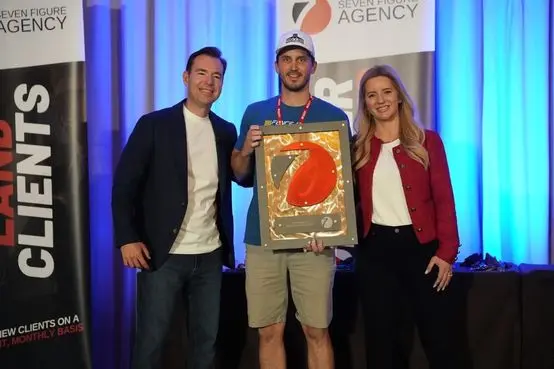
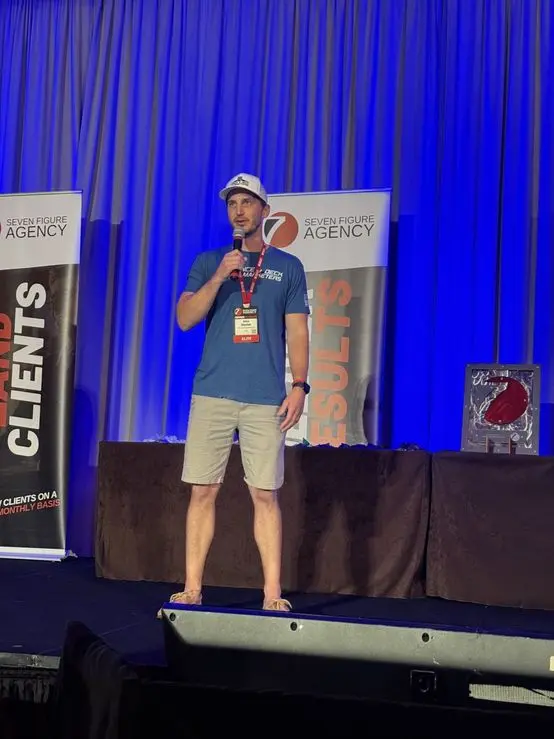
Alex has been part of the Seven Figure Agency community on stage and in the room, sharing what has worked in his agency with other members.

Ranked #1 on TopMarketingAgencies.com
Fence and Deck Marketers is ranked #1 among Fence agencies on TopMarketingAgencies.com, the editorial directory of the best niche marketing agencies in the country. Listings are editorial, not pay to play. Agencies are scored on niche depth, tenure in the specialty, client retention, verifiable results, and transparency, then re-scored every year. You can read the full profile on the Fence and Deck Marketers listing or see how the category stacks up on the top fence marketing agencies page.
Want to Build a Niche Agency Like This?
Alex picked a niche from clients he already had, then built an events, podcast and referral engine that most agencies never bother with. The system he used is the one we teach.