
Excavation and Demolition · Phaser Marketing
He Left for Sixty Days. The Agency Grew Without Him.
Luke Eggebraaten and his wife spent June 15 to August 15 in Germany, Austria, Italy and Japan. He attended three ninety-minute meetings the entire time. Phaser Marketing grew while he was gone. Here is how he engineered that, starting from a honeymoon he could not afford to take.
Luke Eggebraaten of Phaser Marketing on the Seven Figure Agency podcast with Josh Nelson. Full interview, 72 minutes.
Read the full interview transcript
Full transcript of Josh Nelson’s interview with Luke Eggebraaten. Lightly edited for readability.
Josh Nelson: Hello and welcome to the Seven Figure Agency podcast, where we're interviewing highly successful digital marketing agencies from across the country on how they've grown and scaled their agencies. Today, I'm super excited. We've got a very special guest, Luke Eggebrechten from Phazer Marketing. He's grown his agency to seven figures over the last two years or so, serving the excavation niche. Really excited to kinda have you learn from him, how he's grown, how he's scaled. Nothing's off limits today. So if you're excited, hit the like button here. And Luke, thanks so much for being here. Whoo!
Luke Eggebraaten: Josh, thank you so much. I've been really looking forward to this. Can't wait to dive in. And like you mentioned too, nothing's off limits. I was telling you before the show, that's how I learn so much is everyone being vulnerable and transparent. So nothing is ever off limits with me.
Josh Nelson: So if you're watching live, type keep it real in the comments if you're okay with Luke keeping it real on kind of the success, but also some of the struggles and some of the unique things that he figured out along the way. So before we get started, Luke, kinda introduce our- introduce yourself and kinda your journey to seven figures.
Luke Eggebraaten: Yeah. So, a little bit about me. Name's Luke Eggebrechten. Graduated college in 2018 and knew I was always entrepreneurial, just didn't know what that would look like. And funny enough, I got a full-time job as a marketing director at a, an orthodontic practice in Omaha, Nebraska, and they had hired a niche marketing agency, and so I got to kinda manage them. And what I got to see through that was, wow, these… This agency is making me look good. We're paying them tons and tons of money, but it was coming back, with so much value, and they were just so personable and so fun to work with. And I thought, I was in 2019, I thought, "Man, I should do that. That sounds like so much fun. Sounds like a blast. Let's do it." And, I'll never forget it either. So kinda came up with some ideas like let's start a marketing agency. It was gonna be LE Marketing, standing for Luke Eggebrechten Marketing. I was gonna be the guy. I was gonna be the graphic designer, the web designer, con- consultant, everything. And then I read the book that changed everything for me, which is The E-Myth Revisited. Basically scrapped everything I thought I knew I wanted to start, threw it out the window, and started Phazer Marketing. So a business that was meant to grow to be bigger than just me or just one individual. And that's how we got started. And funny enough, we… My first ever client was a real estate agency, good friend of ours, and started out and just didn't really work out well. Second client of ours was a demolition and excavation company, one of my very good friends. He's a co-host on our podcast, The Dirt Bags, and we've been, running it together ever since. So really found my love for the excavation and the dirt world industry. And I know we- we're gonna get into that a little bit here too, but that's a little bit how I got started with the marketing agency. And then I guess fast-forward to November 2021, that's when I first met you and the whole 7 Figure Agency crew.
Josh Nelson: Amazing. So can't wait to hear more about the journey, kinda how this developed. It sounds like had a marketing director position, discovered you liked it, decided you'd start your own niche agency, landed a client in the niche, and it just kind of accelerated from there. So I always like to talk about the niche a little bit 'cause it sounds like you had a client in ortho… Or you were working at a, at a dental practice. You liked the idea of a niche. Talk to us about how you landed on the excavation niche, why you decided to go all the way deep in this, dirt bags world, as you say.
Luke Eggebraaten: Yeah. It,… So I think like most of us, you have a few clients that you like to work with. And for me, before I found 7 Figure Agency, it was… We probably had eight clients, and it was a mix of blue-collar type companies. We had a garage door company, couple oil field companies, and then a few heavier demolition and excavation companies. And so I really started to gravitate towards that. And before finding your stuff, I just kinda knew, yeah, we like to work with blue-collar companies, but we'll work with anyone 'cause we gotta pay the bills. And so I was already kind of on finding that niche path, which I know for a lot of people, they weren't as lucky, where they're, you know, maybe 60 clients in all industries. But for me, it was very early on when I found you, which really helped. And, shot a LinkedIn message. So right when I went full-time, August 2021, I left my job, had about eight clients, I believe it was about $7,000 monthly recurring revenue, and messaged a guy in Florida. He had a marketing agency, thought it was pretty awesome. He served the lawn and land, landscape niche. I was like, "Man, this guy's awesome. I'm gonna shoot him a message, see if he has any tips for a young entrepreneur that just quit his job." And his name was Tony Ricketts, and he said, "Hey, Luke. Thanks for reaching out. Read this book. It's by Josh Nelson. It's the 7 Figure Agency Roadmap. If you're interested after you read it, let me know. You can come be my guest in Miami. We meet three times a year at an intensive." And I was like, "Okay, sweet." And obviously, you hear a lot of mastermind stuff and Facebook, ads that are targeting you with these scams, and, you know, you see it all really. But this one I was like, "Yeah, I mean, at the very least, I'm gonna read the book and see what it is." Read the book, and what I loved about it so much is it's, it's all there in the book. You don't hold anything back. It's, it's all there. If you… If I just wanted to follow the book, I could get it done. However, I know that there's so much more to unlock when you're in person. And so, not knowing anyone, I messaged Tony back and we'd never met either. I said, "All right. I'm gonna take you up on that. I'll come to Miami. Let me know what I need to know." And so flew out to Miami And got to meet everyone at the Seven Figure Agency. This was November twenty twenty-one. I was a guest, and I remember I lied on my little intake form 'cause it says you have to be doing ten K a month, you know, to be a part of the group, and I was doing about eighty-three hundred by November. So I just kinda rounded up, I figured, and go to five figures and say, "Yep, ten thousand two hundred dollars. We're good." And man, it just changed everything for me because I felt like the passion and the business maybe acumen was there, but it was so rough around the edges, and it was so chaotic. But then having it honed in with a group of two hundred other marketing agency owners that were doing exactly what I was trying to do, I was like, "Okay, here we go. We're in the right spot." So however, we come home and, we had just moved to Arizona. I'd never been to the state. We had just moved to Arizona. My wife got a new job. And keep in mind, my paycheck to myself, I had just gone full-time, five hundred bucks every two weeks. So I come back and, you know, I tell my wife, like, "Listen, these imaginary people I just went to go see in Florida from this mastermind group, it was incredible. I really wanna join the group. It makes so much sense. I know it's gonna help myself and the business and everything we're trying to do. It's fifteen hundred a month, but trust me, like, I will make it so worthwhile, the investment." Thank… Like, hearing it from the outside in sounds crazy now. Yeah. But I just– I knew coming from Miami that day that this is where I needed to be. And, thankfully she said, you know, "I trust you. Let's go for it, but let's, you know, take a… Let's take inventory of where we're at in month two, month three," 'cause it's really one of those groups where you get out what you put in. And so, that first time I went to Miami, you guys really harped on picking a niche, finding a niche, and staying with it. And the second thing is too, which really helped me, is getting rid of all project work. I… We had some website projects, logo projects, things like that. From that day forward, I was just committed to we're gonna let all projects go. We're only doing monthly recurring revenue, and then also we're gonna serve a niche, and we're gonna dive into this thing for hopefully decades to come. And I took a look at three criteria of what that niche for sure would be. And when I looked at the demolition and excavation space, it checked three main boxes for me that really helped me solidify that as our niche. Number one, we're– I was passionate about the men and women of America that are building this country, that are… When you turn the water on, you don't think about how the water comes out of the sink. When you flush the toilet, you don't think about where that goes and how that gets done. But whenever there's an emergency or your toilet's backed up or your water's not running, you gotta call somebody. And that's seems to be the only time you think of them, or when there's road construction on the road and you're just angry that there's people slowing up traffic. And so I think the passion was there for the people that are doing the work that nobody else is wanting to do, but it just was a fascinating industry. The second thing was the impact that we could make quickly. Typically, the excavation space is ten to fifteen years behind other industries when it comes to digital marketing. And so I saw that, okay, if we just do the marketing basics very well, we can have a big impact quickly for them. And that's more of what I was passionate about. I didn't really wanna be the best design agency out there, the best SEO agency. I just wanted to be that partner that could work with them and set a solid foundation for them and help them grow. And then the third thing, which I think is sometimes overlooked for people, is this industry isn't afraid to cut a check, and they have half a million dollar equipment, million dollar equipment all over their yard, and so they're used to these big payments. And that is just something I realistically had to look into if we're gonna invest long term into an industry. Because as much as I might wanna work with, like, a bakery, those profits to pay us eighteen hundred dollars a month would be probably pretty difficult long term. And so I looked at it that way as well. If the industry needs our help, passionate about the industry, and also it would have long-term positive effects on us and them as well.
Josh Nelson: Love it. So many nuggets there. First of all, taking the initiative to seek out a mentor, right? You saw somebody that was crushing it in a similar industry, Tony Ricketts, a legend in the Seven Figure Agency community. He said, "Hey, read this book." You took the initiative to actually read the book and make the trip out to Miami, and then you were faced with a big obstacle, which is like, "How much money do I actually have to invest in this? Yes, I see this is useful, but can I really afford it?" Yeah. And you doubled down on investing in yourself, right? More than you were making a month, you invested in, in development, and that forced you into massive action. And so I just love that and the, like, kinda the thought process you went through in the selection of the niche, right? It wasn't just about the money. It was also about your passion for the industry. And obviously it's, it's served you well. One question I have for you just as you kinda reflect back now having a seven-figure agency in this niche, you know, how would it have been different if you tried to stay general in home services? 'Cause a lot of people think, you know, excavation could also kinda go with plumbing, could go with HVAC, go with, like, pool builders. Like, how is it different the fact that you're so narrowed in on the, you know, that dirt world industry?
Luke Eggebraaten: Yeah. It's super interesting because so many opportunities probably wouldn't have presented themselves. A good example is The Dirt Bags podcast and what we're doing with that. It almost like… When somebody hears that title, and then they're like, "Okay, I feel like I know what this is gonna, is gonna be," and then they hear us talk, they're like, "Okay, this is exactly what I thought it was gonna be." But it's building that community. That would be almost impossible, I think, if w- when somebody says construction and they mean flooring, roofing, dirt, septic. Like, there's so many different industries. So we wanted to be in the dirt world, and so we wanted to encompass that and really embody that industry long term. And so if we would've stayed pretty broad and said blue collar, we wanna work with blue collar companies, I don't have the capacity, neither does our team, to learn what we need to know to be the experts in electrical, plumbing, underground, roofing, flooring, you name it. And then it's changing every couple months. So how can we possibly stay up on the trends and the issues the industry is having if we stay, so broad? And so, yes, I think you can niche down, and you guys harped on me for that. I thought I niched down, and you said, "No, you gotta go further." I was like, "Okay, well, here we go." And it's really helped blossom some other opportunities in our company, and I wouldn't wanna be anywhere else. And could that grow into something where we help some subsequent industries? Potentially. Some good examples would be asphalt, some pool builders, some things like that. But at our core, people know that we help clients in the dirt world and in the excavation space.
Josh Nelson: So good. So, so many good insights there, and kind of the power of not trying to be all things to all people, and not just saying, "Hey, look, I focus on legal." No, like if you can go more specific- Mm-hmm… Like Luke did, and go into a very sub-niche pocket, you can go deeper. You can become the outlying, you know, expert in that particular industry. You can really understand the specifics, and obviously that's worked well for you. So I know you had a client within the niche, right? And you already had some success. How did you break through to, like, having five clients? What were some of the strategies that worked well for you to get those first five in the industry?
Luke Eggebraaten: Yeah. I love this question because it's, easier said than done. Right. Because most of us go through it, they're like, "Yeah, you just get your first five clients. It's easy." And now w- we have about 54 clients. It, it genuinely is a little easier to get new clients because you have more people that can vouch for you. Yeah. But going back to we have our first client, we have maybe one or two, how do we get our first five? You can't look past your current clients. Like, the current person that is feeding you, working with you, impressed with your work, use them as your pedestal client if possible. And luckily, we hit a home run with our client. His name's Luke. I went to high school with him. He's just… He is the coolest guy. He's very personable, but he just runs a badass company, and he knows what he's doing. And so I was like, "Okay, I'm gonna use you all over our website, social media. Like, show, give people an inside look at what we do on a day-to-day basis." And what I love, and we do this nowadays too, is I call it the reverse NDA. And so instead of having a non-disclosure agreement, we have the opposite of that. And that is we will tell everyone everything that we do besides, like, certain ad budgets and things like that, but… Because what we do is simple. We don't do magic tricks. We… There's nothing sneaky that we're doing. It's very simple. And I think that's really opened up the door. So when you have one or two clients and you're trying to get to five, focus on building some case studies with those clients, getting those Google reviews from them, and then highlighting those on your site. Even doing different collaborations on social media, and also, of course, having them on your podcast doing what you're doing here, like an agency success interview, having a client success interview. If there's one thing that I think we've all learned is people love to talk about their own business or themselves, and if you can really pull those questions or those answers out of them with good detailed questions, you'll see their eyes light up, and they'll go and go. So those,… Utilizing those clients that are currently paying you, currently working with you, I think is your quickest way to get to five.
Josh Nelson: Love it. So really doubling down on that first client in the niche, second client in the niche. Focusing on delivering a world-class result- Yeah… A world-class experience. Make them your number one advocate, 'cause that's really where you can simplify your growth going forward. Any specific tactics? Like w- did that individual refer you to somebody else, or was it just s- people saw his success story on your podcast? Just tactically speaking, how you got, like, those next handful of clients.
Luke Eggebraaten: Yeah. So a big tactic we use is making sure that they know how they can refer us to others. Mm-hmm. I think sometimes we tell them one time at the beginning, and then it just gets lost, and they go on their day-to-day. But continuously, every time you meet with them, "Hey, is there, is there anyone you know that could use our services? Anyone you know that kinda embody what you and I embody as far as our values go?" And I think the deeper you can get with your clients as far as, like, you know, we're looking to help the industry, is there anyone that you'd recommend? Continuously making sure that they know how to refer you and what they can do and what they can say, is a really good tactic. But then also making sure that, I like to use the funnel, attract, educate, acquire. Mm. You gotta always be attracting people, and that could be through the podcast, through social media, doing all that. And then educating them on what you do. You're open for business. This is how we do it. But then acquiring, making it very easy to work with us. And so, a lot of that was in our messaging and making sure that our clients had that in their tool belt of like, okay, here's the messaging. If you wanna work with Phazer, here's how much it costs. Here's how you can get ahold of Luke. Here's what it's done for our business. But giving them that ammunition really helps because they like to kinda, I'd say, brag about what we're doing with them and then how we can help, this referral as well.
Josh Nelson: So good. So good. So just focusing on that existing client, making sure the results are strong, arming them and asking them, "Hey, listen, you know anybody else that could benefit from this that you can connect me with?" And kinda having that flywheel where one client can start to give you three clients, can start to give you six clients. Yeah. And that's kinda what worked for Luke. So let's talk now about client acquisition in general. So you've got 54 plus clients. You're running seven figures today. What does client attraction look like in your business right now?
Luke Eggebraaten: So definitely, what's really helped is our social media strategy, and by strategy there isn't much strategy to it. We don't– So I've been– I run our Phazer Marketing socials and my own socials. The reason I say my own is because I know Matt Plapp is big on this too, of having your own personal brand. I'm a big believer that people wanna work with people, not just companies. So big on our, my personal brand, but also our business brand. And couple things too with the business social media is I call it the big four and Facebook company page, Instagram company page, LinkedIn company page, and the Google Business Profile. Every post we have going out goes on all four of those every single time. And what's funny is that so many times we can try and engineer this perfect post, and when we do that, it sucks. Like the algorithms don't give us any exposure. They're like, "Nope, we don't like it." But when it's personable, fun, transparent, when we give them an inside look when it's different,… I had somebody tell me a couple years ago when I was asking for advice, they just said, "Be interesting." Like, there's so many boring people on social media, and the algorithms have done such a good job of like shadow banning that to like, "People don't wanna see this." Like this is just a sales pitch. And so being out there, being fun, being different, has really helped our strategy. So I love to give people an inside look from day one of our company, what we're doing, what we're going through on some of the issues, but also, sharing some of our wins as well. And, if you jump on our social media you can see some of the different things that we post about. Some of them are probably pretty questionable, but it's just, that's just us. That's who we are. That's what we like to do. And that's just very similar with the podcast as well. We don't like to apply filters, because that isn't who we are. So a couple other things that we've done to attract clients and make them feel like they're a part of a community, you'll see I'm wearing one of the hats, but since day one we've started with merchandise. We put a PM logo on 24 hats when I first started the business. We had zero clients. Mm. I said, "Hey, if anyone wants to support the business you can buy a hat. It's 25 bucks." And friends and family, cousins, maybe college students, like they would maybe buy a hat just to support. They didn't own a construction company, but they could support by wearing the merch. Now I think we have about 15 different styles of hats out. Sweatshirts, shirts. We also have, I brought these up, but our new Skiddy scented air fresheners- Mm. -and our forestry mulching scented air fresheners. People love these because it's not a sales pitch. It's just a part of the industry, and I know that, I'm not always trying to sell them to bring them in, but it builds that community so that when they are ready they know exactly who to go to. They've already built that trust with us. So the merchandise has really helped every single time somebody bought a hat, since 2019 till now I write a handwritten thank you note and with a wax seal with our PM logo. Mm. And usually when somebody buys a hat from a retailer they expect a hat, right? Right. And they get a hat in a box and they're like, "Sweet." What I saw that as is an opportunity now to blow them away with an experience. It's like they've already committed to supporting a business that I started from scratch from nothing. Like how cool is that? I wanna make sure that this person remembers this and feels something from this. So we'd send the box with the hat, then we'd throw in our get to-do list, which are just these little short notepads. They're all branded. We throw in magnets, stickers, new Skiddy air fresheners, and then as many extras as I can. And then o-on top of that, this handwritten thank you note that is wax sealed. And because of doing that from the beginning to still doing it now, I know not only has that helped us gain most of our clients, but it's also helped with retention because they appreciate the time that we're putting into thanking them for everything they do for us. And also on the flip side too, the time I get to sit down and write those notes is a time where I can practice gratitude of like, man, this started from zero, and with so many people helping it's gotten to where it is. But on this card that I'm writing right now, I'm gonna focus on this one person and thank them for everything they're doing for our business. And it's just a really great practice. I feel like it boosts your mood the more of those you get to write. And so I'm really big on the non-digital marketing piece of sending handwritten cards. And then I guess a couple other, strategies we've used to gain more clients is the podcast has been massive, as far as like bringing in clients. It is a little different I think than most people's because we talk about marketing about 5% of the time on there, but we address other issues. So estimating, contracts, cash flow, financials, digital marketing, hiring. And I think that really helps build a- A community where people can get behind and enjoy, and enjoy the episodes, but then know that, okay, if I have a marketing question, like I could probably ask the guy that owns a digital marketing company for, you know, for excavation companies. So that's helped build, that trust, and then when they need help, they know they can come to me, and that's been a really nice funnel, into our agency.
Josh Nelson: Love it. So, so it sounds like a combination of social media, right? You're posting organic, authentic content, being entrenched in the industry, the merchandise, the hats, and the things that you send in the mail, and it feels like the podcast is a big component of your success. Can we unpack that a little further? Like kind of what the, what the format for the podcast is, how you promote the podcast, and how you're even like leveraging sponsorship opportunities?
Luke Eggebraaten: Absolutely. So, the Dirt Bags podcast started in February 2022. Believe it or not, of course, it was from a S- Seven-Figure Agency, and I wanna put this in there too, because Seven-Figure Agency has a lot, right? And there's so much to do. I would say I'm a pretty slow implementer, but I'm slowly consistent. And so every intensive, I would grab one thing, I'd just say, "All right, we gotta start the podcast." And I would spend those three months just starting the podcast. Like it's ki- it's not exciting, it's like kinda slow, but when you do that enough over time, it really all builds up to be… It compounds to be something special. So we started the Dirt Bags podcast. Luke Paine is my co-host. He was our first client. He owns two excavation companies that have exploded, and so it was, it was perfect. And we really do well, going back and forth. But we started the co- we started the podcast as a company, and from day one, from the first episode, we registered Dirt Bags Media Group LLC, because we knew that we weren't gonna do this just to have two drunk guys ba- banter back and forth and like, you know, on a Sunday night. Like this was meant to be a revenue-generating, platform. And, and so we set it up as an LLC, and our whole goal was like, how can we provide resources to the dirt bags all across the world that are in the same exact industry we are, and they just need a little help? And they need, they need it delivered to them in a way that's repeatable, that they wanna come back and listen to more, and they want more. And so started out one podcast a month. Had some big names on early on just to create some buzz, and that was a ton of fun. And if anyone's on listening here, and you're doing a solo podcast where it's just you and you bring on a guest, I did that for two years prior. It's hard. It's hard to keep up the excitement. It's hard to c- come up with the ideas. Since I had a co-host, it's so much fun. Like him and I, we don't even have to prepare. We can just start, and we feed off each other, and we go. So, so we started that, and then Dirt Bags University. So this would've been after probably the July intensive. I was like, "All right, my next step is a webinar." And so we started an in-depth webinar series called Dirt Bags University, and I'll get into that in a sec. But, that only helped amplify the podcast. Like, okay, these guys are like doing something for our industry. I'm gonna give it a listen. And then they actually like the content, and it's not cheesy, or you can say whatever you want. And so as Luke and I continued to grow it, we said, you know, "How can we bring in some more resources and some sponsors to help, to help the people listening?" And we're very open and transparent about when we bring on a sponsor, who we brought on, how we vetted them, things like that, and we wanna make it exciting. We're very clear that this is a for-profit business, and we want them to get excited about that. Because the more money we make as a podcast, the more that goes right back into it, paying our speakers for the webinars, getting better mics, like all that stuff. And so, we started bringing on some sponsors, and I also wanna detail this, like we didn't have any metrics of like, okay, we're doing this many downloads. If you multiply it by this should be our CPM, and this is what the advertising costs. We didn't do any of that. We just said, "Well, we're bringing in 5,000 downloads a month, and I think 1,500 a month seems fair. And yeah, let's just ask. And we'll have one spot open. If somebody takes it, great. If not, great. We'll keep doing it." And yeah, I think businesses, they wanna support the education side, but also wanna be a part of it, because if that's taken up by their competitor or somebody else, it's like they missed out. You snooze, you lose kind of thing. And so I love that mentality of the cost is just a cost. It's a, it's an investment and belie- belief in what we're doing, and just being able to say, "Yeah, let's do it. I'm in. We'll do it for six months. Let's see how it goes." so that's how we started building up some podcast sponsors. And then on the webinar side, it's a closed-off paid webinar. So from the first webinar we did, we were gonna do the free route, but we said, you know, "Let's try the paid route. Let's only have this available for people that pay 20 bucks." They come in, they fill out their questions, and then they attend. And to our amazement, it helped a ton with, registrations. So we typically get about 50 to 70 dirt bags per webinar. Mm. And then retention is incredible. It's almost 100% up to an hour and 15 minutes in, because they paid for it, they're there, and it… They can't listen to a recording after. So it's like whatever they miss, they miss. So doing it that, keeping it very exclusive has helped, the webinar, but on top of the podcast, that only fuels that webinar as well.
Josh Nelson: I love it, man. So, so good. I love the idea that you created a separate company for the podcast. You get paid for producing the content. That also furthers your positioning, that gets people excited about doing business with you. And a cool approach to the webinars where they have to put a credit card on file, put a little bit of money. Sometimes you don't, you don't actually appreciate it unless you spent some money on it. That's, that's beautiful. Great insights there. In terms of the promotion of the, of the podcast itself, outside of, you know, obviously recording the content and loading it up, are you emailing it out? Like, what other strategies do you use to get attention for the podcast?
Luke Eggebraaten: Yeah. So what we do, when we know we have a podcast coming out, we use Constant Contact, and we have an email list of people that have been to the webinar, so we know that's a very hot list. They're avid listeners. Then we have a separate list of people we know are listeners that haven't been to the webinar. So we'll send it out to them, and then we usually send out a separate tailored message to the rest of our audience, just g- giving them some more information on the podcast and what we're doing and how we do it. So we send that out. Definitely Instagram Stories have been- Mm… Very big for us because ideally, we have them come to one place to see, like, what's going on. And, and with Stories, the more they're interacting and messaging us, it's, it's like we have a direct line to them. So as an example, if we're always putting out the stories of when the next episode is, when we just launched one, when the next webinar is, but then when we need something, we know that the algorithm will show that to them because it- they've already delivered. So, for example, a couple weeks ago, we said, "Hey, we're doing a Q&A episode. Send in your questions." And we got about 15 responses from construction company owners all around the world that had questions that they wanna hear on the podcast. And what helped with that too is that we always give them a shout-out. So we'll shout out their username on Instagram, and so people can really start to understand, like, if they follow us on Instagram, that's where most of the content comes in. But then we try and hit 'em, of course, on these other channels as well, like email, and then also we have a Dirt Bags Facebook group, of course. So, we've got that. So we cross-post everything, even on LinkedIn. But our main source is Instagram Stories. And a cool feature I like is I will… If we have a new episode that just dropped, we'll put out that Instagram story, and then you can hit the little three dots on the bottom right and send that to a list of people as a direct DM. Hmm. And I'll just… We send 'em out on Friday, every two weeks. And so I'll say, "Happy Friday. Cheers. New episode just for you. Let's go," or something like that. And, Instagram's so good at giving me the right recommendations of who to send it to. So I'll just send it to like the first 40. They're all excavation companies, and they all listen to the show. And so it's a really good direct message that goes right to them that feels a bit more personalized as well.
Josh Nelson: So good. A- it's such a great example of the fact that, you know, we think about social media to attract any type of client, let alone home services, let alone excavation companies. Are the owners of these companies actually on Instagram? Are they actually reachable? A- and most people say, "No, there's no excavation business owner that's on Instagram." But you're living proof, like in… And if it's in, in excavation, it's in any vertical you can imagine. Yeah. You can reach them. You can engage with them if you've got the right approach. So amazing insights here. Really appreciate you unpacking that for us.
Luke Eggebraaten: Yeah. And one, actually additional point on that, I'm glad you brought that up, is the clients that find us and know us through Instagram, what, why I love working with them the most is because they've been following along with our stories and our journey. And so they see what we do every day. They listen to the podcast. They're keeping up with everything, so that by the time they reach out, like a lot of times, they know my whole life story, and I'm just getting to meet them for the first time. So it really helps, with that positioning of like, okay, now I get to ask more about you and your business. Like, let me dive in here. But, they've already been listening to us and listening to me and getting nuggets of value throughout the social media and the podcast. And so that's really helped. And then it's helped kind of filter who we want to work with. I'd say most people, when they think of excavation companies, they think of older, 60, 70-year-olds that are on their way out, and there's tons of them out there, and they're great people as well. But, the people we wanna work with are the young studs that are forward-thinking and wanna build a legacy with their company. And so- Hmm… We're in probably one of the oldest niches out there, I would say, septic and excavation, but 90% of our clients, the owner is under the age of 39. Hmm. And I think that is very interesting because… And most of them find us through Instagram or the podcast. And so I think as you guys are thinking about how you're trying to attract clients, figure out which platform you'd love for them to be on and kind of… Maybe LinkedIn is another one of my favorites, where if they find me through LinkedIn, they're already doing the right things. And so that's where I love to go, is where I would like to find them.
Josh Nelson: So good. So good. Love that. And, and really because you're putting out such consistent content, such likable content, you get the coveted position of them coming to you pre-positioned to buy. They didn't see a blind ad and schedule in and a hard sell.
Luke Eggebraaten: Like they're already like, "Hey, I've been following Luke and Luke for quite some time. I know what you guys do. I've seen your case studies. Talk, talk to me about how much is this gonna cost and can I afford to do this with you?" Yeah. Which is where we all wanna be, pre-positioned. Yeah. And we took one step further a couple months ago because we got to exactly what you said there, and then they'd ask me how much it costed, and I'm like, "I feel like I talk about it enough." And so we just decided to put all of our pricing on our website. And I know that, you know, not everyone likes to do that, but for us, like I'm… Truly believe that I would rather them inform themselves of how much a lot of this stuff costs 'cause- Most of our clients have never worked with an agency. Mm. And so that's a bit different where they might think it's two hundred bucks a month. Right. And when they find out it's eighteen ninety-five a month, I don't wanna give them a heart attack on the phone. But if when they start to consume some of that on our website, and they read why it costs that much, what they get, it's like, "I might reach out to them." And then I feel like we get more qualified leads that way.
Josh Nelson: Let them digest that price in advance- Yeah… To decide whether that's comfortable for them before they schedule in. There's a great book called They Ask You Answer, and they make the case for putting the price in advance and- Yeah… You know, really warming the prospect up to what you do and how much it's gonna cost before they even meet with you. So that's cool that you do that. You've done some counterintuitive things and have proven that it's worked really well for you in your agency. I do wanna shift gears now to, packaging, right? So, you know, we can package these digital marketing services any variety of ways. Well, I'd like to know how you package your offering to the excavation companies you work with.
Luke Eggebraaten: Yeah. It's funny how that's in the title of packages his program, because we used to call it a package. We'd say, you know, "Here's your package. You have one, two, or three." and from seven FA, I can't remember who was speaking on it, but they talked a lot about your vocabulary and how if you switch it to programs instead of contracts, agreements, and there's different little tweaks that can make a huge difference. In November of twenty twenty-two, we switched everything from packages to programs, and we used our name and how we came up with the name to assign those programs. So, Phaser Marketing came from a two weeks of trying to figure out a name for our agency. It was the hardest thing we've done to this day. And I took a step back and learned, okay, what are we really trying to do? And really is simplify the digital marketing landscape for business owners. At the very simple process, I just wanted there to be like a million ping pong balls up in here of everything that goes on, but all the business owners see is phase one, phase two, and phase three. Just very simple. And then that's how we came up with the name. So we use that now to switch from packages to programs. So now, as of November twenty twenty-two, we have a phase one program, phase two program, phase three program. And to go a little further, we have revenue numbers based on that because then we're making the decision of where we're gonna place our clients when they come in. So phase one is six-figure company, six-figure excavation companies and up. The minimum is about six hundred thousand dollars in annual revenue. Phase two, seven figures and up. And phase three is kind of a custom, it's eight figures, usually about ten to a hundred million. And that way, the phase one program, website, SEO. Phase two program, website, SEO, paid ads, and so you're pouring more gas on the fire. And then phase three is just more of a custom plan where we can kinda do anything if you're an eight-figure company. So that way, when we switched from packages to programs, and it's like Tony's thing of like, get off the bus, it helped us take so much more control of like, there's a reason we've done so much research, and we are niched down, is because we should know how to do digital marketing for excavation companies and what is best for you. So if you follow the program, it'll work. If you, if you don't wanna go get any Google reviews, it's probably not gonna work well 'cause that's not following the program. And I'd say, you know, we're probably not as intense as Tony, but it really is just going back to like, yeah, if we follow the program, it's going to work. And it's not magic, it's not science, it's just the marketing basics. And so that's kinda how we have it set up, but we went from about… I think we took on eight new clients, which is a record still to this day, in November of twenty twenty-two when we switched. Mm. And it was crazy. And I think the clear graphic of what they get and what phase they're in resonated with our potential clients of like, "Oh, I think I need phase two." And then they would reach out and ask, and I would say how much it is. And so then we went one step further and added the prices to the bottom of each graphic, just to put it out there. But when we switched from packages to programs, it changed everything for us, and it also helped us take the wheel a bit tighter of like, we know where we're going, we just need you to trust us.
Josh Nelson: Love it. Kinda painting the vision for where they can go. It sounds like the lines here are kind of in that, phase two level, where it's website, SEO, and paid search with retargeting.
Luke Eggebraaten: Yep. Yep. So that… And the way I describe it is like m– 'cause most of our clients wanted to work with us because they just wanted a website. And most clients didn't think they need SEO. They don't need paid ads. They have more work than they can handle. They just need somebody to build a website. Can you do it? Just the website, no monthly fee. I'm like, "No, but we do have a program that's like, it's phase one, you get a website, you get ongoing SEO, ongoing hosting, ongoing updates, you know, things like that. We'll keep it secure. We'll work with you." And it's… You basically hire a full digital marketing team for an eighteen thousand dollar a year salary total. And it's like, oh, that's a good way to put it. So it's more of an investment, less of an expense, and that's kinda how I like to try and frame things. And also that it's more of a delegation exercise too. It's like, yes, you can keep doing all of this yourself, but you run a four million dollar excavation company, and you're t-tinkling with like a Wix website that you built. It's like at some point, there's gotta be a trade-off. And one of my favorite questions to ask them is, do you feel like your website accurately represents the history and the work that your company does? And it's almost always a resounding no. And so that's a good foot in the door But as a marketing guy, almost selfishly, I know, like, I gotta get their SEO going and their organic search up. So how can I do it in a way that's very presentable to them so that when I show them in six months what we've done, it's like, "Oh my gosh, this is awesome." So there's a little bit of that where sell 'em on the website and everything that's included, but then as they go along, they get to work with our team, they get to build that personal relationship and then that trust, and then they start to see the results as well. It's a really fun pairing. And then to switch in that phase two, we do all that at the beginning, but also then we pour gas on the fire and we can build out hiring campaigns, Facebook ad campaigns, PPC, and we also, run LSAs now.
Josh Nelson: Love it. Love it. So good. And, and guys, people will buy what you have available to sell, right? And so if Luke had the option of, "Oh yeah, I'll build you a website and I'll do it for two grand," or whatever the price is, people would buy that and he would lose the opportunity. You, you have to decide as the agency owner, I'm going to sell retainer-based services and know that it's gonna be in the best interest of the client. Like Luke said, yeah, they want a website, but how well is that website gonna serve them? Like if it's just a brochure where a website that doesn't rank, that doesn't drive traffic, that doesn't drive lead flow, you're not helping them. So selling a retainer-based service where he is building authority, where he is building value, makes a lot of sense. You just gotta have the frame right in your mind. So I think I, I really appreciate you unpacking your packages, but also, your programs, but also kinda how you present that and how you get over the objection of, "I just want a website," 'cause that's gonna come up in a variety of niches, and if you don't have an answer for it, you're gonna lose all those opportunities.
Luke Eggebraaten: And it was Tony that made a big point about y- you don't sell packages, you sell programs. Yeah. People, you know, when they buy a cell phone package, they're like, "Okay, it's $19.97," and they don't expect anything from it. But a growth program is something they can get behind, they can get excited about. And, it was… He did a great video on the… Like, why you have to position it as a program and not a package. Yeah. And so much of it was just the way you say it, right? And it wasn't even like we changed much, but the package, yeah, you see it as like you tie it up in a bow, you give it to them, you're like, "Here you go. Thank you. Can you write me a Google review?" Where a program, it's like, "Hey, we're, we're looking- We're in this together… This year, next year, five years out." Like there's this whole thing going on here. So, I definitely recommend anyone looking at their big picture here and their programs to say, you know, "How are we talking about this?" And, I know Chris Rodriguez had talked about this too, but, changing the lingo from contract to agreement or SOP to playbook and just little tweaks like that can go a long ways.
Josh Nelson: So good. So lots of great nuggets here. If you have questions, I know there's some questions in here, I'll come to them as soon as we can, but if you have questions, post them in the comments. We've talked about how you chose the niche, how you land clients, how you attract clients with your podcast and your positioning, kinda what your, what your programs look like. I wanna shift gears a little bit to delivery because it's one hurdle to get over to land the clients. It's a whole 'nother hurdle to get over to actually deliver the results and to keep the clients on board. Let's talk a little bit about what your team looks like and kinda how you structured your delivery mechanism.
Luke Eggebraaten: Yeah. I think this is a super interesting question because I did what was comfortable for me and for our team, and I think it looks a lot different than what most people would assume that you have to do in a marketing agency. So, I came from not being the technician, but being a true entrepreneur of like, I'm just vision, go, go. And I honestly didn't… It didn't excite me to learn Adobe or to learn how to build a website, and I just didn't really want to. And so I'm like, "Okay, I'll just contract in a, an individual that is really good at this stuff, and I can kinda learn from them as they go, but ultimately, they're the ones building the product." And so early on, got a couple, contractors from Upwork and LinkedIn, just people either I knew or I'd put out a job post and I would pluck them off the platform. And they're all US-based, so a lot of them were either in college, they were out of college, maybe they're a full-time freelancer. Those were amazing to work with because they had their own systems as well. But I would just say like, "Hey, I am looking for extra help on graphic design. I can pay you 20 bucks an hour if, you know, maybe five to 15 hours a week. Is that cool with you? We'll put you in our base camp. We'll work together. We'll collaborate with the team." And then it gives them more of that team feel like, "Oh, this is actually pretty cool, so I don't have to do all the communication with the client." It's like, "No, that's part of our job, but you just get to help with what you actually love to do." And so that's kinda how we structured it early on. But wow, what a difference when you're doing $15,000 a month in monthly recurring re- revenue, but you have six, seven people on your team that feel like they're on your team, they're passionate like they're on your team, they're collaborating, they're wearing your Phaser gear and all of this, but then your costs are still at where you can afford. And so I loved that because it also helped them in their career as well, freelancing and potentially starting their own business. So that's kinda how we started. We brought on contractors. And I hired my first full-time employee. Her name's Josie. She started with me contracting about three years, three and a half years ago, and I hired her full-time in May of last year. So she's almost been with us for one year, and it's just been her and I full-time even today until we hit seven figures. And now our goal is to start bringing in some more pieces full-time to then do things, deliver better results for our clients, and two, to increase some of those profit margins. Because- If I were to talk to some people in the group, they'd say, "Luke, your margins are probably so slim," or, "Your net profit must be below twenty percent," or all this. But for me, it was most important we're a debt-free company. We're cash flow positive every single month, and always have been since day one. We're making great money. It might not be the forty percent or the thirty-five percent yet, but that's what we're gonna work on expanding. And so to me, it was more important to get out there to more people to deliver better results and then start bringing in some pieces in-house. So currently, let's see, April second, twenty twenty-four, it is myself full-time, Josie full-time as the, I'd say Director of Client Success, but she's almost running the whole company at this point. And then we just hired in full-time Brandon, who's been working with me for almost four years. He's our podcast producer, graphic designer, and he also films content, so he's been coming with me to all of my speaking engagements. He just started last week full-time. And then we just hired our fourth person full-time, last week, and so he starts April fifteenth, and he will kind of take over half of Josie's plate, and he'll take over that operations management. And so really starting to bring in some more, team members. But then you might be thinking like, "Well, who's all doing the fulfillment?" So we work with two label partners that have been with me for, I think, a year and a half, two years, so we've know each other very well. And on the one side, Agency Elevation, they've been with me, and just been incredible. I love working with them, and our team does as well. And what they've done is helped us learn a lot of what we don't know through the whole process. So we always pepper them with questions on marketing. And then on the second side, so they do… Sorry. They do all of our, like, SEO fulfillment, a lot of the legwork, where Josie and I would then filter and fill in some of the gaps. And then, on the website side, we have an agency called Imperium Social. They're based out of Canada. Really cool. They work with a lot of– They're in the same industry as us. Two young studs, and I saw one of their ads two years ago. I was like, "Man, these guys are crushing it." So I right away called one of the owners, his name's Wes Mann. I said, "Dude, you don't know me. My name's Luke. I do run Phaser Marketing. We do something similar to you. Love what you're doing. Let me know if there's any way we can work together or collaborate or something. But I just like, there's not many of us, and it'd be cool to do some work together." And then it escalated from there, and we've been working together for the last two years. They have their own Phaser emails. Like, it's very close. We've grown our agencies at the same rate. They, they're running,… They read your books. I send everything to them. And so it's, it's been a really great relationship having those white labels to do some of the heavy lifting, the contractors in between where I'm not stuck on, like, a W-two salary, but they're helping a ton and they're a part of the team, and then now building out some more of those full-time team members.
Josh Nelson: So good. And, and love, like, that you're sharing your journey and kinda how you've put this together. Amazing that you grew to seven figures with two basically- Yeah… One full-time employee and yourself. That's just phenomenal. And you built this amazing network of contractors and white label providers to have a better delivery standard than you would if you tried to do it all yourself with a couple of VAs or something along those lines. So cool. Guys, shout out to Luke for sharing this and being willing to be open and transparent in kinda how he's grown, how he's scaled. One question I have, and this is what I hear from a lot of agencies that try and go the contractor route, is, you know, they're, they're only semi-dedicated to you, right? They've got their own freelance business. They're taking o-other contracts. How are you able to keep them on task and keep the speed of turnaround on things in your agency?
Luke Eggebraaten: Gosh, that's such a great question. I think, I think it a-all actually goes back to your business and your brand and what are they… Like, what picture have you painted for them? If they're, if this is just another freelancing project or another contract, like it's… You're probably gonna have a lot of that. But if they're like, "Man, it would be sweet to work for this company full-time one day. I wanna show up and show out so that I do get one of those spots." 'Cause right now, we can only hire so many people full-time. Right now, we're just brought in our fourth. But if our contractors, if they've been with us for three, four years and we love them and they wear all of our stuff and they do such a great job taking care of our clients, like they're probably next in line, of course, for like a full-time job. Like, it just makes so much sense. And a good example is Josie, she worked with us for three years before hiring full-time. Mm. Brandon was almost four years before getting hired full-time. And then our next guy, he's brand new, but he brings a whole array of skill sets, and he also follows Seven Figure Agency, so it feels like he knows a bit a-about what we're about. And so I think it all starts with the companies. Like, what picture are you painting for these contractors? Is it just plugging them into an SOP and, "Here, do this," and there's no light in sight? Or is there some excitement that they can work towards something, they can grow towards something, they can get paid for what they love to do? Like, we work in one of the greatest industries in the world where we can work from our phone, our laptop. We can work in the Bahamas with Wi-Fi. We can do anything. And so I tell them that. I'm like, "Hey, my goal is to crush it with you, and my job is to keep this business growing as well, keeping people happy so that you never know. Maybe one day there is an opportunity to bring you on full-time." And, I think people are, in their careers and in their jobs, they are– tend to be unhappy. And so I wanna provide like a career path and a job where somebody gets filled up, is passionate about, is thrilled to be at work. So, I try and take that same attitude towards our contractors. Like, they're very much a part of our team. – They just, the only difference is well they pay their own taxes. I guess that's different. And then they don't work 40 hours a week. And it's because if they all did work 40 hours a week and they were all W-2 employees, I think that would be a little too risky for what I'm looking to do long term. And I think their job, their future job would be in jeopardy if I did that.
Josh Nelson: So good. So it's really the way that you paint the vision of how they plug into the company. You treat them like they're a member of the team and they see the future. And of course, they're gonna prioritize what they do with you and the deadlines that you set because they want that opportunity to continue to get the business from you, but also to potentially develop into that future career opportunity as well.
Luke Eggebraaten: And it's not easy either. So there have been situations where, like, we have to bring in somebody full time, like 8:00 to 5:00. There has to be somebody answering these emails and these phone calls, and that's kinda what we've grown to now. But if you find the right dedicated contractors where their situation is right and they are very responsive and very active, which we have found many of them, and I know that they're out there, it's just finding the right ones. And then, you know, you do have to be quick sometimes to know who's right and who's not right for your company. And you know, unfortunately, we've had to mutually part ways with quite a few, but you try and make it as mutual as possible, of course, and like we're just not achieving each other's goals.
Josh Nelson: So good. So many great insights. One last question here that I wanna make sure we cover. We talked about the team and delivery. How about retention? Right? You got 50 plus clients in a really competitive industry. What are some of the things you guys implement in order to keep the clients engaged and onboard long term?
Luke Eggebraaten: All right. So I've got a few things, and I actually have something I wanna show you guys too if anyone's watching.
Josh Nelson: But- Awesome… So there's a few things and- Yeah, so there's 50 plus people watching. Okay. Perfect.
Luke Eggebraaten: Sweet. So thank you all for being here, first of all. But a couple things we do for client retention, a lot of it, believe it or not, is non-digital marketing related. I think you can only talk about, Google Analytics, Search Console, keywords so much, but a lot of what we do for retention is outside of that. It's, going out to see them. So I'm taking a trip out to the E- East Coast to speak next week. Nice. And I am going to go see 12 of our clients on the East Coast 'cause I've never been in the Northeast. And so they are showing me their job sites. They are taking me out to dinner. We're gonna go see their family. Like, just be present with them. And so that alone just shows, like, "Hey, we've got something in the calendar in three months from now. Like I'm… We're excited about. Let's start planning about that," not planning about how you're on the chopping block and we're gonna, like, get rid of you guys, but like, let's get excited about some stuff. And 'cause I know that the team is gonna do their thing to deliver results, it's like let's, let's talk about some other things. And I think I've kinda helped with that is most of what I talk to them about is non-digital marketing related. It's more podcast topics. Who should we have on for the webinar next? Oh yeah, I'm coming out to come see you. Let's go golfing in May here, and just planning more of that, and then also a high level business view. So I think that's really helped get me out of the weeds. But a couple other things here. So, give me one second. I'm gonna grab it.
Josh Nelson: Yeah, go grab it. And guys, while he's going, I'm gonna see if we have time for some Q&A. I know a lot of you guys have posted questions in. If you have questions, post them in. We'll make sure to try and get them, as we wrap up. Okay.
Luke Eggebraaten: So I don't even think any of our clients are on this, but if they are, they'll just get to see what they're going to get.
Josh Nelson: So- Okay. That's what you meant.
Luke Eggebraaten: – I didn't know if like there's clients watching… It's honestly just a bonus. Like, if they're taking time out of their day to be here, then we're good. So, anyway, but this is one thing. So I love just doing random surprises. So I'm not a big believer in like, "Oh, here's your Christmas gift. Thanks for being with us. Here's your one-year anniversary gift." That one's not as bad, but you know what I mean, of things that are kind of expected. The routine, the expected, the, you know- Yes. Absolutely. So a couple things that I like to do is whenever we get a new hat or s- a new style of merch, so we have, a couple hundred hats coming in in the next few weeks, my goal then is to send out another round, usually every like three to five months, of a box with some new gear and a handwritten note and any new air fresheners we have, all that stuff, and also just like thanking them, like… And I use that time to, not to get super sentimental, but a little bit of like, I, we could not do any of this without you. Like you, the person I'm talking to, thank you so much. And it's just, like, such a blessing what we get to do every day. So I had this idea, and I saw it come up. I'd always wanted to do a… 'Cause you know you can have, like, mugs that are branded with your PM brand and stuff like that, and you can send that to them. That's great. They might use it. But I was like, what if we got their brand and my brand engraved on the same thing? Mm. And so I looked at options of doing that, and I was like, gosh, it'd be… 'Cause most people in construction, they know Yeti. They love Yeti. It was like 70 bucks a tumbler to, to do that.
Josh Nelson: And I was like- That's good…
Luke Eggebraaten: I was like, man, I love our clients, but that's gonna get ex- like, really expensive. And so I was kinda thinking on it. I'm like, I should just, I should just do it. You know? They, they pay us 1,500, 2,500 a month. I should just get it. One- once a year gift, like that'd be so awesome. Then Yeti came out with this deal, free engraving for two logos, free shipping. So I got 54, and you can see them here- Oh, wow… Engraved with the client logo and our logo with our domain underneath. A black, favorite color of course, Yeti tumbler, and then when you engrave it's silver, which is our colors. Beautiful. And so something that they can use that's quality that they can be proud of, 35 bucks a pop on these. And I was l- I'm like, done. Give me- And they're like printing on demand, everyone with different logos obviously for each one of the clients So no. So I had to– They only do it for a short window, and so right now it– the deal is off. But I just took any of our current clients, and so these are clients that are currently working with us. Mm. I uploaded their logo. And so on that run… So anyone that starts to work with us, like, today, they won't get one of these, but then I'll do something special in the next six or seven months. So- Love it… Things like that. Yeah, I just encourage anyone listening to just be different and be out there, but don't be afraid to put some thought and just be sentimental with it and, like, write that card or send that gift. One of our clients is getting married this summer, so I'm definitely gonna send him something special. And then, one other thing too is always be listening. This is one of my favorites, but one of our clients, I'm good friends with him. He– I was watching his Instagram story, and he was in his truck. He's like, "Man." He had a bunch of mail he's ripping through. He's like, "All anyone ever sends me is bills. It's always bills. People are always asking for money. Why doesn't anyone ever send me money?" And you know, he's kinda like kinda joking, but just one of those days. And I saw that, and so I wrote a card in there, sent him twenty bucks cash and just, like, kind of as a joke like, "Here, go buy some golf balls." And I think just, like, that alone, like, he still has the card and things like that can really stand out to your clients. But don't be afraid to be a friend, and a mentor and a consultant and a marketer for them. I mean, I just lo- It's more enjoyable as well, and so I think that really helps with retention.
Josh Nelson: So good, man. Love it. So many great insights, how you've grown the agency. Congratulations on going to seven figures. I know that multiple seven figures is right across the pond for you here as you continue to grow. Luke, do you have a hard stop, or do we have time to answer a couple questions?
Luke Eggebraaten: We're golden. Let's keep her going.
Josh Nelson: All right. Type let's go if you're excited to let's go. We'll try and get to a couple of these questions. WT5WS wrote,… Let me… Just gonna get in here. "How do you handle access to the tool sets?" Not sure what that means exactly. Are you ref- Like, did we mention something about tool sets, Luke, that I'm missing?
Luke Eggebraaten: It could have been the tool belt that I had mentioned, – Okay… When we were doing the referrals. But, I guess to an- And if this is wrong, I might be totally off, but, I would just say, like, package it up either in a nice graphic with the wording that they can use that's easily accessible. So I would just send that over to them and then asking them each time you're on a call with them, just making sure they can always have access to it and it's not something they have to dig out of an old email from back in the day. So what we would do too is in our Trello board, where our clients have access to and use all the time, we would have a card in there where it's like, "If anyone wants to ref– if you wanna refer us to another agency, you can send them this." And that way, it's kinda always live and present and… 'Cause if somebody has to dig for it, they're never gonna grab that and send it.
Josh Nelson: Yeah. So I think what he's talking about is in regards to contractors specifically. So how do we, how do you give access to the contractors so that they can get in and do the work on behalf of the clients?
Luke Eggebraaten: Gotcha. So what I would do for that, and I don't know if this is correct or not, so we'll see what happens. But usually I would have a group email, so let's say success@phasermarketing.com, and then I would give that person access to it. So then they would have access to the accounts that they need, manager level. And then if that person, if we ever break ties with that person, I would just take them off of that success email. So that's how we've done it. It's worked really well because I ha- I don't have to add this contractor's email to a hundred different things, and we can just add them into a systemized email where they can just see everything and be like, "Okay, cool. Now it's all making sense." So that's how we've done it. We have success at Phaser, office, billing, you know, those generic emails and that… Instead of doing names, that's really helped. Super good.
Josh Nelson: Ma-makes a lot of sense. Hopefully, that answered the question for you. Robert's saying, "What are you focused on delivering mostly? Maps in the three-pack, organic SERPs, or paid ads?" Ooh, I like it.
Luke Eggebraaten: So depends on the client, I would say. But most of what we've been doing recently, so most of our clients that are really looking for leads, it would probably be organic leads, or the LSAs. So it depends. If they're, if they can do LSAs, I love to do 'em because we can easily see are we driving results. Some of our, or a lot of our clients are only commercial and just federal companies. They… You know, the city calls them when there's a broken sewer line. So it's like, "Okay, we're not really looking for leads." So then we would build out Facebook hiring campaigns or, PPC campaigns going to the careers page on their website. So it depends on which problem we're solving, and I know, Tim Sharemark said this as well. It's like be more of a problem-solving- Mm-hmm… Company and not just do one thing. Yeah. So it's kinda always changing depending on what the issue is with our client. Most of their issues are the same though because we're so niched down, but they tend to be, you know, we wanna keep growing, we have a lot of work, but we don't wanna get complacent, but we also need to hire more bodies. So we want them to come to a place where they feel comfortable and they feel excited to work with us. So definitely the organic, three-pack is a great spot for us to be, and then if they're looking for more of those leads like septic or heavy hardscaping, landscaping, it would be the LSAs.
Josh Nelson: Yeah. Same in, same for us in plumbing. You know, it's a- Yeah… It's a mix of both follow-up question here from Victor S. Are backlinks needed for local marketing for ex- excavation type businesses?
Luke Eggebraaten: Absolutely. The, the beauty– And that's actually a great question 'cause it brings me into a little bit of a rabbit hole. But the beauty of the excavation market is you don't need a ton to see a lot of results because most of their competitors in the whole state aren't doing anything. It's just like Google created their Google business profile, the website was made years ago. And so the quicker we can get backlinks and do– and post on their Google business profile, have them jump their reviews up to… Most of 'em have two, three, four reviews. Let's just get to ten. Let's focus on getting double digits. Let's get to ten 'cause we know what that's gonna do and what juice that's gonna give. And then when they see, backlinks start to come in and they start to see their keywords starting to go up and they're like, "Oh, how can we rank better for, you know, excavation company in the state?" And then it's like, well, backlinks, need more Google reviews, need to be posting more content. Let's bulk up these service pages. So there's definitely levers we can pull, and I think that we give 'em a very solid foundation from the start by building backlinks and having a solid website. But then there's certain levers we can pull depending on what we're trying to do.
Josh Nelson: Absolutely. Great, great answer. Let's hear Facet Agency says, "Really l- really appreciate Luke's approach and mindset." Whoo. "Powerful insights here." Steven Schwartz says, "Such great content." Let's see. Evan says, "Awesome stuff, guys. Sounds like Luke followed the seven-figure program to the T. Didn't waste a minute. The organic Instagram approach is very interesting with a lot of really good innovations along the way, I must say." Let's see. Tim says, "Excellent content. Love your approach." So, so many great insights here, Luke. Thank you so much for your abundance mindset, coming on, sharing exactly what's worked for you, how you've grown, how you've scaled- Mm-hmm… How you deliver. Cannot wait to con-con-continue to celebrate your progress as you grow and scale. Kinda as we wrap up, if somebody wanted to connect with you, what would be the best way for them to connect with you and learn more about you?
Luke Eggebraaten: Yeah. Easiest way is just to, connect with me on social media. You can either do Luke Eggebrechten, Facebook, Instagram, LinkedIn, or Phaser Marketing. I run both those accounts. Shoot me a DM. I'll get you right back. Usually texting works the best. If you, if you don't wanna get ahold of me, send me an email because I will not see it and I will not respond. I'm horrible at emails. So, definitely connect with me though, and I think that's just… It's the most fun way too 'cause we can keep up with what each other's are doing in their agencies and just, yeah, keep the good times rolling.
Josh Nelson: Awesome. Amazing stuff, Luke. One last nugget. What would be like the one last piece of wisdom you'd leave for that agency owner that is trying to get to the next level, whether that's to get to their thirty K or whether that's to get to seven figures? One piece, one last piece of wisdom.
Luke Eggebraaten: Yeah. Gosh, this is so good. So there's a few pieces, but I'm gonna give one, and it's been a big piece of just like taking that next step forward, right? And just starting not thinking about it. We like to say, "We're gonna get you eighty percent of the way there, and that is gonna be good enough." And it sounds terrible coming from a marketer, coming from a digital marketer, but it's like, I think it's the truth. Like, let's get this eighty percent of the way there, and then we can refine it from there. And then one other thing is just don't step over the dollars to pick up the nickels and dimes.
Josh Nelson: I love that because so many times we're focused on like our margin's gotta be up a little bit and we gotta cut here, cut there, and like, "Oh, let's let me do this so I can save eight hundred bucks a month." It's like you're missing the big point of like, don't step over the dollars.
Luke Eggebraaten: So, yeah, I love that. And then just enjoy every stage of this journey. It's such a fun journey. And, you'll see here I've got the, all the medals from Seven Figure Agency, and anyone that's in the group knows that, if you go to an intensive and you're at a certain level and you just got there, you get a medal. I have almost every single one, and that just shows it's like it was a slow growth to get here, but it's so fun and every stage I just enjoyed because what an opportunity it is to be there and to be doing what we all get to do. And so though from the white to the yellow metal, the brown, purple, everything, just being so excited and proud of our team, proud of our clients, and like with what we've built. So, enjoy every step of the way. Don't be afraid to ask for help, especially in the group. And, yeah, just keep putting your best foot forward.
Josh Nelson: So good, man. Congratulations, Luke. For those of you watching or listening, thanks for watching and thanks for participating with us live. Be sure to hit the like button, hit the subscribe button, and send a shout out to Luke congratulating him and thanking him for his abundance mindset. That's it for today, and we'll see you on a future episode of the Seven Figure Agency-
The Sixty Day Test
On June 15 Luke and his wife Olivia left the country. Germany, Austria, five weeks in Italy, two weeks in Japan. They came back on August 15.
In those sixty days he attended three L10 meetings, ninety minutes each, on Wednesdays. His team ran everything else, and Phaser Marketing grew.
The trip was not originally going to be a sabbatical. The plan was to work overseas, eight to five, Monday through Friday. Olivia’s employer said no for tax reasons and put her on unpaid leave instead, which Luke now calls one of the bigger blessings that has happened to them. Once she was not working, he was not going to spend forty hours a week in the agency. So he asked the question that had been available to him the whole time: what would it actually take to step away completely?
Less than he assumed, because he had been building toward it since 2022 without framing it that way.
It Started on a Honeymoon He Could Not Afford to Take
In 2022 Luke and Olivia went to Italy for fourteen days. The agency was around $25,000 a month and consisted of Luke, one teammate, and a stack of contractors. On paper, he could not leave.
He left anyway, because the wedding was already booked. The forcing function made him do the thing he had been avoiding: write down every task he personally performed, and decide who else would own each one.
He has repeated that exercise at every level of growth since. The sixty day trip was the same drill run by a bigger company.
Five Keys to Building Without Burnout
Luke now teaches this session to other Seven Figure Agency members. His argument, which the data across our membership supports, is that revenue is not what burns owners out. He has watched it happen at $20K a month, at $50K, and at $500K.
- Systems and processes. Give the team the recipe before you expect the meal.
- Let them cook. You provided the systems, the resources and the coaching. Stop stepping in. This is the one most owners fail.
- The visionary and integrator duo. Luke calls himself a visionary with negative-one follow-through. Hiring an operations manager and growing that person into the integrator seat is what let him leave.
- Know your numbers. He tracks MRR, gross profit, net profit, net-net profit, and revenue to labor cost.
- The power of reciprocity. Lead with what you can do for the other person.
The Burnout Matrix
The exercise he runs owners through is a simple four-box grid of everything you personally do, sorted on two axes: am I good at it, and do I love it.
- Peak zone: good at it and love it. Protect this. This is where you produce disproportionately.
- Distraction zone: love it but are not the right person for it. Your team quietly rolls their eyes when you do these.
- Draining zone: good at it and hate it. The most dangerous box, because competence keeps you trapped there.
- Burnout zone: neither. Delegate, automate, or eliminate, in that order.
Then take one task out of the bottom boxes at a time and ask three questions in sequence: can I delegate it, can I automate it, can I eliminate it. He audits himself with a burnout prevention scorecard roughly every three months and runs the full matrix every six.
One caveat he insists on: roughly ten percent of the work is always going to suck, and you will never have fifteen tasks sitting in your peak zone. The goal is not a perfect week.
This Is Not About Working Less
When Luke mapped his own tasks, the work itself landed in his peak zone. He was excited to come home.
Buying back your time is not the same as wanting less of it.
Where He Started
Luke Eggebraaten graduated from college in 2018 knowing he was entrepreneurial without knowing what that meant. He took a job as marketing director at an orthodontic practice in Omaha, Nebraska, where part of his role was managing the niche marketing agency the practice had hired.
What he noticed is the whole reason this business exists. The agency was expensive, it made him look good, the value came back, and the people were a pleasure to work with. He thought: I should do that.
His first plan was LE Marketing, standing for his own initials. He was going to be the graphic designer, the web designer and the consultant. He was going to be the guy.
That decision, made before he had a single client, is why the agency could later scale past him.
Finding the Dirt World
His first client was a real estate agency, through a friend, and it did not work out. His second was a demolition and excavation company, also a friend, who is now his co-host on their podcast, The Dirt Bags.
Before he found Seven Figure Agency he had about eight clients: a garage door company, a couple of oil field companies, and a few heavier demolition and excavation businesses. He knew he liked blue-collar work, and his positioning was effectively blue collar, but we’ll work with anyone because we have to pay the bills.
His own argument for why the narrower niche was necessary is the best version of it we have heard from a member:
The Handwritten Note
One habit runs through the whole business, from his first client to today. Luke writes handwritten thank-you notes, wax sealed.
He credits them with winning a large share of his clients. He also credits them with retention, because clients notice the time it takes and read it as evidence of how they will be treated.
And he points out a third benefit that has nothing to do with either:
It is the cheapest system in his agency and one of the most effective, which is worth sitting with if you are currently evaluating software.
Luke in the Community
Luke has been part of Seven Figure Agency for years, and these days he is on the stage and in the mentor seat as often as he is in the audience.
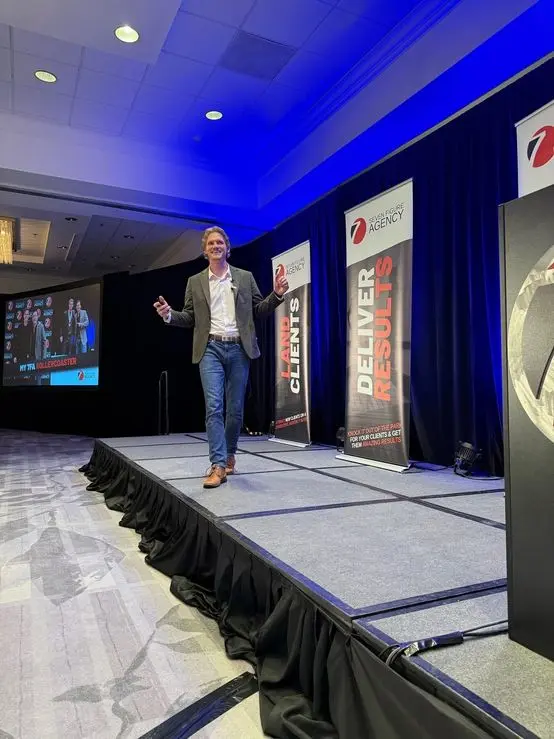
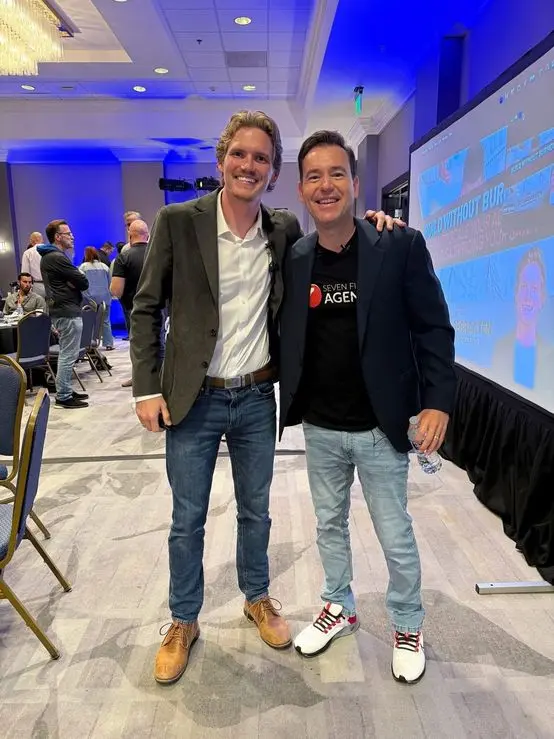
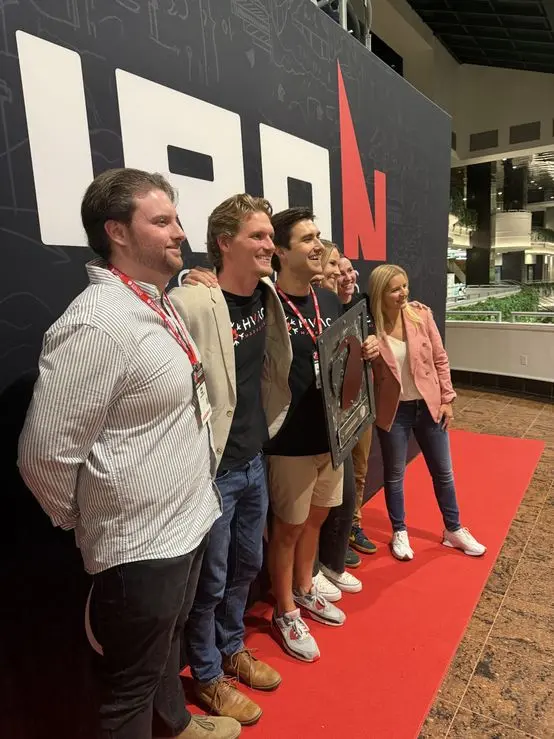
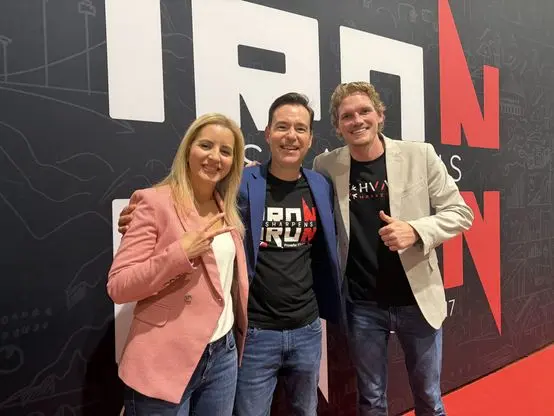
The short version
Prefer the short recap? Here is the same story in his own words.
Luke Eggebraaten on going from $7K to $180K a month with 113 clients
Read the testimonial transcript
Transcript of Luke Eggebraaten’s testimonial video.
I just can't thank this community enough for, for giving me access to these amazing people, but also pushing us to become better. My name is Luke Eggebrehten, and I own a marketing agency called Phaser Marketing, and I'm also the host of The Dirt Bags podcast. So when I first started with Seven Figure Agency, uh, it was November of 2021. We were about $7,000 in monthly recurring revenue. Fast-forward, uh, we're sitting at about $180,000 monthly recurring revenue, no project work, and about 113 clients serving the excavation niche.
The main challenge that I faced that helped me decide to join 7FA is I didn't know what I didn't know. Uh, I started the business and worked for it a c- couple years, but then tried to get advice from other entrepreneurs that didn't seem to know exactly what I was going through. A huge shout-out to Tony Ricketts from Lawn Line Marketing. Uh, he sent me Josh's book. He said, "Read this. If you wanna come as a guest to 7FA, we'd love to have you." And it just made so much sense, like, just having the people in my corner that are going through the exact same things I'm going through in hundreds of different niches, it just made so much sense where, hey, I'm good at following directions.
If you give me a roadmap, I will follow it, and that's exactly what Josh, Jessenia, and the whole team have done here. For me, the most valuable component of 7FA, hands, hands down, are the people. Uh, the people and the lifelong friendships that I've made in this group, uh, I'm forever grateful for. Yes, business has done very well from it. Yes, I've learned a lot. There's been great courses and training. That community, that camaraderie, has just built a life and a business worth living and con- and continuing to pursue, and so I just can't thank this community enough for, for giving me access to these amazing people, but also pushing us to become better.
I mean, that's one thing about the friends I've made in 7FA, is they've pushed us to become the best version of ourselves that we can be. So in the next six to 12 months, where do I see our business? Where do I see our agency going? I see us really trying to pull i- new ideas in and do things different. I'm, I'm always big on treating our people right, treating our clients right. I love the idea of doing things in person, because we are in a digital age, and so I really want to s- stress test that, of how can we bring all of our clients together in person, bring our team together, build a community from that?
Because really, that creates that FOMO. That creates that willingness and that urge to, "I wanna hire Phaser because they have not only their team, but they have the clients that we wanna be like." And so really, I, I do see us growing. We're excited to see what, what, uh, boundaries we can push here. If you're thinking about joining Seven Figure Agency and you need something just a little more clarity, for one, reach out to me. I would be more than honored to talk to you a little bit more about what the community has done for me and so many others.
What can really knock you off that ledge towards joining? Show up in person. The number one thing you can do is show up in person in Miami at the Seven Figure Agency. Uh, this is now my 13th intensive live in person. The one commitment I made to myself when I was at 7K and I came here, I didn't know anyone, I said, "Luke, if you're gonna join this group, you just have to show up in person every single time." And it is just my testament to, uh, everyone here.
I, I love everyone here, the coaches, the staff, but the people you get to meet every single time in person, lifelong memories. Uh, I'll be in this group forever, and I can't wait to see you here. So reach out to me, ask me any questions you have, and I'd love to meet with you.

Editor’s Choice on TopMarketingAgencies.com
Phaser Marketing is an Editor’s Choice pick in the Excavation category on TopMarketingAgencies.com, the editorial directory of the best niche marketing agencies in the country. Listings are editorial, not pay to play. Agencies are scored on niche depth, tenure in the specialty, client retention, verifiable results, and transparency, then re-scored every year. You can read the full profile on the Phaser Marketing listing or see how the category stacks up on the top excavation marketing agencies page.
Could Your Agency Survive Sixty Days Without You?
Luke thought he had. Going further, and then building an agency that runs without him, is what took Phaser Marketing to 82 clients and $128,000 a month.