
Lawn Care & Landscape · Landscape SEO
He Lost Half His Revenue Twice, Then Went All In on One Niche
Luke Truetken sold a lawn care company at 22, bought into a generalist agency, and watched COVID cut it in half in a single day. It took years of holding onto legacy clients before he finally committed 100% to landscape and lawn care – and went from $40K to $110K in monthly recurring revenue in about a year.
Luke Truetken with Josh Nelson, live. Full interview.
Read the full interview transcript
Full transcript of Josh Nelson’s interview with Luke Truetken. Lightly edited for readability.
Josh Nelson: Hello, and welcome to the Seven Figure Agency podcast, where we're interviewing highly successful digital marketing agencies from across the country. And today, I'm really excited to have Luke Trewin with us from Landscape SEO. Has grown his agency to seven figures and has been quite a journey. So Luke, thanks so much for being here.
Luke Truetken: Yeah. Thank you, Josh. It's, it's been a long time coming, and super pumped to be here with you today.
Josh Nelson: So good. So, give everyone that's listening kind of the lay of the land. Like where are you at in the agency right now? How many clients? How much recurring revenue? What's the niche?
Luke Truetken: So we are servicing the green industry, the lawn care, landscape, hardscape industry. It's a pretty big industry. You could have a niche inside of the niche really. Right. There's so many different things that go into this space, but, we're doing just over 100 per month. So good. And yeah, that's mixed up of about 53 clients, that we're servicing right now, so.
Josh Nelson: Amazing, man. That's- Well, congratulations on your, on your growth and success. I know you didn't start there, right? It's been a journey. Tell us just kinda w- briefly, like how did you get into the agency space in the first place?
Luke Truetken: So we started a lawn and landscape company in high school and- Awesome… Grew that company to 553 lawns a week, 20 guys, all that- Wow… Kind of stuff. In high school? So, in high school. That's incredible. Well, by senior year, we were mowing about 100 lawns a week, and so I went into that business full-time, like dove into that, trying to grow that and blow that up. I think our best year in that business was like 1.1. And then I sold that to my biggest competitor. So we had one town, the density was really tight, and I blew that business up in just a few years. And so, wasn't really looking to sell, but ended up w- at 22 with this opportunity and the biggest lump sum of cash I'd ever seen in my life, and ended up taking it. Sure. And, that took me down this path of like, what am I gonna do next? And when people ask me about that business, they're like, "Luke, how'd you grow so fast?" And I had all of these, you know, people I was networking with and all this kind of stuff, and they were like, "Luke, we saw you grow this company and sell it, and we've been struggling to grow. Like we haven't been able to grow. Can you help us? Like can you give me some pointers? Like maybe talk to me about what you were doing." And I was like, "Cool." And so kind of ended up in this consultative role for a second. And I like to tell people I was a marketer that mowed grass back then. And so- Mm-hmm… My entire mindset was how do I get customers? How do I separate myself from the competition? What can I do that nobody else is doing in that business? And the great thing in the lawn and landscape space is that there's really not a lot of innovation that was happening back then. There's a lot of innovation happening now, but back then there was still operating like it was 2001. Mm-hmm. And so those are the things that I was starting to like help other businesses implement. So fast-forward, ended up in the, with the opportunity to buy into an agency, and bought into an existing agency that was doing 30 to 40,000 a month. Very broad, very everything you could think of, anything you could imagine under the sky, we were servicing it. Whether it was local service, 60% of our business at the time was franchises, and we were really blowing up the franchise space, so Tap Out Fitness, Title Boxing Club, Kids 'R' Kids. We would get into a franchise, we'd bring them up into the top 10 in the nation, and then we would get a call from the franchisor and say, "You're not on our approved vendor list, but you're blowing this business up, so we wanna have a conversation with you," and then we would get opened up to all their other locations. So we were growing that very quickly. Fast-forward to COVID. This, this was 2019 when I got into that business. Okay. Fast-forward, so I have in 2019, going into 2020, things are moving. We started like a little call center. We're starting to call, make dials, and make things happen, and COVID happens. And we all know what COVID did, and one day we lost 50% of our revenue from all of the franchises that we had. So here we are at like 50K MRR at this point.
Josh Nelson: We go down to 25- Mm…
Luke Truetken: Just in one day. Just gone. So that made me start reconsidering, like what are we doing? Like, and so I was like, okay, home service is where it's at right now. Like we're, we're doing some stuff in the plumbing space and the HVAC. We have some HVAC and plumbing clients. We have some other clients that are kind of around electrical and stuff like that. So we start going down that model, along with we're picking up some lawyers and some stuff like that. We grow it back up through 2020 to December, and we get to a back to right about 45 to 50K MRR. And I'm like, okay, the rebuild of a lifetime, you know, I'm feeling pretty good. And between November and December, we churned another like 40% just because the systems and processes weren't there. We were still servicing all these different people, so you know how it is, just like constantly coming up with the drawing board of what am I gonna do? And that's where I was like going into '21, I was like, there has to be a better way. There is no way… I was like, "This, there's gotta be a better way to do this," or like, "This is not the business for me. Like I am 100% gonna be out." And so that's where I started like reading books and figuring out what's going on, and I read The E-Myth for Landscapers back in the day when I was in the landscape space. I'm like, is there an E-Myth for agencies? Like there's gotta be w- there's gotta be something. And that's what ca- that's where I came across your book. And I read the first book, and I started watching YouTube videos, and I was like, this is the guy. Like this is, this guy knows what's up. He's speaking the language. He understands the niche. He understands the problem. And I got on with, Esteban in January, and I said, "I don't, I don't, this is gonna be the easiest sale of your life. Like I don't care what it is, what…" J- I was like, "Tell me the price, and I'm in." And he was like, "The price?" And I said, "Okay. Take, take Visa?" Take it. And I just knew, I just knew like there, that This was going to help me grow. And so you would… I would like to say that this is 2022, and, here we are at seven figures, and I blew it up in one year. But obviously, now we're in 2026, and here we are just crossing. Right. So it's been a journey to really get here. And so I was kinda talking about this when I received the award, but there's so many things that this program teaches, and it's v- it's very much laid out. It's a roadmap to success. And I took some things, and I left other things, and I said, "Okay, cool. Like, this is great, but I'm gonna go buy me a Jeep, put some off-road tires, and even though it says turn left here on this nice paved road, I'm going to go right, and I'm gonna go see if I can make my own road to get up there 'cause it's gonna be faster this way." And I didn't realize that there was a valley that you get stuck in and all these other things. And it was a journey to get to the seven-figure model or to the seven-figure revenue just because I was in my own way. I was doing other things. I was, I was trying to plug some other things in, thinking that was gonna grow the business faster. Like, "Oh, I don't need to do the webinars because I don't need that. Like, I'm better than that. Like- Mm… I'm not a webinar kinda guy. I'm, I'm not gonna do those." Just that kinda stuff, you know? And so it wasn't until I kinda hit a breaking point again a- about a year ago today, and I said… Look, I was talking to my wife, Allison, and I was like, "We're either gonna go for the… We're gonna go 100% in on this thing, and we're gonna make it, or we're gonna go broke trying. And either way, it's cool, and at least we can say we left it all on the table. And when we go on to the next thing, i- if it doesn't work, we can at least say we gave it 100%." And, that's really what in the last really right about 12 months now is what we went from 40 to 110. And it's just plugging in the system, getting dialed in, just going back to the basics, the fundamentals, and saying, "Hey, I'm not better than this. Like, let me go start from ground zero. Even though I've been here for so long, let me start from ground zero and, just make it happen." And so that's really been the journey over the last few years. It's been a lo- hard roller coaster, but we're here, and this is now just… I feel like this is just the beginning, you know? This is just the start of where we're gonna go. And so it's been a fun ride, and I have you to thank for all those different pieces and putting the community together and the coaches and your help and your guidance and the program itself. So good, man. So there's, there's a lot there. There's lots of moving parts from, you know, successful, sell the business.
Josh Nelson: Talk to us a little bit about why you decided to go general after having success in landscape versus just saying, "Hey, I'm gonna focus on landscape," and kinda when you did decide, "Okay, this is gonna be my focus," how that changed the trajectory.
Luke Truetken: So, you know, it's hard when you have legacy business stuff. Mm-hmm. You know, thinking about the niches and all of that kinda stuff, we were… When we lost the franchises and we went back into, like, the generalist home service, I think we were mainly, like, a generalist service-based business. I'll call it that. We had a lot of white collar. We had a lot of blue collar. And you know, we were… I was really depending or tr- when I, when I got in, I got into Danny Barrera's, what was it called? St- Kickstart back then. And he was talking to me about niches and all that kinda stuff, and he was like, "You know, what do you, what do you think? What do you think you're gonna do?" And I was telling him a little bit about my story, and I th- I said, "But I think…" He said, "Why don't you do landscaping?" And I was like, "I don't wanna be in the landscape space. Like, you know, the landscape space, they just have a lot of problems. There's just, there's just things there that I don't know if I wanna do." And we were crushing it in the law space, and we were crushing it to some extent in the plumbing and HVAC space. And I said, "I'm either gonna do plumbing or HVAC, or I'm gonna do the law space." And he said, "Well, you should really think about, like, who's the clientele that you really wanna work with. Like, who are the guys that, like, if you weren't making money, you would just be happy hanging out with them. Like, they could be your friends, like, all that kinda stuff." And I didn't go to college. I went to college. I dropped out of college. I don't have that, you know, MBA or master's degree or Ivy League school to, you know, s- set up. For the law space, it almost takes that to get a seat at the table anywhere. They wanna know where you went to school. They wanna know what the background of the education is. And it wasn't… If it wasn't for the fact that I'd sold a company, I wouldn't have gotten seats at those tables, and I think I did have a little bit of a leg up as soon… That's why I would lead with that. Like, "Oh, I've sold a company. Now I'm doing this." Like, and that would get me kind of a foot in the door. But at the end of the day, I didn't wanna s- I didn't really want to serve that clientele. So Danny put that thought in my mind of like, "Who do you really wanna serve?" And so that's what took me down the lawn and landscape niche. To, to get all the way to last year, I didn't wanna let go of the legacy stuff. Like- Mm. Like, local businesses would still call me. Joey, who was, you know, a client for five years, would call me and say, "I've got a referral for you, and it's a plumbing company," or, "It's a…" And, and I'd be like, "Yeah, cool. Like, bring it. It's no big deal." Like, "Yeah, 35. Okay, yeah, bring that revenue in here. Come on, come on, come on, come on." And it would then distract the team, distract the processes. Those guys would then take up more time than the l- than the niche agency clients because of whatever reason. I'm local. They wanna meet me in person. They're like, "Come down to the office. It's just 15 minutes away." And you know how those things go. And so- Yeah… It wasn't until really 12 months ago where I was like, "Okay, we're, we're going all in on the niche. This is 100% all we're doing," you know, dove in and said, "Let's, let's rock and roll." So good.
Josh Nelson: I think there's lots of great takeaways for those of you that are still in that niche selection phase in your business. You've decided, you know, you're a generalist, but there's benefit in going niche, you know, 'cause you can position yourself, 'cause you can systematize, 'cause you can become the expert. When it comes to selection Where you have some affinity and background is almost the fastest path. And so in the case of Luke, like he was like he already built a landscape company, the 20 tru- the 20 trucks for whatever it was, and sold it. And so it becomes extremely attractive. There it is, Green Dream. I love that.
Luke Truetken: The Green Dream is the book, but, that's, that's me in the truck and all the stuff in the background.
Josh Nelson: So like if you have any of that kind of stuff, it helps so much. Yeah. You know, like- 'Cause you can talk the talk because you understand the industry, you understand the revenue cycles and all that. And, and if you don't have that, not everyone has run a business in the industry they wanna serve. Like I wasn't in plumbing before we entered the plumbing space. But if you've already got a couple of wins, if you've already got some successes on the board, that's gonna be so much easier if your family worked in that business. So Luke, I think that's, that's really helpful. And then I think a lot of agencies get stuck in the trap that you were in, where it's like, "Okay, I've got this niche thing. I've set up the website, and I'm kinda one foot in, one foot out." Like, "I'm gonna keep myself open to whatever-" Yeah… Happens, but I'm gonna try and focus on this." And you know, you never really give it the focus that it needs, and you let yourself continually get distracted. And a lot of cases, that's going to keep you stagnated versus accelerated. Like when you did decide, "Okay, that's it. I'm gonna, I'm gonna put on the blinders. I'm just gonna focus on this space," like how did you do that, and how did that impact the acceleration?
Luke Truetken: I just started putting everything out there under Landscape SEO, and I think people to some extent started getting the picture that we were… You know, the problem was is that I had so much in niche agency work that I was a, I was afraid to personally promote the Landscape SEO side of things because I was afraid of losing that revenue. And it wasn't until I said, "You know what? Like, let's rock and roll and like, let's, let's just put everything on the table here," and started really promoting as Landscape SEO versus the niche agency stuff and, and what– or the legacy agency stuff. That's when things really started to dial in, and so that's… Yeah, that's what's made everything work really well is just, you know, putting it out there, really standing behind the brand, running the ads, doing the webinars, getting on stage, going to the events and all the different trade shows. And even if you don't have a booth, like going and talking to the other vendors and leaving a card and figuring out how to get them on the podcast and sending them stuff. And you know, it's just all those different little things. It's like there's not just one thing that's gonna blow you up. Like you have to do a little bit of everything to make it all happen. But freeing yourself up from the traditional work that you were doing because you had to go meet the client in person, because you had to go do this and that and come up with a customized plan and all of this other stuff that's required with, you know, generalist work, project-based work, all the shenanigans, you have more time to spend on those other actual revenue-generating activities. And you know, I think I saw some posts in the group, some scenario around the account manager said that the client, a legacy client, didn't wanna talk to them anymore, and they only wanted to talk to the founder, and that's really what it is. Like, you know, tho-those people are the OG clients, and they think they get OG treatment and we all grow, and if you wanna grow the business, that means that things change and that relationships change in those scenarios. Like those are just ties that need to be cut. And let me tell you, like every time you cut something that you think is like really hard to keep that revenue or whatever, there is double, triple, quadruple the amount of revenue sitting on the other side. You just can't see it until you let it go, you know? And so yeah, those would be the biggest things, just dialing in, committing, meeting people, shaking as many hands as possible and, just spending the time growing the business. What are the revenue generating activities that you can be doing every single day, every single week, every single month that bring in the consistent lead flow? And it's not gonna happen all at once, you know? It's not gonna– You're not gonna do it today and think that, you know, tomorrow you're gonna have leads. And it's funny because I get around other agency owners, and we start talking about what are we doing for marketing and guys will go, "I spent money on Facebook ads for three weeks, and I didn't get anything." And I'm like, "What would you tell your client right now?" Hmm. You know? Like, "How many creatives are you running? Like what are you testing?" All these different things. Like, "I did this and it didn't work." "Well, how did you track it? What did you do specifically?" And I think it's easy for us to think to sit here and we all preach to our clients like, "How do you answer the phone? How many times are you following up? Are you sending them, putting them in a nurture sequence? Just because they called you today doesn't mean they're gonna buy today." Like you ha- all these different things. We, we go on these rambles, and then we look at our own marketing and we're like, "The no-showed. Facebook ads suck. This is not gonna work." Like, "I just got, I just got 10 calls on my calendar and only one of them showed up." Like, "I'm stopping the Facebook ads. Click, click, turn it off. Waste of money." You know, and it's just like those kind of things that we do that we don't look in the mirror and we're like, "What would we say to our client if we were those people?" And, and then how do we make sure that we go and clean those up and implement that same system and process that we're trying to implement for our clients to bring them results and leads and all that stuff and do that for ourselves? So.
Josh Nelson: So there's a gestation period, right? Like decide, all right, I'm gonna stay in this niche. I'm gonna do the right- Yes… Activities and know that I like I'm gonna plant these seeds and it's not gonna be immediate. Like we plant seeds, and we gotta water the seeds, and we gotta be consistent with it, and then it starts to, it starts to bear fruit o-over time, and kind of you're in that fruit-bearing season right now. So we know like landscape i-is the niche, and we know that, you know, like y-you decided I-I've got this general stuff. I've gotta, I've gotta focus on this. I'm gonna put all my focus here and that really s- drove things forward. Talk to us a little bit about the program. Like what is it that you do for these, landscape companies? What does the program, or the deliverables look like?
Luke Truetken: So we're, we're in a pretty, I think, in line with the seven-figure deliverable model. We do the websites, we do the SEO, we do the pay-per-click, the LSA, the Facebook ads, and then there's things that we add on on top that we do, you know, CRM reactivation- Mm-hmm… Management, drip campaigns, email marketing. We've just recently gotten into print EDDM for these guys and then a big one that has been Super beneficial for us is adding on like video and photography Hmm And so it's a very visually driven niche- Yeah… In the sense that especially on the like project-based work side of things, like people are going to websites to see what the scope and the capability of the company is, and that's driving their buying decisions and what they do. And a lot of these guys, you know, they have iPhone footage. If they have iPhone footage, they try to push you to get stock footage, and stock just doesn't really sell. And so that was a huge thing that we added on about two years ago, was flying out direct to the client, spending one to two days with them. We're, we're gearing up right now. Summer is obviously our biggest time for the client between spring and midsummer for them to sell all their work. But we're already prepping now for next year and what they're doing in the fall and what they're doing in the winter and the spring. And so we're, we're prepping, gearing up right now to go on basically a two to three-month road trip of client to client to client to client to client. We're spending one-on-one time with them. We're taking them to lunch, dinner, shooting a podcast in person with them, getting the video testimonial in person with them. Then we're shooting ads and all that kind of stuff with them on site. So that was a huge thing that we added, that helped with retention, stickiness and just the relationships, you know. And not for everybody, it's a hard… You know, we don't have any kids, and it's something that we can do, and a lot of other people would outsource that thing, and that's fine too. You can totally outsource it. But if you have the ability, there's no- there's like, there's… We– Anybody that we've gone to in person to shoot content with, we have not lost- Hmm… Without that. Like the stickiness is just so good because we all know there's gonna be 800 people in the DMs, "Hey, I can do this. I can do that. Let me do this. Let me do that." And you have that one-on-one relationship where you've been there, you've seen their location, you know how they like legitimately operate, and that sticks in the back of their mind. And so that's kind of a little bit of a, a secret weapon for us, you know?
Josh Nelson: Yeah. There's so much power in getting live and in person and not just holly duty, but you're creating value with them. You're recording videos with them. Hopefully, you're getting some testimonials as well whi- while you're at it. So how do you, how do you package that? Is, like a lot of services, their website, SEO, pay per click, LSA, database marketing, the whole nine yards. Is it like one tier, multiple tiers, à la carte?
Luke Truetken: Great question. We, we have several tiers, one-day, two-day shoots. All of those are add-ons. And we price it pretty competitively to make sure that we are the ones getting the work because we're shooting the VSL for them. We're shooting the thank you page video. We're shooting the video testimonials for them. We're doing all these other things that make our ad team more successful. And the biggest thing for me right now is like just getting there in person, hanging out with them. I bring… Like next week we fly out to Minnesota, and I'm bringing a videographer with me, and so like he's shooting me shooting them. Oh, that's cool. And there's just some of those different things, you know, like behind the scenes. We turn them into vlogs. We turn them into YouTube content and all that different stuff. And so there's, it's priced off of packages if you're doing a one-day shoot or a two-day shoot. And then w- like over the summer where we're getting on the road and we're just going from hotspot to hotspot to hotspot, if they book inside of that window that we're gonna be in their territory, they get a little bit of a discount because they're booking inside of the time that we're already gonna be in the state. So versus like next week, we're just flying there for a one-off shoot, that's obviously a different type of pricing.
Josh Nelson: So that's the video piece, which I think like you do at a world-class level. Like look up Luke's YouTube channel, check out the videos he does. I think it's one of the things that really makes you stand out in the marketplace, and you just do it so good. But I think that's, that's separate to your main program. It sounds like it's à la carte.
Luke Truetken: Yeah. It is.
Josh Nelson: Like talk to us about the main program and can someone buy those video shoots by themselves or is it kinda like we only do this for our clients that are on our core program? Like just kinda talk me through the logistics of that a little bit.
Luke Truetken: Onl- you can only, you can only buy the video and photography packages if you're an existing client. And yeah, the, the packages start with website and SEO services and LSA, and then it goes up to one additional paid ad platform, whether it's Facebook ads or PPC, and then they have like the master program, which is pretty much all paid platforms. We're doing CRM management for them, whether it's through their CRM, our CRM- Hmm… Which would be GoHighLevel, something like that. So like those are kind of the three main packages, and then the video and photography stuff is just a bolt on- Separate… After they're a client. But nobody can go- Yeah… And book that. Like you can't… I'm not gonna f- I'm not gonna go out to a non-existing client to go shoot that kind of stuff. Yeah. Unless they fall under the Titan program and we wanna, we wanna highlight them as a Titan and put them on the YouTube channel and that kind of stuff. But that's very specific. You know, like we're, we're going after them for those things.
Josh Nelson: They're not calling us and saying, "Hey, we want you to come and do this." I wanna talk about both of those things separately. C-can you give us an idea price point wise? Like what's the price range for those programs?
Luke Truetken: Great question. So it's really kind of in line with what your teaching was on pricing around the fifteen hundred to thirty-five hundred dollar mark. We are experimenting with some smaller programs actually. We have so many guys that are starting in the niche or whatever that I think that there's offerings that we could, that we could pull some of those people in at, especially with AI today and some of those different things that we could be doing that maybe we offer a smaller than a thousand dollar a month package, but it's only because of AI now that we're able to do that. But, yeah, that's kind of the real main price points is between fifteen hundred and thirty-five hundred a month.
Josh Nelson: You said the Titan thing, which I think is something really cool. So that's where you're like targeting the biggest, baddest- Yeah… Landscape companies in the area and you're like, "Hey, we wanna interview you. We wanna do it in person." Talk us through that and kinda… It looks like a lot of work, but it's also super cool when those videos drop.
Luke Truetken: Yeah. It's, it's been a Trojan horse for us because it's something– it's like really well done pieces. Like in our space there's a lot of guys that do like shop tours and those videos do a lot, but it's really just talking about like How's the operation? Like, oh, you have this equipment. Oh, that's cool. Like, talk to me about how you roll your trucks. And it's, it's not really the nitty-gritty of how the business runs, and so there's, there's brackets of our industry. A vast majority of the industry is kinda like below the $10 million mark. And then you really get into like the top 20% of businesses when you're talking like 10 million plus. Mm-hmm. And those guys have it figured out. And a lot of times, those guys doing 10 million plus don't have social media presences because they're just running legitimate businesses. 90 to 100 plus employees with those guys, and they just don't have time to be on social media, and they don't have big followings most of the time and that kind of stuff. Where a lot of times the small guys, they've got big social media presences. They're almost like social media guys that do lawn care and landscaping. And so those big guys don't get to tell the story, and so it's kind of the same thing in the niche in the agency space as it is kind of in the lawn and landscape space where the guys that are smaller wanna become bigger. Like, everybody wants to figure out, like, how do you get to that next level? Yeah. And so we created like almost like a TV show that's on YouTube called Landscape Titans, and it features the titans of the industry. And so we go and prospect them, and we say, "Hey, like we have this thing. You get a big plaque like this that says you're a, you're a Landscape Titan." And we go sh… It's a whole production. Costs us about $6,000 to produce end to end. We fly out there for two days, and we have a full editing and production team on the back end, somewhat scripted out on the front end. And we then use those for marketing assets, and our best one's done like 32,000 views organically on YouTube. And so it's just other stuff that helps us kind of separate ourself from other people in the industry and gives us stuff that we can send to our nurture list as like, "Hey, check this out. These guys are doing, you know, 15 million, 20 million, 10 million. Go look at what they're doing." And that's the email, and it's just, it's just an easier nurture sometimes where there's no ask, but it's like legitimate value. And then they go, they get to sp- they get to see you on camera. You're the one kinda delivering and facilitating that conversation, and so it helps.
Josh Nelson: Really cool. I, I love that. I love that initiative. You think about like the Dream 100 approach where you try and pick the biggest companies, and you mail them something, or you kinda like call them again and again. Like, what a great way to say, "Hey, I'm, I'm gonna invest heavily in this. I'm gonna go see these people in person." And you're creating a media asset that whether that company ever becomes a client or not, just because you're side by side with the biggest, baddest companies in the industry, you've got that affinity on, you know, the, the guys that wanna be at that level are like, "Wow, look at Luke. He's working with some of these big companies. He understands the inner workings of these types of organizations," which makes you magnetically attractive, I think, to the kinda clients you wanna serve.
Luke Truetken: It's really a Trojan horse in the sense that, you know, if you call them and say, "Hey, we've identified you as somebody that, you know, has the cri- the criteria to be on our show. We, we want you to become a Landscape Titan," and they're not gonna say no to that, you know what I'm saying? We, we have had one or two people, and it's only because, like we've, we've been targeting some of the big names, and one of them does run a $32 million company, and he runs some YouTube stuff. But he's pretty private about how they run the business. Mm-hmm. And so he was like, "You know, my team I don't think is gonna want me to do this," or whatever. But almost everybody else has been, "Let's do it. This is awesome." You know, you send them the one video, the first video that we did, and they're, they're on board to go do more. So yeah, it's been pretty sweet.
Josh Nelson: Not for everybody. Like, like that would be very hard for most of you to pull off. But like try and find your unique thing that you can do that will really make you stand out. I remember, Luke, you know, in our conversations over the years, like, "I'm in this landscaping space, and there's so many big agencies already in it. How do I, how do I differentiate?" And I think you did a really good job saying like, "Well, I'm gonna do the fundamentals, but I'm gonna also kinda figure out what my unique thing is." And you're really good with video, and you really understand YouTube and scripting, and you kinda deployed that as part of your strategy, which I believe has been a major accelerator. Whether you landed a lot of clients directly from that or not, you changed your position in the marketplace by going that deep.
Luke Truetken: I do wanna say that this is one of those like off-road, let me go blaze my own trail scenarios because we went so heavy into this before we did the fundamentals.
Josh Nelson: Took you off track.
Luke Truetken: Right. It took us off track, and so I thought this was going to be a secret hack, and it was, but I should have started with the fundamentals first. Mm. And it wasn't until I went back and that this became an asset after I started doing fundamentals. Mm. And so I just wanna make sure that like if you're, if you're watching this and you're thinking about like, "Oh, let me go do this and this," maybe your wheels are turning. You have to do the fundamentals first, and then you can go do some of these other things that are like a little bit off the beaten path. This has been a huge, a huge success for us in the sense that like nobody else in our niche from the marketing perspective has done anything close to this. And I have like, I think, an ability to create something that's almost like a show level of like production. But that doesn't replace the fundamentals.
Josh Nelson: Right. Right. You still gotta do the webinar. You still gotta do the ads. You still gotta do the outreach. You still gotta show up to the events. Like all of that stuff, you can't have a distraction. Like this has to be a bolt-on. It cannot be a replacement. So that other stuff that is not maybe as sexy or as fun or as innovative, you still have to do that first, and then you can go start on some of the other tasks. But those tasks, I would make sure that those are the highest on the priority list. So good. A great, a great disclaimer, right? Like this is a great idea, right?
Luke Truetken: But if you just- Yes…
Josh Nelson: Did this, you're gonna wind up spending a lot of time with not a lot to show for it. Yes. But when you, when you combine that with sound strategy and with like consistent activity, man, it really differentiates you in the marketplace. And what I'm not saying if you're listening to this, if like don't go replicate this strategy. Find like what you do that makes you different, that can make you stand out, and lean into that. And I love the way you've done that, Luke. So talk to us about the fundamentals. I know we kinda touched on this a little bit, but if you think about your marketing mix today, right now we're at $100 plus thousand dollars in monthly recurring revenue. Where's, where's the deal flow coming from? Like what does your pattern look like? What are the strategies that you've got in place from a positioning? I saw the book. I heard about the podcast. Kinda walk us through that.
Luke Truetken: I think the big one is, you know, running the ads, whether it's Google Ads, Facebook ads, all that kind of stuff. Mm. Like you have to spend and dedicate time to shooting content, getting things tested, running the ads. You know, if you think like your clients, like you're gonna go and shoot one ad and then put it out there and generate all the business from that one ad, you're wrong. Like you have to go and shoot different angles and different things. So that's been a big piece for us. Getting the video testimonials from clients has been a big piece of… For us. We're probably gonna start doing more of a podcast interview style like this just to get the- Okay… Deeper conversation. We, the clients that are killing it, we incentivize them to go do the photography and videography shoot, and then we set the, we set the truck up diagonal behind them with the logo- Okay… With them sitting in front of it, so it's a very clean, crisp, like just money shot of them on the testimonial. So it's again, very elevated, very high level. And so we take all of those and we run those as video testimonial ads. We send them out to the, to the list. We create, try to create case studies around them and all those different things. So ads, email nurturer sequences, all that kind of stuff. I mean, we build such big lists from running all of the ads that we're trying to remember to make sure that we're constantly nurturing those people. We've started a little bit of the coaching side of things, so we bring in some of the people that maybe are not ready to pull the trigger and say, "Hey, like, let's just do coaching for 60 days." Mm-hmm. "Let me just work on this with you and get you some quick wins." And as soon as they get quick wins, we've converted almost every single one of those to clients. I see. And so stuff like, "Hey, let me show you how to do some things on your own just so you can see, like we're legit." It's much obviously discounted price, and get those people in that way. Let's see, what else? Gift giving. So if there's people that are on the list that we know are c- are great and maybe they've fallen off or they started to ghost us or something, we put them on a list, and then we just start sending them stuff constantly. Like they just… They get big boxes from us. They get air fresheners. They get all these different things. What else? Obviously, the trade shows. Trade shows are a huge piece. We've been doing trade shows ever since we niched down. So that is one of those things where it's like the consistency of showing up, being there. You know, you start then getting friends, and you start taking people to dinner. You start getting groups, and then they start bringing people in, and then, you know, them bringing people in. It opens up your circle even bigger. Speaking on stages. Last year, I got to speak at the Texas Association of Irrigation Specialists, which is a mandatory state class- Mm… That if you're an irrigator in the state of Texas, you have to have CU credits. So it's not the only one for the state, but it's the biggest one for the state. There was like 1,200 people in the room. The, the video footage I got from that people were saying was AI because it was so insane, like how many people were in this room. So that was huge for us, like just having that speaking experience. I probably don't need to bring a videographer again, just because no other room is gonna be that big.
Josh Nelson: Yeah, you're not gonna top that, right?
Luke Truetken: And like you know- Like every piece of footage you need of you presenting, right? You know, every piece, every piece of footage possible to get, to get locked in on that. So anytime, you know, we've… This is probably the t- the 15th or 20th speaking engagement that I've had, whether it's like 15 people in the room to, you know, 1,000-plus people in the room. Every single time you're on stage is money, and you need the like five people in the room scenarios because that's what builds your confidence. Right. And sometimes those are the better deals anyway because you get very one-on-one. "What's your name? Okay, Joey. Hey, Joey, what's your question?" And then you're sp- you know, it's just like way more specific than speaking to 1,000-plus people in a room is cool and great. We did land deals from that, but, it's not as intimate necessarily as like the 20, 25 person speaking engagements. But you need those to get you to that point because if you're just gonna go up and speak in front of 1,000 people, it can be a little daunting. So speaking engagements have been, have been huge. The booth, getting the, getting the booth set up, locked in. The book, sending out the book to people. It's just like I said, like you just gotta like go through the checklist and see like, what am I doing? What am I not doing? How, what am I gonna do this quarter that I'm gonna plug in and get this rocking and rolling and, just picking off one of those things. And it's not one of those that's like completely… If I could say, you just gotta do this one. It's plugging in all the different pieces because things ebb and flow. Like right now, you know, Facebook has been giving us some issues, and so we've been relying now on other things that have been bringing in the deal flow. And so every quarter it's just a little bit different, you know, whether it's referrals, whether it's people coming in from the book. They got the book, and then they called us. It's just, you know, just different things that move the needle for us.
Josh Nelson: So again, I mean, to me, like what you described there is the growth system end to end. It sounds like you've got it fully deployed from the positioning assets, a really good book, right? A beautiful website filled with tons of case studies. Speaking on stage. Stage time is money time. You've got those authority pieces that when somebody were to di… Like, "Hey, who am I gonna choose for my landscape marketing?" And they wind up on a call with you. It's like, "This seems like the guy." Like, he seems like he's got it dialed in. And then you're doing the consistent daily activities, right? The Facebook ads, the content that's being loaded. The, the monthly anchor, which like I think you've added in with the podcasts and the, and the webinars on a consistent basis to nurture the database, to force yourself to create the content and then being live and in person at those events. Sounds like maybe even more than once a quarter, but on a consistent basis being present in the industry. When you combine all of those activities on a consistent basis, and because you've decided I'm not gonna try and be all things to all people, I'm gonna let the legacy stuff die on the vine, I'm gonna focus on this, you could go that deep. And I think it's a beautiful explanation of how you're marketing yourself and how you've had the accelerated growth that you've had.
Luke Truetken: I- it's been a lot, you know. And, and the hard part for our niche, it might be this way for plumbing HVAC, but you know, the spring, summer months are their money time. And so- Mm-hmm… What does that mean? The down season is when all of the trade shows are. And so it's like, you know, it's, it's, it's hard sometimes because it's like in the winter between like maybe October and February, it's just Every couple weeks on the road, on the r– that's your time to get there because really there's no trade shows really now between now and the fall. Mm. And so you have to kinda lock in and dial in in those times, and then we just know that, like, really between June and August is kind of our time to breathe, and it's a little bit slower because they're in the field doing stuff. They're not- Yeah… Gonna be necessarily making big changes in their marketing and stuff like that in the middle of the season and that kinda stuff. And so it's, it's us kinda getting dialed back in, taking a second to be like, "Okay, I can relax for a half second, figure out what are the other things that I'm gonna plug in and that kinda stuff." Yeah, in seasonal type niches, you do have to think about, like, when it's go time, it's go time, you know? You, you've gotta lock in and be at every trade show that you can possibly be at. Think about all that kinda stuff in those times because otherwise you're not gonna have those opportunities later on in the year. – So true.
Josh Nelson: T-talk to us a little bit about, like, do you have a trade show strategy? What, like, what are you doing to get people to come see you, and how are you working the angle kind of in between, in between the sessions where they might be coming to your booth?
Luke Truetken: So one of the things that we've been experimenting with that's done better is, like, giving away tangible stuff that they want, whether it's like a local- Yeah… Gift cards or something like that, or it's the soft drinks or I think I don't remember who I got this from, so I apologize, but somebody was talking about in the group how they made, like, their booth a local convenience store. Mm. And they literally had, like, all of the stuff you could think about that they would want, and, like, they would just come there to get it. E-either it was free or it was, like, heavily discounted. And so, like, that's the kinda stuff that, like, I think about is like, hey, handing out the book and some of those different things, like, isn't enough by itself. Like- Mm-hmm… "Hey, hey, come here. Let me hand you my book," they're, they're not necessarily, like, just gonna come out of the aisle to do that. So, like, think about what are the things that people want, and then how do you attach yourself to that and be kinda, like, the center of attention when it comes to those things if you have the booth and whatnot. If you ha- get the speaking engagement, that's gonna help because you can say, "Speaking," like you can put a big poster that says, "Speaking time at this. Come check us out. We're gonna h- we're here to help you answer all of your questions on this topic," or whatever. At… Those kinda things help because especially after you speak, then people know where to find you at the booth. If you don't have the booth, you know, a lot of the big trade shows for us, like Tony Ricketts has one of our biggest trade shows kind of, like, locked in. He's been at this same booth spot f- as long as I've been going there, which is over, like, six years. Mm-hmm. He's in the main floor. There's 6,000 booths at this trade show. That's a hard one to break into because to get the money s- locations, you have to be there for a long time. You have to be willing to drop 10 to 20 grand, those kinda things. So at those kind of, like, presence, I will find another vendor that has a booth that I can, like, link up with. Mm. And I can tell people, like, "Hey, this is the booth that I'm gonna be at. Come check us out over here," or I'm just gonna be running around meeting up with other people that are good JVs for me at those kind of events. And so I focus more on the smaller, maybe state organization-wide trade shows where I'll put up a booth and that kinda stuff versus doing the really large, like, the main one that 100,000 people come into and all that kinda stuff. It's just so chaotic and crazy, and a lot of times those guys are there to just test the equipment. Mm-hmm. You know, they wanna be on it. There's, I think, like, 15 or 20 acres outside where people get to be in the machinery, actually driving the machinery. That's why people go to those. So- Mm… I go there because I'm bui- building relationships with other people with booths. You have to be there 'cause it's the biggest one obviously, so you gotta have content while you're there. And then I'm just going around shaking hands and meeting people, take… Going to lunch. Like, you never wanna go to lunch alone. Like- Mm-hmm… Just find a group of guys or somebody, or girls or whoever, and just be like, "Hey, where are you… What are you guys doing for lunch? Like, can I join you?" Like, and just try to expand the s- the horizon and the circle and just make the most out of trying to get as many relationships out of that as physically possible.
Josh Nelson: Super good. Lots of great insights and takeaways there. I love the idea that, like, don't feel like you have to conquer the biggest event. A lot of times the best deal flow, the best opportunities come from the smaller regional events, and it's a lot less expensive, which can be a lot less of a drain. Amazing, and thanks for breaking down the kinda how you're landing clients and what the, what the deal flow looks like. Let's shift gears now. What, what does the team look like? From a delivery perspective at scale, are you virtual? Are you in office? Talk to us about that.
Luke Truetken: We are 100% virtual, and we're a mix between the States and overseas and stuff like that. So, you know, that's been a huge piece for me to kind of really conquer, and I think this was a huge roadblock for me as well when it comes to the team, the deliverables, all that stuff. I was so focused for so many years on trying to deliver most world-class product possible, and the problem is that when you're sub a million dollars a year, you just don't have enough money to hire world-class people. And so, like, looking back now, your whole goal should be to grow as fast as possible, and even if you have a subpar product, you owe it to your organization, your clients, your team to grow as fast as possible, and that might sound c- you know, counterintuitive of like, "Oh, I'm growing, but I'm not delivering the mo- the best product." Well, as soon as you kinda get a little bit more cash into the business, you have more money to hire better people that can help you deliver better results. And so I was so stuck on, like, "This has gotta be perfect before we really go after the masses," and, like, before I really put myself out there, like, I have to be really confident in what we're delivering. And it wasn't until I just said, "You know what? Screw it. Like, let's just sign clients and figure it out," that everything got better. And those, when you're growing and you're being successful and people see you winning and becoming successful, it attracts other people to your organization. And so the more you're marketing, you're also attracting, like, higher level talent, and you can't afford those people at $40,000 a month. And the only way to get there is to continue to grow, continue to add clientele. Obviously, you need to be delivering some type of results, but I, like- You know, my face and my, this is my face, my brand. I'm in the book, obviously, like all that kind of… I'm on all of the ads. That means something to me. Like, I don't wanna just, you know, churn and burn stuff. But you have to get to, you have to get over that to some extent. The, the good news for me is that I'm not a coder, I'm not a website builder, I'm not an SEO specialist, strategist, all of that other stuff. So as much as that's kind of, you know, been harder for me to put all my trust into other people to get that stuff done, I'm not the person that's like, "I have to go code this website because I'm the only one that can code this website this way." I've had to rely on 100% of other people in those different processes. So if you are watching this and you are the guy, you have to outsource that stuff to other people and- Mm… And/or you have to outsource the sales and the marketing, which is another harder piece. Like do you want somebody else to be the face and the brand of your business? I don't know. But you've gotta bring in the people that are gonna help you with the things that you're not good at, and so that's probably been the biggest things that I'm super pumped and excited about the team that we have. We have some incredible people that have, you know, come on board and have been with us and have helped us grow. So, you know, it's, it's only getting better, but you have to kinda get to that revenue mark to be able to afford the kind of people that are gonna take you to the next level. Like our churn's been 99% over the last two quarters, and it's purely because of the people that we have on board right now.
Josh Nelson: And so- That's so good… Yeah. Though those are the biggest things- Retention is 99%, churn is 1%.
Luke Truetken: Yeah, just- Just so everybody- Sorry. Yeah, yeah… Understands that Yeah, yeah. Just to make sure that the, yeah, it comes out the wrong way, but yeah. The first time really in a few years that we've had back-to-back quarters with 99% retention is- So good…
Josh Nelson: Is solid. That's awesome. And I love what you said there, like, you know, they're, they're gonna put the cart before the horse sometimes. Like, "I'm gonna make this perfect. I gotta get it all dialed in." but if you don't have the financial resources, you'll never get there. So you gotta take action. You know, obviously do great work for your clients while you're getting there, but like as it grows, now you get more financial resources to invest to generate even better results for those clients. Let's talk about that 99% retention 'cause that's, that's huge. That's phenomenal. What are some of the things that you feel like you put in place that have helped you know, get to, get to that level?
Luke Truetken: Really dialed in account management. I think- Mm… Everything comes down to the account manager, and you have to make sure that the account manager understands that this is their, like sub-part of the business. Like they're responsible for these guys getting success. And so the account manager has to be in a, in a scenario where their mindset is all the… Like proactively looking, like all their lead flows down right now. Like what… Going to the team, the team that manages that specific piece and saying, "What else can we do here? What's wrong with this?" Like, "Be, be on the lookout for this for me because this is down." So you have to have people that actually care about the clientele and making sure, and yeah, making sure that they're getting the results and that they're seeing things not from like the aspect of just reporting. So if they're just gonna get on and say like, "Yeah, here's the numbers for this month, and here's what's going on," and, "Okay. Cool. Any questions? All right. Cool. We'll see you next month," y- you're, you're gonna churn those people out because there's gonna be somebody else that maybe gets in their ear or whatever. So we're, we're meeting with clients a lot every week, every other week, but that's the sole responsibility of the account manager. So, I would say that's probably the biggest thing is the clients just know that we're on their side, that we have their back. We're proactively saying like, "Hey, this isn't working. Like what else can we do? Let's run this other offer. What other things can you get us some more of this? Can you get us some more of that?" And we're the ones leading the conversation versus them coming to us and saying, "This isn't working for me right now. Like what is going on?" You have to beat them to the punch, and if you do, you're gonna have their trust and their success, and it's gonna buy you more time to kind of figure out, like what else can we do here? What's not working? Some of that stuff, where if they're coming to you saying, "Hey, I'm slow. This isn't working for me. I've spent six months, and you know, I didn't get anything out of this," and that's the first conversation you're having with them, it's so hard to recover those. So you just have to be really proactive and, and a great account management team can make up for some of the lacks and the, the problems they might have on the deliverables and help buy you some time to get the team up to speed, get the systems and processes in place. But yeah, I would say at this point we're, we're pretty dialed in on both sides and it helps when you know the numbers because people can feel… There's, there's been s- several times this quarter where somebody's gone, "I feel like this or that," and you go, "Well, let's look at the numbers." Mm. "Well, we've done this…" And they're like, "I didn't realize it was that good." Like, and you catch them on a bad day. A lot of times something happens in their business that's not related to you. They're having problems. They just fired their head person, whatever it is. Like whatever the… They just got stiffed like $30,000, now they're in a bad, crappy week, or the client, or the guy's wrecked a truck or whatever. And then the ne- then you get, you know, or they get a bill, they get your credit card hit on their account, and they're just like, "What am I even paying these guys for?" Mm-hmm. And so if you know the numbers, and you have the relationships, and you can go through all that kind of stuff, they're like, "Oh yeah, this is working." Like, and even if it's not, they know these guys have my back. It buys you the time for them to get rocking and rolling, and then once they're rocking and rolling, it's kinda game over.
Josh Nelson: So good. So many great insights there. It sou- it sounds like proactivity, getting a great account management structure in place, focusing on the outcomes for those clients, and really just leaning into that, kind of being on the front end, acknowledging where you've dropped the ball, and mon- acknowledging where the numbers aren't where they need to be and saying, "Look, we've, we see it, and we're changing it." And when you're, you're on top of the ball, they're more likely to stick around, and that's really had an impact on your, on your retention.
Luke Truetken: Yeah, 100%. You can't beat… I was sold the agency model of set it and forget it. Like people- Mm… Just pay you to run agency services, and you know, they're not gonna hit you up that much and super easy. Like this… I was sold this whole bill of good w- goods when it comes to what this business is, and I'll tell you what, like the agency space is probably the hardest business that I've ever run. Like- Mm… You think about all the moving parts in the landscape industry, and the trucks, and the maintenance, and the guys, and the plants, and the grass, and all this other stuff that's going on. Like running the agency world and the… Being in the agency space, this is by far the hardest business that I've ever had to try to grow and, and whatnot. It's been super fulfilling and it's, it's been super solid, but it's not what people make it out to be, this, you know, toes in the sand, sit on the beach, mailbox money.
Josh Nelson: Laptop li- laptop lifestyle, right.
Luke Truetken: There's so many problems, you know. Like we… There's so many different things that we've had to help clients solve, whether it's like the older generation, they couldn't figure out their email, they couldn't figure out all these different things, you know. And you're, you're over here now as their IT specialist. But it's all those little things that you're able to help them figure out and fix and solve and move the business forward for them that builds those relationships and makes you more sticky than the guy that's gonna slide in the DMs and say, "Hey, I can get you 60 leads this month," or it's free or whatever. And they won't even entertain that stuff because, you know, it's, what's the saying that's like, nobody cares about what you know until they know about what you… How much you care or something like that. It's just those situations where, you know, if somebody really feels like you're devoted to them and committed to their success and their growth, they're gonna give you time and, you know, make sure that they at least give you an opportunity to, to turn things around. So that's the biggest thing. I would just say build the relationships with the clients. There's so many times that I've seen or I've had conversations with people where they're like, "I don't wanna have the ta- I don't wanna meet with a client anymore. I don't wanna do this or that." And it's like, I, A, was on the opposite end of that, of like where my team was like, my account managers were like, "Luke, you gotta stop, like, communicating with these guys. Like, let us do our job." And, and that's been, that's been good, but you do need to slide in there every once in a while as the owner. It makes a big difference to just slide in and just say, "Hey, I'm just sending you a quick message just checking in on you. You doing okay? Everything good?" And then if they send a request about something, you three-way text it to the account manager, or you say, "Please send this to the account manager. They're gonna be able to do this task better than I am, but I'm just here to make sure that you're good, that you're taken care of." And that stuff goes a long way. So, you know, still have that, that one touch sometimes, like once a month, once a quarter, once a year. Get something to them, just say, "Hey, I'm thinking about you, just making sure you're good." And if something isn't good, they're gonna tell you. Like, I've had that happen a couple of times in the last year, where I reached out to somebody and they might have churned out if I didn't hit them up because they didn't wanna say… They couldn't say it to the account manager. They didn't really have a place or a way to say it to me necessarily. And so it wasn't until I hit them up and they said, "Well, I am struggling with this." And that gave us the ability to go and change that piece or correct that. It… And it wasn't f- they feel more comfortable speaking owner to owner on some of those different things. So if you just make that quick touch point of saying like, "Hey, you good? Everything good?" "Yeah, Taylor's really awesome, isn't she? Like, she's crushing it." All those different things. "Kate's really awesome. She's crushing it." "Great. All good." Or, "Oh, you have this thing. Let me take care of this for you," and then you get right on it. They're, they're never gonna leave.
Josh Nelson: So good, man. Lots of great takeaways and insights on the, on the retention side. Well, well, Luke, congratulations, again on the growth, and I really believe what you said. I think this is just a starting point for you, and there's a, like, massive continued momentum ahead of you. Thanks for sharing kinda how you've grown the agency, how you broke through in a lot of different areas, some of the key things you're doing to market and retain your clients. If you had one last piece of wisdom to share with that agency owner that's listening, what would it be?
Luke Truetken: Anything else that you're doing, just cut it off. Like, you have to be 100% dialed into one thing, or you're a slave to many masters. And the more you think about, "Oh, I have this business over here, I have that business over there," it's just a distraction. Whether it's legacy agency stuff, whether it's the landscape business you're running on the side, whether it's the whatever you're doing, like whatever those things are that are not what you're doing to grow the agency, get rid of it. Like, it's short-term money preventing you from long-term success, and you just need to be committed, put your head down, go all in on the fundamentals. Nothing's, you know, beneath you. You need to just go back to square one and say like, from square one to… From step one to 100, where am I at? What have I not plugged in? Just get those things dialed in and move forward. And, give the niche enough time. Like, don't, don't, don't say, "Hey, I'm gonna go in on this thing." It goes three months and you haven't– you're not where you wanna be, and then you pull the trigger and you move on to something else. Like, everything takes time. You underestimate what you can do in, a year, but you overestimate what you can do in a year, but you underestimate what you can do in 10. Yeah. That's what we're at. Like, we're at, we're, we're at that stage here. And so those would be the biggest things that I would say is like, just go 100% in on the niche, the revenue-generating activities in your business, and get rid of everything else. Put the blinders on.
Josh Nelson: So good. Luke, thanks again for coming on and sharing from your abundance and kind of what you've learned. If somebody did wanna connect with you further, what would be the best way?
Luke Truetken: Yeah, you can send me an email, Lu- Luke@landscapeseo.com. You can find us all on all the social media platforms. Some of it's under The Green Dream, which is the book and the podcast. Some of it's under Landscape SEO, so you can find us on Facebook, Instagram, TikTok, all that kind of stuff, so.
Josh Nelson: So good. Be sure to look him up. Be sure to subscribe to his channel so he grows his following and, send him a shout-out, right? Like, thank him for sharing today and for… You know, he doesn't gain anything from this other than just his abundance of saying, "Hey, I wanna share what's worked for me so I can help somebody else out." So thanks so much for listening, everybody. I hope you got value. If you've got follow-up questions or thoughts, drop them into the comments wherever you're watching or listening, and we'll do our best to answer those for you. And look forward to seeing you on a future episode of the 7-Figure Agency podcast. Thanks, everybody. Thanks, Josh.

Where He Started
Luke built a lawn and landscape company in high school, growing it to 20 trucks and about 553 lawns a week before he went into it full time after graduation. Its best year did $1.1 million. At 22 he sold it to his biggest competitor, and with the biggest lump sum of cash he’d ever seen and no plan for what came next, he started getting calls from other business owners who wanted to know how he’d grown so fast.
That consulting work turned into buying into an existing agency in 2019 that was doing $30,000 to $40,000 a month across everything imaginable, from local service businesses to franchises like Tap Out Fitness and Title Boxing Club. Franchise work alone was 60% of the business, and it was growing fast.
Then COVID happened. “We lost 50% of our revenue from all of the franchises that we had” in a single day, Luke said. The agency, sitting around $50K MRR at the time, dropped straight to $25K.
The Rebuild That Didn’t Stick
Luke pivoted the business toward home services, picking up plumbing, HVAC, electrical, and some attorney clients, and rebuilt through 2020 back to $45,000 to $50,000 a month by December. He thought he’d turned the corner. Between November and December of that same year, the agency churned another 40% of its revenue, purely because the systems and processes weren’t there to support the clients he’d brought in.
That was the low point that sent him looking for a better way. He read Josh Nelson’s book, started watching the YouTube channel, and joined Seven Figure Agency in January 2021. But he admits he didn’t follow the roadmap. He skipped webinars because he didn’t think he needed them, built a generalist agency alongside his growing landscape niche work, and kept saying yes to legacy clients out of fear of losing the revenue.
Going All In, No Exceptions
About a year before this interview, Luke and his wife decided they were either going all in on the landscape niche or going broke trying. He stopped taking referrals from old generalist clients, started promoting everything under the Landscape SEO brand instead of the legacy agency name, and let the relationships that came with “OG client” treatment go. In roughly twelve months, the agency went from $40,000 to $110,000 in monthly recurring revenue, now serving 53 clients on packages priced between $1,500 and $3,500 a month.
The daily mix behind that growth is unglamorous: running and constantly re-testing Google and Facebook ad creative, video testimonials shot on-site with clients, email nurture sequences, a short paid coaching offer for prospects not ready to buy, and gift boxes sent to leads who’d gone quiet. He also built a YouTube series called Landscape Titans, profiling the biggest companies in the industry, costing about $6,000 to produce end to end and pulling as many as 32,000 organic views on a single episode. He’s candid that he built the Titans show before he had the fundamentals fully dialed in, and it took time away from the ad and outreach work that actually moved revenue.
Trade shows and speaking rounded it out. Luke spoke to roughly 1,200 people at the Texas Association of Irrigation Specialists’ mandatory continuing-education class, and he’s done 15 to 20 speaking engagements at events ranging from 15 people to over 1,000. He now favors smaller, regional state-association shows over the largest national trade show in his industry, where booth placement takes years and tens of thousands of dollars to secure.
The service packages themselves are simple by design: websites and SEO and LSA at the entry tier, one additional paid ad platform (Facebook or Google) at the next, and a top “master program” that adds every paid platform plus CRM management, most of it running through GoHighLevel. Video and photography shoots are a bolt-on only existing clients can buy, priced by whether it’s a one-day or two-day shoot, with a discount if the booking lands during Luke’s summer travel window.
He’s also candid that he spent too many early years trying to deliver a world-class product before he had the revenue to hire people who could actually build one. Looking back, he says the better move for anyone under $1 million a year is to grow first and let the money fund better talent, rather than waiting to feel ready.
Why 99% Retention Stuck
Luke’s team is 100% virtual, split between the U.S. and overseas. Growth funded better hires, and better hires funded the account management structure he credits most for retention. Account managers meet with clients weekly or every other week and are expected to proactively flag what isn’t working before the client has to bring it up.
Luke still stays personally in touch with clients on occasion, a text or a quick check-in, even though his own team has told him to back off and let them run point. That habit has caught at least one client close to churning before it happened, simply because the client was more comfortable telling the owner than the account manager.
The result, in Luke’s words, is 99% retention over the last two back-to-back quarters, the first time he’s hit that mark in years.
What made it work
- One niche, no exceptions. He cut legacy generalist clients loose and put everything, brand, ads, and content, under the Landscape SEO name.
- Daily revenue-generating activity. Constant ad testing and creative refreshes rather than judging one ad after three weeks.
- Content as a Trojan horse. Video testimonials, a book, a podcast, and the Landscape Titans series built authority before the fundamentals were even in the room.
- Smaller trade shows over the biggest one. Regional, state-level events produced better relationships and deal flow than the industry’s mega show.
- Proactive account management. Weekly client check-ins, and an owner who still slides in occasionally to ask if everything’s okay.
Luke in the Community
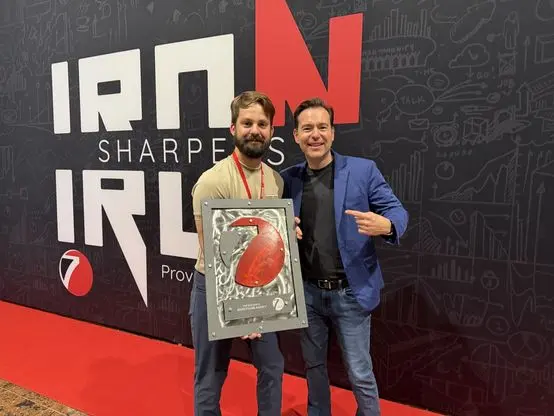
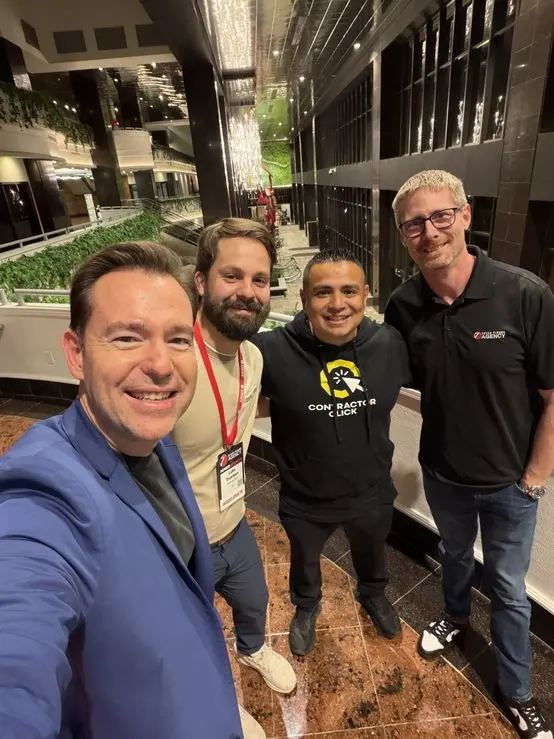
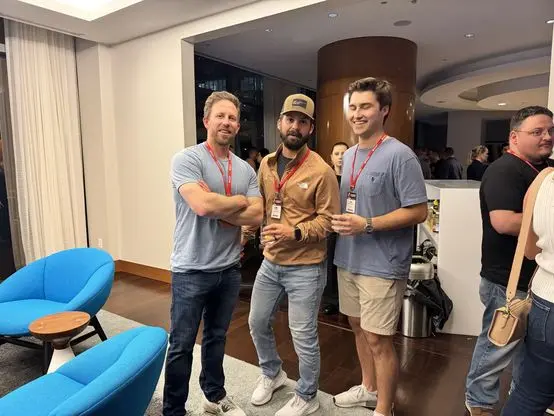
Luke has been in the room at Seven Figure Agency events, from the awards stage to the Intensives and the evenings in between.
The short version
Prefer the short recap? Here is the same story in his own words.
Luke Truetken on going from $17K to $110K MRR
Read the testimonial transcript
Transcript of Luke Truetken’s testimonial video.
You're gonna meet your friends, you're gonna meet your peers, you're gonna meet your mentors, you're gonna meet your core people that get what you're going through, that you can bounce ideas off of, that you know they have your back. My name's Luke. I'm the CEO and founder of Landscape SEO. We are a digital marketing service specifically for the green industry, lawn care, landscape, hardscape, excavation, that kind of stuff. I joined 7FA in 2022 with just struggling with growing the business. I was up and down, and I came across Josh's book of retention, and I went through the book, and the next thing you know, I saw a Facebook ad, and then I started watching his YouTube videos.
And then I saw that he had a coaching program, and after watching those different things and seeing his expertise, I jumped on a sales call, and I already told them, I said, "I don't care how much it is, just take my money, and I know I'm gonna do this." And so I joined, and we were at probably about 17K MRR, a few clients in the niche, still legacy business stuff. Fast-forward to today, we just crossed, uh, 110,000 MRR and, uh, we have over 50 clients. The biggest thing that changed the needle for me in 7FA is the community of people you meet here.
You're gonna meet your friends, you're gonna meet your peers, you're gonna meet your mentors, you're gonna meet your core people that get what you're going through, that you can bounce ideas off of, that you know they have your back, and that is what makes this community so special. Josh has done an incredible job of building so much knowledge and training and future development into everything here at 7FA. But the number one thing you get from this community is other people that are going through the same things you're going through and that are going to help you genuinely grow your business.
Competition's not a thing here. There's multiple people in our space, there's multiple people in every niche, and everybody comes together, gives, and helps each other out because that's what this community is about. So if you are looking for a community that's going to love you, that's going to help you, and most importantly, a community that you can join and help and give back to others, this is the place for you.
Ranked #4 on TopMarketingAgencies.com
Landscape SEO is ranked #4 among Landscape and Lawn Care agencies on TopMarketingAgencies.com, the editorial directory of the best niche marketing agencies in the country. Listings are editorial, not pay to play. Agencies are scored on niche depth, tenure in the specialty, client retention, verifiable results, and transparency, then re-scored every year. You can read the full profile on the Landscape SEO listing or see how the category stacks up on the top landscape and lawn care marketing agencies page.
Ready to Go All In on Your Niche?
Luke rebuilt twice before committing 100% to landscape and lawn care. The system he used to go from $40K to $110K is the one we teach.