
Restaurant Marketing · Restaurant Marketing That Works
He Held Client Churn to 1.9% While Scaling Past 300 Restaurants
Matt Plapp spent a decade as a generalist agency owner before he picked restaurants, and the pivot almost didn’t work. Here is how he built a data-first system that keeps clients longer than almost anyone in his industry.
Matt Plapp with Josh Nelson, live, recorded on the road in June 2021.
Read the full interview transcript
Full transcript of Josh Nelson’s interview with Matt Plapp. Lightly edited for readability.
Josh Nelson: This is the Seven Figure Agency podcast. Discover the strategies and techniques to grow a highly successful and profitable digital marketing agency with your host, Josh Nelson. All right. Well, hello and welcome. Thank you so much for joining us on today's special session of… This is part of the Seven Figure Agency podcast, our agency success interview series, where we interview successful agency owners from across the country. And today I'm super pumped to be interviewing Matt Plapp. Matt, thanks so much for joining us.
Matt Plapp: Thanks for having me.
Josh Nelson: So Matt runs a really successful agency, north of seven figures, serving the restaurant space, which is a really tough niche. Matt, why don't you just start with telling us a little bit about your background and how you got into the agency world.
Matt Plapp: Okay. So got in radio advertising in 1999 and did really well out of the gate. Out of the gate, my dad put me through what he called sales school, which apparently was unique. I didn't know because my dad's a salesman and entrepreneur. But the month leading up to my interview, because I had like a month notice of this interview for radio, he put me through a sales school and taught me how to sell. And he's a freak. He's the Michael Jordan of sales. He could literally, Josh, I'm not joking, if you ever get in a call with him, he could sell you a membership to Seven Figure Agency, and you'd be like, "Hold on." "Josh Nelson." So he taught me how to sell. I did really well in radio. Six months into it, we got the idea that we were gonna start a boat RV dealership as a side hustle, all three of us. It's just a family thing. We got five thousand dollar loan, got a lot, and I bought a book on how to design websites. And I'm not a tech person at all, but that was our, "Okay, if we're gonna do this," my brother couldn't do it, my dad couldn't do it, "I'll figure it out." So I… One of my radio clients sold– had this book in his place called Adobe PageMill, and it was a software, and I bought it and built a website. And with– fast-forward within three years, the business was doing about six million dollars in sales with a, brick-and-mortar location. And we ended up getting it up to fifteen million in annual sales, three locations. Accidentally learned a lot about SEO. We had a… The same guy that sold me that came in. He was our IT guy at that point. We had forty employees. We had a seven-acre store. And he came in, and we had a virus all the time. And I thought Glenn was planting the virus. I'm like, "Bro, seriously, I'll just give you a check. Quit planting it." 'Cause like there's… That's like you're the only, the only one that benefits from this. He's like, "Matt, it's not me, I promise." And it turns out he wasn't. But he's like, "Hey, I'm gonna put a software on your computers. Every time your employees log in, they have to use their username and password, and you need to let them know that they're being tracked. We're gonna figure out where the virus is coming from." So long story short, he did it. We figured it out. We fired that lady. People wanted to date her after they found out what she was looking at. Different story. But we ended up growing that, going on our way. Well, about sixty days after that, Gl-Glenn brings this binder. I wish I still had it, man. That was gold. It was a binder about this thick, and it was a catalog of every website our employees were visiting. Now, remember, this is 2004, two thou– 2003, 2004, so this is pre-social media. Well, every website they were visiting were bassboatcentral.com, camp, airstreamcampers.com, Arctic Cat ATVs. They were all things, chat rooms about why we hired them to sell what we sell. We had all outdoorsmen working for us. And so I kinda tricked them. I pulled them all in. I reached out to all these chat rooms and bought sponsorships because that was a big thing. Five hundred bucks exclusive Triton bass boat dealership for Kentucky. You just can't sell. You gotta have your name, your phone number, your address, all this stuff on there. Well, I ended up doing it with about seventeen sites. We ended up having a lot of our employees active. I mean, I'm talking crazy active. Well, long story short, within six months, we were the number one on this thing called Google for anything boat-related, period. And so when I learned that, when I went to Yamaha, I was at a Yamaha convention, and the head of Yamaha Marine, Ben Jarrett, walked up and said, "Matt, what are you doing on this thing called Google?" I'm like, "It ain't me. I didn't do it." 'Cause we were always breaking rules. And he's like, "No, you're not in trouble. It was you." I'm like, "Okay, we probably did. What do you want to know?" And that's when I learned about backlinks. We literally had, you know, like our IT guy was telling me when he explained SEO to me, he's like, "Matt, you're the, according to any search engine, you are the authority because you've got hun- thousands of backlinks from credible sources, and all of them have your website, your name, and they're all keyword stuffed." Because people are saying, "Hey, why is my twenty-one-foot Skeeter with a two-fifty Yamaha HPDI not running at seventy-three miles an hour?" And then Sean Weeda gets in there and drops about the prop, the drag on the boat, the weight of the trolling motor. That's what Google loved. So I figured out digital marketing really quick. We put fire– we put threw gas in the fire and blew up. By '07, I hated it. Me and my dad and brother had forty-plus employees. We were too leveraged with banks. It was stressful as all get out. And I was back into a lot of my radio clients I had stayed in touch with, were asking me to consult for them. Hmm. And so I was getting free cars, free landscaping, free food. It was just like, "Man, this is fun." Well, come end of '17 or 2007, I realized my wife and my mom got, came to me and my brother and my dad and said, "Hey, you guys need to talk to each other because you're not… Your dad hates this damn business. You hate the business. And my– your dad wants to retire. You wanna go into marketing." And so that's what happened. I built my agency. I was fortunate that I had a contract from the Reds and Bengals for about a hundred and fifty grand a year to do marketing or help them with stuff. And so I had, you know, that bridge, they say, that I could go from a successful company to my agency. Hmm. And then from there, we just built from 2008 till 2000 and… She celebrated her tenth year, two weeks ago with my agency. And we had just me and her. We had thirty-four clients from thirty-one industries. And in April of 2015, I had one client that had two clients that were kind of connected, had nine restaurants. That was our only vertical we had, you know, we actually had. We didn't know what I know what the hell a vertical was. And so in that 2015, the client actually, you know, was giving me a hard time. We're spending about a million two on radio, TV, sports sponsorship for their restaurants. And anytime I spent fifty bucks on a Facebook ad, like you thought, you thought the world was ending Like this is stupid. You shouldn't be doing it. And so he said, "Okay, prove to me." He used to always say, "I can't deposit likes. Matt, I can't go to US Bank down the street and deposit the five thousand likes that the people got last week." And I'm like, "I don't disagree, but it's working better than the damn TV." And so he said, "Prove to me." So we did a National Pretzel Day promotion April twenty-six, two thousand and fifteen. We did three Facebook ads for fifty bucks. We did three emails 'cause they had three of the stores we did this with. It did eighteen grand in trackable sales in one day. Wow! And I looked at it and said, "Crap, this is the first time in my professional marketing career that I've ever seen that type of attribution at that level." And so I just started digging into it. And so I spent all of fifteen and sixteen, building f… I didn't know what it was then, but building funnels in that sense of, okay, this person saw a Facebook ad, how do I get their email? How do I give them an offer? How do I get them to come back for their birthday? And I met Billy Gene in the summer of two thousand and sixteen. I say I met him. I saw his ad. I missed the webinar I signed up for. I bought the flash drive. I got the reminder sequence that I missed the webinar. I showed up to the webinar on a Sunday night, the replay, watched it for ninety minutes, went to bed, and my wife's like, "What's wrong?" 'Cause I'm never quiet. And like, you know, if you know me, you know that. I'm not- Yeah… Never moving. And I said, "I'm scared." She goes, "What do you mean?" I said, "Well, I just got off a ninety-minute webinar." She's like, "Yeah, I was confused. Like, you're in your office. Like I walked up and looked in there, and you were actually like not talking, and you weren't doing anything. You were looking at a screen, nothing else." I said, "Because I just saw it. I just figured out this Billy Gene guy. I just figured out how to do what we do at a huge level." And, I had– I ended up having a call with Billy's team that Wednesday, bought their training course on digital marketing, went to their event a couple, I guess, two months later in San Diego, and then from there, that was the first time I had ever realized this whole scaling thing in a vertical. I had never heard… I didn't know I could… The first thing I had Billy, I had a con- me- in-person meeting with him at Traffic & Conversions in, February of seventeen, which I think is where I met you for the first time. Mm-hmm. You were sitting next to me, and I'm naive. I'm just sitting there talking to this guy next to me in a green shirt. And next thing I know, you're on stage. I'm like, "Oh, I know that guy. That's the guy who was sitting here." And so Billy, I had met with him. It was seventeen or eighteen, I think, went that one, but Billy's meeting was seventeen. I met with him, and he's like, "Well, dude, you've already figured out the scaling thing. Just go find a brewery in fifty markets, and you'll make a shitload of money." And I'm like, "I'm not traveling these markets." And now I am, ironically. And he's like, "Well, you j- all you need to do is do this, you know, online." I had never thought of selling via Zoom and via phone calls. All my relationships were in person. And so ended up doing that. You know, flash forward to two thousand and seventeen, eighteen, we started hiring a lot of employees, got out of the way a little myself, and here we are, June of two thousand and twenty-one. We've got thirty-nine full and part-time people. We've got a nine-thousand-square-foot building that we bought, four months ago, where I'm sitting in my Mercedes Sprinter van. It's a mobile conference room, and, you know, got all sorts of crazy stuff happening.
Josh Nelson: That's awesome. So, so it sounds like transition from sales to running an RV dealership, running to this dealership, to the going to the agency model, to, all right, rather than being a generalist to kind of being a specialist in restaurants. How did you land on the restaurants as your, as your, like, main vertical?
Matt Plapp: So I think the way I landed, I don't know exactly how. I think honestly, it was an accident because I had… When I looked at my client list, like back then, if I look back to two thousand and fifteen, we had thirty-four clients from thirty-four vert- thirty-one verticals. I had one guy that had fifty car- forty-five car dealerships at the time, and we did all of their social media, all their review management. You know, we had chiropractors. We had… I mean, you name it, commercial hardware, commercial construction, home builders. We had everything. And I realized the one thing that Billy really taught me, and I, and even more with you because you took it to the next level and you and your team, and even the community, was that I wasn't able to reuse what I was doing successfully at every stop. I was recreating the wheel because nothing transferred from a car dealer to a chiropractor to a GNC store to a carpet cleaner to a restaurant. And when we had success with the restaurants, I just sat back and looked at my client list, and Billy had said, "Hey, you need to pick." So I picked three. I picked golf courses, I picked restaurants, and I picked boat and RV dealerships because I knew boat and RV dealerships really well. I already owned a gol– I had another golf company I owned as well, and I thought, "Man, this would be a good piggyback." And then restaurants, we had nine of them. And I said, "Well, worst case scenario, I control all of their ad budgets. I'm just gonna make sure that their ad budgets all go to creating what I think should happen." And so that was kind of the best thing that ever happened to me and the worst thing that happened because that first eighteen months of being a restaurant agency, quote-unquote, the decision maker who suc- who decided how successful stuff was and how awesome it was Matt Plapp. I was the marketing director. I was in charge of every penny for all of our restaurant clients. And so when I went out to the street to actually sell to people who weren't Ma- Matt Plapp, the messaging didn't make sense because they didn't value what I did. So it put behind about a year, and I had to figure that out. But that was a big part of it, was having more restaurants to play with. Mm-hmm. The other part of it, I looked at all of our clients and said, you know, when we had the boat business, the struggle was it was every three years somebody bought something if we were lucky. And I said, "Okay, I'm really good at getting people to give me their information via, you know, digital marketing. Who needs it the most?" Well, the car dealer, you know, you buy a car every couple years. Nobody really gives a shit about the car dealership. It's the deal you get. But the restaurants, of all our clients, the place that people went back to a lot were golf courses and restaurants. And so I got rid of the boat and RV dealerships. I'm going golf course and restaurants. And the first year I had… I think we had at one point like nineteen, boat or nineteen restaurants, and we had f-… I don't know, six or seven golf courses. Mm. And then on accident, an agency training bloomed off of that, which was a whole 'nother world. And I had to make a decision. And Billy kept telling me, "Get rid of everything. Cancel your agency. Get rid of the agency training. Get rid of the golf course idea. Go with restaurants. Be done with it." And of course, I'm like, "Dude, I know better. I can hustle more." And I did. I just worked 100-hour work weeks. And I got to a point where I eventually sold my golf company, realized the golf vertical wasn't for us, and then went restaurants, and then now, I mean, we still have our agency. We have s- five clients, traditional clients, and it worked out because one of them does basement, water r- removal, and we had a leak in our sump pump on a t- torrential downpour S- Saturday morning, so I was able to call him and he fixed it. And the other one is an air conditioning company, and they put three new air conditioners in our building. So, that's kind of where we're at. But I picked, I think, just Josh, to answer your question, is, the fact that they need data more than anything. People can eat at restaurants two, three, four times a week. They need a plumber once every six months or a year. Right.
Josh Nelson: So kind of the repetitive nature of the industry, and the fact that you already had nine restaurants and you kinda had some wins under your belt that you could, you could draft on. How many restaurants are you guys working with now, g- approximately?
Matt Plapp: I'd say between all the brands we work with and their locations, there's upwards of 300 or so. Nice. So- 'Cause there's some of them that, like, one guy's got like… It's weird on our end 'cause, like, some of them will run, like, 20 restaurants will run under one program, but then other 20 restaurants are all 20 programs. So it's… I should probably know the number, but I haven't paid attention much the last six months to that part of it, but it's, it's 300 plus. Somewhere, somewhere in that range.
Josh Nelson: And I know that over the last nine months you've had some really good momentum in terms of growth and revenue. Yeah. Like, what were some of the things that you changed that helped to get that velocity, you know, to kind of push you over the seven-figure mark?
Matt Plapp: So one of the biggest things that happened, and I'll… And I wanna put him on camera and then let him go back in the trade show, is Billy Gene kept telling me to hire…
Josh Nelson: Hold your tool up. What is your tool you use? A camera. Camera.
Matt Plapp: That's David, by the way. So Billy kept telling me, 'cause I, he knows I like video, I have no issue with it, I can get on video anywhere. I haven't gone to shower yet, which we have a funny idea for a shower video, by the way.
Josh Nelson: Whoa, whoa. Whoa, you don't gotta…
Matt Plapp: I'm being close. But he kept saying, "Hire a video person. Hire a video person. Have them follow you. Chronicle the journey. Tell your story. Create better video versus the crappy video you create." And I hired David January of last year. And we had a, we had a goal of my podcast. I… Everybody's got podcasts. Like, I don't wanna do a Zoom podcast. I don't wanna, I don't wanna look like I'm in my mom's basement on headphones. I wanna, you know, go in person. So we literally started the podcast, and we started it before COVID hit. And we shot nine episodes end of February in person. COVID hit, and everybody… When everybody stopped, I'm like, "Eh, screw it. If I, if I get a cold, I get a cold." And so we never stopped traveling, and that was probably the biggest thing. We never stopped what we were doing. I think, I think, Jaime asked me at your mastermind in December of… What, what year is this? When the hell was that? 2020. Probably '20. I'll say it's 2020. Yeah, 2020, when we were in Miami. He said, "What was one of the things you did that helped you grow during the pandemic with restaurants when other restaurant agencies shut down?" We didn't stop. We put it in high gear. I mean, I invested $150,000 in four months last summer. I've doubled down, tripled down on everything. Yeah. And so I think the biggest thing was we didn't stop, and we put the foot on the gas, and we went everywhere. And, you know, this trip's a great example of it, is the fact, like, I'm in here talking to the head of Cisco, and he's like, "Dude, we do these blitzes where they literally will bring in a vendor and take them to every restaurant possible, 8:00 AM to midnight. Here's who it is, here's why you need to work with them, and here's how Cisco's gonna incentivize you to work with them." Jeez. He's like, "Matt, we've never seen a cool product." Like, nobody's got a, you know, this, the, a wrapped Mercedes van and a video crew, and you got a… We have a media side. We talked about it lately. We created a media company called America's Best Restaurants. We're creating our own channel, creating our own place that people go, "Well, shit, they, we gotta work with them." But it just was that el- that element of it.
Josh Nelson: You wanna head back in there? Yep. Cool. Thanks, brother. Yep. So, so one was kind of doubling down on content, having a full-time videographer there to kinda shoot video with you. What else would you say are some things that have helped kind of accelerate the growth?
Matt Plapp: Advertising. You know, it's, it's weird because I don't think we're the… Ironically, my whole sales pitch to restaurants is we have what I think is one of the most trackable programs on the front end of marketing for restaurants out there. We're not very good at tracking our own. But I can tell you that where we spend money, I can see it work. I mean, we spent massive amounts of money last June, July, and August, and it wasn't a, it wasn't a coincidence that, you know, August, September, October were three of the biggest months we had ever had.
Josh Nelson: And I think the, the problem with a lot of what I've seen with agencies and even Matt Klepp, I remember the first time I saw… It was back in 2015. I was talking to a buddy of mine. I said, "Man, I've gotta up my game.
Matt Plapp: I've gotta find a place where people like me are at, and I've gotta go to a co- I've gotta go to, like, a conference." And I found… So I'll never forget 'cause I was talking to a guy named Rob McCracken, and… Can you hear me okay, by the way? Yep. My computer's acting weird. And I was talking to Rob. He's like, "You gonna go?" I'm like, "I'm definitely going." Well, then I logged in and saw the ticket was, like, two grand. And then I did the math on flying and hotel, and I'm like… Even though I was making a quarter million dollars with one employee, 'cause we did well, I was a cheap ass, and I didn't value, number one, a c- I didn't have a coach like yourself. I didn't have a community, and I just didn't invest. And I didn't go. And eventually, when I went and saw Billy and- Saw that first event I went to, and when I heard about T&C, I went to it. I literally booked a ticket, bought the ticket within a week, flew out there. At that point on, I've just gotten to a point, you know what? I'm gonna spend myself till I'm bankrupt if I have to get myself in the right places because, you know, like a lot of people say, cash in the bank is fine, but if you can invest it's a hell of a lot better. And I think that has been our biggest thing is we invest money. I mean, we've, you know, this vehicle, these trips. I mean, I've got four employees with me here. You know, I'm gone. I'm home. My wife and kids are with me a couple of the trips. That's pretty cool to be able to take them. But I'm, I think I'm gonna be in our office two days between past Sunday until July twenty-fifth. Jeez. And it's not… It's, you know, it's tiring, but I'm investing. I know where it's going. And this commitment has already landed us. I got a meeting this Friday. I won't mention his name, but the guy's a huge television personality who wants to help partner with us and be our spokesperson for the restaurant consumer brand, to help us do some bigger things. I've got another person who already called me twice in the last two days who's a client, who's a multi-millionaire in the restaurant space, very, very well connected. He wants to fund the next– investing money, investing in Matt Plapp, investing in, marketing, putting us out there. And that's a scary thing because, you know, we all look at it, but I think a lot of us don't do what we preach to our clients. When I was an agency up until three years ago, I'm telling all my clients to advertise, advertise, collect data, collect data, get out there, grassroots, do this, and I'm sitting in my house by my pool on a Zoom call with them.
Josh Nelson: Yeah. So it sounds like, the, the willingness to be live and in person has been big for you. It's like getting to the restaurants, getting in front of them, and aligning with joint ventures, I think is what's gonna accelerate you to that next level ten times faster as well.
Matt Plapp: Yeah. I looked… The one thing we did, we sucked at accounting. We sucked at money. I mean, we were doing fifteen million a year in sales, and we were spending fifteen. I mean, we were… I was young and arrogant, and didn't know what I didn't know. But I… Like, my one accountant told me, he's like, "Matt, the master's degree you got on the streets and the hard knocks is better than my Ivy League masters." He's like, "So don't discount what you did then. Your failure then is your success now." but when I look at what we did back then, this has really got me thinking about this a year ago. I was talking to my dad, and we're best friends, and I said, "Dad, what did we do so well at Plapp's?" He said, "We marketed." I said, "Okay, how did we market differently?" We went to the boat shows. We went to, fishing tournaments. Back then, there were… Typically, most of our competitors went to one boat show, the Cincinnati Boat Show. I'm looking where we're at, I'm like, "Okay, well, there's nobody that sells…" We had seventeen, we had like fifteen to twenty boat lines that we carried, or RV lines, so we had a lot of flexibility. There were seventeen shows within four hours of where we lived. None of our competitors went to more than one. I'm like, "Screw it. We're going to all seventeen." And so we did. And my, my life sucked. Somebody said, "What was our profit margin?" we were about twelve to eighteen percent typically. But that was the front end. You know, Matt Plapp also had seven vehicles for the company. So we had other problems there. But we went to seventeen shows. From the day after Christmas until the end of March, we did seventeen shows. Our biggest competitor did one to two. And so we did that. The other part of it, I said, "What else did we do that was successful?" I wasn't a fisherman. I'm not a fisherman now. I wasn't a fisherman when we had the dealership. But we sold the number– we had Triton and Skeeter bass boats, number one and number three bass boats sold back then. And these fishing tournaments all had, happened every week. So I went out and realized, okay, there's about a thousand fishing tournaments. Let's go to every single fishing tournament we can. So we bought a fifty-three-foot fifth wheel trailer that was a mobile store and a stage on the side for the tournaments to do the awards, and we bought a twenty-eight footer that got pulled behind a Hummer we had. We went to fishing tournaments. We were visible. Everybody bought boats from Plapp's because we supported their tournaments. So then that got me thinking. I'm not– we have not been great at lead generation, which is funny. Like, my third book is delivered to the hotel in about twenty-six minutes, I'm told. Nice. Right around noon, thirty-six minutes. And I've got so much content that we should have leads just pouring in. But I think the restaurant world's a different person. They aren't as active as, you know, you and I are, or the concrete guys. Like, my CrossFit gym I'm an owner of, you know, the CrossFit gym owners I know are all on Facebook and Instagram all damn day. If you want to run ads that reach CrossFit gym owners, easy as shit. For whatever reason, we have not done well with online lead generation. We've grown the business to seven figures, but I don't want seven figures. I want a hundred million dollar company in five years. And when I looked at how to get there, I said, "We've got to go to the restaurants. We've got to become the authority." And I looked at it and said, "There's two pl- people that are the authority right now. Yelp and restaurant owners hate them, but consumers hate… They have the consumer's eyeballs. And, like, Diners, Drive-Ins and Dives, the TV shows, restaurant owners love them. What's his name? Dave Portnoy of Barstool Sports and the pizza reviews. He's got the restaurant owner's attention. I'm like, "How do I combine it?" We're gonna do a road trip. We're gonna put six vans on the road and twelve months, and we're gonna physically go, and we're gonna go every Tuesday, Wednesday and Thursday where that van travels to different cities, and here we are.
Josh Nelson: So good. Cool, cool stuff there for sure. Before we dive into the strategy on kind of how you're attracting clients and kind of what that play is, because I think that's really exciting, what, like, what is it that you do for your clients? You've got these three hundred plus restaurants. Just high level, walk us through, like, what is it that Restaurant Marketing That Works does, kind of what you charge for that.
Matt Plapp: Yeah. So right now our services per location are twelve hundred and fifty bucks a month, plus a five hundred dollars startup fee, plus ad spend, plus software. So we use a software called MiniChat. We're in the process of creating our own software. That'll be done late this year. So every client that buys our software is buying my other company, Database Dynamite, because I want them to own the data. I don't wanna have any of my hands on it, so they have their own account. It's theirs, kind of like a MailChimp account almost. We, they, the Facebook spend is directly, or Facebook or Instagram spend is directly on them. We put on their card, it runs through them. But our core competencies are two things. Number one, acquiring tr- people. So they've got Facebook, they've got Instagram, they've got a website, they've got in-store marketing, they've got people that are seeing their concept. Well, how do we get those people to give us their name, phone number, email, and birthday? The next part of it is how do we use the data? So before COVID hit, we were mainly acquisition. "Hey, we're gonna help run your digital marketing. We're gonna give you software inside your restaurant, and we're gonna help give you some tools on your w- on your website and your grassroots tools that you go and use at events to get people to opt in to an email text birthday program." When COVID hit, I never had a content team 'cause I'm like, "We're not in that business. It's a lot of work." The restaurants can create their own content. When COVID hit, I realized that, one, before COVID, they weren't using the data we were giving them anyways. So they weren't taking the… We were giving like one restaurant eighteen thousand emails and cell phone numbers over a fourteen-month period before COVID. They had never sent out an email or text. I'm like, "I just gave you a Ferrari, and you took the wheels off it and put it in a shed." And they're like, "We don't have time." Well, then when COVID hit, they sure as heck didn't have time. So we, when we, when COVID hit last March, I mean, everybody's business, everybody got rocked. The restaurant business got rocked big time for about eight weeks. We only lost, two clients in the entire process. We lost less than point zero five of our revenue. We had a twenty-eight percent dip in revenue because they couldn't pay their bills. But I told every one of them, "You're not canceling. We'll work for free until you can pay us. Don't worry about me. I got plenty of money." I told all of them that. Said, "I'm not being arrogant. I've got money in the bank. My employees are fine. You need help. We're gonna help you free of charge until you can help, till you can pay." And they were like, "Man, thank you." And so we kept our clients, and they stayed on the books afterwards. But during COVID, I said, I told our team, I said, "Hey, guys, two things. Number one, your jobs are safe." I learned this when we had our boat dealership, that we didn't do a good job of communicating openly and honestly. I told our employees how much money I had in the bank with the business and personally and said, "Your paychecks are secure for at least a year, so don't worry about that." I said, "Number two, our restaurant clients need your help. So whatever you can do over time to help them with emails and texts and Facebook and Instagram and Google and Yelp, whatever, do it. One hundred percent, you're at their disposal." And when we did that, it helped. I had a client call me one time crying and said, "Dude, we're up eighteen percent. We're a barbecue restaurant that was ninety-five percent dine-in a month ago. We have zero dine-in. We're up eighteen percent. The only reason we're up eighteen percent is your team." Wow. He said, "Because you helped us get our message out, you gave us advice, and then you took that database that we built, and you used it." We have, we have, we have clients who are sending emails and texts every day. Hmm. And so it was like, "Hey, we're gonna hit the women on Monday. We're gonna hit the men on Tuesday. We're gonna hit your lost customers on Wednesday, your frequent customers Thursday, your new customers Friday." You know, we just went down the list. And so when COVID started coming around, like, well, I guess when it, when it, people started opening up a little in July, August, I told our team, "Hey, guys, we gotta shift to content. We've gotta create a content department because why are we building this database nobody's using?" And so now we're at thirty-nine people full. I think we actually hired one more person yesterday, I think I heard. 'cause Ashley's involved with, in charge of that now. But I think we've got like forty people or so now that are, most of them are doing content. So it's like, "Hey, we're, we're building the database, and in the back end, we're helping you use it." That's awesome. That's been a big transition, too, on our part is we used to have this objection a year ago. We, we had this objection a year ago of, "I've got a loyalty program. I've got an app." And they looked at us kind of as competition. And I'm like, "Well, y'all get people into an email program that gets, what I call traffic sources, to their other tools they currently have." Nice.
Josh Nelson: So it sounds like it's a combination of running Facebook ads and database management and database engagement and offers, and it's twelve hundred bucks a month, and you manage all of that for them, in a nutshell.
Matt Plapp: Yeah, and the, we, we have three main places we help them. Social media is one, in-store is two, and their web presence is three. Because I don't wanna be… We, we got into a, a, we got pigeonholed a couple years ago into the Facebook restaurant people. And I'm like, "Well, we also do stuff on Google. We also do stuff in your store. We also help with your website. We help with your current database." So we, we have what we call five inroads. There's five ways to gain customers' data. Social media is one of them, because I know at some point Facebook's gonna go away. Instagram's gonna go away. Something else is gonna come about. So I don't wanna be a one-trick pony.
Josh Nelson: That makes a lot of sense. That makes a lot of sense. Awesome. So let's talk a little bit about kind of the new cool things you're up to to get in front of these restaurants, because, I know restaurants is one of the hardest verticals there is. You know, like you mentioned, Facebook ads to generate opportunity has been hit or miss. Cold calling a restaurant is almost like a dead end 'cause they're so busy, they're not answering the phones. Done. Talk to us a little bit about this new strategy that you're doing and kind of, you know, why you are so confident it's gonna, it's gonna be a game changer.
Matt Plapp: Yeah. So real quick, I saw somebody asked in the chat what my profit margins are. We are operating right now at thirty-eight percent. Thirty-eight percent of what, you know, what comes in stays in the company bank account. So I'll give you the vision. I guess I'll go outside real quick and show it to you. Sweet Let's see. How do I, how do I turn my camera around? It's freaking bright out here.
Josh Nelson: And so for those of you that were wondering why it's a little choppy, Matt's literally on the road in a, in a van.
Matt Plapp: Check it out. So this is, Piedmont Gas. It's a, it's a gas comp- natural gas company locally, but it's also a huge kitchen that Sysco has partnered with. So there's a couple hundred restaurant owners inside. That's where all these cars are. Hmm. Is restaurant owners. 'Cause this was empty when we got here this morning. And we're the one of only two companies that's not food-oriented. So we did the van two ways. Just give you a little trick here. We did it orange and blue. My colors are orange. Our, our colors are orange and blue. But I wanted it where if you see me go down the road on this side, you see a blue van. If you see it driving down the other way, we're coming back from an interview, and you see an orange van, you're like, "Oh, there's another van from that company." And so the, concept of this van is, number one, a mobile office, is that we're, we're actually– we've created a media company a little different. America's Best Restaurants is a restaurant media company that we own, that we're creating consumer-facing. There's my big ugly mug. There's QR codes to scan and get my book. There's a QR code on the back to scan and opt in, 'cause one thing we'll do, I'll tell you in a minute, it's called our first stop location. We're leaving this in towns for five days at a time in between our trips, and we're having restaurants where we, for two hundred and fifty bucks, we advertise the vans at their restaurant to consumers, "Go scan this for a chance for a gift card." Hmm. And so we've got some lead magnets. It's got the whole front of it's wrapped as well. Front. The top. Top was, actually more expensive than anything else it seemed like. Yeah. But we wanted that for the drone footage. Let me get back in the van.
Josh Nelson: Nice van too. Super, super classy on the inside. It's beautiful.
Matt Plapp: It was a, it was a year-old limo that I guess- I'm guessing went out of business for COVID. But it's got all audio/video, it's got two TVs, it's got the starlight ceiling like the Rolls-Royces have. Hmm. It's got a ref- a refrigerator, a wine cooling bottle. It's got some stuff we don't need. Wow. But my vision with this was I was looking at it, and I came up with kind of an internal saying was I was gonna take the funnel to the restaurants, was that if we suck at online acquisition, and I'm spending five to ten grand a month on Facebook ads incoming, and some on Google and some on, other places, well, shit, what's it cost me to buy a hundred thousand dollar vehicle? What's it… The wrap was ten thousand four hundred bucks, so it's not cheap. But I started looking at it, and I also thought, "What's different? What is nobody else doing?" And I can tell you, the minute I did this and Sysco heard about it, they called me and said, "Hey, we heard you're doing something. We wanna see it." And that's why it's here. And, you know, like you said, it's classy. It's Mercedes. That's one of the reasons I also went with Mercedes and not the Ford. I could've went three ways with this. I went Mercedes because even though it's pretty damn similar to the Ford version, it's got a little different viewpoint. But my big thing was how do I, how do I stand out? We're not your typical… Like, one of my clients says, like, "Matt, you're not your typical restaurant marketing company." You know, a lot of the agencies that call on restaurant clients of ours, this was another huge company called Performance Food Group, they're, they're, they're what you were five years ago, two and three employees, handful of clients, do a good job, but you're a different animal. And the other part of it I also thought was you guys have all– you've seen Diners, Drive-Ins and Dives, Guy Fieri. If Guy was in there shooting that restaurant and he looked at Josh Nelson, who owns The Seven Figure Burrito, and said, "Josh, I want you to come outside to the motor home. I want to show you what we do for restaurants," ten out of ten people are going in the motor home, and ten out of ten are going, "Here's my credit card." Okay. And so I thought, "What if I create that?" Well, America's Best Restaurants, I've had it for a few years. We've never really… Didn't know what to do with it, didn't have the money, didn't have the manpower. Well, now that I'm not involved in the agency, I take one to two phone calls a week with clients, with my account managers. I don't build anything. Like, my managers all call me. I have five key managers. One of them called me today, texted me, "Hey, you got five minutes?" "What's up?" Talk to him. He handles it. So I'm not involved in the agency anymore, that I can do different stuff and put my time out here. But I looked at it and said, "What if…" You know, I look big picture. You know, I wanna create the biggest restaurant marketing mar-… Cost that, "Oh, shit, well, I gotta do business with them." You know, why wouldn't I? And so that's, that was my big goal with it and then I decided, okay, well, how can we… If we're gonna go on the road, how can we do this efficiently? And I've thought about motor homes. I also figured out that I c- I can't be the only person, because if I'm the only person, that means I gotta travel every week. So I looked at my team. Doug on my team's a former college broadcaster. He worked through radio twenty-seven years, but the first, like, ten years he was a college broadcaster. He is amazing on camera. And I'm like, "Well, hell, I don't have to be the star of the show. Doug." Luis on my team is in Chicago. He's cool as shit. He's not a white dude, which is I'm trying to get our audience diversified from our on air, 'cause it's all white guys it seems like always. And not all white guys, just we need a little mixture. And so I'm like, Luis is Puerto Rican. He's hilarious. Clients love him as an account manager. I'm like, "Hey, guess what, Luis? Every three weeks you're traveling with the van and a camera crew and an employee, and you're the host." And so we've got two other people in the pipeline, and so by the end of the year, we'll have more than likely four vans at this point. I had two. I was– Our second one's coming in in a couple months. But I had a client who's got nine restaurants. I don't know if I told you this or not. He called me. He wants to get two vans on the road by the end of the year because he wants to do a joint venture on it. He wants to do a JV on those vans because he wants to help us. He franchises restaurants And he wants to help us franchise America's Best Restaurants so that I can have a hundred and fifty vans on the road, and my marketing agency is fulfilling everything those vans have. Wow. So I love the idea. So the concept is you're going to a city, you've got pre-scheduled appointments with these restaurants. It's not a sales call. It's a, "We wanna feature you on America's Best Restaurants via video." are they paying for this?
Josh Nelson: Like, how do you structure that part of the deal?
Matt Plapp: So originally, the concept was… And by the way, when we show up, we've al- we have one phone call with them, and they're recommended by either a franchise group we work with, 'cause we have a lot of franchises, or they're recommended by Cisco or a food company. Like, Cisco's already got a– given me a list of the top one hundred clients that fit our bill for North and South Carolina. That's just two states. And so our goal is fifteen restaurants a week, Tuesday, Wednesday, Thursday. We fly in on Tuesday. The team Ubers to where the van's at. From the van, we film, four restaurants that day, seven the next day, four the next day. We, we drive the van to the next city. We drop it off at the first restaurant on the next one, so we're two weeks already scheduled, and then we fly back. Well, when restaurants get– we get on a phone call with them to pre-qualify them. Once we pre-qualify them, and once they're qualified, we schedule a Google Meet, and that Google Meet is what we call, it's a needs analysis, an attention audit. Here's what America's Best Restaurants is, and we're completely one hundred percent. We have two divisions. Our entire company's company goal is to help restaurants find frequent customers. How do we do it? ABR does it. As a consumer-facing media company, we're gonna market your restaurant and tell people why they need to eat at your restaurant. It's gonna take long term for that to get big time, but it's a start right now. Number two is Restaurant Marketing That Works. That is our digital marketing agency that we own that works with hundreds of restaurants nationwide and can tell you exactly how to get your app off the ground, how to get more people in your email, how to get this. And so we're, we're telling them from both sides, and they know it. We're also doing an, a needs analysis and an audit on that call, and we're letting them know that here's the agenda. If you agree to us come to your restaurant, there's no cancellations 'cause we're in town. We're doing fifteen places. This is a big deal. There's no cancellations, and if you can't make it, somebody better have got shot in a drive-by, and then you send your wife to come do it. And the next one is we have a five-minute pre-shoot meeting in the van. We go on our fifteen-minute. We go over what we're gonna cover on the TV behind me. Here's what it, here's what it looks like. They've already gotten a box in the mail with an agenda, everything. We then go in the restaurant for thirty minutes and shoot. We come back out, and we show you how our marketing firm and America's Best Restaurants can help you. Now, we're in the process of tweaking that a little, 'cause this is a test. I mean, we're, we're testing A/B. I'm thinking we're going to move to where people, the whole package when we come, you get our monthly, our services for two months, everything. There's no cost. Mm. 'Cause I'm like, you know what? If I'm in front of fifteen restaurants every week and I look forward to a year from now and we got six vans, we will have six vans on the road in a year. At fifteen a pop, that's thirty, that's a hundred and twenty restaurants we're in front of. Why risk some of them saying no? Make it irresistible. Here's what you get for sixty days for us coming and being, you being featured, and here's what we need. Facebook access, you c- display the in-store kit, you put this code on your website, and you put four hundred bucks in Facebook ads behind it. One of my ultimate goals is to get to a point where we fund that. You don't do shit. Make, take away every single possible objection 'cause at that point we're going to over-deliver. We are the best at what we do. Let's say we only get forty of the hundred and twenty. Do the math. At twelve hundred bucks, you know, that's fifty thou- you know, fifty-five, sixty thousand dollars a month times twelve, you know, over every month growing and growing and growing. I mean, it's eight figures.
Josh Nelson: Yeah. A-amaz-amazing stuff. And it's interesting we're doing this right at this point in time 'cause it'll be cool to look back on this interview twelve months from now because this is innovative. It's very different. It has not been done in, I don't think, any industry, let alone restaurants. And I cannot poke any holes in it. I love the idea. You're in front of these restaurants. You're coming in with value in advance. We're gonna shoot this video. We're gonna feature you on this platform. Now you've got their attention. You're plugging them into your service. It'll be interesting to see twelve months and watch this interview 'cause right now it could go, could go either way. It seems like it could go well, to really see what the, what the outcome is 'cause I think it's gonna be a slam dunk.
Matt Plapp: Well, and y-your holes you poked in it were accurate. Number one, can you afford to give away that much on the front end? Because it's a, it's… I mean, this right here, I mean, me being here right now, I'm not working in my business. I'm, you know, in fl- I'm, got three employees down here. I mean, it's expensive- It's a lot of money… To fly people, and we got a big outlay. And then the other side of it is, okay, let's say I'm completely right on this. Can my team handle another sixty to eighty restaurants in there? Like, hell, I was inside an hour ago talking with the one big guy from Cisco here, and he's like, "Matt, you tell me how many you can do. Because if you're gonna be here those two weeks, if you wanna go seven days a week, seven to midnight, the restaurants will love it. You, you just tell me what your capacity is." I mean, we could literally, in certain times, do a lot more. But I've already told my wife, like I'm, I'm a family guy. I won't miss my s- my kids' sporting events, and my daughter's birthday is today. We celebrated it Saturday, but, I mean, it was just… She knows the opportunity. But we… You know, I go to their sporting events, I do that stuff, but I'm like, you know what? If I can fly somewhere Tuesday morning and be back Thursday night, I'll do it fifty-two weeks a year if it takes to get to a different level. Because that's, at the end of the day, Josh, that's what I think, what I found bigger than anything during pandemic. Not everybody's got… Certain people have certain things. There are certain things that people couldn't do. I get it. But a lot of the people I know could have done, could have kept exactly what they were doing But it was an easy excuse to stop. It was an easy excuse, "Oh, you can't fly." Like, I had friends of mine go, "Well, how are you flying?" I'm like, "I'm on a plane." "What do you mean? You can still fly?" I'm like, "Yeah, the airports are open. The airports never closed." Kroger clo- Kroger didn't close, the restaurants closed, but the airports never closed. And I, you know, I never had a client, I never had a client that didn't wanna meet us in March, April, May, June, July. I think the only thing holding us back is ourselves and our belief in ourselves, and then also risk. I'm not risk-averse. I don't give a shit. I've had times… I mean, I've not– I've been fortunate since I was twenty-one, I've not made below six figures. I can also tell you I've had years where I made a half million dollars, that there was fifty dollars in my bank account. Because I risk it, and I'm like, "You know what? I've made it before, I'll make it again." You know, this is a six-figure gamble here. I'm already moving fast. I've– Based on the conversations I've had today and yesterday, and I'm having in Tampa on Friday, I think we'll have four vans by December first in flow. And it's kinda scary because I mean, that means I've got somewhere in the neighborhood of a seventy-five to eighty thousand dollar a month outlay for four vans to be running operationally and doing their thing. But I'm also like, "Shit, that could also mean a t-ten million dollar influx in twelve months." Yeah.
Josh Nelson: For sure. So a-another thing you're doing that I think a lot of the, of the listeners could really tap into is this whole idea of aligning with the people that already sell to your industry. So Matt works with restaurants. Who sells to restaurants? The people that provide the food, the pr- people that provide the equipment, the, you know, the things like that. Sysco obviously is at the very top of that food chain. And in any vertical, these types of opportunities exist. I'd be curious to see how… Like, how do you look at those opportunities? How are you able to align with a massive, you know, opportunity like Sysco in your space?
Matt Plapp: The, the tough part about that, it comes with them seeing something they haven't seen. Mm. The Sysco deal came by two things, and I won't say this from an egotistical standpoint, it came by two things: the fact that one of the people who's friends with Sysco was telling him how I have a Lamborghini. Mm. Literally. I've made co- There's… I don't post- That stands out, right. That stands out. If you, if you look on Facebook, you look on Instagram, you will not see a picture of me personally with the Lambo. I don't… Who gives a shit? And I've got friends of mine that are struggling to pay their mortgage. They don't need to see my jackass in the Lamborghini. But there's also people that are at this event. The guy I met with yesterday has two McLarens, and the, one of the, one of the things he loves is that. So when you, when you get to a certain level, there are certain things that people show. The other thing was the van. When they saw my vision, and I tell everybody, like I've got my vivid vision. You know, I don't know if you guys have that or not, but I've got a vivid vision from the book, and a lot of this comes from also Josh. But in here I've got… Well, somewhere. I've got a copy of our vivid vision for our company that's eight pages long, that's audacious. We're gonna have a company beach house. We're gonna own a restaurant in three years. We're gonna have a ba- indoor basketball court at the company. We're gonna have this culture. We're gonna have these services. When they see that, they don't see it anywhere else. So I think that that attracts the higher level. The, but it, that all came from the lower level as well. So the biggest thing I did in the past twenty-four months was, Russell Brunson's book, Expert Secrets. So there's a guy inside right now named Gabriel. Last May, Gabriel saw my post on Facebook, which is funny. I call him Gabe, and every ti– I realized today every time he introduces himself, he says, Gabriel. And I'm like, "Huh, I always call him Gabe." But Gabe started as an intern last May, saw a Facebook post. I bought Russell Brunson's book, Expert Secrets. Read it. If you're wanting to be an influencer in this, read it. Because what I read from his book is the opposite of what I always did. I always went after my top one hundred restaurants. And he's like, "No, go after the top one hundred people that have your restaurants," the Syscos, the Performance Food Groups, the Prestos, the US Foods, the GFSs. So I, he– I read the book, I said, "Shit, I can't do this." So I put an ad out. Luckily, I found Gabe, Gabriel. He applied as an intern. He did it for three months, and his entire job was I– we came up with a list of everybody that had a podcast or a book in the restaurant space, and we bought it. I've got literally two hundred books. I've got… My Amazon account, every day I get notifications, something's being shipped, something's being shipped. Well, here's the cool part. Gabe now has an intern. So Gabe came on last May, helped me build my Dream 100 funnel, which is… I do– you've seen them. I do, weekly interviews. I've got one tomorrow. I've got one Friday, where I interview authors and podcasters in the restaurant space. Half of them aren't great. Half of them don't have connections. I never pitch any of them. They all always, after three or four conversations, go, "Dude, is this what you do?" And I'm like, "Yeah, why? Why didn't you tell me? I mean, you need to know." And then it, that makes the relationship different because everybody else, every other agency is calling that guy. "Hey, man, I got shit we do for restaurants. Hey, you could refer us. I'll give you a kickback." None of that ever comes up. And so Gabe last summer became a paid employee. He's not an intern anymore. He's an employee now. He's in college. He's a sophomore in college. Dude's a genius. And he's now got an intern named Ben. And Ben took all the stuff Gabe did last summer off his plate. Now, Ben, Gabe is in charge of the abruniversity.com website that we're rolling out. He's in charge of the webinars, and he's in charge of my in-person events I'm hosting starting late July in our new building in the room called ABR University, where we're gonna have restaurant-oriented focus groups every month with these experts. And my thought is, "Okay, we've, we've found about thirty-five of them that are awesome. If those thirty-five get to love Matt Plapp and what we do, and because we're helping them get their word out, I'll eventually get in front of their customers." I love it.
Josh Nelson: So it's kind of the joint venture strategy on steroids. You're not just reaching out to joint ventures, you're creating a strategy to really hand select them and to feature them on your podcast. And again, everything you do, from what I can see, is leading with value. You're coming in, "Here's how I can help you. Here's how I can feature you. Here's how I can make you look better." and then, and, you know, just the basic law of reciprocity, they're like, "Oh, well, that was awesome. Like, how do I help you? How do I get involved in your services? How do I plug you into my network?" I think that's, that's a powerful explanation of, like, how do we look at these things? It's not just reach out to Cisco and say, "Hey, I wanna sell to all your restaurants," 'cause that's never gonna work, right? It's leading with value. It's coming at it from a different angle and, you know, that's how these types of opportunities blossom.
Matt Plapp: And another thing too is y-you standing out. Like what I've told… I tell everybody our vision. I tell e- the most random people, you know. And, and part of it, my dad always taught me, tell everybody everything. Because number one, when you tell them, you're committed to it. I'm gonna have six vans. I say it all the time. Twelve months, six vans. I keep saying, I keep saying it. I'm gonna convince myself that we're gonna do it. But then also you're, "Matt, where's the sixth van? Where's the fifth?" You know, and the sixth one, by the way, is gonna be a forty-foot diesel pusher motor home that's gonna have a trailer to be able to pull my Lambo and a Jeep in it, so my wife and kids can go with me on a lot of trips, and I can have the cars and do a little, have some fun. But the big thing too with these vendors, like Bruce Nelson, I interviewed Bruce last, Friday. Bruce is an author in the restaurant space. He's the controller for eight restaurants. I've not asked Bruce to do business yet. I won't. If he needs it, he'll find me. But when him and I are talking, I did, we're doing what's called deep dives. Every Wednesday, we do our expert interview. It's the first time I've talked to him. Fridays, if we think your content's deep enough, let's go to the next level. And then we have monthly webinars. But also, when I told him that, "Hey, by the way, here's what ABR University is gonna be. Our first event's in late July. Every month, end of the month, we're gonna have an event, and we're gonna pay for you to come in. We're gonna fly you in, hotel. You'll have a… We'll have cars 'cause we're gonna have, we're getting a couple cars wrapped locally to have as, courtesy cars when people come in town." But I'm gonna make it to where guys like that come in, speak to twenty or thirty restaurants. I mean, nobody does that shit. And I think that we did that in the fishing business. Mark Menendez, Joe Thomas, Billy Lowen, Gary, oh, what's Gary's name? Gary's name. We flew in professional fishermen. We had our boat dealership, and we hosted fishing events at our store. Like, nobody fl… Like Gary Menendez or, Menendez, Mark Menendez lived down at Lake Barkley. He was a Bassmaster Classic big time guy. I would spend like ten grand a year to be his friend. How do I sponsor you? I'll pay you to come to my store twice a year and give a seminar to fifty people. This guy's huge, and he's coming to our store. Next thing you know, you know, we're the place to be. And I'm just kinda taking that same thing from a restaurant standpoint. If all of a sudden we have this ABR University and all these people are coming, well, guess who's the exclusive host of ABR University, the sponsor? Restaurant Marketing That Works. Oh, by the way, the whole first level, our podcast studio, the shared workspace, our company offices, all that cool, trendy crap up there, you know, that's from Restaurant Marketing That Works and, okay, you can do business with us.
Josh Nelson: Love it. Love it. Great, great stuff. Brandon says, "Matt's a wild man. I love it." Spirit Thaw says, "True inspiration. Love to see you making moves like this. Keep, keep crushing it, Matt." Let's, let's shift gears for just a sec. I know we're almost up to our hour, and I wanna be respectful 'cause you've got a big event happening right there that you need to be part of. We talked about kinda the power of being in the niche and kinda how kinda shifting that focus helped to accelerate the growth. We talked about, kinda some unique ways that you're getting your foot in the door and looking at things differently. You know, you've got three hundred plus restaurants, soon to be probably thousands. Talk a little bit about client retention and what, like what are you doing to serve these clients and keep them on board as long as possible?
Matt Plapp: So I did the numbers, and up until June first, we have a one point nine percent revenue loss this year, one point nine eight. Phenomenal. My banker, I did the numbers. My banker, who financed this vehicle, I don't know what research he did, but he's like, "Matt, your industry, you should be closer to thirty to forty percent re- lost revenue at this point." And he's like, "What are you doing at one point nine?" I said, "You know, one, I can't take credit." I think it's the fact that I don't get involved as much in my team. We have account managers, account analysts. They do a good job. I think it's because we're sticky, that if you're a restaurant in the middle of a time of need, the best thing you can do is talk to your customers. Well, who controls your database? Now, granted, they have access to it, but they don't know how to do it. And so it's, it's kinda like the person, like my son, up until six months ago, depended on my wife to get him everywhere. He couldn't piss mom off. He wanted to go to football, Gabe's h- or Abe's house, wanted to go to school, want whatever. He couldn't pi… He wanted Chipotle before he knew what Uber Eats was, which was, Jesus, that's killing me now 'cause now he-… He has a car and still orders Uber Eats. And by the way, sixteen-year-old, seventeen-year-old kid the other day had a twenty-four dollar Uber Eats order by himself. Now, granted, he's a D lineman and he's two hundred and fifty pounds, but that's a different story. But he depended on my wife. He couldn't… Him and my daughter, I saw this as my kids, I analyze a lot of this stuff, is that they depended on mom to get them everywhere. And when they wanted something higher level, like my wife always says, like, "You gotta talk to Dad." When my daughter, like, wanted a Jeep when she was sixteen, like, all of a sudden, I was the greatest dad in the world for six months. And so I look at it from our clients the same way. How can we be as sticky as possible? You know, we can kick ass on the front end and over-deliver, like we do the welcome box now. I've actually got a, my assistant's mailing two welcome boxes out today. We have an entire line of apparel. Our, our, at our new location, we have a wall that says, "Get geared up," and it has the MP logo. It's got T-shirts, sweatshirts, sweatpants, and shorts. And we do that kind of stuff. We are account managers and analysts, and I tell all of our clients, "Here's my cell phone. Granted, I don't do anything with any of your stuff, but if you need higher level advice and you can't get a hold of anybody, I'm your guy." Well, it never happens. Like, once every two weeks I get a phone call. Our team does a great job of doing it. The content part has made us really sticky. We had less retention or worse retention, not bad. We've never, we've never been over, like, probably seven or eight percent, but we had worse retention when we did only acquisition because then they were– if they weren't using the email list, who gives a shit? Well, now we're using it for them. And like yesterday, we stopped by two clients yesterday, Sweet Taters in North Carolina and, Conover and Crazy Crab in Greensboro, and both of them raved about my account managers- Mm. -raved about the content team. We use Facebook Workplace. Every ac-every client has a Workplace group, and their content manager, all five of my managers and their two dedicated managers and myself and my director of operations are in the group. And when they post something, they get responses. And when my team posts something, we have, like, pretty strict protocols in place that if, like, right now, what is it, June twenty-second, July's content's already done. In a week, by the end of, by July, by July first, Tanya, Lisa, their content team will be posting August, and our clients appreciate that it's not happening tomorrow, that it's, "What do you need? Here's August. Here's the two things happening in August. The NFL season kicks off. Let's do something trendy with NFL if you're an NFL network." And so I think that's why our retention's good, but I also think it's because, you know, we provide high-level services. I tell my cl- my employees, you know, over-deliver. You know, when you need the credit card, you don't even have to ask me. I mean, if you– I was cracking up one of the other days like, "Hey, Matt, I wanna do a contest with our employees, and my team. What do you think?" I'm like, "What do you think?" "What do you mean?" I'm like, "You've got the company credit card. I mean, if you wanna spend a hundred bucks on your team, have fun. You wanna spend five hundred, have… If you spend a thousand, we might wanna talk." But, you know, let's make them happy. Let's make our clients happy. You know, that's, at the end of the day, I think that's what it comes down to. But account managers, I'll tell you what, account, to backtrack on that, like, the biggest thing up until two years ago, Doug and myself, the salespeople basically, 'cause I still sell, we were the account managers, and it's impossible. If you're selling, in my opinion, once you get to a certain level, it's impossible to keep up. Like right now we have, I think there's seven account managers and analysts, and the analysts are low, lower level. They're account managers in training. All they do is look at our dashboard and our data and give a once, they used to do four times a month, now we're down to one because we found from clients it was overload. They have a once-a-month report that they do on Loom, and they give it to the account a-manager. The account manager looks for negatives, high highlights, and then pops it up to the client, and then the client can schedule a call. They have a call with Scott or Luis, and then our content team kinda acts as that liaison as well.
Josh Nelson: So good. Good. Great stuff. Matt, if people wanna reach out to you and they wanna learn more either about the restaurant stuff or just in general they wanna connect to you, what's the best way? Somebody said on here, "Matt, email me. I need your help. VA disabled veteran, homeless, training, restaurant digital consultant." Okay.
Matt Plapp: Well, shoot me an email. E-easiest way to reach me is matt@mattplapp.com. I will, I will say this, that I'm a lot less available than I used to be. Probably one of the biggest mistakes I made three years ago that hindered my agency was I was too available to the agency side. I mean, it was Billy Gene and Mike Arce kept telling me, "Dude, you gotta get out of that. You're, you're hindering your growth." but I mean, if you, easiest thing to do, and this isn't to say that's 'cause my shit's the greatest, but follow me on Follow Me. I mean, I talk about everything. If you go to Matt Plapp on YouTube or Instagram or Facebook, you'll see everything I do. There is no secret. You know, the secret at the end of the day with any business is find a reason, like, you know, like my dad's always told me, "If you can sell, you can help." And so find out how people need help. Like, my clients in the restaurant space, they need people to come back more often. Well, how do you get them to come back more often? You invite them. How do you invite them? Email, text, birthday, retargeting. Well, how do we get that? We get their information. Oh shit, I don't know how to use it. We do it for you. And so find a solution that fixes their problem. And then at the end of the day, a guy asked me the other day like, "Oh, how do you close clients? How do you do this?" I'm like, "You're, you're probably, you know, if you're that new, just go out and shake hands and kiss babies, meet people, have conversations. Quit selling." You know, my first year as an agency, now granted, I'll say this, I had a hundred and fifty thousand dollar guarantee from the Reds and Bengals, so I was pretty fortunate when I started my agency that I didn't have to worry about not eating. But my first year to year and a half of my agency, I had no sales collateral. I had no sales pitch. I went in and said, "What's working? What's not? I know marketing ten times better than you. At the end of the day, it's pretty simple. We all probably do. How can I, how can I give you advice?" They're like, "What do you need?" Like, "Maybe you don't need me." And we would just talk, and I never presented something if I didn't see a need.
Josh Nelson: Mm. Great, great stuff, Matt. You know, congratulations on your growth. Practically speaking, if I were to boil this down for you guys, a couple of the key things that stuck out for me. Number one, if you're still thinking about should I go niche or should I stay general, you know, Matt's another great example. Choose a niche. Position yourself as the expert. Has experienced accelerated growth. Number two, I would say, figure out ways to get live and in person with your clients and your prospects, right? All of us wanna stay behind the phone. We wanna stay on Zoom. You know, I've seen it time and time again, and Matt's a great example. Get to their location, get in front of them, get to where they are hanging out at events, at exhibits, at shows. That's going to create new opportunities for you that didn't exist. Number three, look for joint venture opportunities. Find the people that are already selling to the people you wanna do business with. Figure out ways to add value and lead with value in advance. That way, you know, you get with a Cisco, you get with a major association, they start to plug you into the client base instead of you going one-to-one. And then number four is think bigger, right? You can see Matt's not thinking how do I build a, you know, a six-figure income, or how do I build a seven f– He's thinking really big. He's making big, massive moves, and I hope that that think bigger philosophy is starting to rub off on you as you listen to Matt's story here. Matt, in close here, what else would you say, to that agency owner that's struggling and just trying to get things to the next level?
Matt Plapp: You know, Gary Vee always talks about it, that like, I'll never forget, I was listening to an interview of his a couple months ago, and this girl was like, this lady, she's like, "Hey, you know, I'm really struggling, like I've been trying this thing out. I don't know if I'm, if it's meant for me, but i-is it gonna happen?" He goes, "How long have you been doing it?" She's like, "Three months." He said, "F you." She goes, "What?" He's like, "Three months? Come back in three years." You know, and I think that that's, like I saw, I think Christos, I think is on this webinar over in Greece. I wanna say Christos shared something about Usain Bolt the other day, that Usain Bolt trains for four years to run nine point seven seconds. I think too many of us want stuff quick. I'm, I'm bad at it. I want six vans tomorrow, but I know what it takes to get to six vans. I wanted one van the last three years. I didn't stop. Don't, don't try something for two, three, four months. Do it for two or three years. Do it for five years. Because I mean, I'm from Kentucky. Colonel Sanders, there's notorious stories about Colonel Sanders. He was like seventy years old when he finally figured out what he was doing, and he did it for like twenty years of selling chicken at gas stations. I think too many people give up too quick, shiny object syndrome. They constantly change. I've had every opportunity. I get, like literally, I've been told I'm a jackass by a lot of people in the marketing business because I don't wanna do joint ventures with them. Like, "Oh, Matt, I got this online ordering. Oh, Matt, I got this mobile website. I've got…" We don't do it. We do this. And like I told somebody, one of my clients that owns, I have one of our non-traditional clients owns a boat dealership. He was our first ever employee at our boat dealership back in the early two thousands. He's a client now, and he's a good friend, and he's been a client since he opened his dealership ten years ago. And he called me today, and we're talking, and he knows what I'm doing. He's like, "Dude, why don't you create that van concept for me so I can go do what you're doing in the fishing world? 'Cause I'm tired of having employees. I wanna go do what Matt Platt's doing with the fishing world." I said, "Sean, maybe in ten years." "What do you mean?" I said, "I got five to ten years left before I'm even close to becoming known in this industry. When I cash out in ten years for s- for a hundred million dollars, maybe I'll create you a fishing road trip like this." But I said, "Right now, I don't wanna talk about anything else.
Josh Nelson: It is how to acquire frequent customers for restaurants, period." Great stuff. Great, great insights. A lot of amens and preaches, and I needed this today. So Matt, thanks so much for taking the time out of your busy schedule. I know you're there at Cisco, you know, making things happen. Thanks for sharing. Really appreciate it. Cannot wait to see where you're at twelve months from now as we look back on this interview and kinda how this whole experiment plays out. So if you got value from today's session, be sure to look Matt up, follow him on YouTube, friend him, send him a personal message to thank him for sharing, and, be sure to cheer him on as he, continues to grow the business.
Matt Plapp: And Josh, final thing. The only thing holding y'all back is yourself. I've got a quote that's on the back of my key chains for the car and also everywhere I look at. It's from a song by Kid Quill that says, "The hardest part about writing your story is knowing your worth to ink." I remember when I met Billy Gene in two thousand and sixteen, I've always liked cars. I've always liked fancy shit. I have a problem buying stuff, but I had given up that I was ever gonna get to a point where I could own something of that stature. Even though I made good money, I couldn't see it, and then Billy helped me see the vision better, and then Chris Patterson, now Josh Nelson. I was where everybody in this call was, more than likely, in the last three to five years. And you… It's scary. Like I was talking this morning about a conversation with a client that we will have a hundred million dollar business, one part of the business, in five years. Thinking about that is like, wow, because I was thinking about a couple hundred grand a couple years ago. But the hardest part is knowing your worth to ink, so believe in yourself.
Josh Nelson: Love that. That's a great, a great quote to end on, a great analogy. Matt, thank you so much. We'll talk to you again soon. Thanks for logging in, everybody. Have a great day. Thank you
Where He Started
Matt Plapp got into radio advertising in 1999, trained by a father he calls “the Michael Jordan of sales.” Six months in, he and his family opened a side hustle boat and RV dealership with a $5,000 loan. Matt taught himself to build the website because nobody else in the family could, and within three years the dealership was doing about six million dollars in sales, eventually growing to fifteen million across three locations.
The SEO came by accident. An employee was found visiting boating and camping forums on the clock, which led Matt to sponsor those same chat rooms and forums under the dealership’s name. Within six months the business ranked first on Google for anything boat related, and a Yamaha executive asked him what he was doing to earn all those backlinks. That was Matt’s introduction to digital marketing.
By 2007 the family business was over-leveraged with the banks and everyone involved, Matt included, was burned out. He and his dad and brother agreed to go separate ways, and Matt built his own marketing agency starting in 2008 with a $150,000-a-year contract from the Cincinnati Reds and Bengals as his bridge. For the next several years he stayed a generalist, working with 34 clients across 31 industries.
The Pivot to Restaurants (and the Year It Cost Him)
The turning point came in April 2015. One client, who ran nine connected restaurants and was skeptical of digital spend, challenged Matt to prove Facebook worked better than the roughly $1.2 million a year he was already spending on radio, TV, and sponsorships. Matt ran a National Pretzel Day promotion: three Facebook ads and three emails for fifty dollars. It generated eighteen thousand dollars in trackable sales in a single day.
That result sent Matt down a two-year rabbit hole building what he later learned to call funnels. He discovered Billy Gene’s training in 2016, bought the course, and met Josh Nelson in person at Traffic and Conversion in February 2017. Looking at his client list, he noticed restaurants and golf courses were the verticals people came back to again and again, unlike a boat or car that gets bought once every few years. He picked restaurants, golf, and boats to specialize in, then eventually dropped everything but restaurants.
Here is the honest part. For the first eighteen months of running the restaurant-only agency, Matt was still personally the decision maker for the nine restaurants that got him started, which meant the pitch he brought to other restaurant owners did not translate. “It put behind about a year,” he says, because prospects who were not Matt Plapp himself did not yet value what he was selling. He had to rebuild the pitch from scratch before it worked on strangers.
Doubling Down When Everyone Else Pulled Back
The core offer today is $1,250 a month per restaurant location, plus a $500 startup fee, plus ad spend and software, run through ManyChat today and a proprietary platform Matt is building through a sister company called Database Dynamite. The client owns the account and the data outright.
That line describes the biggest gap Matt saw before COVID: restaurants were sitting on tens of thousands of collected emails and phone numbers and never sending anything. When the pandemic hit in March 2020, the agency lost only two clients and less than 0.05 percent of its revenue, though it still absorbed a 28 percent revenue dip because clients could not pay their bills. Matt told every client to keep the service running for free until they could pay again, and told his own team their paychecks were safe. His staff spent the shutdown finally using the databases that had been sitting idle, sending daily emails and texts segmented by customer type. One barbecue client, down to zero dine-in business, told Matt his sales were still up 18 percent because of it.
Coming out of COVID, Matt put more money into growth, not less, investing $150,000 in four months chasing visibility. That included buying a wrapped Mercedes Sprinter van as a mobile office and studio to physically tour restaurants nationwide under a media brand called America’s Best Restaurants, filming featured segments with owners in exchange for access to run their marketing. He built the relationship with food distributor Sysco the same way: by showing up with something distinctive rather than pitching. He also used the “Dream 100” approach from Russell Brunson’s Expert Secrets, hiring an intern named Gabe to identify and interview every author and podcaster in the restaurant space, leading with value and never pitching until the relationship was already built.
Where the Business Is Now
Restaurant Marketing That Works now serves upwards of 300 restaurant locations across roughly 40 brands, runs at a 38 percent profit margin, and through the first half of 2021 had lost only 1.9 percent of revenue to churn, a number Matt’s own banker told him should be closer to 30 to 40 percent for the industry. Matt credits the retention to the content and account management team using the database on the client’s behalf rather than leaving it to sit unused, plus welcome boxes, branded apparel, and direct access to account managers.
Matt says the goal now is not seven figures, it is a hundred million dollar company within five years, built on the same principle that got him this far: pick one niche, go deep, and stop chasing the next shiny thing.
What made it work
- Committed to one niche, even after it cost him a year. Restaurants over boats, golf, and a general agency, even when the early pitch did not land.
- Made the client own their own data. Every restaurant gets its own database account so the email, text, and birthday list belongs to them, not the agency.
- Kept spending and serving through the downturn. Free service during COVID cash crunches and a 28 percent revenue dip kept churn to near zero when it hit.
- Went where the competition would not. A wrapped mobile studio touring restaurants in person, when most competitors stayed behind a phone or a Zoom call.
- Led with value before ever asking for business. The Dream 100 strategy built relationships with restaurant-space authors and food distributors like Sysco with no pitch attached.
Matt in the Community
Matt has been a constant presence inside Seven Figure Agency, on the stage, in the mastermind room, and in the hot seat.
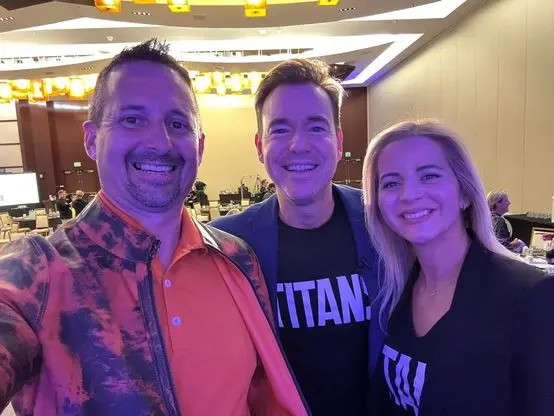
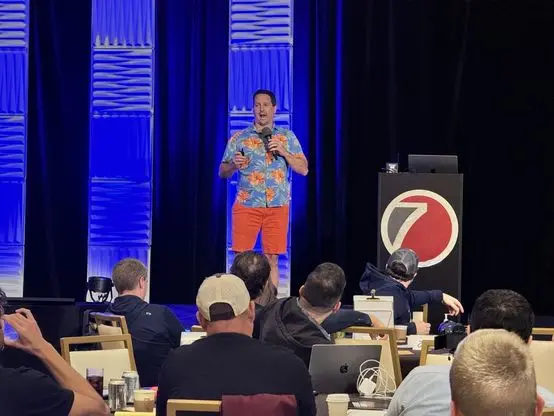
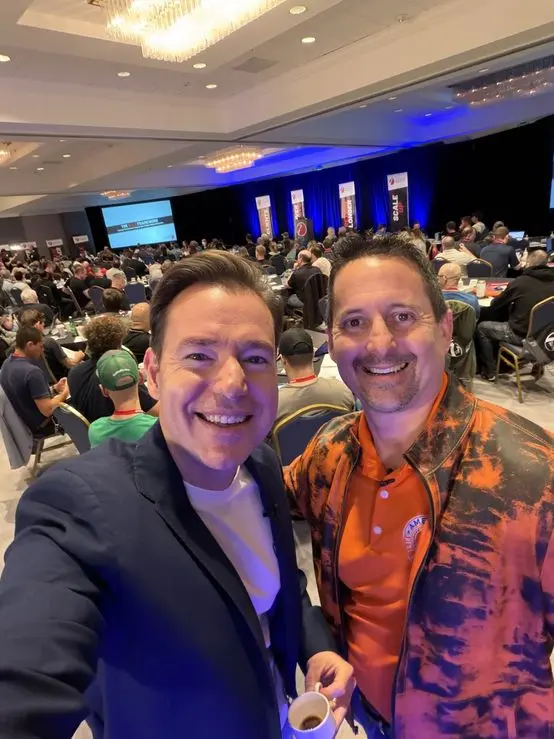
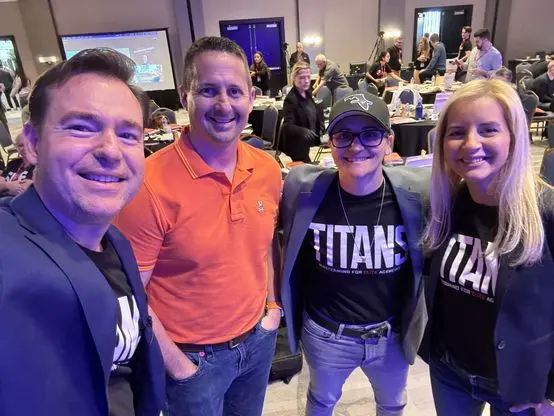
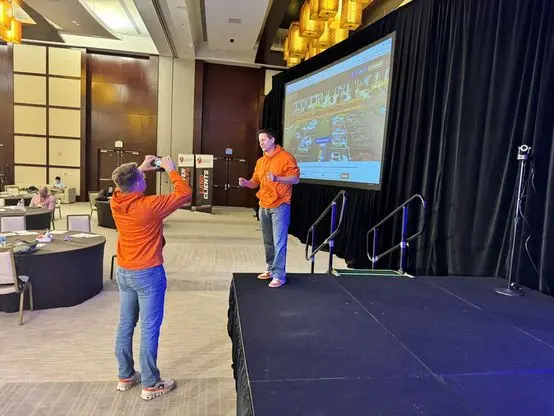
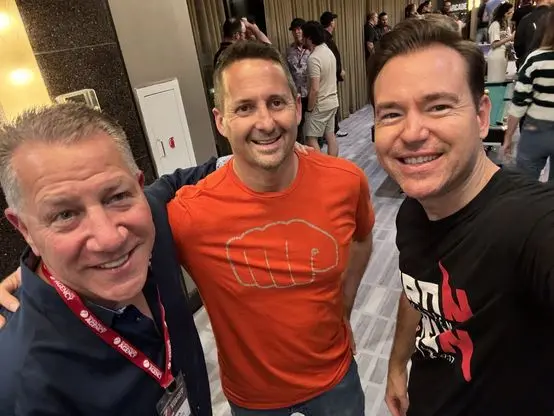
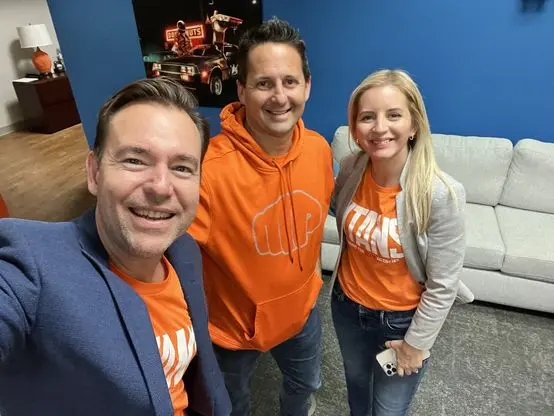
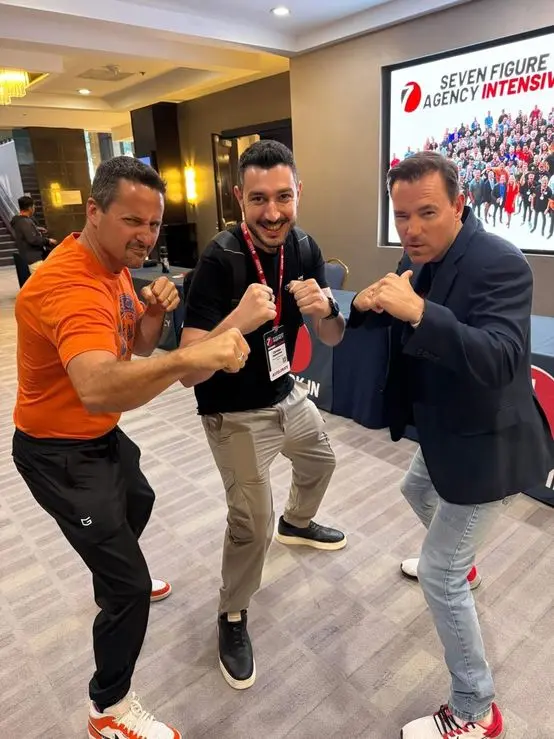
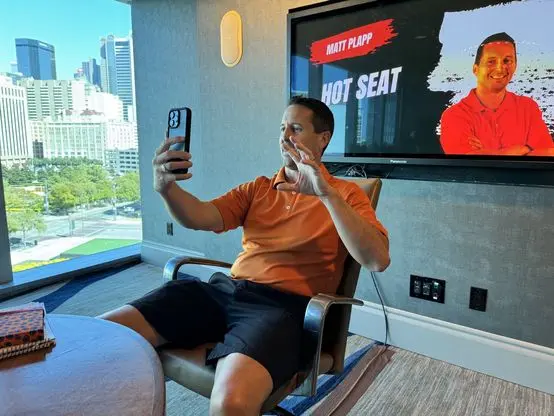
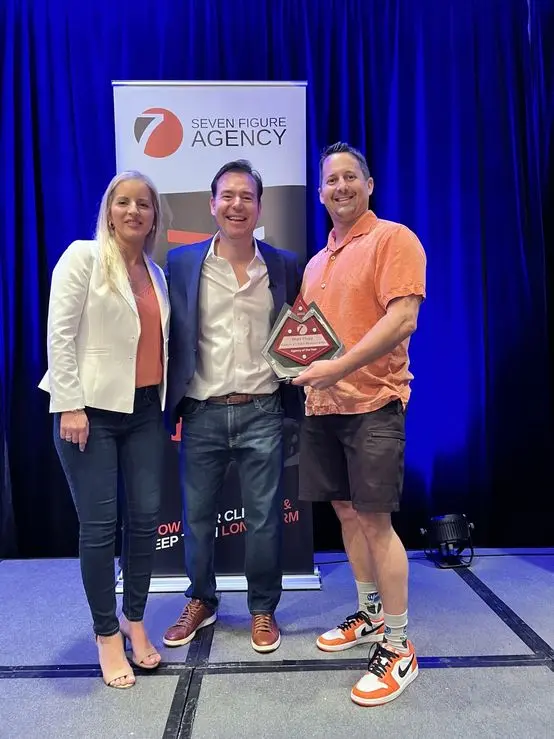
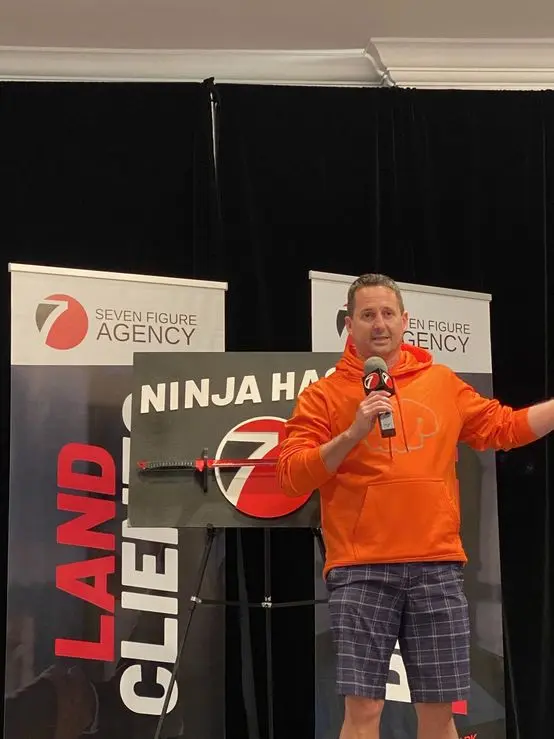
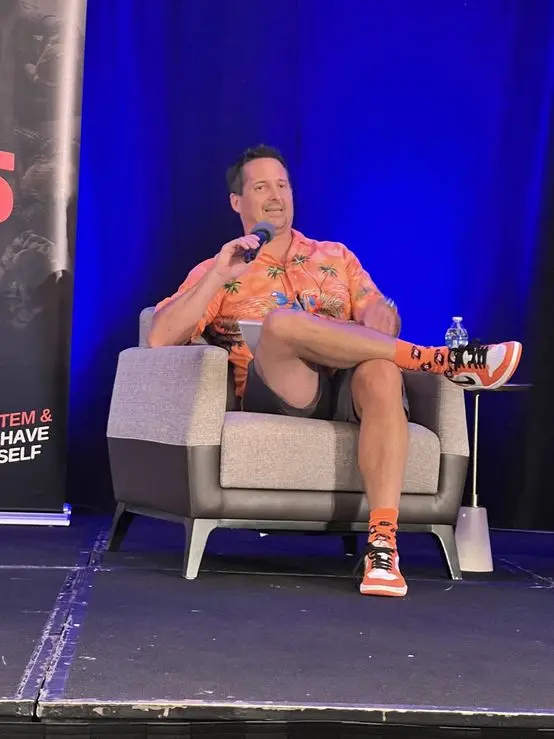
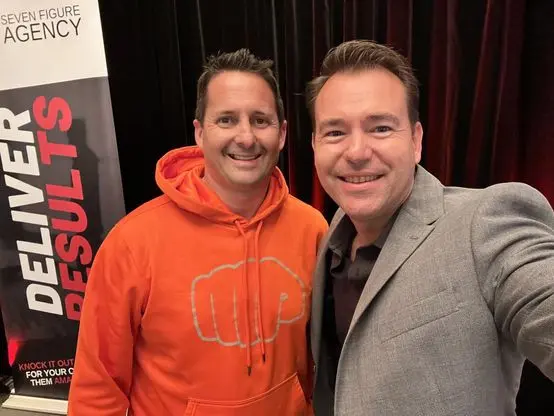
The short version
Prefer the short recap? Here is the same story in his own words.
Matt Plapp on scaling his agency to multiple seven figures
Read the testimonial transcript
Transcript of Matt Plapp’s testimonial video.
Before joining 7 Figure Agency, my agency was seven figures. I was at a good revenue point, but I was stuck at a bottleneck of how to scale with systems, processes, and honestly needing advice from people that had already been there. And in other masterminds I had been in, everybody was down at the bottom. They were in, you know, $20,000 a month, $30,000 a month, and they weren't able to give me the advice I needed to scale correctly. Why I joined this group is kind of funny. 2017, I'm sitting at Traffic & Conversions in the front row, getting ready to watch the guy speak.
I didn't know the guy who was sitting next to me was the speaker, his name was Josh Nelson. And we had a good conversation. He walks up on stage. I'm kind of fanboying. Three years later, July of 2020, I was looking for a new group, and I had inquired about the event. I got an email from Josh saying, "Hey, Matt, it's Josh from 7 Figure Agency. I love what you're doing. I remember having a great conversation with you three years ago at Traffic & Conversions." That showed me the person steering the ship was in the right place.
So before joining 7 Figure Agency, my biggest pain point was understanding scaling of processes. We had systems and processes in place, but it was for under seven figures, and I was trying to find advice from somebody who had already been there, because at that point, all of my advice and my friendships and other masterminds were coming from people who were smaller than me, and they couldn't relate with my problems. So I was looking for somebody that had already been on that path and been down it a long time ago.
So one experience that sticks out to me about joining 7 Figure Agency was actually two weeks ago. I was flying into Dallas for the GoHighLevel event. I was on a panel. I was flying in in the morning, flying out at night, and I, I like to have conversations when I come into town that are deeper than just a, "Hey, how you doing?" And so the first person I knew about was Jonathan Bannister, and I knew Jonathan was a guy that's in the same level I am, that has a really, a lot of, a lot of cool things going on in his business.
And the fact that I could shoot him a text and he drove over to a restaurant and we talked business for three hours before I went to High Level was great, because it's those depth of relationships and those conversations with people that are on the same path that you can't find anywhere else. So if you're looking at joining 7 Figure Agency, I would say look at it this way. Number one, I heard Daymond John speak a few years ago. He said if he walks into a room and he's the richest, smartest person there, he leaves.
And so I think in this group, you're going to find people at all levels that'll allow you to grow your, your business. The other aspect is a roadmap. We all have our phones that get us from here to Kentucky, and we have all the little turns you gotta make. You don't have that in business, and I feel like masterminds like this with 7 Figure Agency, with Josh's leadership and the other people like myself in it, you can already avoid those potholes, avoid those wrong turns, and get where you're going a little faster.
It's not a shortcut, it's just a little faster. So my business with regards to how it's changed since joining 7 Figure Agency is that it's given me more of a blueprint. It's, I already had the focus, I had the determination, and I knew I had the products, but I needed that blueprint for the next level. When you've got a coach like Josh that's already been there numerous times, it's a lot easier to understand how to get where you wanna go, and so more clarity and, and seeing that, hey, before I was like, "How do I become a $200,000 a month agency?" Now I'm like, "How do I become a $2 million a month agency?"

Editor’s Choice on TopMarketingAgencies.com
Restaurant Marketing That Works is an Editor’s Choice pick in the Restaurant category on TopMarketingAgencies.com, the editorial directory of the best niche marketing agencies in the country. Listings are editorial, not pay to play. Agencies are scored on niche depth, tenure in the specialty, client retention, verifiable results, and transparency, then re-scored every year. You can read the full profile on the Restaurant Marketing That Works listing or see how the category stacks up on the top restaurant marketing agencies page.
Want Retention Like That?
Matt Plapp built a niche agency clients almost never leave by making the data theirs and never letting it sit idle. The system he used is the one we teach.