
Moving Industry · Rotate Digital
He Picked the Moving Industry Almost Blind. Now It’s a $5M Agency.
Travis Weathers had one moving company client and a testimonial he could use on every sales call. That was basically the whole strategy. Two years of Facebook group DMs later, Rotate Digital is the top digital marketing agency serving movers across the US and Canada.
Travis Weathers with Josh Nelson, live. Full interview.
Read the full interview transcript
Full transcript of Josh Nelson’s interview with Travis Weathers. Lightly edited for readability.
Josh Nelson: All right. Hello, and welcome to another episode of the Seven Figure Agency podcast, where we're interviewing highly successful digital marketing agencies from across the country on how they've grown, how they've scaled their agencies. Today, I'm, I'm super excited 'cause we're joined by Travis Weathers from Rotate Digital, runs the top digital marketing agency in the moving space. Travis, thanks so much for joining us today.
Travis Weathers: Thank you. I'm excited to be here, excited to share as much value as possible, and have some fun.
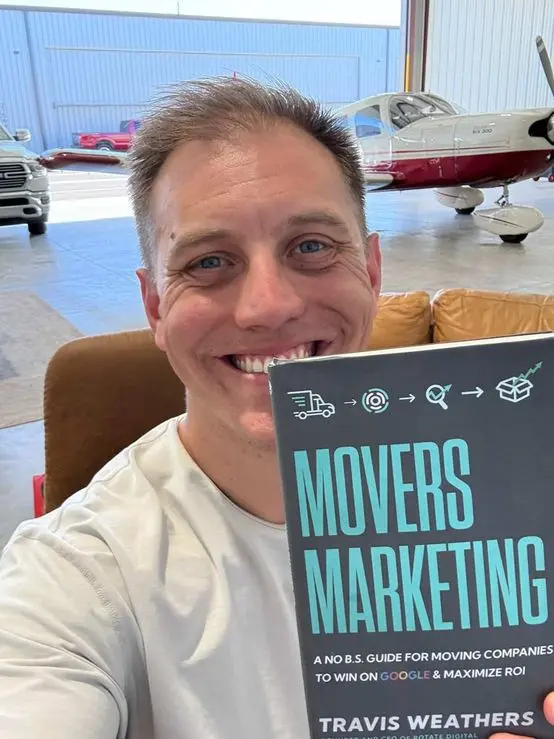
Josh Nelson: And I wa- I just wanna point out for the viewers that are watching with us live on YouTube, th- that's not a fake background. You're, you're actually in a- That's real… An airport hangar right now.
Travis Weathers: I am. This is, this is my baby right here. She's a Cherokee 6, 300 horsepower, and, I finally got a hangar for her, which is exciting. And this is one of the cool things that the agency has allowed me to do, and ultimately, the aviation and flying is really what kind of got this agency started. And so yeah, it's a, it's a fun background to have, and it has a lot of meaning to it.
Josh Nelson: I love it, man. Beautiful setup. Super cool that you've been able to do that. So for, for the aud- for the listeners, just tell us a little bit about your agency, kind of where it sits today. How many clients? Yeah. What's the approximate revenue? What's the lay of the land?
Travis Weathers: Yeah, happy to share. So we are a digital marketing agency. We're really specialized in SEO, so our main offering is websites and SEO- Mm-hmm… Although we do PPC and everything else that an agency kind of needs to play around with. So that's kind of our core focus. We focus on the moving industry, which is, what a wonderful, fun industry that is. So we focus on the moving industry. We have about 175 plus or minus clients, depending on how much we get in churn, currently today across US and Canada. And we're doing about $5 million this year. We're at about a 400 and something, $410, $20,000 run rate right now, and, it's been fun. I mean, that's kind of where we're at today, but it's come with its ups and downs. And just last week I looked at the, I have a profit well, and it kind of shows you your MRR over time, and it's like, it was up and down and up and down. You got these big pushes- Ooh… And it's like, wow, that's a, that's a lot. But that's kind of where we're, we're at today.
Josh Nelson: So good, man. Well, congratulations. Obviously that, like an amazing business you've built over the last couple years. And I'm sure if you're, if you're listening, you're excited to hear kind of how Travis has done this, drop a yes or a like wherever you happen to be watching this, whether live or after the fact. So that's where you're at today. Talk to us a little bit about the journey. How did you get into the digital marketing, business i- in the first place?
Travis Weathers: Yeah. So I was… I, I got a job overseas. We'll, we'll go a longer story shorter. I got a job overseas doing customer service. They needed some help with marketing, and I started, I started, like, working on marketing and, like, learning that a little bit. Then I wanted to make more money. I was like, "I could do this on my own." Went off on my own, miserably failed. I couldn't do anything. I was on my own, by myself. I didn't have a seven-figure agency group to learn from or, you know, it was just kind of go. So I failed. I… So I ended up getting a job selling Bible software and bought a course by Sam Ovens. And so- Ah… The combination between learning how to sell and then Sam Ovens telling you exactly what to do to start an online business, really when that got married, that's kind of when it flourished. And so I was like, "I want to sell something, but I want to sell it reoccurring." Somebody told me about SEO, and you could sell SEO, and I got into a SEO Facebook group and just, I dove in. I learned everything I could. I went to the owners of the group and the admins like, "I'll sell for you. I'll white label to you. Like, I'm just, I'm trying to learn everything." And that's kind of the, how the process started, evolving is I started selling, I white labeled and ultimately all this was happening while I was going to flight school. I wanted to be a missionary pilot. I wanted to get my AMP certificate, become a commercial pilot, and I did all that, which is exciting. But the agency started to pay for all that schooling. Mm-hmm. And eventually through that process, I fell in love with business. I fell in love with everything about business, the impact business can make, and so I ended up changing my kind of career path. Instead of going commercial flying or overseas flying, we ended up deciding to just focus on the business and fly for fun. And so, a good friend was like, "You should just buy your own plane and fly for fun and not be away from your family." So that's what we did.
Josh Nelson: So good. Love that. I wonder how many of us started with some of the Sam Ovens training. Just drop Sam in the chat here, if you, if you, if you went through the samovensconsulting.com stuff, which it's a, just a great training, you know, like, you know. Such a good training. That… I mean, he's the OG of online courses, and I just remember I was drinking LaCroix.
Travis Weathers: I was just- I was doing everything he said just because I needed it and wanted it. 'Cause I bought that course, I think it was 7,000 or 8,000, potentially $10,000 back in the day.
Josh Nelson: Ooh. Ooh.
Travis Weathers: And I think I maybe had $20,000 left in the bank account. So calling my wife and being like, "Oh, by the way, I bought a course," and I didn't tell her about it. I had to make it work or else I think she would've murdered me if I didn't make it work. She would've been mad.
Josh Nelson: Yeah. And, and I think, you know, that's a powerful lesson in and of itself. You know, the investments that we make in our self-development, especially when it feels like a larger than it should be proportion, are the ones that tend to move us forward, right? 'Cause you respect what you, what you pay for, right? And if you, if you had downloaded that same course for free online, you wouldn't have probably paid as much attention. You wouldn't have taken nearly as much action.
Travis Weathers: Okay. So- Every, every time. Even your, even your program. I was… You, you know me, I was hesitant on the wall, and I was like, "I don't know if it's worth it." within two months of signing up, I was like, "Ah, this is so worth it. I've gotten so much value out of this already." It's that, it's that investment into yourself and the business that's hard to do, but makes some of the biggest impact.
Josh Nelson: No doubt. Yeah. Thanks for saying that. All right, so selling Bible software, getting a pilot license, going through Sam Ovens training, just trying to get some money coming in, a passive income on the side hustle deal. Talk to us about how you landed on the moving space. Like, why, of all of the niches to choose, why that? And kind of more importantly, like, what was your selection criteria to get to that place?
Travis Weathers: You know, so I did a, an analysis of the industries and where's the biggest opportunities. No, I wish I had a really good answer for that. I, legitimately was like, Sam Ovens was like, "You've got to pick a niche." And I remember getting on a webinar, you know, training with him and sharing, and he's like, "You love aviation, you should be in aviation." And I couldn't see that. But at the time I had like four, five, six clients, insurance, restaurant, moving company owner, medical, coding company, a honey company, and they were all over the place. And he's like, "You got to choose one niche to get in." And I had one moving company owner, and I've– he was like, "You did great for me." And I knew he would give me a testimonial, be willing to like talk to clients if I was on sales calls. And so it unfortunately wasn't this calculated move. It wasn't this strategic thing. It was blind like, "Well, we've got to do something, and this, it makes the most sense." I didn't know anything about it. In fact, I looked into the industry and went, "There's already agencies there. There's already like a known person." Like I just looked at it and looked at all the objections and things that could go wrong. And I blindly chose the moving industry knowing only that I could get a testimonial from my first client, which is Kyle Pearson. I'd get a testimonial from him, and so every sales call I could be like, "Of course, yeah, here's a testimonial. Call him. I'm happy to refer you to that." And so it was a bli- it was a just a blind choice of like, here's what it is. I've already got this. I know I can sell one more with this. Let's just go all in on moving. There you go. Yeah.
Josh Nelson: And sometimes it's not this deep technical analysis. Rarely is, right? Yeah. 'Cause there's no perfect niche. There's no data that would tell you, "Okay, this is the one I should do." you know, try and find the path of least resistance, like what Travis just said, right? Mm-hmm. Where do I have some client wins already? Okay, I got a client here. It seems like we've done good work. Let's, let's go down that track, right?
Travis Weathers: Yeah. And, and it kind of blossomed from there.
Josh Nelson: So- And look at, look at, look at all the objections. Just note them, but don't let that like totally detain you. You… Like, you'll never find an avenue that's like, "Oh, this is a golden pathway. Nobody's ever been here." It's like, just go and just execute on it.
Travis Weathers: And when I started executing it, I was selling courses by the way, 'cause it was Sam Ovens. Mm-hmm. He's like, "Sell a course." So I was selling a course to moving companies when I barely knew digital marketing, and I didn't even know the moving industry. That miserably failed, and I had people over and over going like, "Do you offer SEO?" And I was like, "No, we don't, we don't offer SEO. We offer a course." "Do you offer SEO?" "No, we don't offer." And then one day I was just like, "Yeah, we do. We offer SEO." And, they're like, "How much?" I was like, "It's $1,000 a month." He's like, "Cool. How do I sign up?" I was like, "Oh, shoot. I gotta, I gotta do this now." So good.
Josh Nelson: I love that. And yeah, that path, trying to sell to local businesses, the course play, lesson learned there, right? Try… Like, you're like, the done for your service is gonna be more profitable out of the gate. You know, maybe once you've got a hundred clients- Yeah… Maybe at your level now you can start to sell courses and masterminds- Oh, yeah… In that same industry.
Travis Weathers: – Totally. Yeah, I feel like it's so much, it was, it's so much easier now. I've got so much knowledge of this moving b- industry. It just, and it's all because I just decided to go all in on one service and just learn it- Mm-hmm… Which is really powerful.
Josh Nelson: So good. So we got that one client really with the idea like, I've got one, I've gotten great results, and that's I think a prerequisite in every industry when you try and go down into the niche, and I can use that as my case study to say, "Hey, look what I did for this client. Would you like me to do the same for you?" So talk to us a little bit how you parlayed that from one, you know, roofing client to your next five.
Travis Weathers: You know, it's kind of like that's the hard move in a lot of cases. Yeah. So w- I sold my first moving client SEO in, it was my very fir- I sold a c- I sold a course, with, to a guy named Nick in November, and he ended up signing up for SEO like four years later. December of 2018, I sold my first SEO service, to a moving company owner. That was 2018. The, it really was a brute force into the industry. And so the really, the only method I knew how to do was from Sam Ovens, and it was this method of get into a Facebook group, don't say anything, add people as friends on Facebook, and then message out to them. And don't, don't make it complicated. Don't ask how they're doing. Just go, "Hey, my name is Travis. I help moving owners get more sales by leveraging Google. Do you need help with this?" And just do that over and over and over again. Every day you wake up for one hour, you add 20 friends, you send out the messages, you do the follow-up, like that is your critical work and you do not focus on anything else but that. And so that is ultimately how I went from then one, or how I got my first one, and then how I ultimately grew really to the snowball of g- of getting that million-dollar run rate was really just through these Facebook groups and through these direct messages. And I had a sales journal. I still have it to this day. And I would put every phone call, how long it took, who it was with, where did they come from, the recording of the call, and then I would journal my emotions because you get on a call and you just, you feel like an idiot sometimes after these calls, and you gotta journal it out, any changes, and you go to the next one. And he said, and I still love this, "Do not change anything until you're done with 30 sales calls." And I personally would actually go 40. Don't change anything. Don't change j- don't change your industry. Don't change anything. Get through 30 sales calls. Learn the industry. Take as much notes as you can. And so it really was the sales journal and then getting into these Facebook groups, adding as friends and playing that playbook literally for like two years to grow these clients. I think I got my fifth client by March, so like three or four months later, I think I was at my fourth or fifth client and, you know, it snowballs. So good. Yeah.
Josh Nelson: I love this. As you're sitting in your, in your airplane hangar at $5 million in annual revenue, being able to look back and say, "Hey, I was like, this was my play," right? "I joined these Facebook groups. I sent these DMs. I wrote down every single sales call, and that was the seed effort that grew to this Titan Level agency." Mm.
Travis Weathers: So that, I mean, that's kind of where we started.
Josh Nelson: Obviously, you've got different strategies today. Like what is it, when you look at your client acquisition approach, what's working best to continue to grow the business and continue to land clients on Clockwork? Like today?
Travis Weathers: Yeah. There's, for us it's not just one thing, but it is probably, like the critical ones are probably three or four things. So, the Facebook, the Facebook group- Mm-hmm… From day one is still and consistently is one of our highest, channels of acquisition for c- new clients. We get referred to, we, have people that we still reach out to people. We get referred to. We in, we engage in the industry on this Facebook group, and it gets probably one of the most referrals and consistent incomes is, "I saw you on the Facebook group." "Oh, I typed in SEO on the Facebook group and I saw that you guys came up." So that is gonna be, one of them. The second one is conferences. That one for us right now, at least in a 18-month or less snapshot, conferences is a goldmine for us, for two reasons. I try my very best to speak at every single conference. I am aggressive on my outreach. I'm aggressive on to the presidents. I speak at… W- in the moving industry, we don't have these amazing, huge trade conferences where it's like $25,000 to go. They're, they're smaller. They're five, $6,000 to go, and there's maybe two of them a year. Mm-hmm. So it's like, all right, well, we only have two conferences. Well, then what we did is we leaned into associations, and we call those conferences. Mm-hmm. And we've gone to almost every single one of these associations with a booth, but with the goal of speaking, and the beauty of it is you go there and it's like I'm speaking to 30 people, and it's really disheartening. Right. But because you're there on stage, and you're like, and some of these people, like I, and I joke, but, like I've gone to conferences where I'm like, "I, there's like 12 people in here. I don't know if they're gonna live another year." Like, they're so old. Like, this is not my clientele. But you've got the one to five people who are looking at you going, "You have been what I've been looking for." Mm-hmm. And so conferences for us right now is the second biggest channel of new acquisition costs of just w- you know, speak, conference list, following up, building that relationship. And I would say the third and final one still has to be referrals. And so we get a lot of referrals for our work, and so the wisdom I would say from that is, like we have had to lean in, just like most agencies, extremely hard on the results that we provide. Mm-hmm. Extreme- Like we are not in 2019 anymore, 2020 anymore, where you can kind of check the box and get away with it and everything's up to the right. You have to lean in. And so getting the good results and making that the number one focus, those are our three acquisition channels right now, I would say the big ones.
Josh Nelson: So good. Love that. And so th- this idea, like getting in the industry, not just trying to hide behind your computer, being on Facebook groups, you know, and sending DMs, but getting live and in person where your prospects are hanging out. In every vertical and every niche, these groups exist, right? Yeah. So find the opportunities to plug in and, you know, don't just have the booth. Stage time- Yeah… Is money time. Like when you can be up at the front, like Travis said, even in a small group, and when you're at the front and you're educating and you're sharing value, that makes you magnetically attractive to the right prospects. Yeah. And they'll come to you, and they'll be willing to pay a premium 'cause they see you as the expert. They see you as the s- as the premium provider. And don't be afraid, don't be afraid…
Travis Weathers: First of all, if you asked me this three years ago, I'd be like, "Networking, who needs networking?" Mm-hmm. Like, just provide results and value, and it'll come. And I kind of still hate it. I hate that the who you know and the networking and the advocacy is so real. Like, don't be afraid to shake hands. Get in front of people. I went to a conference in Hawaii that I wasn't even boothing at or, speaking at, and the only reason… Well, it was a business expense to Hawaii with my wife. That's reason number one. Yeah. But reason number two is I wanted to speak at that conference or that, association. It's, it was more of the coveted association. Mm. And so I went there literally just to shake hands with people and get face-to-face time, and one year later I got to speak at that conference, and that conference or that association when I spoke is now our highest producing association. So it's like that is powerful. And then I say 30 is like sad. I've gone to one where it was eight, where we had eight people show up at a golf and indie event. We signed three of the eight clients up. Like, don't be… The, the numbers aren't, aren't, don't matter. It's who's there and how much are they needing you.
Josh Nelson: Yeah. So, so good. I think such a powerful insight, 'cause it, I think a lot of times when we think stage time, we're thinking at least 100, 200, 300 people in the room. Yeah. And that's been my same experience in plumbing and HVAC where, you know, I, when I do speak, it's usually in one of the breakout rooms with 20 or 25 guys, right? Yeah. And, and it is, it does feel a little bit, you know- Yeah…. I don't know, like that I just wasted an entire week of my life to do this and a lot of time and energy. But you know, that stage time, even in a small group- Oh, yeah… Is super powerful.
Travis Weathers: I went to a New York conference. I'll stop with the stories. I went… But I'm j- I'm sharing all the sad ones, right?
Josh Nelson: Well, this is gr- this is great. Very, very practical. It's the reality.
Travis Weathers: I flew out to New York. I, four days away from the family. I'd already been traveling for a little bit. Went to this conference in New York, again, association. There was probably 45 people there. 40 of them were vendors. Five probably actually moving companies. The disheartening reality of like, what am I here for? Mm-hmm. I'm speaking and it looks cool, but I know there's only five and, like two of them are 95 years old. Like- Right… This is a joke. The worst part, we signed somebody up for $5,000 a month from that conference. Like one person. It's like, well, that was worth it. And so you just never know. So it's like that, just that leaning into, like the action and just trying to, like not to get discouraged too quickly. So good. Yeah.
Josh Nelson: And actually with the, with the group strategy, you actually shared this at our last intensive. You did a whole session on kind of like the strategy behind finding the groups, you know, making sure you fly underneath the radar, connecting with new prospects, sending DMs. Lots of good feedback from the members that went through that. And, and what's great is that strategy, you know, is originally it was Sam really, it was Sam Ovens really unpacked that well, but it still works in today's environment- Yeah… When you do it today, and I think you've got a cool, some cool, you know, innovations that you've brought- Yeah… To that process.
Travis Weathers: Yeah. In fact, I actually had like five or, five or six people reach out and go, "Thank you so much. That was so tactical." Yeah. "I'm gonna take action on that." And two of them reached out since the conference and gone, "I've sold my first person from this." Like, this doesn't take long.
Josh Nelson: Like how long was the conference? Like three weeks ago?
Travis Weathers: It was a couple weeks ago. Yeah, three weeks ago. Yeah. And they've, they're, they're selling new clients, like money, cash in the bank from this exact process. It really is so powerful.
Josh Nelson: So good. And then on the last thing that you said don't, is not to be overlooked is that- It, it becomes a flywheel. If you, if you get clients and you get them great results and you help them understand the value of the results that you get, that one client should be able to bring you two, three other clients in the future. But you can't just sell the client and just focus on the next. You've got to put the systems, procedure, and the team to make sure that client gets an amazing world-class result, and that each client should generate more referrals and more- Mm-hmm… Growth as the company expands.
Travis Weathers: Probably one of the hardest things for me to do is because I am a sales acquisition, kind of like that's, it's more fun for me than focus on client results, 'cause client results take so much time and I can sell somebody new within a week. Mm-hmm. And, again, going back, one of the, one of my biggest regrets, like my million-dollar mistake is I really do wish I had gone heavier into client results and client retention, than I really did. I think I think I could have had an extra $200,000 run, right? If I really focus. Now, again, what ifs, you never know. But like ultimately, like there are… I can see so many clients that's like, yeah, like yeah, it was, they needed more time. Yeah, we could have sold them better and, but it was like we could have just really leaned into the results and we were kind of just checking the box for a solid 12 months in that business frame, timeframe, and it really, it really bit us and we're, we're really, you know, handling the effects of that today. And so 100% agree on the just the world-class experience is so real and so powerful and it's hard. It's easy to overlook 'cause it's like, well, I already have that revenue. You know? It's like, well, look down, look down 12 months from now, are you gonna still have that revenue? Right.
Josh Nelson: So good. So great insights there on how you've kind of, how you've kind of grown from a, "Hey, maybe I should do the, the moving niche," to a $5 million agency serving that industry. To speaking on stages.
Travis Weathers: I would've never believed it. Yeah, totally. Yeah.
Josh Nelson: So the follow-up question here from, Achal and actually this is where we're headed next is let's talk a little bit about the service offering. What does the program look like? What is it that you're selling these moving companies? What are the, what are the deliverables?
Travis Weathers: Yeah. So, I'll, I'll share, I'll share my experience that kind of, is new for us. We used to always have packages like these, like, you know, bronze, silver, gold packages. And, they worked great. They were perfect. And really for us, we were, we were really heavily focused on SEO. I personally, as a business model, love, love SEO. I love the retention, I love the longevity. Clients are already trai- prospects are already trained to think long-term about SEO, and it's your highest margin. It may not be your highest percent margin, but it's your highest gross margin usually with digital marketing services. Mm-hmm. And so I love SEO. That's, so that's our kind of, that's our kind of core critical focus. Like we sell S- PPC and our PPC margins are good, but like 750, $1,000 a month, like, okay, maybe I'm making a margin of $600 a month off that, but I can sell a $5,000 a month, you know, SEO package and make a margin of 4,000 or whatever it is. Mm-hmm. And, so I say, I say all that to go, our service offering is SEO website core with PPC add-on and PPC being Google Ads or Google LSA. Really, that's it. We don't offer… There's a really good, s- CRM in our industry. Really don't offer go high level as a CRM. We don't offer social media management, as a CRM. And so I know that part of that is against the grain and part of that is just, the reality of like, I don't know if I'm good enough business owner to like handle all that and do it with world-class excellence. Mm-hmm. And so it's like dive into the most needle-moving things. Well, I've been asked to do a social media post for four years now, and I still haven't done that. I think we sold our first client on that to experience like what that is like and the risks that come with that. Yeah. So that's our service offering. What has transitioned for us in the last 12 months that we have found, at least in our niche, in our business to be really helpful, is we have moved to a little bit more of a a la carte option. And when I say that, we're still talking about framework packages, but within them we're now going, okay, there's a base package for your brand, and then we can op- almost open up the menu and go, "How, how aggressive do you want to be on these three?" you may have three Google Business profiles. How aggressive do you want to be on each one of these? This one looks like it's already getting good results. We could either do nothing on that one 'cause it'll come with the brand, or we can be like conservative on that one. It'll cost $720 a month or whatever it is. I don't know the pricing. Or like this one needs a lot of work, let's go aggressive on this. And that we get to show them on the call and that then allows them to pick where they want to go. And they almost feel like they're not getting forced into a plan. They kind of choose their own. How aggressive do you want to be on content? How aggressive do you want to be here? Now our base plan and our sales is all about going, "How do we meet your budget with your results and refine that?" You may want to be the biggest company in Texas, but your budget doesn't allow for that right now, so let's start somewhere. And it's that conversation of budget versus, what you can spend versus expectations, and that has actually proven really well. The main reason why it's done really well for us is people are actually willing to spend a lot more than what our packages were set up. Our packages were set up at 15, 2500, 4,000, and I think we technically had a 5,000 we never sold, and our average package was ended up being like $2,000 a month. Over the last 12 months, we've increased that to, a average new, package of $4,000 a month with website and SEO. And it really was just letting them choose the route they want to go and going, "What's your budget for this? Here's how we can craft a good service." So we still have base framework packages, but we really are kind of a la carte letting them kind of choose their path forward on the pricing.
Josh Nelson: I love that. Very, very cool. So what's the, what's the base, like the base package that it starts at?
Travis Weathers: I think it's $2,000 a month- Got it… Is the base package, that it starts at. 2,000 for like, and like it's like we're tr- like don't– You can sign up for this client or- We don't recommend it.
Josh Nelson: You need this and this and this too, right?
Travis Weathers: But you're gonna need more. So yeah, ex- exactly. That's kind of where it's at.
Josh Nelson: Very cool. Lo- love that.
Travis Weathers: And so like at the heart of it's like, let's make sure we've got a website that's built to convert. Let's make sure that we've got- You know, the, the- Oh yeah… Organic strategy to come up, you know, for this, for the results. And then there's optionally, like, if you want us to help drive more l- traffic with paid ads, retargeting, local service ads, we can help with all that as well, but it's kind of plus, plus on top of the base. A little bit. I would, I would say, again, maybe it's encouragement or maybe it's like, "Hey, step up." Like, we don't even offer retargeting ads for our clients. Like- Okay… So there is so much more we can offer, which I think is the exciting opportunity.
Josh Nelson: It really is kind of a choose your own path through SEO, is really it.
Travis Weathers: Got it. And then it's like, okay, what are you spending on PPC? Here's our base packages.
Josh Nelson: We have a startup fee for $1,500 a month, or sorry, $1,500 in the first month.
Travis Weathers: Mm-hmm. And that's gonna pay for a lot of the website, the startup. We have some tracking now with AI and marketing data that we can combine. You know, the whole normal startup.
Josh Nelson: I hate calling it a startup fee 'cause nobody wants to pay a startup fee, but kind of that getting going process.
Travis Weathers: Mm-hmm. But yeah, it really still is that same core, you need a website that converts for sales, priority number one. Oh, by the way, it needs to be well built for Google to understand what you sell, and then SEO. So nothing goes away from that. It's still very much forcing them into that framework foundational, p- package that we ultimately want with the more the customization of going, now that we've got that website, now we're gonna go that process, now we understand your goals. How much do you wanna spend? What's your budget?
Josh Nelson: Where we wanna go, and here's, here's how we can price that out. Super good. Lo- love it. With, you know, being SEO at the, at the core, search engine optimization, with AI and generative search, you know, you know, on the horizon and kind of things changing, how are you seeing that in your marketplace today, and where do you, where do you think that's gonna go over the next couple years?
Travis Weathers: Yeah. So I'll share my insight, my opinion personally. My opinion personally on all of it is AI's cool. It's coming up. We are seeing more and more clients get leads from ChatGPT and Claude and, you know, whatever the other ones are. Alexion, et cetera. Yeah. We've… Yeah. Pr- yeah. So, and we're tracking that, and it's growing. And so it's like we did our AI webinar that you helped us do, with what you offer and, we got that and, put our own little twist on that and did the AI webinar. Surprisingly, our lowest attended webinar- Interesting… But our highest converting- Ah… When it comes to after sales. Okay. So it was really interesting. The people that are intrigued with that are, they're more, aggressive, I guess you could say, with AI. So what I see with AI is going to be AI is changing the game, but ultimately the game is still the same. The game is, we have to create revenue for our clients. We have to create visibility with whatever the online real estate is. Now, if that is ChatGPT, if that is, you know, Google Glasses that we're eventually gonna have to figure out, like our job is purely revenue generation. Mm-hmm. And so that's what we really need to focus on. And so I'm not too scared with AI right now. We all get the benefits of AI with it, cost savings. I'm not too scared right now for AI. I think it's like, yeah, we just have to be open and really on the forefront of like what needs to change and adapt in order to continue the process of creating new revenue for our clients. That's the end goal. We are a revenue generating, generation, you know, company for our clients.
Josh Nelson: Hundred percent. Could, could not agree more. And, with that lens, there's tons of opportunity in whatever niche any of us happen to serve, right? We're just gotta figure out how to help our clients grow and keep them exposed. So, – Mm-hmm… No doubt at all. So we understand now kind of what the, what the service offering is. We know what the niche is and kind of how you're selling it. Let's talk about the delivery side of the equation. What does the team structure look like? How do you, how do you serve that many clients at scale?
Travis Weathers: Yeah. Great, great question. So right now our structure is we have a, director of operations that oversees pretty much all of fulfillment. And then under that we have kind of the website team, the SEO team, the PPC team, our, outbound, team for like link building. I know some of you guys don't do links. We still build links and do guest posts. So we have a whole team for that. We have a, like a backlink, team to do backlinks more manually 'cause we just find that the, it's all the small stuff that creates the bigger wins in the future. And so we have those fulfillment teams. So that's how the teams are structured. Each team has a most important number that they drive that when that number, when that one and most important number gets better, it increases, it increases the value above that, it increases the value of the organization. So that's roughly the structure. Everyone is overseas. We mainly hire in Eastern Europe area. Mm-hmm. Although we have plenty of people that are coming from, we have people in Africa, we have people in Philippines, and, kind of all over the ad hoc, but ru- roughly mostly Eastern European. And then the, when it comes to like our biggest thing for SEO fulfillment, it is sales. Sales finds and brings on new customers. They are, they are basically, they are held accountable for the first 90 days of the client. And by held accountable, it just means if the client is a bad sell, if it's a bad client, if the team's like, "This is not a good sell, and we need to get rid of them for the health of our company," sales doesn't get that commission. So they're in charge of that. The moment sales is done selling the client, ultimately they're off to another pro- that's all their job is to bring on new clients. Then our CSM team takes over. And so what happens is we have our pod or our SEO, team, and they're built into pods. We have a pod leader, over the each pod. I think we have three or four pods. They have a group of clients. Each one has, each SEO person has their own clients. The SEO pod leader has a small select amount of clients, and then helps focus the results and holds their team accountable to the results of their clients, which we are tracking when it comes to local Falcon results, Ahref results, SEO results and so that's the structure, and it's very much then this dynamic between the CSM and the client and the p- and the, and the SEO team and kind of going back and forth. Our pod team doesn't go on client calls unless the client really wants, and, although our SEO team, I think they'd be great account managers. They, they just, they love their clients so much, and they own them so much. So I think that's most of the structure when it comes to fulfillment. Very much as much of assembly line as possible. We have processes that everyone follows, but the way we look at it is, here's core processes that's like, we know this works. You must execute this and execute it with excellence. And then you've got your, like, what you're really paid for, your consultat- consultatitive. That's not a word, but your, your expertise. It's like the things that we just are different for every client that we can't standardize an SOP. That's where that conversation between the pod lead and the SEO person and the head of SEO all kind of come into play, on that. So that's the structure of the fulfillment team for the most part.
Josh Nelson: So good. Love that. So, so international team, all virtual, but really dialed in structure, really dialed in SOPs- Mm-hmm… Getting work done consistently.
Travis Weathers: Any insights- Yeah, they are fully part of the team.
Josh Nelson: Yeah, I was, I was gonna say, any insights on how you build the team culture and kind of the, the, like, teamwork aspect of that?
Travis Weathers: Yeah. They, they are treated as if they are here in person. Although, although we don't have too many people here in my per se office in person, they are treated as a full team member. And so what that includes is they get PTO, and they get time off. They are on all, our all hands calls and our meetings. They're held accountable just like everyone else is held accountable. A year and a half or two years ago, we did a retreat, with the leadership team, and we flew out and brought everybody o- that were overseas into, like, one, city, and we hung out for, like, three days. And so those are the things, like, I know that in our group of, in our, in our group of niche of people that we are around, we treat people overseas normal and with, like, a human being with respect. But there are a lot of companies who treat them as, "You're just cheap labor to me. That's it. That's all you are." And these people are… They're humans, but they're freaking phenomenal. I love- Mm…. Working with our overseas team. The hard part is, like, they're overseas, so we require them to be on till 3:00 or 4:00 PM Eastern time. And so they may do their work during the day, but they have to be available for meetings, Slack messages, emergency meetings, the whole gambit. So we require them to do that. The other thing we do is we profit share in our company, and so they are fully, they fully participate in profit sharing. And so- Mm… They are, they're energized and driven to see results for the, the overall company. So we try to do everything we can to create a good culture. We don't have the fun… I would argue, we don't have the fun culture where it's like we're doing Friday night, where we're having whiskey together. We don't do that as much. Our culture is very driven on success, having fun, you know, not keep- taking ourselves seriously, but taking our work seriously. So that's the culture we're creating right now.
Josh Nelson: So good. L- love that. I think the, like, the key thing there for you, if you're listening and you've got an international team, is you've got to treat that international team member like a true team member, right? They shouldn't be on an island. They shouldn't just be getting Slack messages. Like, bring them into the team meetings. A- and you mentioned a couple times, team, you know, all hands meeting. Talk to us about the meeting rhythms within the company and how you guys… Like, what's, what's the pulse of that?
Travis Weathers: Yeah. So, so, I share that when somebody starts at Rotate Digital, we have a welcome to Rotate Digital, and we talk about value creation, and we say, "Here's some of the ways that we create value in this organization." and some of them are the, just our meeting cadences. So, as a company-wide, we have an all hands team meeting. That meeting happens once a month. That's with everybody, and that's where we're gonna go through the month, right? Birthdays, anniversaries, kudos, wins for the, for different clients that we wanna highlight. We will then go into, lost clients, gained clients. We'll then go into, did we hit our profit share for the month? What was our profit? Did we hit it? Why or why not? What are the things that we see? And then the focus items, right? Here's where we're going. Here's the adjustment. Here's the change. Here's a concern of ours, right? The hoorah or the let's step up kind of conversation. That happens once a month as an all hands. Then below that meeting, every department, we try to cultivate, and again, it's still rolling and still being cultivated, a… You can call them a level 10 type meeting. Like, we call them mind meetings, most important number and the drivers that drive that. And that happens in each department o- on a monthly basis, and then we try to, then, then that trickles down to, like, usually we have, meetings one-on-one depend- with your, like, one-on-one direct report once a week to once every two weeks. And then we have a goal to have performance, snapshots or performance capability checks, where here's the list of capabilities we think you need to have in this company, or in this role to succeed, and we check on that about every two to three months. We have a full-on meeting with them. We talk about what's been good, what's been bad. We put action items on how they can improve on that, and then we grade with n- a numeric value. And so that allows me then to start seeing different departments and that number value change over time and see where there's deficiencies. So that's, I would say, overall our meeting structure, and then we also have, like, a leadership meeting that we have every two weeks, where the, we have three leaders, me included, come together and go, "What's going on? What are the most important things? What do we need to realign with?" And then we have a checkpoint day, which is basically every six months. So you'll see an end of the annual and then mid six year, and the checkpoint day is a one day for the leadership team right now, where we step away, and we kind of look at where we've been. We celebrate wins, but then we go, "Do we need to adjust? Is this like a, you know, a little shock meeting for us? Is this a celebration?" And it's just where are we at? Where are we going? What needs to be adjusted? What do we need to throw away and be done doing? And, and it just allows us one day in the middle of the year to kind of step back and go, "All right, what's the bigger picture here?" So those are probably the core meetings that we find create the most value in the organization.
Josh Nelson: Love it. Love it. So, so important, right? That you've got a meeting rhythm, and there's a place for the team to come together and to be plugged in, to celebrate the wins, to address the issues. So many great insights and takeaways there. Y- you mentioned profit sharing, and I think that's really interesting. Can you talk us big picture through kinda what brought you to the idea of, hey, I should profit share across this entire organization, and kinda how you structured that?
Travis Weathers: Yeah. That w- it was very much of a personal journey, and it was a long journey. I think from the conception of should we profit share through the investigation, the talking to multiple people, the figuring out the thousand different ways you could profit share, that was like a seven-month journey to- Mm… Before finally rolling it out. So, for the entire team, we profit share. The way, the w- the way, the reason why I wanted to do it, let's start with the reason why. I wanted to celebrate with the team. Mm. And I, and I, and it, and I think I was just making it myself because we pay fair. We j- do our- we tell everybody we do our best, our very best, it's never gonna be perfect, but to pay a fair, equitable wage in every role in every department, right? And but there was part of it where it was like I wanted to celebrate wins and, and it just, it felt weird not to have the team know. It felt weird, like we celebrate wins, but I remember, one of the guys on my leadership team now and good friend, his name is Gary, he said, "As an A player, when I was not knowing what was w- w- working well in the company, and ultimately when the company was winning, it was like, 'Cool. Good for you guys.' It really means nothing to me." Mm-hmm. "There's not one single ounce of impact." And I sat with that, and I just didn't like that. I was like, "I want you to feel like even if it's, you know, $5 at the end of the month, I want you to be like, 'Hey, it's something.' Because as we grow the value of the organization, we can grow this kind of profit share." Mm-hmm. And so I wanted that specifically. So we started sharing profit numbers and stuff with the leadership team, and then eventually we rolled out profit sharing to the entire company. And on a high level, and please, this is high level, there's o- obviously intricacies, the way we do profit sharing is we have a profit minimum goal. For us, it's a 20%. We've gotta hit 20% for that month in order to share out a profit share. If we hit 20%, we take 10% of the profit, and we share it, proportionally to every single team member on the team, proportionally to their salary. And so the reality is we went through all the different ways you could do it. We love the salary because it's like our goal is to pay por- proportional, fair, equitable wages based off the role, the value, all this stuff, so the salary made the most sense, right? If somebody was getting paid 5,000 versus 1,000, there's reasons, right? It could be your location. But if it's a loca- if it's the same role but different locations, well, that dollar amount goes, is the same effect. It's like you could come to the US for that same job, but then you're gonna have a totally different lifestyle. Mm-hmm.
Josh Nelson: So we ended up choosing per- proportionally that.
Travis Weathers: And, then every month we take that 10% if we hit the goal, and we share that out proportionally. And so some people are making, you know, $50 a month extra, 100, 150. Some people are making 600. And what I like about that is then it's like we can come together, full transparency on the profit, the health of the company, and then it's like when people are like, "I've already had it," which is the hard thing to hear. It's like, "Well, it's not a lot." It's like, "It's not worth it." It's like, "Awesome. It isn't a lot." Like we have some work to do. Like the value of the organization can grow. Where I'm in this, I tell them, "I'm in this Titan Mastermind. I know people are having agencies bigger than ours profiting more than we can, we are right now. Like we could double this in the next year. Like how do we actually do that?" So right now that profit share ends up being like a, if we can consistently hit it like a 10% boost in everybody's salary, like that's phenomenal. I love that. So that's where we've been with profit sharing.
Josh Nelson: I love that. Thanks for sharing that. I think it's, it's true, like as the company grows and you're like, "Hey, we just hit a milestone," and, you know, you're s- you're like, you're s- celebrating and they're kinda like- I'm celebrating…. "Hey, good for you. But, you know, it looks like you made some, a lot of money." They probably think it's more than it actually is.
Travis Weathers: Yeah. But when you give to the- I see all my money's going to that plane over there. Yeah, exactly, right? But when you bring them into that profit share- Yeah… Even if it's not like all, like it, it creates a team vibe and we're all winning together. I love that. Yeah.
Josh Nelson: I think that's a beautiful insight.
Travis Weathers: And it creates really good conversations because then when whether they're happy or joyful or grateful or upset, it's like, "Cool. How do we do this better? What do you see in your role? Like if you're CEO today, what do you, are there…" And you can, and slowly people are shifting to be like, "I really wanna win." A-a-and then people now are just like, "We're so ready for the all-hands meeting. We wanna know how the company did and like are we gonna get a profit share?" Like- Yeah…
Josh Nelson: That's, that's exciting 'cause that's ultimately how I am.
Travis Weathers: How did the company end this month? Like I wanna go, I wanna f- I wanna get these books closed so I can be like, "Did we make money? How much profit?" Like, you know, "Can I go fly today?" You know? It's like I want our team to do that as well. So- So good. Yeah… It feels very transparent and fun and real.
Josh Nelson: Yeah. A- and I think it's important, you know, if you're listening to this, you're like profit versus revenue, what's the difference?
Travis Weathers: We'll just, we'll, we'll base it on revenue. There's a big difference, right? The most important number in your company is not how much revenue there was, what the profit was. And so don't make the mistake of trying to do a share based on revenue growth. Make it on the actual net profitability in the organization. That way it's like there's a constraint, right? Like we wanna grow the company, but there has to be profitability, and that makes everybody think along those lines as well- Mm-hmm… Which I think is another really good benefit. Money that you take home, that's what you have to do it all off of. And even in our profit share, I'll lean into a couple more specifics. In our profit share, when we pay that out, that becomes an expense line item on the next month. Mm-hmm. So it's like i-it really is truly like what the company is doing at the end, and then we do hold 25% of that profit share. We hold that to the end of the year because we have to finish the year at 20%. And so it allows just some kind of tactical, actionable experience for every employee at the company and team member to go, "I can't just create short-term value. I have to think about the long-term vision." And so we hold 25% towards the end of the year. So that's another kind of thing that we do in that.
Josh Nelson: So good. So many great insights and takeaways there. So we– let's talk a little bit about retention. Right? You know, at your s- size, 100 plus, 100, you're thinking 170 or so clients, like not easy to keep everybody engaged, on board, sticking around long term. Talk to us about how you think about retention and some of the strategies you've put in place.
Travis Weathers: Yeah First, I drool over retention. And so it's like I always want more retention. And so we believe retention is very holistic, but it does fall on the CSM department. The retention does fall on them. We look at them, and we try to get them to be like, "This is… You're a mini CEO of your own book of business." Like, retention is on you. Of course, SEO results drive that, but we all know that clients can go away with SEO results for a long time. So it is experience. It is how well you communicate. And so we have put that retention mainly on the CSM department, knowing that just like everything else in the entire company, there's intricacies, and it all comes together to help. And so that's a little bit of who's responsible for retention in our department. Everybody talks retention, and we all like to talk numbers, and we all like to throw numbers out. And you'll, you'll feel a little of the cold-hearted part or the hard-hearted part of me where it's like everyone likes to throw numbers out. It's like, okay, what is retention? So when I speak about retention, what we talk about is we look at revenue retention because especially as we grow this business and because we're young, it's like I don't mind getting rid of a $1,000 a month client that we've had for a while if we then can upsell a really good client and have them spend $1,000 more.
Josh Nelson: Mm. And so although I care about client retention, I really am curious about client, revenue retention.
Travis Weathers: And, and so when I say we're at X percent, that is really a revenue retention. And so the way we kind of focus on it is two buckets. One, it's revenue retention, and we have a current goal of, like, 5.5% per month, which really, if you think about it, kind of sucks. Mm. It's like that's s- almost 72% of your clients that are gone at the end of the year. Like, that's not good. And so part of it is like, yeah, it's the reality, and so we're trying to ever drive that down more and more. And the ways that we look or track that is, the other thing is we have upsells. And so we allow our team to go like, "Okay, you may churn out 3% retention, but you upsell some good clients," right? You might lose some bad clients. You upsell some good clients, and it's like, great, you're, you're filling this bucket of revenue, and so that mitigates the retention that they're ultimately, requi- or, like, held responsible for. Mm-hmm. And so that's how we look at retention. It's like keeping clients, and it's revenue of clients because we are drastically changing the way our books look and that it's upsell opportunities to upsell good clients and have them spend more and more. But it has to be strategic. We've done it where we've had a client doing, $9,000 a month. We upsold them $6,000 a month more. We didn't really talk about budget. Next thing you know, it's too much money, and we lose them all, and it's like, that sucks. So we have to be very strategic about retention. And so I think on average, we're about 5.5% of retention, revenue retention over the course of the year, and it's not good, and we wanna get better at that. It relies on the CSM department, and I very much look at, all right, we're gonna have some clients that leave, and it's like, okay, bye. Like, I'm not too sad, but I'm always looking at that client shouldn't have left. Why? And so one of the things we put in place now is just a full focus on ROI and revenue driving. We can talk about SEO results. We can talk about H1 tags. We talk about local Falcon scans. We talk about lead snap snags. We can talk about all of it, right? And it's like, okay, but our clients basically have the common language of revenue, return on investment. Where was I at? Where I'm at today, and where am I going? And so- Mm… We are diving so d- like our CSMs are required to, like, know the revenue of their clients, know where they were at before when it comes to Google revenue, know what that ROI looks like, good, bad, or ugly. Like, it doesn't matter. Know so that we can improve, and the client can see that and see that being improved. So we have seen that the heavy focus for us to help retention is coming into ROI revenue conversations.
Josh Nelson: So, so good. And it just kinda goes to show you, even at a world-class level, you know, it's very hard to get much better than a 5% monthly churn. And so- It's hard… You know, don't, don't beat yourself up. Like, you know, i- if you're running an agency and, I mean, you get a 6%, 7%, continue to focus on it, continue to improve, but don't let it bring you down, right? I mean, like, you know, just keep pressing forward. Yeah. Keep innovating. Keep improving. – That's…
Travis Weathers: You're, you're so kind. I'll, I'll, I'll be over here the, the, bad cop. If you're a smaller agency though, and you're doing, you know, $80,000 a month and you're losing 7%, 8% of your revenue each month- Right. That's horrible… I personally would have a hard look at, like, what we're actually driving. Are we driving actually real results that make a change in this person's business? If not, I need to change my service. Yeah. Because you should be holding those clients more because those should be more intimate clients because you have smaller ability to be more intimate with them, so.
Josh Nelson: Yeah. Good, good point. So, talk to us a little bit about the CSM team. So I know it's a pod structure. Where do you find those people? How do you train those people? Let's just talk a little bit about that.
Travis Weathers: CSM team, I love the team, and it's, like, the hardest department 'cause it ha- feels like it's the most vague department too. It's like, ah. So I… They, they are so good right now. So where do we find them? How do we train them? They are all mainly US-based. We hired our first, person from South Africa. Very excited for her. I think she's gonna crush it. She starts next week. I'm excited for that. Really, this person was so good, it wasn't even that much of a cost savings for us. Mm. I just think she's gonna be phenomenal. But there is some, you know, salary arbitrage that we were able to do, which is exciting and kind of a excitement for the efficiency of the department. We have found the, the clients that succeed really well have really good personalities and can engage with their clients really well. They have some kind of digital marketing background. And there's something about sales or customer retention that they have in their experience or the way they work that does really well. In terms of training's hard. There's so many processes, and we are always changing in this department 'cause we're always trying to get better. But we kinda look at it like there's probably some, like, three core critical things you do as a CSM. Critical thing number one, that 30-minute, 45-minute monthly call with your client. Mm-hmm. We need to nail that down right. What do we need to… What's our checklist? What do we need to get done beforehand, during, and after? How do we go through that? Like, that is critical. Like, above all else, if you– I ask this on my interviews for CSMs. I say, "If you were handcuffed, could not do anything else in your role but one critical activity, call, text, email, what would it be?" In, in a- A good answer, in my opinion, is the monthly call. And it's like, great, I agree. Therefore, how do you get so good at that monthly call? What is in that monthly call that makes it so valuable? And that is what we focus on. So crit- a critical function is training on how to do that call well. Part of the things that go into it is like, what are the results, good, bad, or ugly? How do you g- then get ready to share all these different results? Where do you point them to? What are the wins? Then what is the revenue? Where is the ROI? We may be in the first three, four months, it's we need to talk about it, but it's gonna be something that is not really needed to be a forefront conversation, where month nine, 10, 11, 12, very much of a forefront conversation. So we go through the critical, things like the emailing, the conversation with the clients, how to look at reports, and that's kind of a little bit of the training. Fantastic. Yeah.
Josh Nelson: Lo- love, you know, kind of the transition to international talent, even though it's, it's great to have US talent in those, in those seats as well.
Travis Weathers: We've also kind of, you know, gotten a lot of people from South Africa, and it's worked really well for us. Exciting. Yeah. Yeah. It's, it really is exciting. In terms of the structure just for, the things that, like, I forgot, that people really care about, it's like our cl- we used to have our CSMs manage about 40 to 50 clients. That was a mistake FYI.
Josh Nelson: Mm. Too many, right. Too many.
Travis Weathers: Now they're somewhere between 20 and 30 clients. Thank you, Josh, for that wise wisdom, almost 12 months ago. So they're about 20 to 30 clients. They are right now, at least current snapshot, I'm not telling you it's good, bad, or ugly, but current snapshot, they're all rev- you know, running about 75 to $95,000 of revenue under management. Each one is what it ends up, being for those 20 clients. And they are, right now paid a base and then, and then, paid for upsells. I think we are transitioning to more of a commission plan structure, where it's like you're paid a smaller base, but then it's based off of how many, how much revenue you have under contract. Mm. And then we ultimately have a head of the CSM department. We have a CSM lead that is helpful in kind of all of that, and then we have the CSMs. And we have currently one, two, three, four, hiring our fifth and sixth one with a head. So it'll be a comp- a department size around seven.
Josh Nelson: So- With the hope of growth in the future.
Travis Weathers: Absolutely. Yeah, yeah, definitely. Yeah.
Josh Nelson: Travis, this has been amazing. Thank you so much for sharing. Congratulations on growing it, you know, a $5 million and growing agency in the, in the moving space. You've crafted a, an amazing life with the hangar and the, and the plane and the whole nine yards. If you had one piece of wisdom to wrap up today for that agency that's trying to get to the next level, that one little piece of wisdom, what would it be?
Travis Weathers: Hmm. There's so many pieces of wisdom. I'm gonna go a little less tactical, which I know is… And I'm happy to go with tactical wisdom after this. But I would say this, agency life is not, is not easy. It's hard. It's demanding. It's up and down. You have people come to you thinking you're gonna be the savior of their business. So I would just say the piece of wisdom is learn to have fun and struggle better. It, the struggle is part of the journey. So how do you struggle better? How do you struggle better where it's not as emotional, right? And you can then write down your emotions in a journal and then objectively look at it. How do you struggle better where it's like it feels like you need to give 18 hours a day, and it's like you might, but how do you struggle better so that you get to be at home with your family a little bit more? Not to create the lifestyle business, I don't, I don't see that being valuable in an agency space at least at our size. But to be, "Hey, I'm struggling through creating this business, creating value, helping our customers, getting a better business, but I'm struggling better because XYZ," because I get to be home with my family a little bit more, because I get to make dinner every night, or because I get to live the lifestyle I want, or because I take Fridays off. Like, don't be a f- don't, don't be upset that it's hard. It's gonna be hard. It sucks. Have fun while you do it. You have to be the person in your company that has the most fun and creates that fun experience and creates that fun culture. And struggle through this, but struggle better and look at the ways you can struggle better. I think that was a piece of advice I was given like nine months ago when I was deep in depression of like, "This sucks. How?" And it was like, "Struggle better. Have fun while you do it." And it's like, yeah, you know what? Life is short. I g- I've gotta do that. So that'd be my high-level non-tactical wisdom piece.
Josh Nelson: I love it. Yeah. I think that was beautiful, right? Enjoy the journey, struggle better. Travis, if people wanted to connect with you or kind of get to know you better, what would be the best place to connect with you and, and go deeper?
Travis Weathers: Yeah. I love connecting. I love talking agency life. I think I've loved more of that in the last 12 months than ever before. So if you ever have questions about details, I'm, I'm really an open book. I've always tried to create those mentors, like you and other people. And so, probably the best way to get ahold of me is either Facebook Messenger or Instagram Messenger is probably the easiest and best way. @travisweathers for Instagram, and then Facebook, just type in Travis Weathers. Look for the most handsome man. It's probably me. Yeah. And, you know, and reach out to me and send me a message. If you add me as a friend, there's a lot of friend requests that have just been sitting there, so just message me. And, that's probably the best way.
Josh Nelson: Fantastic. Travis, thanks again for coming on and sharing. If you got value, be sure to drop a comment here below. Reach out and thank Travis for his abundance mentality, his willingness to come on and just share what's worked with him and how he's grown. So Travis, thanks again. And for those of you that watched or listened, thanks for being here, and we'll see you all- Thank you… We'll see you on the next one.
Travis Weathers: Thank you, Josh. Thanks for everything you do. Appreciate it.
Where He Started
Travis got his start doing customer service for a company overseas that needed help with marketing. He picked up enough to think he could do it on his own, went out solo, and, in his words, miserably failed. There was no group of other agency owners to learn from. It was just him, guessing.
He took a job selling Bible software to pay the bills and bought a course from Sam Ovens with money he hadn’t told his wife about. Around $7,000 to $10,000, out of a bank account that had about $20,000 left in it. He had to make it work or, as he puts it, she would have murdered him. The combination of learning how to sell and Ovens telling him exactly what to do to start an online business is what finally got things moving. He wanted to sell something recurring, landed on SEO, and dove into an SEO Facebook group to learn everything he could, offering to white label for the group’s admins just to get reps in.
A Blind Bet on Moving Companies
Ovens kept telling him to pick one niche. Travis had five or six clients scattered across insurance, restaurants, medical coding, a honey company, and one moving company owner. He had no market analysis, no data telling him moving was the opportunity. What he had was a moving company owner willing to give him a testimonial and take reference calls from prospects. That was the entire selection criteria.
His first attempt at selling into the niche was a course, because that’s what Ovens taught. It flopped. Moving company owners kept asking if he offered SEO. He kept saying no, we offer a course. Eventually he just said yes, we do, for $1,000 a month, and someone asked how to sign up. He sold his first SEO client, a moving company, in December 2018. He got his fifth client by that March, using a method with almost no moving parts: join Facebook groups quietly, add 20 people a day as friends, send the same simple message, log every sales call in a journal with the outcome and his own emotional reaction, and change nothing about the approach until he’d done 30 to 40 calls. He still has that journal.
That grind for two years is what built the base. Today, Facebook groups are still Rotate Digital’s top acquisition channel. The second is conferences, specifically the smaller association events in the moving industry that cost $5,000 to $6,000 to attend rather than the $25,000 trade shows other niches have. Travis has spoken at rooms of 45 people where 40 were vendors and two of the five actual movers were, in his words, 95 years old, and still walked away with a $5,000-a-month client. He signed three clients out of eight attendees at one golf outing. The lesson he keeps repeating is that the size of the room doesn’t matter as much as whether the right person is in it.
The Million-Dollar Mistake
Not everything scaled cleanly. Travis is direct about the thing he’d fix if he could go back: for a solid twelve months, the business leaned hard into sales because that was the part he loved, and coasted on client results and retention because that part takes real time.
The operational version of that mistake showed up in the customer success team, too. Rotate Digital used to have each CSM managing 40 to 50 client accounts, which Travis now flatly calls a mistake. CSMs are down to 20 to 30 clients each, running roughly $75,000 to $95,000 of revenue under management apiece, with the mandate to know each client’s actual return on investment cold. He’s also had the reverse problem: upselling a $9,000-a-month client by another $6,000 without a real budget conversation first, and losing the account entirely. Revenue retention still sits around 5.5% monthly churn, which he calls not good and is actively working to lower, mostly by forcing every CSM conversation back to ROI and revenue instead of vanity SEO metrics.
Where He Is Now
Rotate Digital runs on an SEO-and-website core with PPC as an add-on, deliberately narrow: no CRM offering, no social media management, nothing outside the highest-margin lane. Over the last 12 months Travis moved away from fixed bronze/silver/gold packages toward a menu built around each client’s Google Business Profiles and budget, letting prospects choose how aggressive to go. That single change took the average new package from about $2,000 a month to about $4,000 a month, off a $2,000 base and a $1,500 first-month setup fee.
The company is now doing about $5 million this year, roughly a $410,000 to $420,000 monthly run rate, across 175-plus clients in the US and Canada, fulfilled by a mostly overseas team in Eastern Europe, Africa, and the Philippines. Fulfillment runs in pods, each with an SEO lead accountable for their group’s rankings and results, alongside dedicated PPC, website, and backlink teams. Everyone on the team, wherever they sit, gets PTO, sits in on the same all-hands meetings, and shares in the same profit pool, 10% of profit split proportionally to salary once the company clears a 20% profit month, with a quarter of it held back until year-end so nobody optimizes for a single good month. The company runs a monthly all-hands, department-level meetings on their most important number, weekly one-on-ones, and a twice-yearly checkpoint day for the leadership team to decide what to keep and what to throw away.
Travis flies his own plane, a Cherokee Six, out of the hangar he finally bought, which he says the agency paid for in full. His closing advice for agency owners chasing the same climb wasn’t tactical, it was about the process itself: learn to have fun and struggle better, because the struggle is part of the journey and it’s not going away just because the revenue got bigger.
What made it work
- One testimonial, one niche, no analysis. Travis picked moving companies because one existing client would vouch for him on every sales call, not because of market research.
- The Facebook group grind, done daily. Join quietly, add 20 people a day, send the same simple message, follow up, repeat. No shortcuts, no gimmicks.
- A sales journal and a 30 to 40 call rule. Log every call, the outcome, and his own emotional reaction, then refuse to change the approach until he’d logged 30 to 40 calls.
- Small rooms still close deals. Three clients from eight people at a golf outing, a $5,000-a-month client from a room where 40 of 45 attendees were vendors. Stage time works even when the crowd is tiny.
- À la carte pricing tied to a real budget conversation. Replacing fixed bronze/silver/gold tiers with a menu built around each client’s goals took the average package from $2,000 to $4,000 a month.
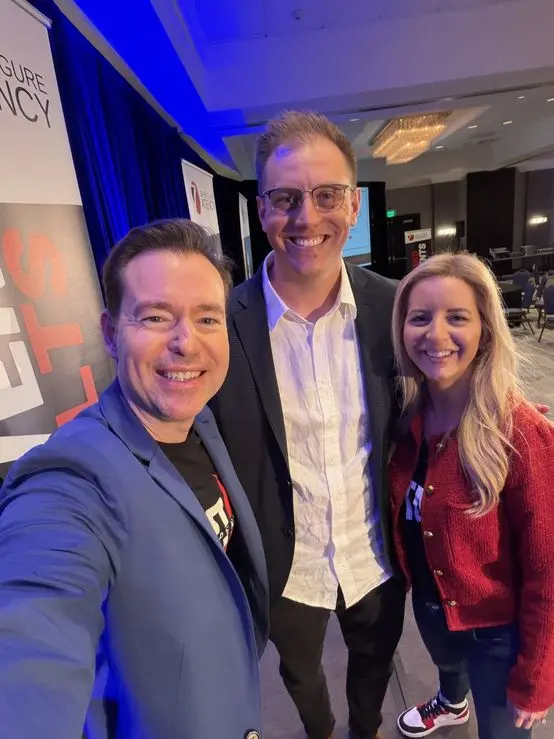
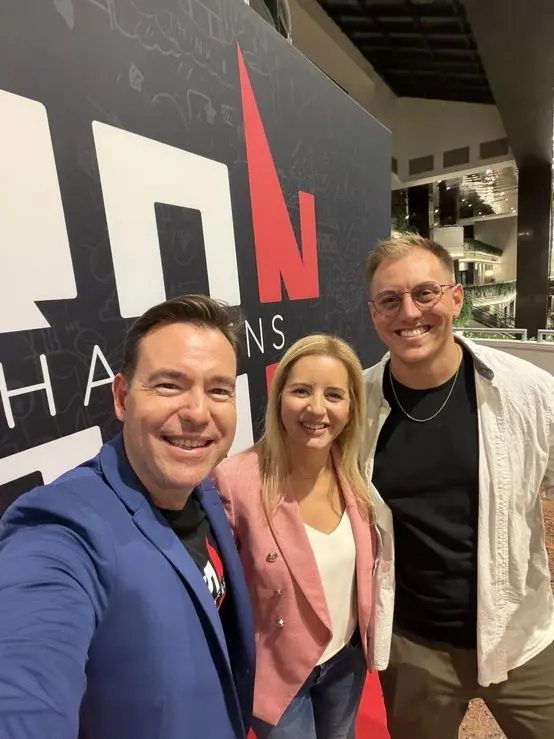
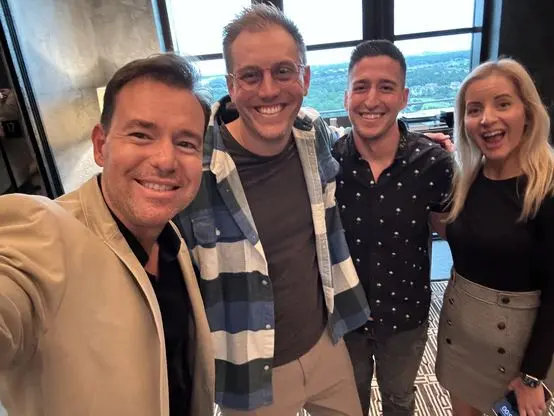
Travis in the Community
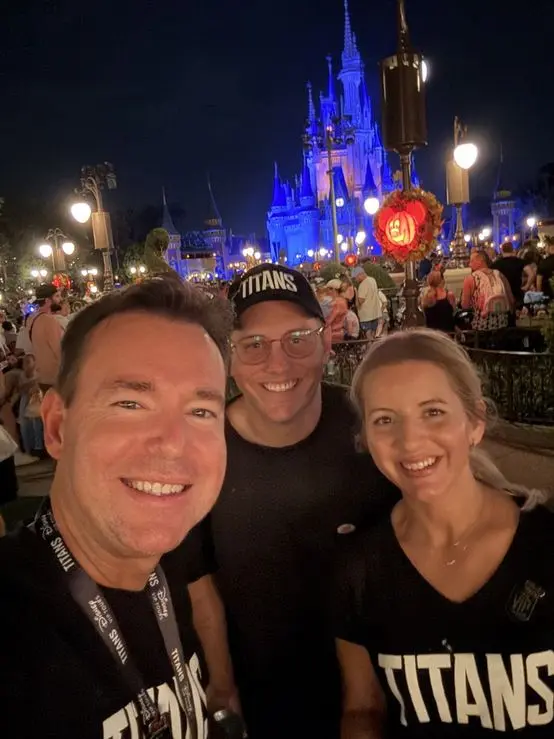
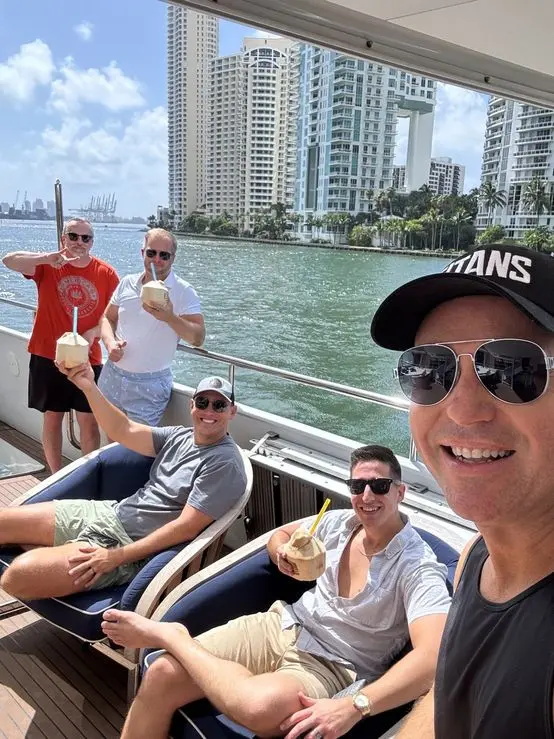
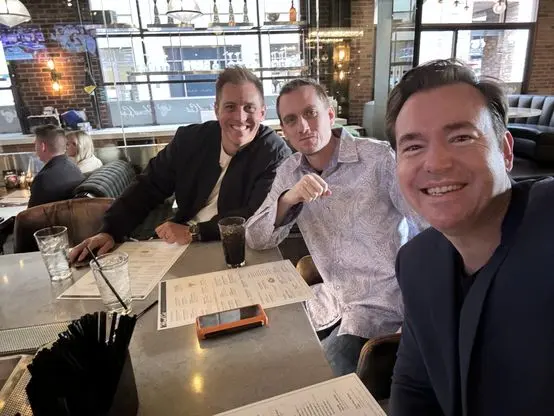
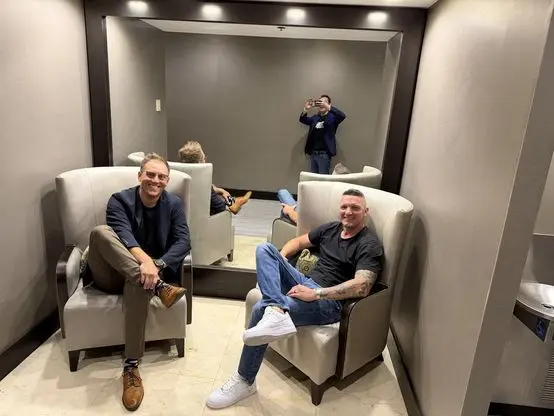
Travis has been a fixture inside Seven Figure Agency and the Titans mastermind, from event stages to mastermind rooms to the road trips in between.



Editor’s Choice on TopMarketingAgencies.com
Rotate Digital is an Editor’s Choice pick in the Moving Company category on TopMarketingAgencies.com, the editorial directory of the best niche marketing agencies in the country. Listings are editorial, not pay to play. Agencies are scored on niche depth, tenure in the specialty, client retention, verifiable results, and transparency, then re-scored every year. You can read the full profile on the Rotate Digital listing or see how the category stacks up on the top moving company marketing agencies page.
Ready to Pick Your Niche and Go All In?
Travis turned one client testimonial and a Facebook group grind into a $5M agency. The system he used is the one we teach.