
Plumbing Marketing · Mammoth Marketing for Plumbers
He Left Alaska TV Ads to Build a $160K/Month Plumbing Agency
Tyler Williams bought his boss’s print, radio and TV shop in Fairbanks, Alaska, watched those budgets shrink, and rebuilt the whole business around one industry: plumbers. Today Mammoth Marketing for Plumbers runs on a fully remote 30-person team, and Tyler is one of the most recognizable faces in home service marketing because he posts the videos himself.
Tyler Williams with Josh Nelson, live. Full interview.
Read the full interview transcript
Full transcript of Josh Nelson’s interview with Tyler Williams. Lightly edited for readability.
Josh Nelson: All right. Hello and welcome to the Seven Figure Agency podcast, where we're interviewing highly successful digital marketing agencies from across the country on how they've grown and scaled their companies. And I'm super excited today to be joined by Tyler Williams from Mammoth Marketing for Plumbers. He's grown his agency over the last couple years to multiple seven figures serving that industry. Excited for you to hear his story, the lessons learned. And so Tyler, thank you so much for being here.
Tyler Williams: You're welcome. I'm excited to do this. This will be fun.
Josh Nelson: So give us the current lay of the land, approximate number of clients, approximate MRR, kind of the structure of the team.
Tyler Williams: So we're sitting at about currently one sixty MRR. We were up, you know, things go like this a little bit. Yep. And so at our peak, we were sitting at about one eighty MRR, and then it's other projects on top of that. And then the average sort of client load right now is about sixty-five, sixty-seven, somewhere in there. I didn't check the final number. And then on average client, like per client, we're sitting about anywhere from twenty-two fifty to twenty-seven fifty per client as far as packages go.
Josh Nelson: Nice. Well, congratulations. You know, I know it's been a journey over the years getting to that seven figure and now multiple seven figure level, and there it's never a s- a straight line. We're talking about that before we even kick things off, right? There's ups, there's downs. But take us back a little bit. You know, how did you get into the digital marketing agency space i- in the first place?
Tyler Williams: So I started making television ads almost directly out of high school and started working for agencies and had a, a kind of a squirrely path towards landing at an agency, and it was in Fairbanks, Alaska, and it was a print– I'm sorry, a traditional marketing agency. Like all we did was print, radio, and TV, and that was fine for years. And then about eight years after I started there, 'cause I started in like two thousand and five is when I started working with businesses. But, after working there for about eight years, I bought it and, 'cause the o- the owner wanted to retire, and I was like, "Oh, that's fun. I just had kids. I don't want to retire." So, he was like, "You should buy this." And I was like, "I don't know. Maybe." And we eventually talked it out, and I bought it from him. All the clients came over 'cause they knew me at that point, and I had kind of grown from video producer to like production, like overseer inside of the agency, and I knew, I knew everything pretty much in and out, and the team was actually pretty solid for what we were doing at the time. But when I took it over, I was already freelancing and dabbling in, digital marketing because I knew that TV and radio was not gonna pay the bills much longer. So we made the shift, locally within like the Alaskan market for, you know, as soon as I took over, we started dabbling in Facebook and Google Ads and quite a bit more websites and making that transition, watching those traditional budgets drop, trying to find a sweet spot of MRR or project work, and we did a lot of project work, and that is eventually, like we shifted to plumbers, which is a little bit after I found your program.
Josh Nelson: So- So, so it started in, was it TV and radio specifically in Alaska companies, or were you serving everybody with that same type of thing?
Tyler Williams: No, it was only Alaska. So we were in Fairbanks- Okay… And we would, I would fly to Anchorage to go and deal with clients there, and that's a forty-five-minute flight or six-hour drive. So sometimes I would drive if I need to take a lot of gear with me. But had a, like our agency served all around the state because of the way the state is situated. It's a weird place. But like, so it was very much like we were statewide, but we worked with kind of that smaller, more mom-and-pop shop or single practice medical sort of zone. So it ended up being kinda one-to-one of the general world where we're going after plumbers as well.
Josh Nelson: So that's where you started. It's kinda early on TV, video, decided, man, this project stuff isn't great. This thing starts to, you know, go away. Talk to us about the pivot to, digital marketing and plumbing specifically. Like what made you choose that niche and kinda like what was the journey there?
Tyler Williams: So I finished paying off the old owner really is what, where this whole thing started, and then, 'cause that was my North Star, was like, "I don't wanna miss a payment to this guy. He was good to me. I wanna be good to him." And thankfully, so that worked. And then I reached this point where I was like, "Okay, I've got this extra income. It seems irresponsible to not use it to fuel our next steps." And I– but I was rudderless. I didn't know what to do. So I started looking around, and what ended up happening is in about twenty fifteen, my brother started his plumbing company a- after, I mean, he went back and forth, had a couple false starts and stuff. But, then his plumbing company took off, and it was the first time that I had the luxury of like being at ground zero instead of accepting a company that had already kind of been in the world for a little bit. And so I was able to help him get like the foundational stuff down and really get my feet even deeper into like, what does, what does this look like if I'm gonna run a digital like zone? And where do our services sort of land and things like that. And he exploded for that market and then ended up selling later, but like the success was so easy. I don't wanna say easy, but it was just, it was, it was such a good study and such like a zone that I knew I could tap into if, like I had questions. I, it like as he grew, I grew, and I got better as he got better and all this. So we kinda ended up going up together in our own zones. And then when the time came to like say, "Okay, pick a lane, bud," like I went, "Well, this is my best client. I know it's my brother, but it's my best client." And so it be– I had two really good clients, and I waffled between two industries. It was plumbing, and it was varicose vein clinics. I don't like HIPAA rules. So I was like, "Let's go after plumbers. It seems quite a bit easier than a regulated industry." So that's kind of like what happened there. And then we started trying to chase plumbers outside of the Alaskan market because I knew also like the Alaska's very resource like dependent. Price of oil had hit a dip, and I was hearing economic struggles from all my Alaska clients, and I was like, "I wanna diversify my income stream a little bit here, so it's not in one state." And so that also helped push the notion to go wider, and I wanted to move. I wanted to get out of Alaska, and I knew that would take Me building a business that wasn't dependent on that, on that state Mm-hmm. So that was part of it.
Josh Nelson: So your brother was running a plumbing company. You're like, "Okay, let's, let's market." You guys had this amazing success there. You're like, "Hey, this is kind of a cool pool to kinda play in rather than trying to be all things to all people." Talk to us a little bit about how you made the transition from y-your brother to, you know, like your first client, because that's usually the hardest. It's like, "Oh, yeah, I've got one. I've got a great c-case study, but how do I, how do I get this to some level of critical?" So there was a, there was a learning experience with that.
Tyler Williams: So I remember though, like, so we signed a plumber who was also in the market, 'cause my brother's not concerned about competition. Right. He's like, "If I can't hold a candle in the, in the market, then I've got a problem, not you." And so we signed another plumber in Fairbanks, but guess what? He was not what I would consider the ideal prospect. No. And so we learned what was our ideal and what was our, not our ideal, like boots on the ground. And then I started really putting in some of the measures that you find in like the Seven Figure Agency program of, okay, let's build a list. Let's go look for people. Let's like try and do calls. Let's try and do text messages. Let's try and send letters. 'Cause you don't know what's gonna hit, really. Mm-hmm. And, and I kinda knew that. I knew it would be an experimentation zone and… But I do remember the first guy that we signed outside of my brother, 'cause that was like, that was the first one that I really fought for, right? Mm-hmm. It was the one that I tried. And I remember, it was a guy in Chicago, really nice guy, small shop, but he was just looking for help, and we were able to help him. And I was like, "Here's what I think we can do for you." And he was a client for a few years until he was like, "I'm still s- I'm, I'm, I don't… I'm, I wanna halfway retire." So I was like, "Okay." but, I walked out of that meeting when he signed and like walked out of my door and was like, "Holy crap, it works. This thing can work. This thing can do it." Like, "If I can get one, I can get more." And then the other thing that happened for me is my brother started a coaching program, and so this I, like I think people need to be careful about going like, "Hey, this is just a nepotism play," because I think JV partnerships can work even if you're not related to people. But, so my brother was like, "You guys helped me. Can you help some of these other guys?" And that got us some more clients, and that relationship continues to this day in various forms that he's evolved to. But, and then I ended up using a lot of the resources that we get from your first clients to push further into that zone- Yeah… Because I didn't want to ta- I still had the legacy agency. Like it was, it was doing about six fifty a year at that time- Okay… I think. Six to seven fifty a year. And I had staff and clients, and I didn't wanna hurt anybody's feelings or like I wanted to migrate the business, not shut down one and start one. And so I ended up using the plumbers to fuel growth in plumber land and keeping the agency working, taking some of the profit to also fuel growth in plumber land. Mm. And that's kinda like that was the strategy. But it took… And I do think that this slowed me down. Hmm. If I had just ripped off the Band-Aid, I think I could've gone farther faster. Yeah. Mm-hmm. And there, maybe it would've been good or maybe the stress would've like buckled me. I don't know. But so I did, I did it that way and it took, I wanna say about four years before we felt like, all right, let's get rid of the clients who are not plumbers because now they're causing more problems in the back end of the operations 'cause we don't serve them like we serve e-everybody else. Like when that tipping point happened, we had to make some decisions, and I did it with my office manager. We were like, "Let's make a transition plan. We're seeing enough sales. We've got enough revenue. Let's finally say goodbye to some of these people," who sometimes were long-term clients and really good people, and we tried to set them up well with another agency if we could. And, and then we were fully in plumbers. And, and so that's been maybe about two, three years, I think, at this point. So…
Josh Nelson: Wow. Time, time flies. So you did something that I recommend everybody do, like with the niche selection piece. Find an industry you've got some wins in. Find an industry you've got some affinity in. You had your brother. You had that amazing case study. You were able to lean into that and then parlay that success- Right… Into more and more success. And then you kinda went brute force for a little bit, sending emails, making calls, et cetera, to kinda get some opportunities in play. And then you leaned into the JV. In your case, that JV happened to be your brother, who became a celebrity expert in the space. But, you know, the, you, like I always say, you're one joint venture away from a seven-figure agency, and it's probably not the main lead pool for you, but it definitely helped to accelerate the growth, it sounds like.
Tyler Williams: Yeah. I mean, it does add… I mean, because he became a celebrity in the space, right? Mm-hmm. Which is so weird to see. But, that definitely, like because of our roots, that definitely plays a part in my lead flow and, and people's confidence in what we can do. And so, it plays a part, but more and more I'm having… Like, I was always conscious of, I can't rely on this. I gotta build a secondary like funnel, 'cause regardless of the fact that we're brothers, he would drop me like a hot rock if I was terrible at it. Right. To be perfectly honest, like he and I, we're, we're great brothers, but we're also like, "Dude, this doesn't work for me anymore. See you later." So, so it became, like I treated it as if it were a professional responsibility, and because of that, I also knew I needed to work on my own lead flow, and I needed to work on my own brand, like presence in the market. And then that's what lead, led me to a lot of social media videos. Just some, and to this day, I'm doing them all the time, so.
Josh Nelson: Yeah. I think, you know, out of all the members in Seven Figure Agency, you're the on the cutting edge of short-form really done well. Even your long-form stuff you're doing on YouTube, and you've done courses for Seven Figure Agency on kinda how you think that through and how you create that content. Talk to us a little bit about the short-form strategy. And it doesn't seem like a volume play. It's not like you're getting millions of views, but you're getting the right views that are bringing the right kind of people into your- Yeah.
Tyler Williams: I mean, it's, I think views can lead you astray. Organic- Mm… You can't target. So I end up going like, "I'll get what I get." And, and there's, you hear it all the time. If you had a room of a hundred plumbers in front of you and you were talking to them, you would be happy about that. Just so let's do that online. And so even if I get a hundred views on a short, I'm okay with it Right? Mm. So, but it also allows me to test my messaging, keep my, keep myself sharp and all that. But the strategy at first was consistency. Like, that was the first thing, was how can I do this? I think we started with three times a week, just one short three times a week, and I had a video producer in Alaska at the time. So we started leaning into that more and more and, figuring out sort of a production workflow, which my background in video production helps with that, obviously. But– And we've, we've slowly, like, increased the volume as I got further out of operations too. Mm. Because when you're making stuff, you can't do stuff. So, so I have slowly over the years, like, increased that volume. Can't tell you for sure if that has helped much. It makes me feel good, which can be misleading. But, the– Look, right now we post at least one short a day, usually two. We try and do a static post a day as well, and we use Metricool to blast that across as many social channels as possible, and then I hop in and I respond to every single comment because there's not a ton. And I think the engagement helps the algorithm, of course, but also those guys I'm building relationships with as well. There's, there's, there's a small gathering of people who are super consistent on asking me questions on those platforms now, and those are fun. So, that's, that was kinda like my short form play. And then we ended up, like we're always testing it at this point too. Like I've been really, I've been trying to do shorts on my morning walks that I take since we moved. Mm. Just to feed the content, see if variety helps, because I was very much like on stage talking to the camera- Right… Editing it through, trying stories, trying- High production value, like high scripting versus more natural just you- Yep… Day in the life talking and sharing. And if I had to guess currently the blend of both just, hey, talking to the camera while you're doing stuff in your life, as well as long as it's useful and still valuable to your demographic, as well as like the scripted stuff, like I'm finding that both work. The other thing is a lot of Q&A stuff. I just, I pulled all the questions that I've been asked and did 60 in an afternoon, and we've been dripping those out for a while now. And so that I just record and hand the footage off to the editors and say, "Okay, go make this," and then actually my assistant is the one who schedules at this point. Then once a week I'll try and do a bigger YouTube video. I– we're currently trying to increase the production quality on that 'cause I do think that's a different source, like a different like ecosystem to play with. Mm. But if I, if I'm busy or if I have life stuff going on, sometimes I gotta scale down the production to maintain consistency. So I'd rather be consistent than fancy. Yeah. So I'll do fancy second, which kinda kills me 'cause I love fancy, which is why this is like this. Looks amazing. Yeah.
Josh Nelson: Yeah, even Colleen's like, "Wow, Tyler's camera quality, the whole setup looks-" Amazing. Which is like Tyler's, like he's got that dialed in for sure.
Tyler Williams: So- I love production, so I will make it fancy.
Josh Nelson: Yeah. So when it comes to, when it comes to short form, like is that TikTok for you? Is that Instagram? Is that Facebook Shorts? Like what, like what is it, or is it all of it?
Tyler Williams: It's all of it. My– Sort of the ones that I pay attention to the most is gonna be YouTube just because of the, the searchability on that platform later. Yeah. But regardless of what my intent is, honestly, TikTok seems to be the most active. Even if views are down, engagement is higher. Then I would say it's a, like… Then I would say YouTube does a little bit better than Instagram for me, and Facebook is ki- feels like an afterthought. And that's gonna vary like from person to person and market to market. Like- Yeah… For… And it wasn't what I expected either. So but I kinda still have YouTube as my primary pillar that I kind of like go, "I'm designing for this." Okay. "Everything else gets sent elsewhere." But I mean, I've had a few shorts lately that just kind of like overperformed everywhere else and like it's like, okay. Like I've had a few on I think Instagram recently where I'm like, "Wow, this did like quite a bit better than other places." Like, okay, with– I'll take what I can get. Like I'm not gonna be picky about the platform. Where do people react to me? So…
Josh Nelson: So that's interest- So you're thinking YouTube, and then it's like this also can be loaded on TikTok and on Instagram, and it seems like you've got a following that's built up on TikTok, which you wouldn't expect. You wouldn't expect, you know, the owners of plumbing HVAC companies to be hanging out on TikTok watching videos, but you know, you get solid engagement there.
Tyler Williams: Yeah. It's, it's, I mean, it's, it's enough to where I can still manage it personally, and I like to manage it personally. Like Gar- and Gary Vee constantly says like, "I respond to every comment." I have no idea how he does that. I don't either. But for me, I'm like, "I can do this. I can be the real human." So that's the other thing is when you start growing, you have resources, it's easy to be like, "I don't wanna do this anymore. I'm just gonna farm this part out or farm that part out." But I think the personal brand side that I've built is I– maybe it's a sense of pride or whatever, but like I want that to remain me and my thoughts- Hmm… And what I think of the current situation and landscape in regards to plumbing marketing. And so, and it becomes honestly a really good way for my staff to also just watch what I'm thinking, and then they can talk it when they're on calls with people and understand it. And we have meetings internally to try and explain deeper and all that too. But so I, I like to maintain that personal brand, and I guess we didn't talk about that. I did sh- pivot heavily into personal brand, and the agency is, we're just now trying to get the agency back on its own publishing schedule. Hmm. Because people, they don't– When it says marketing in the name, that's why I don't have marketing here. When it says marketing in the name, it tends to make people go like, "Ooh, it's one of those guys." Mm-hmm. Versus if it's just, "Hey, here's this cool guy on the internet who talks about plumbers." Like, I was like, "Okay, well, fine. I'll use my name and my face." So yeah, so yeah.
Josh Nelson: So intentionally then, like if you, if you wanna look up Tyler and his social profiles, you look up Tyler Williams, right?
Tyler Williams: Not Mammoth Marketing or plumbing- Yeah… Marketing expert or anything like that. Look up Tyler Williams, and you can find him on all the channels and you can…
Josh Nelson: I would subscribe, guys, 'cause he's doing this so well, and just kinda become a follower and a student of the content he puts out One of the best ways is to learn is by modeling, and he does this exceptionally It's years of just talking to the camera.
Tyler Williams: Hmm. Yeah. Like, that's one thing I've, I've encountered with people who come and talk to me about like, "Hey, how do you do it?" And I'm like, "You just brute force yourself until you become a performer." Hmm. Like I had the luxury of like stepping in front of a camera in 2006 and going, "Wow, I'm bad at this." So I got to try it out before s- social media became a thing, and it wasn't a public trial by fire. But yeah, I think, I think more agencies need to do more just… Maybe not talking head, but just like, just communicate. That's all you're doing. You're just communicating. Trying to, trying to give people some helpful tips and advice. Educational content, that's most of it.
Josh Nelson: So, so obviously you've got the JV play, you've got content in your database that you're working. How much of your business would you say does come from people that say they saw you on your social media and they were like, they've been following you for some time and they're kinda leaning in?
Tyler Williams: A good amount, even those that come from my Facebook ads. So we've started asking and my sales guy, I've got one sales guy, and he's like, "Okay, we're, we're doing…" Like he kinda gives me a rundown of like, "Hey, here's what I'm feeling from these people during the consults." And he's like, "A lot of these people are coming from having seen you a couple times or watched you for years now." Hmm. And if they've watched me for years, well, when I s- show up on a consult, which doesn't happen nearly as much anymore, but like when I show up, I've gotten people go like, "Oh my God, I got you. Okay, let's do this." Right? There's a level of excitement to that, and I think it's silly. But, but I would say now my personal influence has, from all the consult and sales calls that we do, like it has overtaken the JV partnership and then what comes from my ads. Occasionally, we get some people who are completely blind about me. But mostly, I would say, I mean, I'm guessing here 'cause I don't have the number in front of me, but I would say probably about 50% actually know of me through some form of influence on the internet somewhere. Hmm. So.
Josh Nelson: Love it. So, so Tyler's living proof that sometimes you just post and you're like, "This is a waste of time. I'm not getting anywhere with this." But you do it consistently, you do it well, you recognize at first you're gonna maybe not be great, but o- over time, you continue to improve, you continue to level up, you start to develop that expert status, right? Where clients are coming to you pre-positioned to buy. And it sounds like Tyler, like if they see you live at an event, they're almost like starstruck at some level. Mm-hmm.
Tyler Williams: Even if you don't think that's, that's real, like they feel that way and that makes you magnetically attractive, not just to get the client, but to get a client that's willing to pay a premium and give you the faith to really take things long term. Yeah. And I don't think we've leveraged that completely because we haven't done trade shows yet. Like I didn't wanna do trade shows when I was in Austin.
Josh Nelson: You gotta get out in the w- in the world, man.
Tyler Williams: I know. So that's actually kind of our next step is to like doing trade shows. Like I have a list on a mark board behind this, that's like, "Okay, here's what we should try and do." Yeah. I have one scheduled, but even if we don't do a booth at all of them, I'm gonna show up. That's part of like I want people to just see me, and I wanna go meet some more vendors and sort of build relationships. But that… Now, where I have felt the influence though is the one event that we sponsored last year, and that was the Wealthy Plumber Hoorah, which is my brother's event.
Josh Nelson: Your brother's big event, yeah.
Tyler Williams: I weaseled my way through. So but then, as well as I went to Service Titans Pantheon, got a little smattering of people there. And then, and this is the funniest part though, the place that I've, I've been the most recognized from all the short form content is freaking your events. Right. Yeah, then everyone's like, "I've been watching your videos, man." "Oh, I've seen your stuff," blah, blah. And I'm like, "Cool. Do it yourself." Right. So it's funny. But, yeah, so like I, I truly believe like we have this foundation set of recognizability and brand recognition, but… And I tell clients this, like you gotta be physical as well. And so, and I haven't been able to leverage that because of location up until like we, we've been in this house I think about a month now in Minnesota, so it'll be way easier for me to get to things. And so I'm hoping to run through and build out that leg next. So like there's all these little things where we're trying to stack now. We've got, okay, this part's going. We got ads going. Now how do we stack in order to level up further and further so we just feel more like a, A, a helpful company and B, a, something real that people can actually touch.
Josh Nelson: Yeah. So good. So lots of insights here and kinda like how you market the company and kinda the plays that have worked best for you. Talk to us a little bit about what, like what the deliverable looks like. You've got these plumbing clients. What like what is your packaging or your programs? What's the deliverable?
Tyler Williams: I mean, it's, it's evolved of course over the years. And, and even now we're going through another run of like, well, what if we tweak it like this? Based– And some of that is based not necessarily on where we want to go, but what we're pulling as well. Mm-hmm. So because we tend to pull newer shops currently, and I think that some of that is not going to trade shows too and stuff. Like there's a, there's a bit of a market demographic where I'm like, "Okay, I need to build for what the market wants of me right now, and we can figure out how to change our services as we grow if we wanna change our overall demographic pull." But so the way we're positioned, we tend to pull shops that are, that are newer in line. So we end up setting them up with a website, you know, working on their GMB, helping them get up on LSA if they aren't already. And then it's a pretty standard stack of like website, SEO, Google Ads, Meta ads, and we're poking… Like, and then we have a series of like add-on automations if they don't have it for their CRM. So especially anything that's speed to lead related 'cause that's- Yeah… A challenge. We did mandate recently, no matter what package they're on, call tracking and qualifying. Like there's just no way now because we've had enough clients go, "I don't see the value." And we're like, "D- okay, we see a lot of signs of value." So making that a s- like an… There's no negotiation on it. If they don't want call tracking, we aren't doing it. So and then, Like the other places that I'm playing more is like, okay, what can we do is I would love to reintroduce a video production arm into the agency of some sort. Hmm. And that was really hard to do from Alaska. Right. But as well as, because I think they need more branded, like real-life videos, same thing, right? But then looking at TikTok ads and just branching out further and further with where do we offer ads? 'Cause w- we are very ads forward because these guys are new. SEO is slow. It's like- They're not gonna win the organic game right out of the gates. The experts are there, slow, and stopping them compared to that. No, like, yeah, their reviews are low. Nobody wants to click on them, and so it's like, okay, we gotta, we have to win the battle of the mind while Google's battle is fighting in the background sort of deal. Yeah. So that's kinda the way we approach it, and it's, it's, like most of our clients sit on that, like website, SEO, Google Ads, meta ads, and that's a pretty good stack. And that's worked out pretty well, and I expect that to change more and evolve more as we go forward.
Josh Nelson: Can you give us an idea of price point, ad spend, you know, range for those programs?
Tyler Williams: Yeah. So price point, like I'm like just upped our prices a little bit. Trying to get most clients in at about the twenty-seven fifty model and then keeping our deliverables, you know, within the margins that I'm trying to hit. Mm-hmm. And that's been a bit of a challenge is like finding ways to give the team capacity, and of course, AI is playing a big role in all sorts of this. But give the team more capacity so that way we don't have to hire more bodies in order to make things happen. But then ad spends for clients are typically like three to ten K all the way up to twenty or thirty, depending on the client, and it really varies on the client. But a lot of them when they start, you're looking at three to five K in ad spend on top of our package prices.
Josh Nelson: Super good. Shamir here, thanks for joining us live, is asking the deliverables. I think you just said that's website, SEO, local service ad management, meta ads, that's the main deliverables. And does that include the marketing automation piece for speed to lead if they need, or do you kinda upsell that on the back end?
Tyler Williams: We, we upsell it for the most part. We're currently thinking about just making it included and bundled in sort of like the baseline SEO program, like our cheapest program. Because those guys also are the ones who don't have those resources set up yet. You know, they're, they're often sitting on QuickBooks. Right. They don't have-… They don't have ServiceTitan or Housecall Pro or anything yet. It's just, you know, like they, it rings their cell phone. Yeah. They're not as technically adept. They aren't used to this world yet, and they struggle the most with speed to lead. And so it's like, how can we make this better for you? And if it's… I'm, I'm considering bundling it because it is such a good way for us to go like, "Hey, we're helping here." Right. "We're not just here saying, 'You, you do all the work, Mr. Plumber.'" It's, it's like one step shy of concierge. We don't do concierge. But, that's sort of the zone where I'm going like, maybe it would be worth us just saying, "Hey, we're gonna bundle this in. We'll adjust our base price to make it happen." But, to try and engineer success as best we can, even if they aren't running ads, right? Yeah.
Josh Nelson: So the website in your world is included in the, in the program, or do you charge a separate fee for that?
Tyler Williams: It's included. So I mean, i- basically what I've done is I've taken our onboarding fees and that pays for the website build. And so what that means is that extra leg of work up front, cool, we're gonna get paid for it. We're gonna be able to make that thing happen. And the, but the reason why we include it is because so many were coming through with a website we couldn't work with, and we had tried to work with any website. Hmm. Don't recommend that.
Josh Nelson: Easier said than done, right?
Tyler Williams: So it's a- Yeah… Raw lapse every time. Yep. And, there's just so many different ways. We'd inherit one that was even built WordPress Elementor, and then we'd be like, "What are all these plugins that we've never used before?" And, and so that just causes chaos for the team, and we had to say, "No, we need this thing to fit like a glove." And so we end up saying, "Hey, if you want us to work on your stuff, we've got to build you a new website." And so we'll, we'll do our due diligence to try and make that as smooth as possible if they've got a, if they've got a good presence or a good website going, or we'll recommend them to a package that's purely an ads play. Hmm. 'Cause we do have our packages split out to where, hey, here's kind of our standards, but then if you're in a special zone, you could do these, which are just our ads plays separate. And I think those– I'm wondering if those are gonna become more popular as AI kind of works its way into the website space. Mm-hmm. And you have more like hosting providers also just saying like, "We'll build you a website. Just describe it to us," right? Right. So I think there's gonna be an interesting market shift, and I'm just trying to like work our packages to a point where we're a little bit future-proof for it- Mm-hmm… In case it does, and maybe it doesn't. Right. And we're fine.
Josh Nelson: But we have a- It's good thinking ahead, being prepared for those potential changes that are coming down the pipe. You mentioned Facebook ads. Like what's working best for home service companies, I know you work with plumbers specifically, to gen, to actually generate leads, or is it more just planting the brand in the mind of the local cust- customers?
Tyler Williams: A lot of it is awareness. So I think Facebook ads, it's 'cause it's interruption-based media. It's print radio and TV again, just on your phone. And nobody's on Facebook thinking, "I need to find a plumber to-" Yeah "… Change my, you know, change my water heater right now." It's, it's terrible for immediate lead gen. Like it's just not, that's not what it's built for. But it is built for influence. So, what we end up doing is a lot of times it becomes, "Hey, man, your Google ads, nobody sees those unless they're on Google. Wouldn't you like Janice down the street to know that you're a five-star plumber?" So you pick those things up, and you turn them into content, and then you start feeding that idea into the clients 'cause we start building them just through sheer frequency inside of their market. And so we'll shrink it down so we can hit people hard. Like I don't want one impression on a customer, on a potential customer. I want like five to fifteen and in some cases thirty. Like hit 'em once a day and say, "Hey, I'm a plumber you can trust," right? But that takes time, and you really gotta educate the client on this will build you influence, but you won't feel it for a while, and you need to be aware of that. But w- the other thing is if they've got the budget and we can do it, like layering Google Ad spend directly on top of that helps a lot. Yeah. 'cause then you have the influence before they have the need, and then you're capturing the need through Google. And then, of course, you're doing retargeting and all that to like just you're blowing them up in the faces of the customer.
Josh Nelson: Right. So a little, a little omnipresence play there. But I think that's a really important distinction. It's, it's for the– especially for smaller home service companies, if you want it to work, it's not direct response. It's not like, "Hey, you know, come get like $69 in-home inspection." It's building up the knowledge of that brand and frequency in that local marketplace. Are you using them on video? I would imagine that'd be a challenge. Or is it just image-based, mainly image-based ads?
Tyler Williams: Well, so we re- we're really, we're advocates for really strong brands. Mm-hmm. So we're, we're trying to use video more and more, trying to push the clients to give it. Don't always give it. That's always a challenge, right? So what we've done is a lot of it's static, but if we can take their brand elements and make a little mini cartoon using AI- Mm… That's something I've seen the team take on on their own, like I didn't dictate it. And that's been really fun. The clients love it, and it helps push that brand a little bit further. You know, that's something that used to take hours and hours when I was doing it in TV, and now it's a series of props. But then, the other thing is we're working on, okay, can we, can we apply more UCG style ads into the mix? So that way it's, you know, middle-aged woman homeowner talking to middle-aged woman homeowner, and utilizing either the client's photos or AI assimilation of what their experience could be. It, but it's really tricky and we've had to– we have not launched this, but we've had to really go, "Is this convincing enough?" Because there's a little bit of friction when you tell somebody, "Hey, I made this AI thing for you," right? So it has to be like the quality really matters or you're just gonna get pushback from the client. And we tell the client, "Well, send us stuff then." Right. You recorded it. You record it then, right? Yeah. We, we have told clients like, "Listen, we're gonna use AI to fill the gaps if you don't give us stuff." Yeah. Because it's still better than the stock photo of the plumber with blue overalls that everybody else sees, and then you're just part of the noise. We don't wanna be responsible for that, and it's not gonna push you forward. So that's been kind of the way we handle it. The other thing we are doing quite a bit though is helping them build a list- Mm…. Of potential homeowners, right? So it's, that's where we get into the direct response. So it's simple things like, "Hey, here's a Father's Day giveaway, a Mother's Day giveaway." And what you're doing is you're just collecting their list for them- Okay… To try and add to the retargeting and build that awareness. And then should they fall on hard times or something happens, you have contacts to where you can say, "Okay, it's time to activate this list." Right. "Let's, let's go see if we can make something happen here." And that has really been something we tried to concentrate on as well. But again, it's plumbers, and when plumbers are younger, they're lead hungry. So as you g- it's a matter of like setting the expectations of patients on some of that stuff.
Josh Nelson: Yeah. Yeah. It's an interesting balance. Like it's a small company in a competitive market. You know, the SEO is not gonna happen immediately, so you know you've got a gestation period there. You know, the local service ads, even if you've got a big budget, hard to compete, right? 'Cause you're, you're a relatively new company. So I love this idea of like kind of building their brand up over time. Does like any of the pay per lead services like Angi or Thumbtack come into play? Do you help them plug into those tools and activate those opportunities?
Tyler Williams: So we don't activate them. I've, I've been kinda wondering about that. There's a few where I'm like, "Okay, you guys could use some help on here. We just need to learn and apply it to our world." and so that actually came up like literally a week and a half ago. Yeah. And I'm like, maybe there's something here where we can, we can be a helper. And, a- because that's the thing, anytime you can be a helper, there's a place to make money. And so I'm not looking to work for free, but I wanna be helpful at the same time. Mm-hmm. So, so we're, we're sort of like looking into those options, but when it comes to pay per lead, like we will help them understand LSA. We will help advise them. We will make changes. We will help them with support tickets. We will do all that. We won't go in and actually mark the leads and do all the stuff a CSR should do. We've debated adding that layer and, 'cause I know other shops who do it, so. Yeah. But, but there's, also, like PPC is such a bear for these guys 'cause it's, it maintains its complexity. It's usually underperforming if they've set it up themselves because of that complexity, that that's where we kinda have focused a lot of attention on. And because that's also where we feel like we can help is helping drive that cost per lead down on that platform, knowing that it's one of the most expensive places for them to be. Mm-hmm. But when it's leveraged well, it can work. The, the problem that we run into is then we have to play educator on, is your business set up to actually accept leads like this? And that's where the speed to lead comes in. That's where we're also going, wow, we have to play educators in ways that we didn't used to when we were just brand builders in print, radio, TV land. Right. So there's a lot of, there's a lot of conversation happening of how do we ensure that our clients know how to operate before they jump into this side? And that's been tricky. So us- like right now, I just say, "Hey, go sign up for my brother's coaching program 'cause it's all in there." So- Yeah… And that's not very expensive. And then once you feel like you got that side down, then let's, let's go into this. So it's, it like there's, there's all these things where we're going like, maybe we should look at this or that, but I also need to be careful about adding things for the sake of adding things- Right… 'cause it causes… I've done it in the past where I've leapt so soon into a new service and everybody on the back end of my team starts going like, "What are we doing? What? I, we have no idea what this platform is." Like or whatever. And so I, we used to do way more and we're scaling it. We scaled it way back to just these things. But like right now, my ops manager just sent me a new outline for a graphic design package 'cause we have designers and these guys need boots on the ground physical materials. So we're trying to find a way to give them that ability 'cause it's like, "Hey, yeah, you need this. I want you to canvas a neighborhood that we're dropping Facebook ads into, and if you're not, that's a problem. So why don't we give you all the resources for you to be able to do that?" So- That's, when it comes to add-ons, I start going like, how do we extend into the physical realm a little bit more and more as we keep going?
Josh Nelson: Super good. Great breakdown, kinda like what the programming looks like, how you think about delivering results for the clients. Let, let's talk about, a little bit about the team and the operational infrastructure. I know you guys were in Alaska, now you've moved. Is it a virtual team? Is it an in-office team? Like walk us through what the delivery model looks like.
Tyler Williams: So COVID kind of forced us into figuring out remote, and then we came back to office, and then we started hiring the occasional team member offshore, like an assistant for me or somebody to just like do data collection and things like that. And then we realized that as that side of our team grew, we weren't, we weren't treating them the same. And that bugged me, and it bugged my operations manager even more. So we ended up going fully remote. I kept the o- office in Alaska up until the time that I left Alaska. But then, so now we're fully remote, and we have people both onshore, offshore. It's wherever talent is. Like I wanna, I wanna hire somebody who knows the job, so I don't really care where they are. And so we have built up the team, and over the past, I'd say year, w- like once we hit that million-dollar run rate, that eighty-six or whatever it is, – Eighty-three thousand three hundred and thirty-three, yep… Yeah, there you go. Okay. So it's a little bit lower. Yeah. I don't math well. So the,… We realized that we needed department leaders, and that became an interesting thing where if I could redo something, it would be always hire people who are doing tasks with the intention of they could be a leader- Mm… Instead of they are a taskmaster. Because when we started needing to have the responsibilities fall off of my shoulders and onto somebody else's, that meant we sometimes didn't have the right person in play. And so we had to, had to like make some, I don't wanna say frustrating, but like make some moves that just didn't make me happy, right? Of like, okay, this person's not gonna be able to do what we want. Now we gotta add somebody over them, and then they feel like not great about it. But that's what the clients need, and that's what this business needs. So we now have departmental leaders in most zones because most of the departments are mature enough to have multiple people underneath it. And even, like we have one that I'm thinking of in particular that is a one-person department, but that person, I feel like I could put somebody under them immediately if I needed to. Well, I'm sorry, we have two. But the people who are running that, the intention is to put people under them, and they're building their world inside of my agency around that objective. And I wish I had made that clearer earlier, so then I didn't have a bunch of people who are good at pushing buttons but not critically thinking about the entire thing and the, where it fit in the whole process. So that's been, that was an interesting lesson to learn, but I think it's, it's now we're stronger because of it. Because honestly, I'm becoming less and less of the subject matter expert on a lot of these things, and I have to go talk to the team and be like, "Tell me what you learned. I need to– I wanna stay fresh. I wanna stay on the top of this." And so then they'll, they'll help me interpret results. They'll, they'll… They teach me at this point, and then that helps become my content. Mm. And helps me get in front of a potential client and actually talk a good game, right? So that's been an interesting, like shift, especially over this past year and a half.
Josh Nelson: Very, very i- you know, i-interesting. So the dynamic that we wanna hire not just the doers, but people that can step into leadership, that will understand eventually they're gonna have to know how to delegate, right? And that gives you that growth model as the company continues to scale. Going from an in-office to virtual, like what were some of the lessons you learned in terms of like creating that culture in a, in a virtual environment?
Tyler Williams: So we still to this day, we're like thirty people. We've got a standup meeting once a day, and it was something that we started doing even before we went remote, and then we realized, oh, let's just put– We– That was one of the first things we moved into remote because we had people who weren't e-e-able to be there physically, right? So- Mm-hmm… And we've maintained that. And even though it interrupts people maybe in the middle of their day and it creates a little bit of a flow issue, I think right now, it's still, it really helps with the culture so much. And my ops manager, Kira, like she is the one who protects that culture like crazy, and she has structured it so, okay, we start with, "Hey, what are you stuck on? Who do you need just to like align the stars?" And we show up with a good attitude, like, and smiles, even if things are hard. We try and, you know, if the team is feeling down, we try and pep talk them up and say, "Hey, this is just a period. Like this is just for now." But then we also, we have a prompt. This has helped dramatically. We have two peop- 'cause the team's big enough now we gotta do two in one day. But, we have a question that people answer. It could be like, what's your favorite food? It could be, you know, what did you think you were gonna be when you were a kid and growing up? It could be, you know, what's your favorite holiday? Like little things. And- Just to add an icebreaker to get to know each other- Yeah… Outside of the work. And it's that little action every day you learn a little bit more about the people that you're working with. I love it because it humanizes everybody in front of everybody with everybody, and we really do feel more like a team. And then they are way more apt to just, because now they have a familiarity with each other, this is especially true of newer people, they're way more apt to just say, "Hey man, do you have a minute? I need help on this thing." Mm. Like it, it seems absolutely useless when you do it. On paper, doesn't make sense if you're a by the numbers business owner. Mm-hmm. But, but what it does to the humanity of the team is it glues them together to the point where they're willing to help each other and lean on each other if needed, which means they don't always come to me, to be perfectly honest. And that's good because I can't field all the questions anymore. There's too many. Mm-hmm. So it's like that has been really nice. And then we have, what we call internal review, which is where I will pull up projects blind and go through 'em and be like, "From a creative standpoint, this is how I think this markets well. This is things that need to be changed. These are things that, we need to be watching out for." The other thing we have is every Wednesday after the staff meeting, we have about a half hour training where somebody on the team either talks about their department Or I will talk about sort of like the larger picture of things, of how we wanna market our clients. And all those little things have really helped new people get up to speed a lot faster and maintain clarity for everybody on the team. Hmm. So that way they know where they fit in this overall machine, and then that gives them a sense of purpose. And that, I think is, that's the important thing. You can't let people lose their sense of purpose, or they don't have any desire to do, to show up or do well for you when they do, right? Yeah. So I really try and make sure to do that, and Kira's better at it than I am, to perfectly frank, because I get off in la-la land, and she's like, "Okay, I got this. I'll, I'll make the people feel good." So good.
Josh Nelson: It's, it's so important and so many great insights there on going– Like, if you're gonna run a virtual team, which is a great way to operate a business in today's environment, you can't just leave them on Slack and Zoom and be like, "Hopefully they're doing their jobs," right? Like, you gotta bring the team together. You still gotta have those water cooler moments and, you know, doing the daily stand-up and doing the icebreakers and doing the ongoing training, I think is a, is a big testament to why you're able to deliver world-class results the way that you are and still keep that team strong despite being, you know, disparate. I do think also cameras on is a big component of that.
Tyler Williams: Mm. Body language is huge. Yeah. And occasionally, when you're talking to somebody and their camera's on, you can see them go… And it's like, "Oh man, I'm sorry. Did I hit a nerve? What's, what's going on?" You know? Like- Mm-hmm… You can have those deeper conversations. So we– I mean, people have technical issues occasionally and stuff, but it's, we're pretty much a cameras-on agency- Yeah… Regardless of where you are.
Josh Nelson: You guys use Slack? Do you use Zoom? Like, any, like, a little tool stack you can kinda w- run us through?
Tyler Williams: Yeah. So we use, Google Workspace for emails and storage and whatnot. But ClickUp, even ClickUp Chat is what we're currently using. Yeah. And we had been using Google Chat or Google Meet, whatever. I think they're kinda together now. – Mm-hmm… But the problem that we ran into was people need, like, one place to sort of understand where their world lives, and so we opted- Yeah… For ClickUp Chat. Has its pros and its cons. There's, there's some times where I'm like, "Oh, I wish it would do this," and sometimes we're like, "It's really nice that it does this." So we eventually just leaned that way, 'cause I think it is a matter of, like, you need to make sure you're gonna use the tools properly. Like, so we got that, and then for meetings, because we have everything recorded, it's, it's, it's clicked on inside of our Google Workspace. – Yeah… We're, we're using Google Meet because then the clients can get in and out easy. Even the staff, like, when they pull a meeting with each other, it's a Google Meet meeting because then they both get the recording, and they're able to refer back to it. I have everything get centralized into a centralized recording s- area in the adminis- in an administrative drive, and I have Claude hooked up to that. So I can go in, and I can be like, "Hey, was something promised here?" I mean, this has been super useful for me whenever I do consults because I'm often off to the next thing. So then I'm like, "I did a consult with this guy. What did I promise? What did I say?" Like and so those kinds of things help a guy like me who just has a terrible short-term memory.
Josh Nelson: So you get Google Meets, and it's recording the sales calls, the monthly review calls with the client- Mm-hmm… And, like, you get it all centralized. Is that accessible to you and the team, or is it mainly just you prompting against that?
Tyler Williams: No, the team still has access to the recordings through, like, the calendar and, like, their own drives 'cause it goes there. Right. But I created this where it would copy and move them over largely so my ops manager and I could go in and ask questions. Like, if there was a meeting that was between a department or a couple departments, and they were like, "Hey, yeah, we noticed this," or whatever, we have the ability to go back there and get proper context. Because there was a number of times where we would jump into a meeting with a, with an assumption that wasn't useful. Like me, I do this often, and so sometimes I'm like, "Let me go back and make sure I understand the problem first," right? So that's been really helpful for when things bubble up or pop up. And then for the client check-ins and things, the account managers are still responsible for, like, you know, doing their, their responsibilities. But what I'm able to do is bundle all those together and say, "Hey, Claude," like, "Go, like, check all the check-ins. Surface me any pain points," which helps me with content, but it also helps me understand, like, is there something here that we could be offering our clients or that our clients are asking for that we're saying no to a lot in order for me to know, okay, is this a, is this a viable thing that I should look at for pushing the agency in that direction?
Josh Nelson: So good. Yeah. Like, Colleen says she loves Google Meets for that, for that purpose. It's… If you're, if you're all in on Zoom and you haven't tried it, like, it is nice. You eliminate the excess cost 'cause Zoom starts to get expensive when you got a lot of individual users. Most of us are already paying for Google Workspace anyways for emails for our team, and so it eliminates the cost, and it makes it a lot easier to get the automation of the recordings and the aggregation of that data. Thanks for sharing that. I think that's, that's really useful for people as they're kinda thinking about their tool stack. I wanna talk briefly about retention because- Yeah… You know, this is, it's, it's, it's one thing to grow the business and to get the clients. Another thing to deliver great results and keep those clients long term. Talk to us about some of the things you guys have done to retain such a high, standard in your retention.
Tyler Williams: So I think, like, a- and we've had our battles with retention, and it's, it's not been perfect all the way through. Mm-hmm. Like, when it was me and two other account managers, guess what? Our retention was pretty amazing, right? But it's an easier beast to sort of, like, manage at that point. Right. And as we grew, in– This has been sort of a pattern, and we're in the middle of this kind of a pattern right now, which is we have growth, we have retention issues, and then we have growth and retention issues. And I'm, I'm working on trying to smooth those over as much as possible. Right. So every time that we've shot up, like, we've also, like, it feels like, you know, four steps forward, two steps- Back a little bit… Two steps back. Right. So, so as far as what we really try and do is, number one, make sure that the clients are being responded to within a reasonable timeframe. That is something that we preach a lot internally to remind people of the importance of it because the last thing you want is a client feeling ignored. And, like, you're the one who put the thought into my head that clients don't, like, they'll leave because of lack of results, but that's usually not the first thing. The first thing is indifference. Like, if they feel like you don't care, they're going to leave. So Like we're currently working on our onboarding process to smooth out some things to make it feel more like an experience, and just be better even for my team. But the retention plays are a lot of, okay, how do we, how do we understand exactly what this client needs? How do we make sure they understand what a qualified lead is versus a non-qualified? Like, we don't just hand them all the leads and say, "Goodbye," right? Right. We're like, "No. Hey, here's these things." The team is trained to watch for things on an operational side too. Like- Mm-hmm… "Hey, I was listening to some of your calls, and you have one CSR who answers the phone who's just not– like they don't– they feel like they're on their back foot. They don't feel like they're on their front foot," right? And so, just letting them know. Like, because those little details help the client go, "You're, you're doing– you're making sure that I actually make good on what you're bringing from marketing." Mm-hmm. Right? And that helps a lot. The other thing is education. Like making sure they– Because clients often don't know how advertising works, don't know how influence and persuasiveness works, and you have to continually be like, "Hey, here's something that you need to know." So even my content, a lot of times is driven from things I've noticed among the, amongst the client base where they have a misconception or they, or they're just wrong, so And so a lot of my content will be educational materials that then we put on YouTube, email to the client base, have the team watch and understand, so that way they can talk it better through. But it really is also– I think results are important. You need to get results. But once you learn how to get those, that's not usually like the most difficult part. The most difficult part- Yeah… Is making sure the client understands the results and that they understand what the next step is. Mm-hmm. Close the loop on your next three months, right? Don't just, don't just say, "Hey, cool, so here's what we did. We'll see you next month. Bye." You gotta say, "Hey. All right. So here's what we did. Here's some things that we would like to tweak," or, "We don't wanna touch it. It's doing really well." And then, "Here's sort of the plan for the next three months d- like that we discussed on your onboarding or your last quarterly. So what do you think about this? Are there any changes? I just wanna be sure," right? Like just making sure you're, you're keeping an eye on the future for the client, it's massive. Yeah. And so, but you know, these are things that I knew innately just from cutting my teeth managing clients. But y- when you have a team, you actually have to build systems and processes around it, or they break down so fast. And then you, what ends up happening is you have some really great, nice clients who you think it's going swimmingly, and then one day they call you and they're like, "Yeah, I'm canceling." And you're like, "What happened?" Like I've, I've been on a few of these calls where I'm like, "Hey, man, I just wanna know, like what was your experience? Because I didn't hear anything until now," right? A lot of times it's the invisible, like indifference that- Mm… That the clients will come back around and be like, "Ugh." And so, and where we have this happen is when we have growth, account managers get too busy. So what we've tried to do is hire forward- Mm-hmm… In order to maintain like a level of service, and that's tricky when– it's really tricky when you're smaller, right? It gets easier as you get bigger because the adding another body is a much smaller percentage of the pie. And so when we, like we struggled with that a little bit, and so we've, you know, it kills me every time a client says like, "Yeah, I don't like your service." Like, I don't like…
Josh Nelson: Oh, knife to the heart.
Tyler Williams: Yeah. Let me go back and see what I can do, like. And one thing I've realized though is you can't let those things also, some clients will never be happy. Mm. And you can't let those moments derail you even i- like because you need to fix the problem in relation to your overall goal for the agency. You can't fix it for that one client all the time. Right. And that's been a tricky and sometimes hard lesson to learn, where you need to have your own boundaries on how you fix things and how you make the world better for the– Always be thinking of the team and then the client base, not one guy. Like that's, that will help you keep everyone moving forward.
Josh Nelson: Mm-hmm. So good. Lots of great takeaways there on kinda how you think about client retention and the experience and the training of the account managers to be thinking more strategic. I love, like two things really stood out. Number one is obviously you've gotta train the account managers. They've gotta try and plant the vision for where things are headed. I think a lot of agencies make the mistake of just regurgitating the monthly report, and it's like they're gonna disengage with that. Like you need to, like when you sold them, you sold them a vision for where things were headed. The account managers need to be constantly recasting that vision. I think you captured that really well. And then I love the, the through line that you have, which is, I wanna solve problems, I wanna be useful, but then I can also listen to the calls, listen to the recordings, get the feedback to create great content in my short form and my long form, which is gonna help me attract more of the ideal clients that I want. I think that's, it's a, it's a brilliant thought process around the entire ecosystem.
Tyler Williams: I think, I think more than anything, like as I've gotten further and further out of operations and having to do the technicalities, it becomes more about the larger strategy of not just the agency, but what the client base needs and how all these platforms are interacting together. But yeah, it's, it's like I wanna be a good marketer, right? So it becomes, I need to stay in the game, and a big chunk of that is listening to what the clients think about the work.
Josh Nelson: So good. Tyler, thanks so much for taking the time today, kinda walking us through how you've grown, how you've scaled the business in the, in the plumbing space. Congratulations on your success. If you had one other piece of wisdom for that agency owner that's trying to get to the next level, what would that be? Okay. This is gonna be a plug. You ready?
Tyler Williams: So, all right. So I started in Alaska, right? There was not a lot of marketers in Fairbanks, Alaska. I was like the one shop. There, there's a couple freelancers, but we were the one actual like eight people, right? Compared to the rest of the market. And then, so Fairbanks was easy. Alaska statewide was a little bit harder, like 'cause there were more agencies. And when I- Took on the agency and really started to struggle on what my next step was. It, it became very lonely because nobody knew my world. And so the– that's when I started looking out for resources, and I ran into a bunch of different programs and all this stuff. Ultimately, Josh, I landed on your program. Somebody called me. I'm trying to remember how that whole conversation went down. But, like, I, for me, it was really refreshing. Like, suddenly a turning point of, oh, there's a lot of people trying to do this too, and we can kind of band together and compare notes, of course. But I think a lot of times business owners have a tendency to just be like, "I'm gonna figure this out," and drill it in deep, especially in Alaska, where everybody's like a DIY-er. And so I kinda re– I had to shift my mentality a little bit of like, "Oh my gosh, there's a ton of people here who I can ask for help from." And so, like, there was a challenge that we're having in the agency right now, and I hopped on the call that, like, is full of other agencies at our level, and I was like, "Guys, I got blindsided by this thing. What do you think?" And they all had different angles and viewpoints on it. Like, you know, there's all the, like, the training and all of that, and that's really good. But when it came down to it's the ability to plug into some people, meet some people, build relationships with some of the people inside of the Seven Figure Agency group, like, that has made the biggest difference for us. That's usually why I always, like, say, "This program's amazing." And it, it's done even more than that. Like, if you, if you tie it all the way back to, like, a personal point, like I mentioned, yeah, I wanted to move out of Alaska. I couldn't have done that without the influence of the Seven Figure Agency program and training and people behind it. And so, like, now I live in Minnesota. My boys have a way better quality of life. Like, it has made a considerable upgrade for my family from where we started. And so, like, the… Anytime, like, I've had people be like, "Hey, man, I see what you're doing," and they might be in a different niche or the same niche or whatever, and they just see us grow, I'm like, "You just, you just need people to rally around. Like, you gotta go talk to more people. You gotta, you gotta plug in." And the program helps me plug in. And, and so, like, I will sometimes be silent in the program, like all the- Mm-hmm… Facebook stuff, and it's 'cause I'm busy, I'm doing stuff. But then, snap, something happened I didn't expect, and I know that I can always fall back and have this. It's almost like a security net of, like, I gotta make some decisions here. So honestly, if I were to say the single biggest difference for me really has been, like, go seek out help. And the Seven Figure Agency program happens to be the one that I picked and the one that I really like. So without that, I don't think my family or my business would be where it's at. So chop that up, turn it into shorts.
Josh Nelson: Yeah, no, that's great. Thank you. Thank you for the plug. That, that's awesome.
Tyler Williams: I think that the bigger, the bigger piece of wisdom, though, is, you know, like, don't try to do it on your own, right? Find people that have, that are doing it. Like, like, not, they might not even have the answers. Find people that are doing it that you can compare notes with, a community that you can resonate with, and that's going to help you move forward faster. Yeah. I mean, I was talking to a guy who runs an appliance repair agency just a little bit ago. And, you know, he's different niche, but similar, and he has his own challenges. And we just kinda hopped on Facebook Messenger chat and put our heads together, and he, you know, he had hopefully some new steps, right? Like, you, there's, there's people like you all over, and in this day and age, you don't have to sit alone in the, in the coldest, darkest state like, and, and stay there. So, like, go reach out. I mean, and a lot of that comes down to being willing to be vulnerable with other people- Yeah… About the way things are going. Look, business is freaking hard. Like, it's not easy. Don't expect it to be a cakewalk. You're gonna have your ups and downs, but you'll be the best version of yourself if you stick with it long.
Josh Nelson: So okay, man, so many great insights and takeaways. Tyler, if somebody wanted to connect with you further or get to know you better, what's the, what would be the best way?
Tyler Williams: So the easiest way, honestly, is Facebook Messenger, and there's two different Tyler Williams that look like me on there because I have two different profiles for some reason. I don't know if that's a good or a bad thing. But either one I will see eventually. So Instagram, Tyler talks a ton, and then TikTok messages too. Like, those are the things that I check because I respond to all my comments. So those are the best ways. If you try and call me, you're gonna get my gatekeepers.
Josh Nelson: Awesome, man. Well, again, thanks so much for taking the time to come on here and share your lessons, share kinda your success, i-inspiration. If you got value from today's session, be sure to reach out to Tyler and just send him a thank you note, right? He gains nothing other than just sharing from the abundance of his spirit, like, what's worked for him and how he's, how he's grown. So be sure to throw some love his way. And, if you've got follow-up questions, drop them into the chat. And be sure to l– tune in for a future episode of the Seven Figure Agency. Thanks, everybody.
Where He Started
Tyler started making television ads almost straight out of high school in 2005, working his way up inside a traditional agency in Fairbanks, Alaska, one that only did print, radio and TV for businesses across the state. About eight years in, the owner wanted to retire and asked Tyler to buy him out. Tyler wasn’t sure at first. He had just had kids and didn’t want to take on that kind of risk. But they worked out a deal, the clients stayed because they already knew him, and he took over a shop doing somewhere around $650,000 to $750,000 a year.
He could already see the writing on the wall. Traditional media budgets were dropping, so as soon as he took over he started dabbling in Facebook and Google Ads and building more websites, freelancing in digital on the side while running the legacy agency. It was project work more than recurring revenue at that stage, and he knew it wasn’t a long-term answer.
Finding Plumbers
The niche found him through his brother. In 2015 his brother started a plumbing company after a couple of false starts, and it took off. For the first time Tyler was in on a business from the ground floor instead of inheriting one that already existed, and he helped build the marketing foundation as the company grew. He was choosing between two industries at the time, plumbing and varicose vein clinics, and picked plumbing specifically to avoid dealing with HIPAA.
His first client outside his brother’s company was a small plumbing shop in Chicago. It wasn’t a perfect fit, he admits, which is how he learned what his ideal client actually looked like. But it worked.
His brother then started a coaching program for other plumbers and sent clients Tyler’s way, a relationship that continues today in different forms. Tyler used the revenue from those new plumbing clients to fund growth in plumbing while keeping the legacy agency running so he didn’t have to shut down one business to start another. That took about four years before he and his office manager finally sat down and made a transition plan to let go of the non-plumbing clients. He’s candid that the slow migration cost him time. “If I had just ripped off the Band-Aid, I think I could’ve gone quite a bit faster,” he says, though he’s not sure the faster version wouldn’t have buckled him under the stress.
The Content Engine
Once Tyler needed his own lead flow separate from his brother’s referrals, he leaned into social video, and he did it under his own name, Tyler Williams, not the agency’s. He noticed that having “marketing” in a brand name makes prospects wary, so he built his personal brand instead and let people find the agency through him.
The strategy started with consistency: three Shorts a week with a video producer back in Alaska. Today the team posts at least one Short a day, usually two, plus a static post, blasted across platforms with Metricool, and Tyler personally answers every comment. He mixes highly produced, scripted pieces with unscripted talking-while-walking clips, and he ran sixty Q&A questions pulled from real client conversations in a single afternoon to keep a backlog stocked. YouTube is his primary platform for searchability, but TikTok gets the highest engagement even when views are lower, and Instagram has occasionally overperformed both.
By his own estimate, roughly half of the leads that reach a sales call already know him from watching his content for months or years, sometimes lighting up on the call itself. That personal recognition, he says, has now overtaken both the JV relationship with his brother and paid ads as a source of new business. The one place he hasn’t leveraged yet is trade shows, which he’s only now starting to plan since relocating.
Where He Is Now
Mammoth Marketing for Plumbers sits at about 65 active clients and $160,000 in monthly recurring revenue, down slightly from a peak of $180,000. The standard package runs around $2,750 a month with ad spend typically starting at $3,000 to $5,000 and scaling into the $20,000 to $30,000 range for bigger clients. The team, now fully remote and about 30 people, runs daily stand-up meetings led by operations manager Kira, complete with icebreaker questions, weekly training sessions, and department leaders hired specifically because they could eventually lead, not just execute a task.
Retention hasn’t been a straight line. Tyler is upfront that growth keeps creating new retention problems that then have to be solved again. “We have growth, we have retention issues, and then we have growth and retention issues,” he says of the pattern. His fix has been process, not heroics: mandatory call tracking and lead qualifying on every client with no exceptions, account managers trained to recast the plan every quarter instead of just sending a report, and a habit of feeding client call recordings into Claude so he and Kira can catch complaints and unmet promises before a client quietly decides to leave.
He credits the Seven Figure Agency community directly for a lot of what changed once the business stopped being a one-man operation run out of the coldest state in the country. Being able to get on a call with peers at his level when something blindsided him, he says, mattered as much as any training module, and it’s part of what gave him the confidence to move his family out of Alaska to Minnesota.
What made it work
- He niched into a business he’d already proven. His brother’s plumbing company was the case study before it was a strategy.
- He put his own name on the content, not the agency’s. “Marketing” in a brand name makes prospects wary; a person on camera doesn’t.
- He chose consistency over production value. Three Shorts a week became at least one a day, filmed and edited even when it wasn’t fancy.
- He answered every comment himself. The relationship layer under the content is what turned viewers into warm leads.
- He hired for leadership potential, not just task execution. Department leaders were brought in before the agency technically needed them.
Tyler in the Community
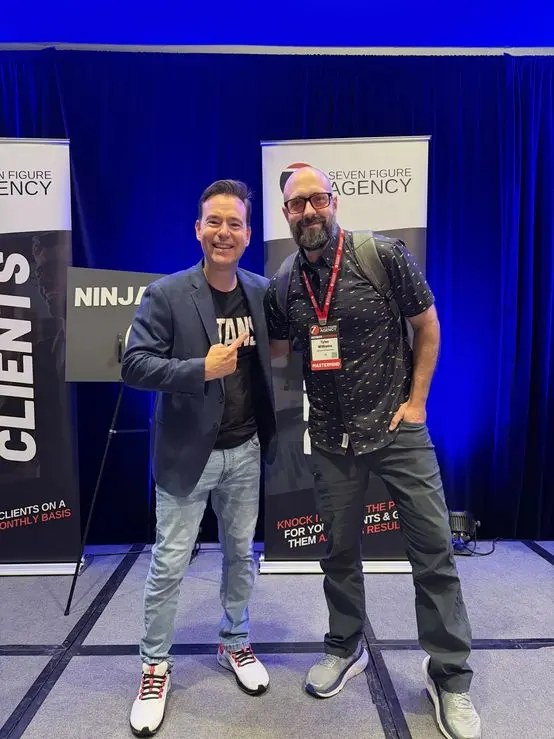
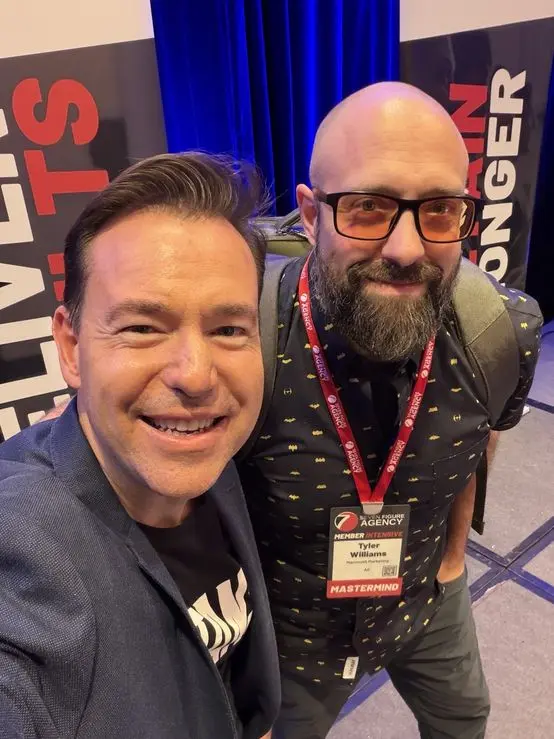
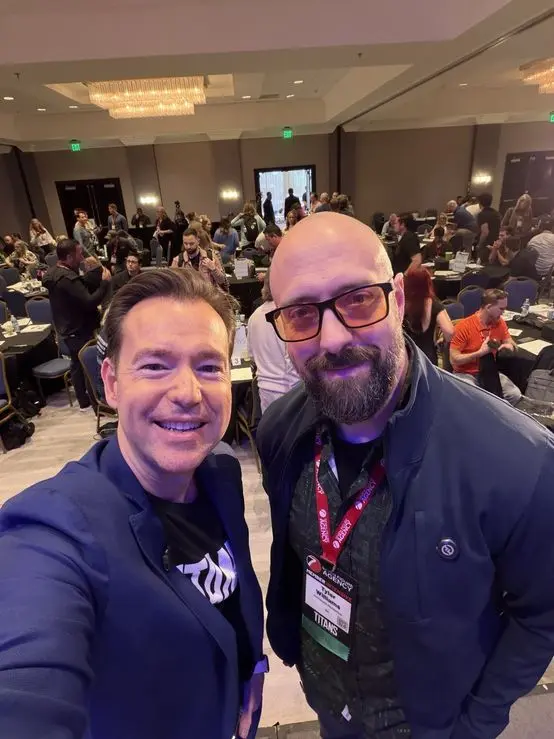
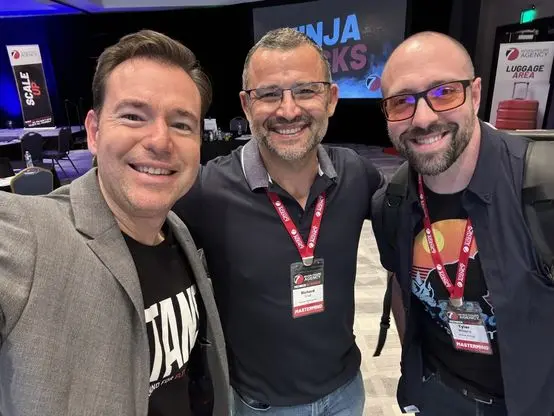
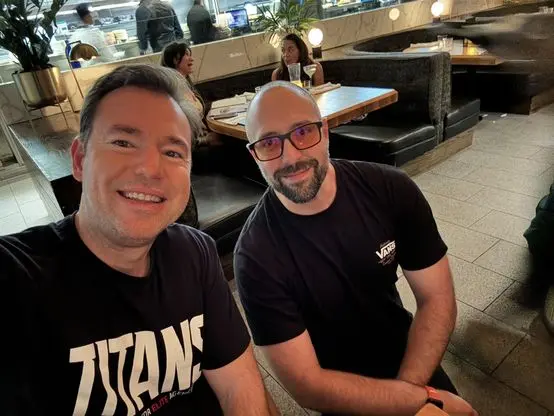
Tyler has been a regular inside Seven Figure Agency events and the Titans mastermind, from Member Intensives to mastermind rooms to the dinners in between.

Editor’s Choice on TopMarketingAgencies.com
Mammoth Marketing for Plumbers is an Editor’s Choice pick in the Plumbing category on TopMarketingAgencies.com, the editorial directory of the best niche marketing agencies in the country. Listings are editorial, not pay to play. Agencies are scored on niche depth, tenure in the specialty, client retention, verifiable results, and transparency, then re-scored every year. You can read the full profile on the Mammoth Marketing for Plumbers listing or see how the category stacks up on the top plumbing marketing agencies page.
Want a Content Engine Like This?
Tyler built a niche, a personal brand and a remote team that runs $160K a month in plumbing marketing. The system he used is the one we teach.