
Local & Urgent Care Marketing · Patient Care Marketing Pros
He Packaged His Chaos and Doubled to $90K a Month
Nick Hoard spent years selling radio ads before he ever touched a Facebook pixel. Three and a half years after starting the agency now known as Patient Care Marketing Pros in Birmingham, Alabama, he had crossed seven figures – and he says the real turning point wasn’t a new channel, it was packaging.
Nick Hoard with Josh Nelson, live.
Read the full interview transcript
Full transcript of Josh Nelson’s interview with Nick Hoard. Lightly edited for readability.
Josh Nelson: This is the Seven Figure Agency podcast. Discover the strategies and techniques to grow a highly successful and profitable digital marketing agency with your host, Josh Nelson. All right. Well, hello and welcome. Thank you so much for joining us today for this special session, w- part of the Seven Figure Agency podcast, where we're interviewing highly successful digital marketing agencies on how they've grown and scaled their agency. Today, I'm really excited to be interviewing, Nick Hord from Nick The Marketer. He's got a really successful agency and just recently made the, made the jump to over seven figures. And so I wanted to have him on to kind of pick his brain on, you know, what happened to accelerate the growth, how he's landed clients, how he's delivering results. So without further ado, Nick, welcome. So glad to have you here with us.
Nick Hoard: Josh, thanks, man. I'm excited to be here today. Fired up to be on your podcast. And everything that you've done for our agency, I'm just proud to be a part of it, man.
Josh Nelson: Awesome. So before we dive in, tell us a little bit about your agency, kind of where you're based, what types of services you provide.
Nick Hoard: Sure. So, Nick The Marketer based out of Birmingham, Alabama. I, I was telling you earlier, if I turn around, our office overlooks the cities, the city of Birmingham. It's a very kind of, you wanna call it mountainous, it's more kind of hilly, like big hills. Not what you think of when you think of a mountain. But, anyway, we overlook the city, it's great. We've been in business for three and a half years, and we've been rocking it as a generalist agency. We provide, website development and design, and we have a mobile-first high converting website approach. That's our goal. And then we drive traffic to those websites through search engine optimization, Google Ads, YouTube ads, LinkedIn ads, Facebook ads, Instagram ads. And then, for those who need it, we provide social media posting and management as well. So those are kind of our four pillars, website, SEO, pay-per-click, social media.
Josh Nelson: Awesome. So kind of a full service agency, there in, in Birmingham, Alabama. That's right. Tell us, you know, tell us a little bit about,… So three and a half years to seven figures, super impressive. That's pretty quick growth. Tell us a little bit about kinda how you got into the digital marketing agency space.
Nick Hoard: Okay. Well, you know, my background, believe it or not, I went to the University of Tennessee, and I, and I studied studio music and jazz performance, which is a complete waste of time, to be honest with you. It's really cool and it sounds awesome, but it doesn't pay bills. So, very quickly got out of the music scene and started looking for a career and went to work at, went to work at Costco Wholesale and worked my way into the marketing department there, and then went to work for Coca-Cola in outside marketing, for small stores, and then wound up being in radio, getting into radio. I moved from Memphis, to Birmingham, transferred with Coca-Cola, and then just got into radio advertising and I loved it. And I stayed there for quite a long time, just learning how to communicate a message, the right message at the right time to the right people over the radio. And it turns out it, the messaging doesn't change the mediums in which you deliver the message change, but the psychology of it is all the same. So, from there, what was happening, Josh, is I was great at radio, but I did not, I would bring these clients on in the radio world, and they would need a website or they would need a Google listing set up or something other than what we provided, and I would outsource it or say outsource it, that's the wrong term. I would recommend or refer to an agency. And what would happen is they would steal my client. So they would take them, build them a website and go, "Hey, I'm gonna pull you off of that radio station. We're gonna put it on this other radio station." Well, after about the sixth time, I said, "Hey, I better get, I better get started learning how to do this, Facebook ads and, and pay-per-click and all this kind of stuff, 'cause, 'cause I'm losing my butt." So I found a group, and I don't wanna get into it because it's, it's, it's not Seven Figure Agency stuff, but fou- found a mentor, that helped me and taught me how to do this stuff. And so I started kind of doing it on the side. Went to work for another agency. It didn't work out. It wasn't a good fit. And I'm like, "If, if I can do it better, I probably should do it myself." And, I thought I was gonna have this really cool name like Digify or something cool like that, and everybody's like, "Dude, you're Nick The Marketer. Like, call it Nick The Marketer." And that's how Nick The Marketer was born, man. It wasn't even my choice to call it this.
Josh Nelson: Awesome. So it sounds like that radio sales background to kind of figuring out how to sell advertising served you well. Talk to me a little bit about kinda what you learned at that kinda phase in the game.
Nick Hoard: Right. So, I learned th- three phases of really the sales process. One is to stir the pot. You have to generate a lead. Mm-hmm. So there's the, just the pure lead generation going through the nos, going through the yeses, right? And then there's the sales. Like, once you get, "Yes, I'm interested," then you have to close it, right? And then there's the back end of that is the account management side of things, right? So you're taking these three completely separate, skill sets and kinda merging them all into one. So I had to get really good at lead generation, creating my own leads. To get really good at closing them. Not to be slick, but, everybody thinks of a salesperson, they think of that guy on the car lot that's trying to sell them something that they don't really want. And I kinda got this mentality from a great mentor of mine named Jennifer. A- and she said, "Look, you take the right product, you take the right person, you just marry the two. That's it. It's pretty easy. You just gotta go through enough people to make sure that they connect." and what I found was my favorite part was the account management side because it was more residual. And so I took everything that I learned in radio and I applied it to the digital space and man, it just very quickly grew. That's awesome. So- Yeah… So full service.
Josh Nelson: Talk to us a little bit about what your programs and packages look like and kinda what you're selling in as Nick The Marketer today. Okay.
Nick Hoard: Well- One of the things, just to back up from that, where I started and where I am today and how we're selling is very different. We got to about forty thousand a month in revenue and started going, "Okay, what got us to forty thousand isn't gonna get us to where we're going." And I start- I started looking for some different, programs that I could plug into. We found Seven Figure Agency, we found you, right? And you started talking about, "Hey, package these differently." So where we started is we would sell a thirty-five hundred to five thousand dollar website, a project, and then we would try and sell search engine optimization to get that website found on the internet. We always likened it to, "Hey, we're gonna build you this great Ferrari, but if you leave it in your garage and you don't put gas in it, that really beautiful Ferrari isn't gonna get in front of anybody," right? So we look at SEO or paid ads, if you will, as that fuel to get you out of the garage and get you out in front of everybody, right? Yeah. So, we like to say a beautiful website motivates no one if they don't ever see it. Yeah. So, that's where we started and started doing… I actually started, in the Facebook Ads game. Like, I just wanted to do Facebook Ads. Thank God I didn't stay in that game exclusively. Only because, you know, they just… They're volatile. They'll shut down your ads or whatever, not really give you a reason why. A few weeks later, "Oh, sorry, my bad," and you're back up and running, right? But when we found, when we found Seven Figure Agency, there was a concept that was being thrown around that really just we knew about it but we hadn't explored, and that's the package pricing. So now today we package it up. We have activate, elevate, dominate. Those are our three packages that we are offered, and typically we don't even throw out the activate package. That's kind of a… Oh, Ryan Davis calls it something like a, just a l- I'll sell this to you if I have to, right? I can't remember what Ryan calls it, but it's- Either the drop sell. That's it, drop sell. Thank you. Couldn't remember what it was called. So what we did is we package it. Some people just want leads, so we have a pay-per-click pass package. That's our, that's our activate package, and that just depends. It's either gonna be Facebook or Google, but the cost and the ad spend are the same, and it's just designed to generate leads for our clients. That's it. They don't need a website or they can't afford a website. That's just not where they are yet. So that's our activate package. Our elevate package is designed to really build a relationship with our client and for them to build a relationship with the internet, okay? We include a website. It's included. It's no longer project-based, so we've moved away from that, based on some really good recommendations from some mentors that I have. So we moved away from that, and we include, in that one we include search engine optimization and one pay-per-click platform. And then that package is, I wanna say it's twenty-five hundred plus ad spend, maybe two thousand. I don't sell much anymore. Somewhere in that range. Then our dominate packages are all inclusive. We build a website design, mobile first, ready to convert. We include search engine optimization. We include paid ads. We include social media. There's paid ads across any platforms that are necessary to get them to dominate.
Josh Nelson: Love it. So you've got those three packages. Tell us a little bit about how things changed by going to a package model instead of just selling the à la carte and then hoping that you could upsell them down the path.
Nick Hoard: Oh God, so many things changed with this, Josh. So, it really mo– number one, the mindset, okay? And what I mean by that is you wanna do business with the right clients that you can get the best result for so that you can go home and sleep at night. Now, that's really hard in that early stage of business not to say yes to everything, and when you, when you have an à la carte option, which is great, when you have an à la carte option, it gives you the opportunity to say yes to what could be the wrong client. I don't know if that makes sense or not. Yeah. So they may have an ugly website and they've heard about this SEO thing, and just the opposite of having a beautiful website that nobody sees, the opposite of that is true too, is if you drive a bunch of traffic and the website doesn't convert, it's just as worthless, right? Yeah. But we would say yes to an SEO client with an ugly website just so that we could… An integrity creep started to happen, right? We wanted to make sure that we were doing our best bus- our best work for clients that would really get a good value out of that. And so here's the mindset shift: Moving to a package price, we started to open up, "Hey, we're gonna give you a website. That way we can do our best work, and the work that we're doing is gonna be a benefit to you because it's gonna convert." Yeah. So, so moving to that, now it also simplified. So you have website, SEO, Facebook Ads, YouTube Ads, geo-fencing, social media posting, all of these things à la carte. Now we've packaged it into three simple things and I'm not confusing my clients or potential clients, and my sales team can go in very comfortably and have three options to put a good, better, best. Yeah. And it just closes the deal.
Josh Nelson: Hundred percent. So it simplifies it for you. It simplifies it for the customer. You mentioned kind of going from forty to over eighty thousand a month now. Do you feel like that was a key distinction in your model that accelerated or kind of enabled you to accelerate?
Nick Hoard: I believe yes. Short answer, yes. A little bit longer answer, I believe the simplification, kind of freed up our team to make better decisions. And what's happened is before we were doing less with more clients. Now the mindset has shifted from now we're doing more with less clients, which is a good thing. Yeah. One of the things that we did is if we can move people into a package price, then we aren't as hungry to go get all these little things. So, I mean, we don't have that many more clients than we did- At forty thousand than we do today at like ninety something Nice.
Josh Nelson: Yeah, that's great. Powerful insights. Alicia says, yeah, something she was trying to figure out, like trying to sell a la carte it, it's not the way to go, right? Figure out a couple of packages, two or three max. Have the big one, the drop sell, like kind of the medium one that you want everyone to buy, and then the drop sell. It's like, "Oh, I can't afford all of that." Well, we need to at least generate leads, so let's buy the paid, you know, the paid search engine o-option, which would be pay per click or Facebook ads or some other thing you can do to just generate opportunity. That's it. Amazing share. Great breakdown, Nick. I really appreciate you doing it. I think it's really helpful for the, for the listeners and watchers.
Nick Hoard: Yeah, man, absolutely. It's, it's so crucial in my mind to make sure that you know who you are as a company. Part of that is identifying your niche, your niche. Part of that also is knowing what you wanna do and what you don't wanna do. Like, we don't want to build websites as a project, so now we just include it. And that has just been… That's been a world of difference because it doesn't bottleneck us.
Josh Nelson: Yeah. No doubt.
Nick Hoard: It's just kinda built into the model.
Josh Nelson: It's built into what you do, makes things s-smoother. You mentioned something I think that's important and this, you know, you think about your business model being, you know, kinda niche-focused and package-based and not tied to a one service model, whether that's Facebook ads or pay per click or just SEO. Any of those individually puts you at a, at a, kind of at a disadvantage because if one of them doesn't work right, you're gonna get fired by the client. Talk to me about like why just doing Facebook ads, for instance, would potentially be counterproductive to your growth and retention.
Nick Hoard: Well, there's a couple of reasons for that. One is Facebook itself, right? A-a-and Josh, you have a killer agency with, Plumber SEO, and I don't know if it's ever happened to you, but I know it's happened to just about every agency that's in this area where Facebook says, "Hey, we're shutting down your ads account." Right? And you don't get a reason. You reach out, there's nobody to talk to. I like to say that we're building our house on someone else's property. Yeah. I don't know if that makes sense. But, Google and Facebook and all these different platforms, you don't own them. You don't have control over them. And if they decide they don't wanna do business with you anymore, you're stuck. Like, you don't have a choice. There was a time, I guess it was probably a year, maybe a year and a half ago, where everybody's accounts went down. Like you didn't get a vote. They crashed. Imagine for a second if Facebook was the only thing you did. You just went out of business for at least a week. How many cancellations do you get? So that's part of it, really is just you're building your house on someone else's property. So if you have to build on someone else's property anyway, you might as well build on everybody's property. That way if one goes down, you have three other to support it. So really, we wanted diversification in our product line. One, that omnipresence that Jim Allen always talks about, Jim Allen, sorry. He always talks about that omnipresence, which I really latch onto. If I can show up on Facebook, then I can show up on Google. If I can show up on Google, then I can show up on YouTube. If I can show up on YouTube, then I can, I can show up on your mobile phone, right? Just getting everywhere. Not only does it work, it saturates the mind share, and that's what we're looking for is mind share.
Josh Nelson: Hundred, hundred percent. Yeah, so what… I mean, so the, the key point for a lot of you guys listening, watching, thinking about your programs and your packaging is you don't wanna be tied to just one thing. If you can blend your offering where you're doing the website, the SEO, and the pay per click and content or whatever else you can do, it does a couple things. It actually means that you can get more strategic with the client to generate a tangible result, but it also means you can blend that result. Sometimes your SEO strategy hits, they get ranked, and their phone starts ringing and life is great. Sometimes it takes a little bit longer for that to build up. And so this blended approach, sometimes it's the Facebook ads that carry the day, sometimes it's the Google ads that carry the day. Maybe sometimes it's something else, like local service ads. But when you blend it and you're bringing a comprehensive approach, you're gonna get better results for the client. You're gonna have less one service fault that can bring you down, and ultimately better retention across the client base for your retainer-based services. Right, Nick?
Nick Hoard: Absolutely. You know, a great example of that, and it can even be, you know, in the same niche, it can even be the same company, right? So, we have a kids urgent care, and that urgent care is easy to rank here in Birmingham. Easy to rank in Birmingham. But we have to supplement that in Florida. In Orlando is a lot more competitive than Birmingham, so we have to supplement our SEO with pay per click, otherwise, they're gonna fire us because they're not gonna get the same leads or it's gonna take longer to get those leads. The fact is not all things are equal. They're not. And the cost of acquisition in Birmingham is just radically different than in Texas or, sorry, like Houston, Texas or like I said, Orlando or Miami.
Josh Nelson: I bet that's a saturated HVAC market. So for you to rank a-across five hundred other businesses, it's a lot more of a challenge than if you are just sampling twenty-five or thirty. Yeah, hundred percent. Great, great insights. Give us a one in the comments here if there's at least one or two takeaways that you've gotten from what we've covered so far. Great stuff, Nick. So looking back, kinda going from that forty thousand level to ninety like you said just now, what were… Like if you had to point to like two or three key pivots that you made, what would those two or three pivots be?
Nick Hoard: Okay. So o-one is our sales process changed a little bit. Mm. Okay? A-and I believe somebody had put in the chat that I saw earlier, "Hey, a little bit about your process and sales proposal." Great.
Josh Nelson: Yeah. Tyler wants to know about the sales process and how you, how you introduce case studies and things. But go ahead.
Nick Hoard: That, that's it. That, that's one of them. O-one of them though is just be-being either in a Zoom call or kneecap to kneecap and talking to that person. It's not about- That I like to call it five layers deep. It's what I do. Trying to get it into the team, and we're working on that. But, you know, Josh, if I asked you know, if you, if you were able to grow seven-figure agency, what would that do for you? You would probably say something along the lines of, "Well, we're gonna have a bigger impact on agencies." Well, the next question is to be, why is that important to you? Okay. I don't know the answer to that, so I'll ask you. Maybe, maybe we'll do this in real time, Josh. I don't know.
Josh Nelson: Shut it down in the- it's important to me- Yeah… Because it had such a big impact on my life and just knowing that I'm gonna be able to help those agencies grow, make more money, have more freedom, and then serve their clients better, which makes a massive ripple effect across the local economy.
Nick Hoard: Excellent. So making that impact on the local economy, making that impact on the agency, w- how does that help you personally? What does that… How does that make you feel? What does that do for you, Josh?
Josh Nelson: Well, obviously there's, there's two side, right? The, the first is it, it gives me purpose, right? Financially speaking, my agency takes care of all of my needs. It gives me the impact and feeling really good about what I'm doing. Obviously, it also creates a really highly profitable additional income stream. And I love that. So finances without purpose is meaningless, and eventually it'll burn out.
Nick Hoard: I love the fact that you have both of those in there, Josh. Let me just ask you one other question. What does having those finances with purpose do for your family?
Josh Nelson: Oh, man, it gives us freedom. It gives us the ability to buy what we wanna buy, do what we wanna do, and take care of people that might not have the financial abundance that we have.
Nick Hoard: So, so I love that so much. If we were able to step in as an agency and to help you hit these boxes, make an impact on your community, make an impact on these agencies that ultimately is gonna give you purpose and give you finances for your family and allow you to do freedom in a different way, time and money, is that something that you would be willing to invest in?
Josh Nelson: Hundred percent. I got the DocuSign on the way, bro. Let's do it. Okay. So that's a different thought process than talking about just leads, leads, leads, leads, right? I'm genuinely trying to help them realize what their true purpose is, and it doesn't always look like what you just described. It's different from everybody. But the point is it used to be we would deliver, "Hey, we deliver leads right to your email." Now it's, "We're helping you send your kids to college, man." Right? Yeah. Powerful.
Nick Hoard: For me, I've got a special needs child. When, when my business grows and we are able to simplify everything that we do and create opportunity, it allows my special needs child to have a future free from worry about whether or not they're gonna be able to find a job because we've created it for them. Follow? Yeah. So our purpose behind our finances is way more important, and when you shift that in our prospect's mind, you close a lot more deals. And Michael's amazing at doing this. That's our sales manager. Devin is amazing at doing this, and that's why they close like crazy.
Josh Nelson: So good, guys. So yeah, this is a really important distinction. Hopefully this landed for you. I love the fact that you did a live example of it. You didn't just explain it, but you asked the questions and tied it to reality. But it's not about what's the goal. Oh, get to seven, you know, seven hundred grand in revenue. It's why, and not just one why, but five levels deep, and you can really get to the, the personal and the, emotional reason behind it. And when you can meet people at that level, that's gonna improve your close ratios and really make for a better business relationship. That's it. And also, it, you know, people don't care about what you say near as much as how you make them feel. And if you're sitting across in that sales, you had originally asked me the question, what shifted? We went from, we went from a very rigid, "Here's what we're gonna do. Here's what we're gonna deliver.
Nick Hoard: These are the services we're gonna provide," to, "Here's how we're making you feel. We're making you feel confident. We're making you feel heard." That seems to be a good work term lately. We're making you feel heard and seen, if you will. But it's more than just lip service for us, Josh. Like, we're writing our clients' goals down. We're putting it into the Slack channels. We're communicating as a team, communicating it as a team, and we celebrate those when they have those things hit. And I'll give you an example. One of– we have a HVAC company, it's, it's a legacy client, been with me for a long time. And they had a child and, they just had a baby like last week, and that baby had to have heart surgery right out of the gate. And they knew that we were taking care of their business, and they're asking us for prayer, us for prayer. They're marketing people, right? They're asking us for those different kinds of things because we have taken it way past the lead generation to a personal feel, felt, found level.
Josh Nelson: So good. So, so powerful. Give me a yes in the comments here if that landed for you and that kind of that distinction in taking things to the next level. David said yes. Rachel wrote something here. I wanna read it. "I like the integration and not just the one thing that the client might want. This is what happened for one of my clients, and I show them that with the integration of creating an ecosystem that supports their marketing is better than just implementing one tool or one thing they wanna implement. Like how we talked about integrity. Love it. Great presentation. Thanks." Good stuff. All right. So that was one pivot that you made, was this whole, the sales process. Right. Let's, let's keep going. Let's go to, let's go to the next one.
Nick Hoard: Well, so the other pivot we made, and again, this isn't trying to be a seven-figure agency commercial. I don't, I don't want it to sound that way. At some point, though, you have to recognize in your business what has worked, right? And so the pivot that we made is we got out of our own way And quit pretending like we knew everything and that we had it all together, and we got around a group of people that knew what the crap they were doing. Right? A Danny Barrera, who is like the process, the standard operating procedure king. Like, I've never met anybody who has it as organized as that. Getting in front of, a Josh Koenigsberg, who really I've never met a better salesperson as far as being able to close the deal. I've just– I've never met anybody like that before. He's changed the way I think, okay? And I'm taking it, I'm bringing my team along with me. I'm not trying to be the secret. I'm like, "Here, come with me. Like, let's figure this out together." so that's another thing, is getting around, getting around people. Like, if you're the smartest person in the room, you're in the wrong room, right? So I'm constantly… Josh, you know this about me, man. I'm trying to get in front of people, not so that I can talk. I just wanna get in there and listen, right? I wanna know what they know. So changing your sphere, that's important. – Getting around other highly successful people, you know, and that's part of what Seven Figure Agency brings, right? You get access to- Oh, no doubt… You get access to RSWipes & Deploys, you get access to Danny and Josh and all of the other mentors, that can kinda fill in gaps and kind of elevate your thinking around what's possible and where you could go in your, in your agency. Hey, I think this is an important distinction too, Josh. There are people that are in the Seven Figure Agency, kinda roundtable, if you will, and I'm not gonna say their name because I don't wanna embarrass anybody or make it sound the wrong way. But they may not be billing on a monthly recurring revenue as we are as a company, but they are so much smarter in areas of their business where I shut down an ego thing that I may have, and I listen to the people who know what they're doing. I don't care what their bank looks like. They've got it figured out, and I need to know what they're, what they're doing. It's not, it's not about the money, man. It's not. The money's great. The, the plaque i- the plaque is awesome, right? But at the end of the day, it's the sphere of influence and the people that you get to interact with. You know, I could name names all day long in the group. And it's not just the group. You know, like I said, I didn't want it to sound like a Seven Figure Agency commercial. I've got other people in my life. I've got John Maxwell team members. I've got a coach named Richard who pours on to me at that level. He's much further in age, but also much further in knowledge. And he'll sit down with me over coffee, and he'll call my bull squeeze, if you will, right? He will. He will. He will. He'll call me out. He'll be like, "Nick, here's what you're saying, here's what your actions are. They don't line up. What are you gonna do about it?" Right? Yeah.
Josh Nelson: And the last thing, because we were talking about it, what are the pivots? – So wait. So like, just to let that one settle in. Sure. Get around other successful people that have accomplished what you're looking to accomplish, that have solved problems that you're looking to solve, that can help you elevate your thinking, whether that's Seven Figure Agency or something else. If you're serious about going from where you're at to the next level, the fastest path in… I have coaches and mentors I'm with. Nick's got coaches and mentors he's surrounds himself with. The fastest way to do that is to get in those types of relationships and get the support that you need to really move things forward fast. That's it. And then of course, that last pivot was– it was overcoming fear. And that looks like… That's different for every person. I just wanna be clear. Identifying what your fear is, excuse me, identifying what your fear is and overcoming it.
Nick Hoard: W- one of the fears that I have is making sure that I can afford to bring people on because I believe it's more than just the person. It's like their spouse, it's their child, it's, it's their livelihood. And, and we're about the team. That, that's, that's who we are. And not everybody has to be about that. A lot of people use VAs. I know, I know Azar has a killer company that helps people with overseas, VAs, right? Virtual assistants, right? And that is awesome. And if we ever get to a place where we need a VA, that's where I'm going. Calling my buddy Azar, right? But, but- Exactly… We have a commitment of building a team, right? Now, that doesn't have to be in person. We have a hybrid work environment. But if we're gonna build the team and be intentional about that, we have to get intentional about our hiring process, we have to get intentional about who we, who we want to bring on, skill sets, and overcoming that fear and saying, "Hey, we're gonna hire. We're, we're gonna not make money here so that we can make money down the road, so that we can surround ourselves with people who we want to live our life with." It's not just the clients that you gotta be around. Who are you gonna be around every day? And if you like looking at a Zoom screen, and you like being at a desk, and you like being at home, God bless you. I'm not that person. I– and there's nothing wrong with that. God bless you. I mean that sincerely. But I want to be… I wanna laugh, I want to knuckle bump, I want to high five, I want to throw stuff at people. Like, I just wanna have a good time, right? And we spend a lot of time building culture, and overcoming the fear of the money to invest in people is a challenge. And that's, that's one thing that I hear in groups all the time that we're in, Josh. Questions that come up is, "Hey, when did you hire your first person?" Right? As soon as you're able to overcome that fear, because that's what it is, it's fear of making that investment in a person, that's when you do it. You identify the thing that you need to get off your plate to move to the next level, you overcome the fear of hiring them, and then you stinking hire them. It's powerful. Powerful. So kinda getting over that fear and moving forward with hiring.
Josh Nelson: I love the insights there around, you know, s- you know, the, it's very glamorized, this idea of having a virtual company with talent across the world. And for some people, that's exactly what they need, exactly what they want. For Nick, for you, like, you like that Personal experience, and I had, you know, had thirty employees in our office down here in South Florida, until recently. And I'm, I'm all about that, having that, you know, face-to-face real relationships with the team. Can you talk about some of the benefits of having everyone there in Birmingham versus just a distributed workforce?
Nick Hoard: Well, first of all, let me acknowledge that the world has changed. Okay? COVID has had a profound impact on how companies do business. I'm not a soothsayer, and I don't know the future, but my expectation is work is not gonna go back to the way it was before. I don't expect it will. So we have a completely hybrid work environment. If I were to wa… It's Friday, and I know my team is crushing it, but also know, like, there's one person here at the office. We have what's called mandatory Mondays where we can build our eyeball to eyeball culture. And we have one team member who's in Memphis, which is nowhere near here, it's like four or five hours away, and she Zooms in, right? But she's in that meeting. It's mandatory. The benefits of being in person are exactly that. On Zoom… You know what's funny, Josh? Something happened when COVID, when the world shut down and everybody went home, okay? What happened is productivity skyrocketed. Yeah. I don't know if you're aware. Like- Yeah… That happened for your company. It did. But… And it did for us, too. Like, productivity skyrocketed because there was no distractions. You could focus on your work, all these th… Like, you could do your thing without somebody asking you a question every thirty seconds, just productivity went through the work, went through- went through the roof. But morale tanked. It tanked. Yeah. And the reason why is because you couldn't tell an inside joke, right? You couldn't, you couldn't go over there and say, "Hey, I gotta tell you something real quick." You know, you couldn't go over there a-a-and interrupt something that was going on, to tell them how much you care about them. "Hey, I heard about what's going on. Heard about your… I heard about your, your mom who got COVID, and she's in the hospital. Just want you to know I love you, care about you." And, you know, you can't do that if you're not around people. And it doesn't come across well. It like… I don't know about you guys, but i-if something personal is going on in your life and somebody texts you, "Hey, praying for you. What can I do for you?" Like, you don't have an answer for that. There's no body language attached to that. You can't… That's the same thing in a company. You can't build a relationship at the same level, in my opinion, as you can if you're, if you're eyeball to eyeball. That doesn't mean you have to be in everybody's business every single day. But that hybrid work environment has been spectacular for us. And people love it. They love the fact that they can come here if they want to.
Josh Nelson: Hmm. I like that. I like that. Kinda giving them the flexibility to be able to work from home, but also having the ability to plug in and be at the world, the real office with the rest of the team.
Nick Hoard: – That's it… And then making that Monday very, like, we're gonna see each other, we're gonna work as a, as a unit here at the office. And that, you know, that was something I was… You know, the first seven years of our business, that was… It was like we were together every day making things happen, and that teamwork develops in a way it can't on a, on a virtual team. That's it.
Josh Nelson: So let's, let's shift gears. So some amazing insights. Give me a, give me a one in the chat if you're, if you're enjoying this, you're getting some good insights from Nick. We're gonna shift gears now to landing clients because this is something most of us is a major focus. Just put landing clients in the chat if you're, if you want us- wanna hear some of Nick's tips and strategies on how he was a-able to land enough clients to go to seven figures. All right. So let's talk, let's talk about that a little bit. Tell us a little bit about where you're getting these opportunities and how you're landing clients in the agency today.
Nick Hoard: Okay. One, I hired salespeople that rock. All right? Just be clear about that. We pay them well. They have great commissions. So that's not gonna be the normal way that people are gonna grow their client list, if you're just starting out, right? You have to create your own network. So there's, there's several things that I did. Of course, not everything is gonna line up perfectly with the way Seven Figure Agency teaches it, but we're doing that too. I just wanna be clear. We're doing that too, and that is working for us. One of the things that we discovered is automation on LinkedIn. We love it.
Josh Nelson: Mm. Okay?
Nick Hoard: So we use, WeConnect. Michael and Devin use that, WeConnect, and then we have a system in place to attract urgent cares. That's what we're trying to do. We're an urgent care marketing company, and that's all of our marketing efforts are to urgent care marketing. So the way WeConnect works is if you have, one, LinkedIn, two, Sales Navigator, three, WeConnect. Those are the three things that you need, and a plan. So what happens is we've identified, who exactly we're trying to attract. And so what happens is this WeConnect chatbot-type thing, what it does is it goes and it views the page of the person that we're trying to connect with. So we put in, their urgent care marketing, specialist, a doctor, maybe they're the front desk person who handles the marketing, whatever. So what happens is the tool goes and it views their page. All right? Now, what happens is if it view… If they view you back, they saw that you viewed them, and then they view you back. You know what I'm talking about? You get a notification that somebody viewed your page. If they view us back, then we send them a connection notification. If they connect with us, we get that notification they connected with us. Now, at this point, you can either automate a bunch of stuff or you can get personal. That's where we get personal, because we have a team for it, but you can also automate responses as well. Everybody's had it happen. Everybody knows that, right? Where they've been hit up by, "Hey, claim your free download," or whatever. Let me just tell you, don't do that, okay? Be a human to people. So then we get involved and say, "Hey, thanks for connecting with us. Looking forward to getting to know you a little better. If you need anything from us, let us know," that kind of thing. Michael's much better at this than I am. But that's where those conversations start. We send them a Loom video. If they connect… If they respond to us like, "Hey, great- Great to know you. Glad we were able to connect, right? We're looking for that response back from them i-in the chat. Hey, I just want you– I made this quick Loom video, thought it'd be interesting to you, and it's, the, it's kind of the Hillsburg method. It's kinda like a Hillsburg light, right? Where we say, "Hey, here's your listing on the internet. Here's your website. Here's your competitors. I don't wanna go into detail if you're not interested, but I made this great video walking you through exactly what your business looks online, what you guys are doing awesome and how we can fill in the gaps. If you're interested at all, I'll send you the full video. If not, no worries." Love it. That's the responses. So that's that piece.
Josh Nelson: We do a lot of connecting with- So, so quick pause there. Yeah. Powerful insights here, guys. What makes, what makes this work is he's not connection requesting and blasting a bunch of people, right? The process is very red light, green light, right? Until they view him back or his sales guy back, there's not a connection request sent, right? Once they do, then they get the connection request. They're more likely to accept it. And then the next thing isn't the video. It's a, "Hey, glad to connect," and wait for a little bit of a conversation to ensue, and then a video. Well, value-added video in advance. Without going crazy with it, but just a quick teaser style video. Awesome. I love it. Great insights here. And the three tools for those of you that are asking again were LinkedIn, that's a free profile. Sales Navigator, which gives you the ability to run searches and be a little bit more granular with access to data. And then three is WeConnect, which is a tool that allows some of that, those automatic steps.
Nick Hoard: Yeah. And also, just to add one thing to that, on your LinkedIn profile, I learned how to set that up properly from you and your teaching on that. Be very crystal clear on who you are, what you do, and what you're about in that profile, so that if they do view you back, they immediately know, hey, Nick's in urgent care marketing and owns a company called Urgent Care Marketing Pros and Nick the Marketer. Wow, he owns two agencies. That's pretty cool. Or, oh, I'm hiding from him. That could go either way. I'm fine with either.
Josh Nelson: You're right. Right? I'm serious. Either it's gonna attract or it's gonna repel, and if it repels, that's fine. Like- Yeah… We won't go down that path. That's it. We'll s– If it, if it repels, we'll find out their address, and we'll go park across the street from it and shine our lights at them.
Nick Hoard: Do that either. I'm just kidding.
Josh Nelson: Awesome. All right. I had something else. Can't remember what it was now. Oh, man. The people are gonna, are gonna be screaming at me. So you were talking about, so that's the first piece is you're doing that to get opportunities in a very intentional approach via LinkedIn and WeConnect. Exis-existing clients. Okay, great. Thank you for that. So, existing clients.
Nick Hoard: So that is another avenue that we use. Our goal is, in our core values, ex-exceptional client experience. And for us, if we're adding twenty to thirty clients a month, we're just unable to provide exceptional client experience. So our goal is to add somewhere between three and five a month with our current team, with our current approach. And we've been doing that, and we've grown. It's been perfect for us. You don't have to add a hundred clients at once. But if we're providing exceptional client service through everything that we've learned, packages, making sure we're delivering on our, on our promises on what we're gonna provide, we have those monthly meetings with them, or at least a Loom video, right? By around ninety days, they should either be in love with us or hate us. Like, it's gonna be one or the other. Not really hate, that's the wrong term. They're either gonna love us or they're gonna be indifferent. That's probably the best way to say it, okay? Indifference is very bad. Actually, I'd rather you hate us. That way, at least I can fix that. Yeah. Anyway, most of them don't. We have like a ninety-nine percent retention rate. So our clients, we have great relationships with them. But around ninety days is the best opportunity for me to ask for referrals. And here's the way I do that. Here's the way Michael does that. Here's the way Devin does that.
Josh Nelson: So you guys- So pause. Give me a yes in the chat if you wanna hear how he asks for the referral at that ninety point, at that ninety-day point to get more business. Yeah, we got lots of yeses. Go ahead.
Nick Hoard: So, great. One, we didn't ask for referrals up to this point. Let's just be clear about that. W-we want this at the right time, okay? So ninety days is about the right time. They know what we do. They've received a welcome box. They've received leads at this point, or we fired them because we couldn't generate leads. But they've gotten leads at this point, and we've communicated at least three times during the process of them actually being a client. So in that ninety days, what we wanna do is say, "Hey, look, this is what's happened to your account. This is where we are. Here's where we're going with your account." So let's talk about them first. Then I wanna say, "Have you been happy with our service?" And what I'm looking for is a, is a profound yes. "Yes, we are very thrilled with what you guys have done for us." "Who do you know that I should know that we can help their company as well? I'm not looking for your competitor, okay? I'm looking for somebody that you know that we can genuinely help their business the way we've helped your business." And then I shut up. And they go… They– Here's what they do. Here's what they do. They pick up their phone, and they open it up, and they start looking for the people. And then I've had this happen. A friend of mine, Craig Westbrook, owns a car brokerage here in Birmingham. He says, "Hold up a minute." And he just starts calling people and setting meetings for me. If you've, if you've provided exceptional client experience, they wanna be a part of that, and they want to tell other people about that as well.
Josh Nelson: Powerful. And I think the, the key insight here, guys, is it's not just going to happen. Like, if you give a great experience and you orchestrate it and they're, like, getting amazing results, and you leave it to them to think, "Oh, let me think about how I can help these guys get more clients," that's gonna happen, like, once in a blue moon. But if you intentionally build it into your process, like Nick just said, and you have that conversation and you ask that question, you're gonna start to get consistent referrals. And those referral… Like, here's an important What's the close ratio difference between somebody that you blind reached out to on LinkedIn versus a referral from one of your clients in that way?
Nick Hoard: Ask that again. I wanna make sure I got it right.
Josh Nelson: The difference in close ratio between the personal referral and somebody you chased down on LinkedIn.
Nick Hoard: Okay. So, our chase down on LinkedIn, we close at about, mm, twenty to twenty-five percent. We're at sixty to seventy percent on referrals. Huge difference, right? A personal referral- And, and often sixty to seventy, like it literally leans up towards seventy. Yeah. So- Referral-based business can be done without being face-to-face, though. This can be done on Zoom. This can be done… I love the fact that you, in Seven Figure Agency, you sent us a survey, right? And then you did a very unique thing, and I was all over it. Like I sent it to every agency owner that I knew, and I think one or two of them showed up, where you said, "Hey," that I believe it was a two-day intensive that you did. That's how I got involved in your program in the first place. But you had done, "Hey, invite. There's a free ticket for anybody who wants to come to the, to the intensive." And I sent that out to every agency that I had a relationship with. I said, "You gotta go to this. You gotta go to this. You gotta go to this." And here's why I don't care if they show up, right? Because I have a niche, right? Yep. I have a niche. I don't care if they get business out there. I'm not– They're no longer my com-competition. They're my running buddies.
Josh Nelson: Yeah. Love it. Powerful. So I hope this la… Like this idea of the ask for the referral is extremely powerful. Type referral in all caps if that landed for you, and more importantly, if you'll start to weave that in to your client experience and your client process. It will make you money. So we talked about LinkedIn for prospect, and we talked about referrals. Any other key strategies that you're leveraging to get new clients on a consistent basis?
Nick Hoard: We are using, what's the email program? Michael does this. It's… What's the email program? GetEmails? No, no, it's the one where we send out cold emails. Mailshake- Thank you… Lemlist, Woodpecker. Woodpecker, that's the one. Yeah, Woodpecker. Yeah. I almost said SurveyMonkey, but that wasn't right. So, like, wait, that's the survey. So we do, we do our cold e- outreach that way. We still cold call on businesses using the Hillsberg method, where we're, where we're doing Loom videos. We have a dream, we have, about a thousand people on a list that we're regularly targeting in the urgent care space, where we're sending emails to, but we also have a Dream 100 list. I did one thing. Now, this is from a radio day, but it still works if you're trying to get in. And it turned out to be one of my biggest clients that I ever had when I was in radio. And this, I need to do this again now that I think about it. So I found out that, there was a mortgage company here that I wanted to get on air because they spent a ton of money on radio. And I couldn't get them on air. I couldn't get in front of the right person. And I found out that that guy was an Auburn fan, Auburn University fan, and I got the nicest pair of flip-flops that I could find that were Auburn. They were leather. They were really nice. They were like Chacos or something like that. Like they were really nice. They cost me a fortune. But I sent him one. I sent him one in a box, mailed to him physically- I like that… And I said, "I'm just trying to get my foot in the door. I'll give you the other one if you'll take a meeting with me." And he called me up. We got a meeting. He wound up spending fifteen thousand a month with me in radio for like five years straight.
Josh Nelson: Love that. Love it, love it, love it. So, so good. So like be creative. Like there's, there's, there's broad prospecting, and then there's Dream 100 prospecting, where you hand select. Maybe it's not even a hundred. You hand select twenty prospects that you know if you could get their attention, they would probably be a great fit. You can have a big impact. They would spend a lot of money. And, and go deep. Drop stuff in the mail to them. Be, be creative.
Nick Hoard: I love that idea, getting something very specific to the prospect and mailing one half of it and like telling them, "Look, I'll get you the other one. I just want a couple minutes of your time to talk about what we do." Super cool. We also practice what we preach to our clients, by the way. We, we work hard on our website. We make sure that it's SEO optimized. We run, we go through seasons where we run ads. When they don't work, we correct them, and then we start again. We're in that season where we're in a correction phase. We'll crank back up in October. We're rolling out our podcast for our urgent care. We're excited about it. It's gonna be called Walk-ins Welcome. And it's an urgent care marketing podcast where we're just gonna be targeting our marketing, to, urgent care, so I'm excited about that. We have another one, but that's not niche. So we're, we're practicing what we preach. I mean, we love SEO. We love pay-per-click. We love websites, so we, we build it for ourselves as well. We, don't fall into this, to this area where,… I wish Tony Ricketts was on here. He'd know what I was talking about. Where you have this great, lawn care company, but your yard looks like crap.
Josh Nelson: Right. Like, you can't do that. Gotta eat your own dog food. Seriously.
Nick Hoard: Yeah, your social media has to be on point. Your, your Facebook ads, like they need to entertain, educate, and execute. Like they need to follow that pattern. Your website has to draw people in and make them wanna play for a minute, right? It's gotta be exciting. It's gotta be new. It's gotta be different. So you gotta have all of these things in place and practice what you preach. Otherwise, why in the world would they do business with you? Yeah. You don't trust a fat dude with weight loss. I'm just gonna say that. So you don't wanna trust like somebody who doesn't know how to market their own company with their marketing.
Josh Nelson: So true. So true. So Nate was asking about the Hillsberg method. That's one of our really successful members. His name is Allan Hillsberg. He was one of the first members that, you know, grew to seven figures following the seven-figure agency model. He decided to focus on funeral homes, and he did something very unique with his prospecting approach, so we coined it the Hillsberg method. And so that's what he's talking about there. It's, it's sending a value video in advance. "Hey, I recorded this video with some thoughts on how you could generate better results with your, with your online marketing. Do you want me to send it here or somewhere else?" Right? And just getting that raised hand, and then actually recording a video specific to them. So that's what, that's what he's talking about there. Let's see. Oh, I see that welcome box in there. It is the best thing ever So you wanna talk a little bit about that? That's up to you. I just saw it pop up on the screen. So, I, you know, I tell you, I sent you one, if you remember.
Nick Hoard: I do, yeah, with the- It's, it's hot- With the hot sauces and you actually put a Nick the marketer onesie for my, for my s- my baby son. That was awesome.
Josh Nelson: That's it. And, here, here's what happened when we sent that box to you. You made a video, right? Mm-hmm. So that… I mean, you d- we didn't ask you to do that.
Nick Hoard: I genuinely just wanted to say I'm grateful for you. I'm grateful for you. I think this is fun to me. I think it'll be fun to you, so we filled it up with a bunch of really cool hot sauce. I think we even had a hot sauce grenade in there. The onesie is something relevant to you. So we had that box sent to you. So that's you who's not a client. Now, here's– I've got somebody who just started with me. They, they immediately they get an email that says, "Hey, we wanna send you something fun, but we need to ask you a couple of questions. Put in your name, put in your phone number, give us your best mailing address, give us your T-shirt size." They're gonna get one of these, right? So give us that and we're gonna send it to you. It costs me about sixty to seventy bucks per box shipped, right? And when they get that, they lose their mind. And again, I don't care about what I say near as much as about how I make them feel. They feel like, here's a company that is taking me seriously.
Josh Nelson: So- Hundred percent. Love it. That's- It's a key strategy that I'm a big believer in. Find ways to shock and awe the client, do things that they're not expecting. So when they sign up, send them a welcome basket, you know, send them a custom box with some tchotchkes and things specific to them, – Oh, let me add one thing to that…
Nick Hoard: That totally changes the dialogue in the sense of what you're bringing to the table as an agency. Right. Yeah, let me add one thing to that because, Michael Ray came up with this. He's our sales manager. Because we ask for referrals, we ask for them, at that ninety-day mark. When they give them to us and they close, we thank them properly for it, okay? And he came up with like, we don't send them a swag box full of our swag. We send them a swag box full of their swag. Mm. We put a couple of Nick the Marketer things in there, but it's stuff that we know they're gonna use, and we put gift cards in there like Starbucks and Chick-fil-A and, you know, anything that they… That it's things that they would like. And it's not a lot of money, it's about fifty bucks. But if they send us a referral that turns into twenty-five hundred a month, I think I can handle fifty bucks saying thank you. And guess what they're looking for all of the time now? Opportunities to refer us because we took them seriously and we thanked them properly, and we had an exceptional client experience. That's what we want.
Josh Nelson: So good. Great, great insight. So we talked about how you're landing clients. One of the key things you mentioned early on is you've got this sales team. Well, talk to us a little bit about how you find salespeople, how you kind of put them to work and make them productive for your agency.
Nick Hoard: Oh, that is a great question, and I wish I had all the answers for this. I'm gonna do my best here. This will be one of those times where I wish Michael was here with me. So, one, I brought on a great sales manager, right? So Michael Ray, he started as a sales rep, and I poured everything in here in him that I could. The, the good news is he already had most of it down anyway, right? But I started working and chipping away at thought process, changing mindsets. And so when you were talking about training, one of the things that I did is I sat down and said, "Let's do what we call inside out selling." And I wanted to teach him that thought process. We're gonna start on the inside, and we're gonna work our way out. All right? Who is it we're trying to attract? And again, at the time, we were a generalist agency, right? So we had… I mean, we would take anybody who could fog a mirror and had money. So we would, we would say, "Okay, let's look." We were just trying to serve the Birmingham area at the time. Much like every business that ever starts, they start local. And we would search. Let's just say that we were starting with plumbing companies, right? And we would search for plumbing companies, and we would look for who was showing up on the map three pack, and then we would expand that map three pack down to the ones who aren't showing up on the three pack because those are the ones that we can help, right? So we're looking for those people that are in the expanded three pack, and then we would open them up, and we would be looking for mediocre work, right? And that could mean we're, we're not looking for terrible work. That means those just don't care at all, right? We want people who care but are missing the mark because maybe they don't understand it a little bit. So we would open up. Here's what they look like on the internet. Here's what they would… I was doing the Hillsberg method before I knew it was called the Hillsberg method, but I wasn't doing it with Loom. I was doing it with, QuickTime, you know, making videos. So I showed Michael how to do that, and I trained him on that first. Here's how you start generating leads, and we started doing networking. Lots of networking events, lots of chamber events, the normal thing that people do when they start out the business. And then I would start teaching him how to close deals. You know, here's, here's the thing. You're not gonna give… You can give them… I do this different than probably just about anybody because I don't wanna waste my time or theirs, so I throw out the price immediately. I'm like, "We have clients." Here's the way I do it. I don't tell them what they're gonna pay. I tell them the range. I have people that spend anywhere from nine hundred to thirty-five hundred a month with me, depending on the marketing that they need from us. And they either throw up or they're like, "Okay," or "Hey, that's cheaper than I thought it was gonna be," right? Like, they're gonna fall into one of those three camps. So I get that out of the way right away, so I'm not trying to haggle about that the whole time, and it really weeds out so much time. If they go, "Hey, we really can't afford that," then we're looking for an opportunity to help them anyway. What can I do to help you? How can we serve you? 'Cause they could be a big business one day, and we want them to remember that we helped them. So starting there, we start asking lots of questions, mainly around what do you do, how do you do it, and what's your ROI? 'Cause what's gonna happen is I turn that twenty-five hundred dollars a month Into real tangible sales form. So here's the thought process, Josh, is most people that we do a meeting with, they get– they have this idea that they're gonna make just– they're gonna be printing money if they just start doing Facebook ads, right? And I don't know about you and your world, but that's just not the case in mine. That's not how it works. But if I can say, I'm gonna use a roofer company, for example, right? I know because of my time in radio that the average roof, a profit is gonna be somewhere between five and seven thousand dollars. So Mr. Roofer, if we're able, with our services, to generate three new roofs for you, that would be about a ten-to-one return on investment, right? Is that something you'd be willing to invest in if we can do that? I expect it's gonna take us somewhere between sixty and ninety days to hit that mark. Simple, simple. And this is what I started teaching and training my sales team so that I could duplicate it. You've heard me talk about this before, the LTDs, right? Learnable, teachable, duplicatable. That's it. That's what I'm looking for. Is it easy to learn? Is it easy for me to teach? And can they teach it and duplicate it within my organization? And once you've got the LTDs down, it also stands for live the dream.
Josh Nelson: Sounds good. Great. Great stuff. So we've talked about the business. We've talked about the packaging. We've talked about how you're getting clients. We've talked about some cool things you do to retain the clients and how you create that great relationship experience. Kind of getting to the end of our time here, this has been amazing. If you had like one or two tips, last minute, like for that agency that's wherever they're at, and they're trying to get to the next level, a couple of nuggets of wisdom, what would those be?
Nick Hoard: So, so I may not have a couple, but I've got one that's incredibly important. Perfect. Okay. Decide in your mind or with your spouse or with your family, the people that are closest to you, what is enough? What is enough? Okay? Because if you understand what is enough, you'll be able to set goals without breaking yourself. Here's what I mean by that. When I was at twenty thousand, I had to get to thirty. When I was at thirty, I had to get to forty. When I was at forty, I had to get to sixty. And when I was at sixty, I had to get that plaque, right? Like that had to happen, right?
Josh Nelson: You were more committed to the plaque than the, than the revenue.
Nick Hoard: I– that's my– that apparently is what people know me for, is I say commit to the plaque, and I mean that sincerely. But I also have sat down with Heather, my wife, and I have identified what is enough for us, and here's why. Here's why. That goal will always change, and you'll never be fulfilled, and you'll never be satisfied. But if you know what enough is for your family, you can continue to move that goal, and you can now have a purpose to use the overflow and the addition and the extra to serve your community, to serve your family, to serve your company, to give raises, to do fun things because you know what is enough for you. That's the biggest nugget I can give you.
Josh Nelson: I love that, man. Just really get clear in your own mind what is enough. Raul says, "Nick, amazing stuff. Have to run." Jennifer says, "I wanna be Nick Hord when I grow up. This was great." Colin says, "That's amazing, Nick. Thank you." Nick, congratulations on your growth and success. Thank you so much for your willingness to come on and share and have a spirit of generosity. Thank you. Lots of great insights on today's session. Can't thank you enough for taking the time, and so honored to be part of your continued growth and success.
Nick Hoard: Man, I'm so grateful, so grateful, so grateful for the Seven Figure Agency, for what you've put together, for the people that you've surrounded yourself with. And thank you for having me on this podcast. I listen to it, I consume it, so to be on it's next level, man.
Josh Nelson: That's awesome. Well, great stuff, man. You brought, you brought the goods. This was, this was awesome. And, for those of you that are on, thank you for being here. Thanks for your time. Thanks for the great engagement. We can keep the conversation going in the, in the Facebook group. If you have questions, tag Nick in.
Nick Hoard: – Yeah… He's on Facebook.
Josh Nelson: If somebody wanted to send you a thank you or appreciation message, what would be the best way to do that, Nick?
Nick Hoard: I'll take three hundred dollar bills and checks. No, I'm just kidding. Hey, you know what? Hit me up on Facebook. It's, it's either at Nick the Marketer, on Facebook, or just tag Nick, you know, Nick Hord. Reach out to me personally. I love connecting with people. I love private messages. I'm good with all that kind of stuff. I just wanna help people, serve people, and then, of course, have a good time while I'm doing it. So I will crack jokes.
Josh Nelson: Sounds like a plan. Very generous offer. Thanks again for your time. Have an amazing afternoon, and, we'll talk to everybody later.
Nick Hoard: Awesome. Thank you.
Where He Started
Nick went to the University of Tennessee to study jazz performance, which he’ll be the first to tell you does not pay bills. He worked his way from Costco’s marketing department into Coca-Cola’s outside marketing team, then into radio advertising in Birmingham, where he spent years learning how to put the right message in front of the right person.
Radio also taught him a painful lesson. Clients would come to him needing a website or a Google listing, he’d refer them to another agency to get it built, and that agency would poach the client onto a different radio station. “After about the sixth time,” he said, he decided he’d better learn to do the digital work himself. He found a mentor, started doing digital marketing on the side, took a job at another agency that wasn’t a good fit, and finally decided if he could do it better, he should just do it himself. He wanted to call the company something sleek, but everyone around him kept saying, “Dude, you’re Nick The Marketer.” The name stuck, and Nick The Marketer was born. The agency operates today as Patient Care Marketing Pros.
The Pivot: From a La Carte to Packages
Nick’s agency got to about $40,000 a month selling websites as $3,500 to $5,000 projects, then trying to upsell SEO on top – “we’re gonna build you this great Ferrari, but if you leave it in your garage and don’t put gas in it, that beautiful Ferrari isn’t gonna get in front of anybody.” That model plateaued. It also had a quieter cost: saying yes to whichever client showed up, ugly website and all, because a la carte pricing made it easy to say yes to the wrong client.
After finding Seven Figure Agency, Nick rebuilt his offer into three tiers: Activate (a pay-per-click-only package for clients who just need leads and can’t yet afford a website), Elevate (a website bundled with SEO and one paid channel, roughly $2,000 to $2,500 plus ad spend), and Dominate (the full stack – website, SEO, paid ads across every relevant platform, and social media). The website stopped being a stand-alone project and became something every package simply included.
The result wasn’t more clients, it was better ones. Nick says his client count barely grew between the $40K month and the $90K month; the packages let his team do more for roughly the same number of accounts instead of chasing every a la carte request that came in the door.
How He Lands Clients Without Betting on One Channel
Nick is blunt about why he never let the agency depend on a single platform. “I like to say that we’re building our house on someone else’s property,” he said of Facebook and Google – platforms that can shut down an ad account with no explanation and no one to call. His answer was to blend channels for every client so that one platform’s bad week doesn’t become the client’s reason to fire him.
For new business, his team runs LinkedIn outreach through Sales Navigator and a tool called WeConnect that only sends a connection request after a prospect has viewed the team’s profile back – no cold blasting. Cold email (through Woodpecker) and Loom-style video prospecting round out the top of funnel. But referrals, asked for deliberately at the 90-day mark once a client has actually gotten leads and has been thanked properly for staying, close at two to three times the rate of any cold channel. New clients also get a roughly $60 to $70 welcome box with items specific to them; clients who refer someone get a thank-you box of the referring client’s own favorite things, not agency swag, for about $50.
Nick also runs a hand-picked “dream” list rather than only broad prospecting. He tells a story from his radio days that he says he’d use again today: he wanted to get a mortgage company on air but couldn’t get past the gatekeeper, learned the decision-maker was an Auburn football fan, and mailed him one nice leather flip-flop with a note offering the matching one in exchange for a meeting. It worked – the client spent $15,000 a month with him for five years. The lesson he draws for agency owners is the same one behind his LinkedIn process: get specific about who you’re actually trying to reach, then earn the conversation before you ever pitch.
Where He Is Now, and the Honest Part
Nick doesn’t pretend the ad side always works. “We run ads. When they don’t work, we correct them, and then we start again,” he said, describing a stretch where his own agency’s paid campaigns needed a reset before ramping back up. He applies the same discipline to his own marketing that he sells to clients – website, SEO, and ads all running on his own agency site – because, in his words, “you don’t trust a fat dude with weight loss.”
Today Patient Care Marketing Pros runs on packages instead of projects, adds three to five new clients a month by design rather than growing as fast as possible, holds a roughly 99% retention rate, and has grown monthly revenue from about $40,000 to about $90,000. Nick says the biggest unlock wasn’t a tactic at all – it was deciding, with his wife, what “enough” actually looks like, so growth targets serve the family instead of the other way around.
What made it work
- Three packages, not a menu. Activate, Elevate, and Dominate replaced a la carte pricing, so the sales team offers good, better, best instead of negotiating line items.
- The website stopped being a project. Bundling it into every package meant the team always controlled whether the traffic they generated actually converted.
- Never one channel. Blending SEO, paid search, and social protects retention when any single platform has a bad month.
- A referral ask built into the process. Every client gets asked for a referral at the 90-day mark, once results and trust are established, not before.
- Client experience as a system. Welcome boxes, monthly Loom updates, and personalized referral thank-yous turned goodwill into a repeatable growth channel.
Nick in the Community
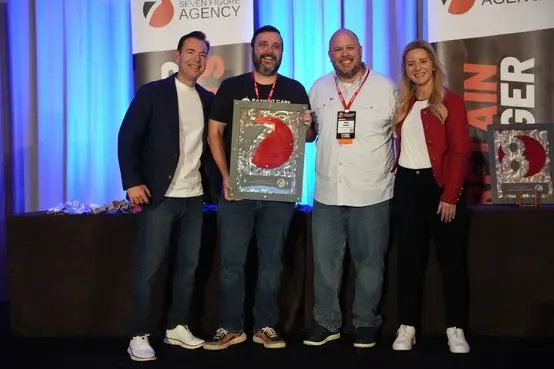
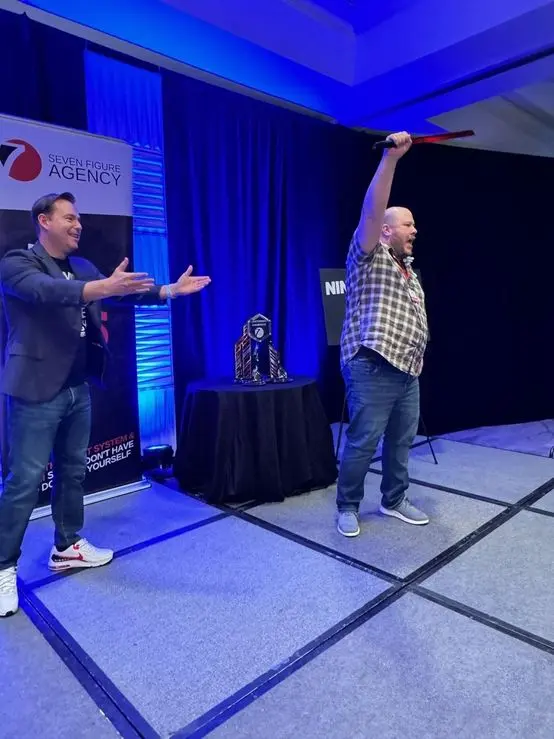
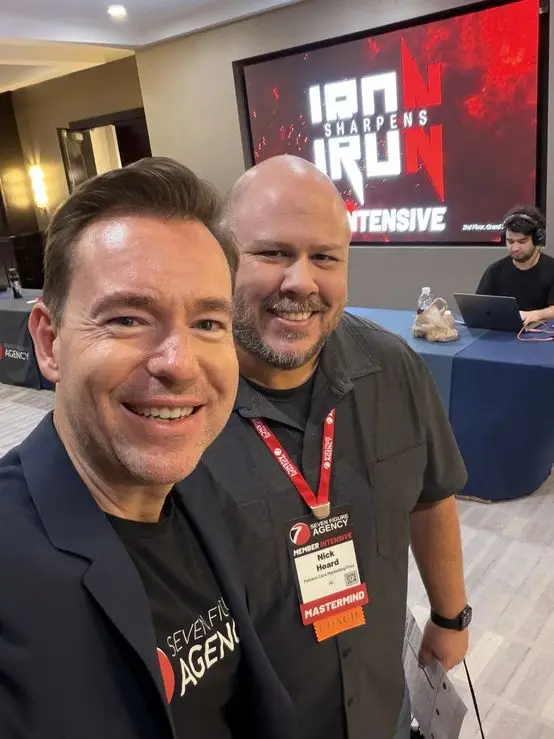
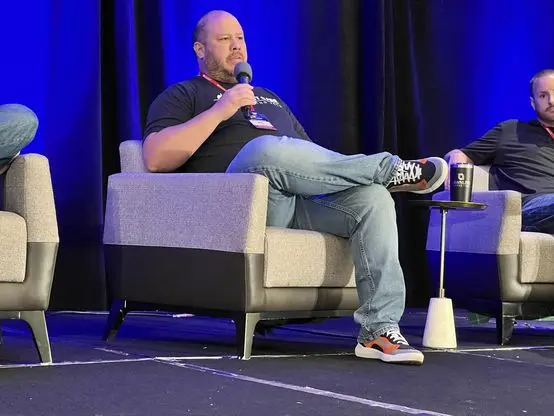
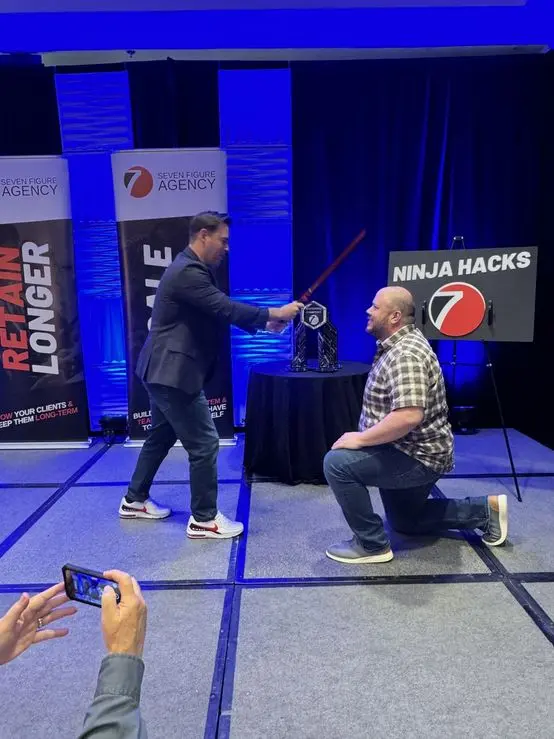
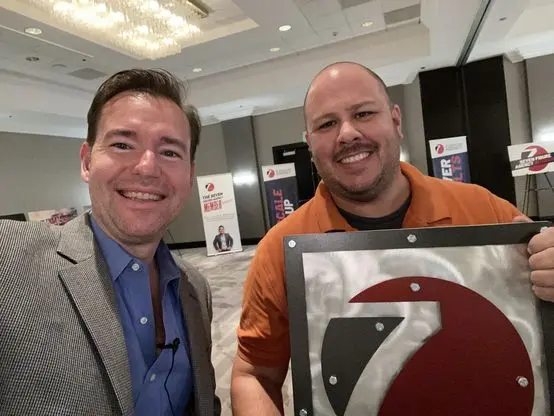
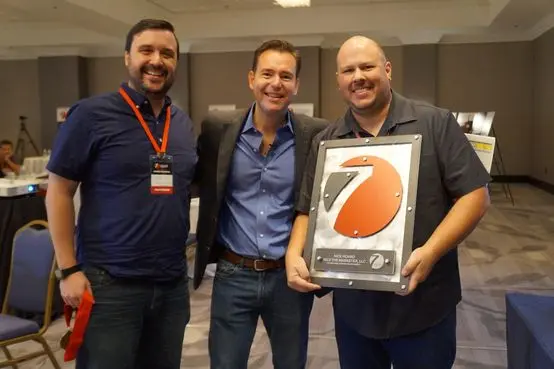
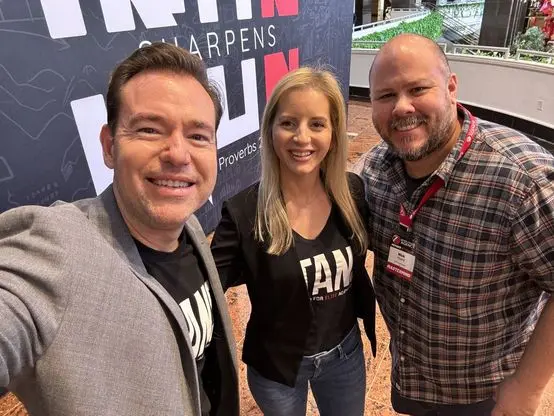
Nick has been a constant presence in the Seven Figure Agency community, from award stages and mastermind competitions to member intensives and panels.

Editor’s Choice on TopMarketingAgencies.com
Patient Care Marketing Pros is an Editor’s Choice pick in the Urgent Care category on TopMarketingAgencies.com, the editorial directory of the best niche marketing agencies in the country. Listings are editorial, not pay to play. Agencies are scored on niche depth, tenure in the specialty, client retention, verifiable results, and transparency, then re-scored every year. You can read the full profile on the Patient Care Marketing Pros listing or see how the category stacks up on the top urgent care marketing agencies page.
The Short Version
Prefer the short recap? Here is the same story in his own words.
Nick Hoard, Patient Care Marketing Pros, filmed at a Seven Figure Agency intensive.
Want to Package Your Way to Growth?
Nick turned a stalled a la carte model into a packaged offer that doubled his monthly revenue and holds a 99% retention rate. The system he used is the one we teach.