
Auto Repair Marketing · Lift Auto Repair Marketing
He Turned a Capped-Out Generalist Agency Into a $128K MRR Auto Repair Niche
Kelsey Outram and his wife Jen ran a general local marketing agency in Austin that kept bouncing off a $20K a month ceiling. Less than two years after niching into auto repair shops, Lift Auto Repair Marketing was managing 72 locations nationwide and generating $128K in monthly recurring revenue, almost entirely without paid ads.
Kelsey Outram with Josh Nelson, live. Full interview.
Read the full interview transcript
Full transcript of Josh Nelson’s interview with Kelsey Outram. Lightly edited for readability.
Josh Nelson: Session of the Seven Figure Agency podcast, where we're interviewing highly successful digital marketing agencies from across the country on what they're doing to grow, scale, deliver world-class results. And I'm so excited to have with us today Kelsey Outram from Lyft Auto Marketing. Kelsey, thanks so much for being here, man.
Kelsey Outram: Absolutely. Thanks for having me, Josh.
Josh Nelson: So Kelsey's had explosive growth in his agency over the last, I call it like the last two years. I'll let him tell the story. But if you're excited about this and you're on with us live, give me a yes or give me a dollar sign in the comments 'cause this is gonna be a great interview. As a matter of fact, in our entire Seven Figure Agency community of several hundred digital marketing agencies, Kelsey and his wife, Jen, were rated our fastest growing agency of the year. So, let's say, you know, congratulations to Kelsey. So before I get in and I kinda steal all your thunder, give us an overview, like kinda tell us, you know, y-your agency, who you serve, and kinda where you guys sit in terms of number of clients and monthly recurring revenue today.
Kelsey Outram: Yeah, absolutely. And again, I appreciate you ha-having me on here, Josh, and I'm grateful for this opportunity. But so our company, Lyft Auto Repair Marketing, we started– we joined Seven Figure Agency July, end of July twenty twenty-one, and so that's right around when we picked our, our niche and created our niche agency there. And then right now in current time, we're at a hundred and twenty-eight K M-MRR, and that's, that equates to like seventy-two locations nationwide with fifty-five owners. That's 'cause some owners have multiple locations that we manage for them.
Josh Nelson: So good, man. Congratulations. In, in that short of period of time to have that much growth is just tremendous. So you're, you're obviously focused on the automotive repair industry, which is a great, vibrant growing, niche, but not an easy niche by any stretch. No. I definitely wanna hear about like how you chose the niche and kinda what you're selling to the industry and what you're doing to deliver great results. But before we, before we go there, so when you started with us back in July, where were you in the agency approximately? How many clients? How much recurring revenue? Was it a zero start? Like kinda where were you guys at at that point?
Kelsey Outram: Yeah. So originally, we were just a general agency. We were called Mixed Digital Marketing. But it was our general agency here in the local Austin, Texas area, helping local businesses. That was– that's what we, what we did and focused on. And then from there, we k- we kinda just kinda got capped out at right around twenty K. We could, we could never cross that twenty K per month like– It was like a ceiling that we're just like we'd get close, and then we'd like lose a client, and then we gain a client. Like we would kinda just sort of back and forth with this dance, and we just couldn't really break that barrier. And then eventually, yeah, we found your coaching. Like actually, my wife found your book through a Facebook ad. She read the book, told me I needed to read the book. I read the book. We joined the coaching agency, and yeah, the rest is history.
Josh Nelson: So kind of from a generalist agency at about twenty K, you know, kind of bumping up there to now over a hundred and twenty-eight thousand in a niche with a great growth model going. If you c-could think back at that time, like what were like three of the big challenges you were looking to solve for that, you know, kind of being part of Seven Figure Agency helped you through?
Kelsey Outram: Yeah. So I mean, one of the hardest challenges was because we were a generalist agency, it was– we d– It was hard to know who the next like target audience should be or the next client should be. It was like, we're supporting everybody. Anyone. We can help anyone. So it'd be like we're driving down the road, I'd see like a truck like that has a, it wrapped, and I see a phone number. Like, "Oh, that's someone that we could help." Or used to get a, get a flyer in the mail. It's like, "Oh, that's someone we could help." So again, reaching like the right people all the time, it got very draining and tiring there. And so that's what kind of created a lot of the ebbs and flows. And then at the same time, I was working– I worked corporate before. I have a finance background, so that's what I did. And then we were kind of dual, like I was doing that as well as we were running our agency. So also doing two things at the same time was very difficult to be able to properly scale. So and just a lot of, lot of those elements that kinda went into place before, joining Seven Figure- So it's kinda like choosing the niche, simplifying the model, getting a, like a, a more accelerated growth program in place.
Josh Nelson: The question everybody wants to know and kinda that comes up often is how did you choose the niche? You're, you're working with auto repair shops. Like why did you decide on that niche, and how did you, how did you land there?
Kelsey Outram: Yeah, for sure. So I mean, I know a lot of times people usually have like a l- a pretty firm foundation in that niche before you choose it. Our story is a little bit different in terms of we didn't really have a firm foundation in this niche, but there was just a lot of things based on like our personal environment that kept pointing to it. And so where both of our grandfathers, like they had backgrounds in a- in and out of automotive. They're kinda like there's a love of cars there. And then my son, he's, he was three or two at the time, and he has a huge garage set in his room and things like that. There's like so much car involvement, and I was like, "Okay, this must be something that we need to try and go and support." And so from there, did some research on the industry, making sure that we could be a value add more, like more so. And, and then we saw that we could, and then so took the leap and just did it.
Josh Nelson: Love it. So, so it was like a hypothetical niche you had, you know, background family-wise in that particular space. What like what was the approach to get the first couple of clients in the niche? 'Cause I know sometimes it's like, "Okay, we're gonna try this niche," whatever it is, auto repair in your case. What was the– what worked to get your foot in the door in the industry and kinda get your first handful of case study?
Kelsey Outram: Yeah. I mean, that– it was hard in the, in the very beginning. I mean, I'm being very transparent. Like it was just a lot of cold calling, cold outreach to just as many different people as possible. And there's this like yes through auto repair shops. There's always someone else that answers the phone, and not, and I'm not expecting to hear from the owner. So then getting to that point where even meeting with the owner was really hard. And so our first few, I mean, I think it was either through Facebook or LinkedIn, just like s-someone– it would pique enough interest of someone where then eventually got to meet with them. They wanted to take a chance with us, took the chance. Thankfully, we were able to provide good and great results for them, and then slowly but surely Word of mouth along with just the consistent building of the funnel is what kind of led to growing even more. Love it. So was it, was it content on Facebook or was it like DM-ing people, "Hey, you know, I-" It, it was a lot of DMs, honestly. Love it. It was just like a lot 'cause we didn't– we were starting to develop content like based on just some of the, some of the teachings within the coaching agency and different things that we wanted to put out there. But I mean, that all takes a little bit of time to be able to develop and put out there. So at the same time of doing that, it was like, okay, we just– I just need to message people and just constant just like be in front of people as often as possible. And then, I mean, if you try enough times, I mean, you just need a few, a few takers in the very beginning to just kind of get that start.
Josh Nelson: I love it. I love it. So, so it was kinda like, you know, there's a couple ways to go a-a-about cold outreach, right? You can send cold emails, you can cold call, you can cold drop in, or you can, you know, prospect by chat. So it sounds like the play for you was prospect by chat. Start these conversations. What would you say you had more success on the Facebook side or on the LinkedIn side or Instagram?
Kelsey Outram: Yeah. Yeah. I mean, so within our auto repair industry, a lot of the owners primarily are on Facebook. Mm. And so that's why, I mean, right now I'm, I have Facebook open right now, and like not in the sense of like me needing to scroll through Facebook, but I know just a lot of our target audience is there, and so I make sure I'm always available on Facebook. So I qui-I quickly came to that re-realization, but actually our very first– one of our very first clients actually found us through LinkedIn, and like I wasn't near, I wasn't nearly as frequent on there, but it was like, we wanna be on as many different medias as possible. So I was like, "Okay, let's post here, post here, message people in this way." Whatever worked at that time, and so that's kind of how it happened. But majority now is all through Facebook within our industry.
Josh Nelson: Love it. So, so like cold outreach was how you got your first handful of clients. I know you've done a really go- good job shifting from chase to putting in content and getting clients to come to you and- Mm-hmm… Creating lots of great case studies and great content. What's working best for you right now in terms of landing new clients? Obviously, you've had this velocity of growth from- Yeah… You know, you know, there to a hundred and twenty-eight thousand plus in monthly recurring. Talk us through what's working best today.
Kelsey Outram: Yeah. So I think one of the best things we did in the very get-go was creating a Facebook group. Mm. That was like one of the best things we could have done, and it was daunting at first. I was like, we're literally starting a Facebook group from zero, and I don't have very many mutual friends on Facebook that are owners and sort of things like that. So really all I did was I just kept adding owners as friends on Facebook nonstop. Ev- I think I did, I like devoted like buckets of time every single day just to add people as friends and then also message them about the group. And then slowly but surely, people joined. And then, I mean, most of the time I had to manually invite in the very beginning, like that was the only way people were gonna join and gain any traction to begin with. So you just have to devote that time. But now, like we're, Facebook group has well over a thousand owners in it, and people are joining just organically now. I'm not having to manually invite all these people that I have to be friends with. It just kind of naturally occurred. But the beginning it was like literally just I click, click, add friend, add friend, add until like Facebook tells me, "Nope, you can't add any more friends today." I was like, "Okay, fine. I'll wait till tomorrow, and then I'll do the same thing all over again." And that's kind of how the process works.
Josh Nelson: Love it. So, so let's talk a little bit about like how you nurture that group. So you started, you know, direct messaging, adding people to a Facebook group. Like what are you doing in the group to create engagement or to kinda convert those people in the group to appointments and sales?
Kelsey Outram: Yeah. No, a-absolutely. And so now the big reason to do that was, calling, like I quickly realized calling the shops, I wasn't reaching the owner pretty much ever. And so I was like, "How do I go about reaching the owner?" We, we tried the cold email route as well. Never, like never hear back, and probably 'cause it went to spam or whatever it may be. And so that's where through Facebook I found that was where I was actually getting to connect with owners, and they would actually respond back. And so that was like, okay, that's where we need to devote all our time and efforts there. And then within our, within the group now, that's where we have regular webinars, we have podcasts, and things that we post directly into there, which again, it doesn't go through a gatekeeper. It goes straight to the owner when those notifications appear. And then we also have regular posts that just kind of in- create engaging, like just communication within other owners. Haven't had as many people post naturally as I was, I was hoping would happen, but I mean, that's, that's totally fine. I mean, there can be as many people that communicate and respond in the comments that, that totally works for me. But then from there, naturally, as we have our webinar invites, they're able to schedule strategy sessions from through there. I mean, any descriptions, we always make sure that people are aware that, hey, you can book a time with myself at any time. We'll make the time to go over what you have going on and if we're, if we're a good fit, perfect, and we'll work with you. If not, hopefully at least we gave you some good and useful information to help at least better where you were before you c- you talked with us.
Josh Nelson: I love it. I love it. So you've got this group, you're putting out content. When, when it comes to like, it feels to me like you're doing a lot of, you know, podcast style interviews like this, like where you're interviewing other shop owners or influencers in the space. It also feels like you're creating unique content. Do you tend to keep that just in the group so that you can make that the place they go? Or do you put it in the group and YouTube and other places as well? What's your format there?
Kelsey Outram: We kind of put it all over the place. I mean, I al- we always put it most things directly. There's, there's some things maybe we put only in the group 'cause it just like, it doesn't make sense anywhere else. But for the most part, if there's anything coming from our business, yeah, we'll post it in the group, we'll post it on our page, we'll post it on LinkedIn. Like, again, the more eyes that see it, the better 'cause we never know maybe someone just doesn't go on F- they don't have it, and so there's just other avenues that we need to be able to reach out to them that way. But yeah, that's kind of been the, the overall process.
Josh Nelson: Love it. Love it. So, what's been your frequency? I'm a big, I'm a big believer that, you know, if you can just do one webinar and you can do one live interview like this per month, you can be extremely pl- prolific- Mm-hmm… In any niche. Like what's the frequency that you've been following as you roll out webinars, interviews, and other content?
Kelsey Outram: Yeah. So the goal is always one a month on both- my wife is pushing me to have two interviews a month, so just always just, again, for overall practice as well in terms of just being a b- a better communicator 'cause it's the biggest thing we preach within our company and just I think a big thing that is helping set us apart is our level of communication. It's just, so in order to do that, as a leader of the company, I need to make sure that I'm locked in terms of that communication ability. And so having ano- one extra interview a month isn't, isn't the worst thing that I, that I could be doing with my time, and so that's another goal that we're trying to just consistently increase, improve on.
Josh Nelson: Love it. So one fully syndicated webinar per month, at least one interview. Talk to me about the interview strategy. I think that this is one of those plays that agencies that use it, just you get better positioning, you get access to people you might not have had access to otherwise. Sometimes you can even land clients just by having them on and interviewing them. Yeah. What's been your strategy to get interviews with clients and with people in the, in the industry?
Kelsey Outram: Yeah. So in the very beginning, I was just trying, like through the cold outreach process, if I, if I, if I'd realized like, hey, this person's actually really happy with who they're working with, but like just where they're at in their shop ownership, maybe they have multiple locations, or they've just reached a certain, a certain level of revenue with them. I'm like, that's actually, that's a great person. Like, regardless of if I get to meet with them in a strategy session, that's a great person to be able to interview 'cause just the level of wisdom that they have that other owners would love to hear about is great. 'Cause again, creating a podcast was, it was daunting at first, but it's a very simple process in terms of like we already have a webcam. Everyone's familiar with Zoom these days. As, as long as the audio can at least come up somewhat crisp, that's really all you need, and then just record the screen and, and kinda go from there. And so that's where we– I picked the first few, and then from there, I would honestly reach out then to the people that we had successful interviews with and be like, "Hey, actually, do you have any other recommendations of other people that you think would be great to interview that has successes?" Again, people surround themselves with others that have success as well. So I figured they would be the best people to reach out to better than myself just hunting these people down 'cause then I– it's a good leeway in terms of, hey, this person told me that you would be a great interview person. And like right away they're like, "Yeah, absolutely. I would love to share my thoughts on this topic," or whatever it is. And that's kind of how we created this snowball effect of having our interviews sort of line up.
Josh Nelson: So good. So, so you're interviewing, people on the podcast. You're getting that into the group. That warms that group up, and you've also got a reason to email out and to post on YouTube and other social channels. What's your mix on the podcast? And hopefully, as you're listening to this, you're like, "Yeah, this is a play I could use." What he said, it was relatively easy to set up, just gets people on Zoom or some other format. Maybe it's Restream or s- str- you know, StreamYard or one of these others, and you just ask questions, right? It creates great content. What's been your mix of actual owners of successful shops versus, let's say, like coaches, consultants, big names in the industry that are just have value content to add to the, to the world?
Kelsey Outram: Yeah. I say majority of our guests are always a shop owner. Right now, this year, I'm kind of branching out in terms of just some other maybe like an arm's length away from being a shop owner. Maybe there's a vendor within, the auto repair industry or whatever that means. So I'm just kind of dabbling with it just to see how it works. So like for example, I had a financial advisor that specializes in 401, and not that that is exactly fitting for like an auto repair shop owner, but all auto repair shop owners need to think about, okay, building, making a 401and having match and things like that for their shop. So I thought, yeah, maybe that could be like arm's length reach of making sense. And so we're dabbling with those different things, but majority of the time it's a shop owner. If they're a coach, themselves and they're a shop owner, even better, 'cause that just, I mean, expands the clout and expertise that other people when they listen can buy into and knowing that not only that they do this for themselves, they're doing this for others as, again, being more service-oriented I think comes off a lot more organic as well. So those are the things we kind of look for.
Josh Nelson: Love it. I think it's interesting you said most of your interviews are with shop owners, and so if you're listening to this, you're like, man, you know, I've been cold calling, I've been sending emails. I can't, you know, I'm having a hard time. Kelsey had the same challenge and he wor- he found a workaround. He was like, "Hey, I'm gonna set up a Facebook group. I'm gonna connect with my prospects on Link- on Facebook, and then I'm gonna interview successful people and actually give them value." Right? There's so many people that like consultants and trainers and they can find that information, but rarely can they hear from the person that's actually winning in their industry and kinda hear what they're doing and what's working best. And then by creating that content, you have affinity with success and people in the industry that are successful, that leads to other people wanting to be around you. That leads to consultants saying, "Hey, how do I get featured on your, on your list?" And, and so it really creates this snowball effect. So Kelsey, this is, this is good stuff, man.
Kelsey Outram: Yeah, I appreciate it. I mean, I think a step further than that too, when you cr- when you're creating these like long form, so the interviews usually last around 45 minutes to an hour. That's, that's been like kind of the sweet spot that they've just kind of lasted. But when you have all that content, you can then snip it into reels and turn it into so many different things now that, and it's rarely, I think when you make the, make the podcast, like for me, I was like big on like I do not, they're not, the audience is not there to listen to me. That's what the webinars are for. That, that's where I, I show the expertise on the marketing side of things. For the podcast, that's for the owner and their platform. This is an opportunity for them to like, they've nev- most of them have never done it before. They're like, "Oh, this is really like, I'm, I'm a little bit nervous, but I'd love to be able to share a little bit of my, about my story and things." And th- th- those are the perfect people I love having 'cause then like you can just, you just warm them up. You give them a lot of very friendly questions that are easy for them to answer, and then you can just, you can just kind of feel their confidence just kind of ride thr- throughout it and- People, again, resonate with that. They wanna be at that, at that level and being able to do that. So yeah, that's– don't– if you're scared to make a podcast, do not. Just, just go, just take the action and do it.
Josh Nelson: Love it. Love it. And a-and you have the opportunity to get the attention of prospects if you cold call them, say, "Hey, you want more leads for your business?" They're, like, gonna hang up with you or the person, "Hey, you know, I see you're doing amazing things with your business," could be a plumbing company, could be an auto shop, could be a roofing company, "I'd love to have you on my show and feature your success." Mm-hmm. Which one do you think they're more likely to take? Right? "Oh, feature my success." And then when you feature them, now you get to know them a little bit. They may or may not be an immediate business opportunity, but you've got a much better chance at having a business conversation that could lead to something that play than just cold calling them and asking if they want more leads. Give me a one in the comments if you're watching this live or after the fact if that makes sense and if that resonates. Excellent. So I mean, the other thing I see you do that's, that's pretty cool is it feels like you're creating case studies from your active client base. What's been your approach for developing those client wins that you can parlay into more and more opportunity?
Kelsey Outram: Yeah. So we're really big on fa- like having, first off, monthly meetings are very crucial, but within those meetings we have monthly surveys as well in terms of just gauging the level of confidence that they kind of have and the relationship we're, we're building with them. And so the people that are obviously leaning towards being very happy, you know, they have big wins, immediately those are like, let's get a testimonial from them. 'Cause it's like granting, we're not, we're not here to take 100% of the credit of why their win happened, but based on some of the things that we're sharing and, and leading to kind of these positive results, that's where we believe that, that testimony will become more trustworthy to anyone else that sees it. And so we immediately grab those. They're about a minute in length, m-m-probably, yeah, right around that range of just them generally talking about their experience with us and how things have been. Usually they're really happy in that moment. And then that's a great little snippet that then we kind of blast out there onto social media as well.
Josh Nelson: So good. I think you've done a lot of things really well, but like when you think about the model, right? You chose the niche, auto repair. You put together a program that was over $1,000 per month that generates results. You developed a list, and it was mostly a Facebook audience that you put into a Facebook group, and you did three things very consistently. And I'm sure you do a lot more than this, but at least one webinar, value-added content, at least one interview of somebody successful in your niche, and it looks like, I don't know what frequency it is, but you're trying to get case studies, short videos like this where the client says, "Hey, I use these guys and this is the results that I'm getting," that you can then syndicate and showcase that you've got proven results in the industry, which further position you as the go-to expert in your space, which is just excellent execution. And I think one of the big reasons you're able to get to this, you know, one twenty-eight monthly recurring revenue so quickly. What are some of the other things outside of that maybe, that you're, that you're doing that you feel like are really working well?
Kelsey Outram: Yeah. So I think one amazing thing that we did was write a book. I, my– it was, it was a big, it was a big dream that we had, and actually my wife and I, we started it in like November, and then she had a big goal, like, "Let's get it done by Jan- end of January." And I was like, "Holy moly." We're talking about we're in the middle of holidays right now, and like, I don't, I don't know how we're gonna accomplish this, but let's, let's go for it. And we amazingly, we did it. We were– we ended up being our own editors in terms of like, we just spent nights just side by side reading a chapter together, seeing what made sense, what made, what didn't, and kind of from there then we launched the book, and it was, it was another amazing… It wasn't, it wasn't a thing that we're like, "Oh yeah, everyone needs to buy our book." It was just like a, a huge thing that we were able to like accomplish together as a couple and as owners and send it out to the industry and hopefully, like we've actually gotten some good, some good feedback in terms of people, like they read the whole thing. They thought it was super helpful and like, then they met with us through it. So yeah, it's been, it's been a huge value add there too.
Josh Nelson: Yeah. So this is "Drive More Business: The Step-by-Step Guide to Internet Marketing for Auto Repair Shops." You guys did an amazing job with the branding of the, of the book. I love it. The content was like really rich content. Can't help but position you to an auto shop owner like, "Wow, Kelsey and Jen, they must, they must know a thing or two about digital marketing for the auto repair industry if they published this amazing book." So kudos on getting that done. What are, like how are you leveraging it? Is this like a lead magnet on your website? Are you giving it away at trade shows and events? Like what's the, what's the play beyond the position that you're, you're leveraging this with?
Kelsey Outram: Yeah. Yeah. So we're, we're s- giving it away at, when we go to– we went to our first like trade show event earlier this year, and so that was super exciting to be able to go to. Brought, brought some books, gave those all away there. We're trying to, we're, we're, we're trying to create a better marketing campaign for it, honestly. 'Cause we did it and it was like a huge sigh of relief that, oh my goodness, we did it. It's done. And we, we like kind of, we posted it a few times and then that's kind of it. But now we're like huddling up in terms of like, how do we leverage this properly in terms of creating better campaigns around the book and getting it just more exposure to it that way in front of, in front of more owners. So yeah. We wanna do better with that.
Josh Nelson: Yeah. I think, I think, you know, next steps for you guys on this that's gonna be big is maybe a free plus shipping funnel where you're advertising to the targeted audience where they can request a free copy. Mailing it out to your top dream 100 prospects. "Hey, I'm the author. I wanted to get this in your hands." Mm-hmm. Using it to get speaking opportunity. I think the next big play for you guys is you on stage at these industry conferences talking about digital marketing and SEO and reputation management and AI, and this book will be the foot in the door that they're like, "Oh, well, he's the author. We should have come, have him come speak to our group." Yeah, for sure.
Kelsey Outram: I think, yeah. We're hoping it leads to kind of all those moments of getting even more and more exposure 'cause yeah. Like you say, stage time is money time, so we definitely wanna be able to get on stage one of these days and be able to share a little bit about our expertise in the marketing realm and how we do things, so. Fantastic.
Josh Nelson: So it sounds like a lot of what you've done is very organic, right? It's like you're putting out content, you've built this list, you've built this group, you've got this content, that you're rolling out on a consistent basis. Are you doing anything, from a paid search perspective, whether it's retargeting or direct advertising on Facebook to attract clients as well? Or, or like kinda like is it all organic? Yeah.
Kelsey Outram: I mean, majority of it is all organic. We rarely spend money on paid ads and things like that on our end. We did, we did for like just pockets in time last year, but just the RO- immediate… If like if I'm not seeing ROI from something, and that comes just from my finance background, I i-i-immediately chop it and like, "Okay, let this, let's move on to a different thing, maybe a different avenue." But the one thing we always do that we just like a very small thing is any testimonial, we boost one dollar a day for 30 days. No matter what, whenever it comes in, just boost it a dollar a day. And, and even the audience, I don't even spend that much time like even making the perfect audience or anything like that. It's literally just people that have liked our business page and then like that 1% degree, like from them kinda. Like just keep it very simple, like not think too much about it, just it's, it's for just natural exposure, so that's what we do consistently with just every testimonial we get. So good. So from zero to seven figures on the brink of multiple seven figures, almost entirely organically.
Josh Nelson: Just putting out great content, doing three things consistently and well. It sounds like, you know, the main things are the monthly webinar, the monthly featured interview, and then constantly creating a cus- a client into a case study that you can then roll out and a small budget behind it just to make sure everybody knows Kelsey and crew know how to generate results, and there's new people seeing it every single day, and they're seeing it in their news feed, and they're like, "Okay, at some point I should give you guys the opportunity to earn my business." Yeah. And, but one thing we d- we only post it on like our business pages. That, that's one thing I don't post into the group.
Kelsey Outram: Like I just didn't want the group to suddenly feel like it's pointing like me, me. Like look at us. Like obviously like we post marketing tips and things like that. There's different things that we do that sort of offhand points at us. But that portion just, yes, it's someone else talking about our service, but still I just didn't feel quite as comfortable. Like yes, this is something we should post in the group. So those, I mean, whoever– I leave it to everyone's discretion in terms of if they're creating a group or not and what they do there, but we've just leaned on the side of the supposed to just to business people group.
Josh Nelson: So you're very careful to protect the group to not feel like it's your fishing pool.
Kelsey Outram: Yeah. Exactly. Yeah. But it's like this is a value-added industry group for our niche, where they're– we're value-adding content, we're bringing people together. And so, you know, I think that's an important distinction.
Josh Nelson: You know, Kelsey, you know, he doesn't wanna feel like he's prospecting to the group and it just exists for him to get clients 'cause quickly people will drop out of that group or stop paying as close attention.
Kelsey Outram: Yeah, exactly. 'Cause you… When, when it feels that way, it's gonna feel fake, and even if people are in the group, they're not gonna engage, they're not gonna do anything in there, and then it's a useless group. We– A big thing is we just wanted it to be a value add for the industry, and so how do we best do that? And then we kind of just brainstorm on different topics and things that we can throw in there just to create, just good conversation between owners and have them connect with each other.
Josh Nelson: Love it. Loads, loads to take away here, guys, on how Kelsey's landing clients and how he's had this accelerated growth. Would love to hear your takeaways in the comments specifically to landing clients, 'cause they've done a great job on this side of the equation. I'd like to shift gears for a minute and just talk a little bit about like the program package. Like what is it that you're selling to these auto repair shops? What like, what does the program typically look like in your world?
Kelsey Outram: Yeah. So, so we offer three different programs. And so a big, a big value add that we saw coming into the auto repair industry was there wasn't really an all-in-one option for- Mm. For people. They always have to piecemeal different services for the different things that they have, and that's, that's totally fine. Like even people believe like, okay, maybe you should only be an expert in this one particular thing. But we felt like we were pretty good at doing… Not pretty good. We're good at, at doing all the different things and just again, streamlining communication. We feel like that's a huge thing that is always a separator for people being happy and them being not. And so we felt like, okay, we can create a good world-class communication process that then allows them to like, "Hey, you just need to meet with our team, and we implement it all for you." And it was across the board. So that biggest program is gonna be like the website, SEO, hosting, Google Ads, social media. But then also we leverage GoHighLevel in terms of like we built, we built our CRM platform on top of GoHighLevel. We built a lot of customizations, like around that then integrates with different POS systems in our, in our industry that then allowed us again to just show that we're, we're– we really wanna make the industry better, and like we're doing a bunch of different things even technol- technology-wise to make it better and do that. So that's our biggest program. The middle one kinda takes out some of this like… The biggest one was the idea of like this is for an absentee owner or someone that's a little bit more established and like they have multiple shops, they just kinda need one for them. Middle one is kind of like the in-between. They're like they're doing well, but they're not quite at the cusp of like needing everything done for them. And so that's what, that's what we kinda created the middle one for. And then the smallest one we created was just for website SEO. That's like just long-term, more long-term ROI play, but also like an entry point for anyone that like they try to feel us out and see if maybe we know what we're talking about or not. I'm like, "Yeah, absolutely. Try us out on the smallest one, and we'll show you that we do know what we're doing, and then we can kinda work our way up from there." So, w- price for– price range, like what, you know- Oh, yeah… How much? Yeah, so our… So we offer, we offer month to month across the board, but then also like we have a six-month or twelve-month, like I call it a loyalty discount in a sense of, "Hey, if you knew you were gonna be with us longer, like this is– th-there's $100 off a month on those different agreements." But biggest one is like $2,800, middle one is $1,900, smallest one's $1,000.
Josh Nelson: Love it. So between $1,000 and $3,000 per month. Yeah. And you're like, "Hey guys, we're gonna come in and really do what you need," right? Website, SEO, pay-per-click, retargeting, and some marketing automation, and just bring a result, right? And in your world, it's, it's more cars in the shop, more, you know, more jobs. That's what they want, right?
Kelsey Outram: Mm-hmm. Yep, exactly.
Josh Nelson: Love it. Love it. Love it. And I think one thing you guys do really well is client retention, right? And you're– you guys retain the clients, they stay with you long term. What are some of the– and I know Jen shared some of the secret sauce at the last event, but like, what are the– some of the things you guys are doing to keep your retention high and keep those clients with you long term?
Kelsey Outram: Yeah. So again, I think I'm gonna preach back to the communica- so communication and results have to go hand in hand. I mean, we can be the best communicators, but if they're not seeing any results, it doesn't even matter. But at the same time, if we're, if we're getting great results, but they don't know, like that that's coming from them or any– or like that's coming from our team or anything like that because we're not communicating that the right way, then they're gonna think like, oh, we're not really doing anything for them. So I think those two things going hand in hand have been a game changer in terms of increasing the lo-longevity of clients consistently being with us and then realizing, hey, it's like, again, not every month is gonna be like, oh, you're way higher than last month, you're way higher than last month. There's a– there's seasonality within auto repair. I mean, when it's the winter, people are homebodies. They're not gonna be driving to the, to the auto repair shop as often. So naturally, there's gonna be less, little bit less call volume, little bit less cars that show up. But we're always comparing year over year, just kind of showing that consistent growth. And if for whatever reason that growth didn't happen, why? Just always answering why that could be a possibility and then what adjustments we're making. But through having those monthly touch points, I think that's been huge as well. Like them feeling heard and feeling like, oh, yes, they are making– they are adapting, they are making strategy changes because again, if you're, if you're on the sidelines just waiting back to hear from them, the only time you're gonna hear from them is when they're pissed off and not happy about your service and like, "Actually, no, we're switching." Like that's when you find out. So that's where we're very consistent about, hey, we know the shop owner's busy, but we're gonna hunt them down to make sure that we can meet with them 'cause we want that time to really make sure that what we're doing is the right thing for them.
Josh Nelson: I love that what you said there, kind of the, the balance of we've got to gen-generate the results, right? If they're spending two grand a month or three grand a month, they have to get results, but they also need great communication and understanding what we're bringing to the table and, I think that, that's part of the reason you guys do so well. Like what does the, like the month– is it a monthly call? Is it a weekly call? And then what does that call look like in your, in your agency? Are you just going through the reports? Just kinda for the group that's thinking, man, how do we like level up our retention?
Kelsey Outram: Yep. Yep. So it's a, it's a monthly call. I mean, if anyone wants to meet more often than a month, then we make sure that we make 'cause again, we're a service-oriented business. We wanna make sure we're serving them in any ca-capacity that we can. Again, if we ever felt like we were getting taken, like taken advantage of, then that'd just be a different conversation. But usually I'm fielding these, the types of people before they even become clients of ours. Anyway, just making sure they're the right fit and partner for us. So that's not something we've ever had to run into before. Mm. But in these client meetings, there's a– they all have an account manager. The account manager's both going over the reports and more so like hearing from them how they felt the, the month went in terms of both what was the revenue, what was the car count. Think how was the performance of the shop there? 'Cause at the end of the day, we can– you can show them and you can manipulate reports to look as rosy as possible or they can look horrible, but if they're not seeing the revenue growth, if they're not seeing what they care about, the ROI and things like that, it doesn't really matter what we're doing at the end of the day. So we need to make sure we're understanding that and then, okay, yes, what we're doing was working, we're moving in the right path or no, what we did, yes, increased calls, but maybe they were just a bunch of spam calls that came through as a kind of a false narrative, false number. Make sure we're kind of addressing that head on and not making excuses for what's going on, things like that.
Josh Nelson: Love it. So I think that, I think that's, that's important, right? I think all of the agencies that we interview on this program that have gone to seven figures and are maintaining, you know, this growth level are really focused on the client result, right? It's not about vanity metrics. It's not about, oh, you moved up for these keywords. It's really, did we make you money, right? At, at the bottom line is did we make you money and are we creating good experience and do you understand how we're focused on moving you forward? Mm-hmm. I think you guys have done a really great job with that. I know that Jen mentioned a little bit about like some strategic gifting and some cool things you guys do with g- do with gifting. Can you talk a little bit about that?
Kelsey Outram: Yeah, absolutely. So when, they start with us, we always send, so we send knives. This is what we s- what we send. So we got it from the Giftology book, in terms of… 'Cause we thought long and hard about what exactly we wanted to send right now. I'm sure down the road we'll probably change on what the onboarding gift is, but we send some pretty fancy knives, to them. It has their, it has their last name branded on there. So again, so very personal. – Nice. All the gifts we send never have anything with our company logo on it. We've nev-never once sent anything with Lyft on it. It's only ever their shop name or their la- or their last name. 'Cause again, there's, there's just power in names and our name doesn't mean anything to like… Yes, we're, we're, we're in this relationship with them and partnering with them and grateful whenever they bring up our name and refer us. But in terms of gifts, that's where we're trying to focus it on them and gr- or how grateful we are for them 'cause we are. Like we wouldn't be here without them. And that's why we kind of focus our gifts on different things. My wife is the master gift idea creator and so she'd be better in knowing like how we, we come up with the, with the different gift ideas. But yeah, just different things. It's not even necessarily like, oh, this is an auto repair related gift. Like no, it's like maybe things that go in your home and are things that are just things that they, they would really use and be of value at the same time as being like, oh wow, that's something cool that I would've never bought for myself, but really, effective.
Josh Nelson: I love that. And hopefully that resonates, guys. Obviously, sending gifts is powerful, right? It's gonna… Something they're not expecting. People don't usually get a gift from their digital marketing agency provider. But then making the gift about them and something that's, like, personal to them versus you, it's gonna have a whole different connotation than if you sent, you know, a knife with your logo emblazed on it, right? It's different if it's their name or their logo. So I think that's a great example of smart gifting. There's a couple questions here I just wanna try and make sure we don't miss. So you were talking about your programs. Somebody's asking, does that include ad spend, or is that just your management fee and ad spend is separate to that?
Kelsey Outram: Yeah. Ad spend is completely separate. So that's the one thing, like, we put as an asterisk to let them know well ahead of time. We don't, we don't charge a percentage based on the ad spend that they have. As big or as low o-of a spend that they want, we're gonna manage that and make sure that it's maximized in terms of ROI there.
Josh Nelson: I think that's something you sh– everybody listening should just as a, as a best practice, don't include the ad spend, whether it's Facebook, local service ads, Google Ads, don't include it in your, in your management fee, right? Yeah. Let them know this is our management fee, and then pay the, pay the spend separately, directly to their credit card or directly to their account. You're gonna, you know, just prevent yourself a lot of headache- Yeah…
Kelsey Outram: Doing it that way.
Josh Nelson: And f-financial accounting wise, it's just much cleaner. You know exactly how much you're, you're netting, as an organization.
Kelsey Outram: Yep, exactly. Yeah, we make sure that their card is what's on file for any of the ads, as we don't wanna be a middle person with them, just the ad spend correlating that chargeback.
Josh Nelson: Yeah. Here's, here's another question that came in. So auto repair guys are mostly busy, it seems like. How do you guys convince them that they need more? Kind of what's your approach when somebody's like, "Oh, we've got too much work. We don't need you"?
Kelsey Outram: Yeah. I mean, again, if they're– if that's, if they're talking about, like, in a sales call, like, "Oh, like, we're, we're plenty busy. We don't need you," then we're– then I kind of pivot it towards time. Like, what does your time look like to you, and what is that value there? Can we provide value in that e-essence? Like, we'll, we'll make sure that you, you keep ramping. Or also, what are your goals? Are you planning on more locations eventually? Like if that new location is gonna take even more time and marketing behind that. And so we're a team that can help supplement that time, so it can be hands-off for them and then be able to ensure that, yes, you are seeing that consistent revenue increase. So, but sometimes it doesn't… If we don't make sense, if they're really happy with their current marketer or they're already seeing great results, I tell them, "Amazing. You found a great partner. Stay with them." I'm not even trying to convince them to switch to us 'cause they're already happy. Like there's, there's no point in switching, like, to a different person 'cause at the end of the day, that's what's most important to me is, like, we're, we're, we're a service that can be of, of value add. We can be a real partner. They can build a relationship and trust us. If they have that built, no need to rock the boat for no reason just because you feel like selfishly, yes, I want them as a client. Like, no. The, the… If the, if the time comes again where eventually down the road they're not happy with their person, they'll reach back out to you 'cause you made an impression on them in terms of, yeah, y-you weren't selfish and just trying to, like, sell, sell and like, "No, you shouldn't go with them," and why they're bad. Like, never ever will, would I recommend going about that tactic at all 'cause it just will never come off as a trustworthy way that the owner will resonate with you.
Josh Nelson: I could not agree more. And I think, to that question, and my– if I'm talking to prospects that say they're too busy, I like that Kelsey was like, how do we pivot to maybe find the pain? If there's not a problem, there is no deal, right? Like, if they don't perceive an issue, they're not gonna do business, right? And you may just be talking to the wrong people, right? If, like, if you're talking to prospects and they say, "I don't need any more leads," and you're just selling leads or, "I don't need more business," then all right, talk to another prospect 'cause there's plenty of growth-minded people in your niche that have a need for what you've got to bring to the table. So you may just be talking to the wrong prospect. Mm-hmm. But I think it's right. Like, if you can pivot to what about time? What about expansion goals, right? And if you can identify a problem, then there may be an opportunity. Mm-hmm. So I think that was, that was really well said. Let's see. Okay, so here's another question that's asking about exclusivity. Like, do you guys do exclusivity or do you, like, just you work with everybody?
Kelsey Outram: Yeah, we offer exclusivity within a certain radius around their shop 'cause within– that's what we want them to be dominant in, and so that's where we give, like, an exclusivity range around their shop. And obviously, when they have multiple locations, we give exclusivity around that. If their own locations are within the exclusivity, obviously that's up to the– Like, they're the owner. They, like, they know that that's what's happening. So we're just careful in terms of the tactics that we apply to make sure that each one is getting fed properly.
Josh Nelson: Awesome. Let's see, Sean's asking how you prevent other marketers from joining your Facebook group and spamming. Has that been a concern? Is that a concern for you at all?
Kelsey Outram: No. I mean, if– I mean, we only accept auto repair shop owners. If we see that they're not or they don't answer the questions that we have in the group, typically I just decline it. Unless I know, I know who the person is, or I clearly see that, like, you click on their profile and you can see that, yes, they're an auto repair shop owner, they just didn't answer the questions, sometimes we'll make an exception and just, like, a-approve them and let them come in. But for the most part, you can tell if someone's being shady or not when they're joining the group and delete it. Some people, I'm sure, will sneak through, but at this point in time, I feel like we've built enough trustworthiness with-within the group and what we bring to the table that I'm honestly not stressed and worried about the competitors. I'm just like, we're focusing on what we can control and what we can apply and add, not what others are also adding. Oh, what can we do better to stop that? Like, no, let's just… Let's focus on what we can do and do it the best that we can, and the rest will take care of itself.
Josh Nelson: No doubt. Yeah, and Sean, you know, to, you know, to his point, it's your group. You control the group. You control who's in, who's out. You can ban anybody on a dime. And so it's a great thing to create an email list and to create a Facebook group and then only bring in, you know, your right prospects or people who are gonna add value to the community. And so that's how you prevent any shenanigans, even though it's, you know- It's rare, but there are bad actors, right? There are people that will just join groups for the sake of DM-ing your prospects, and- Yeah… So you do need to keep an eye on it, but it's not e- it's not hard to, it's not hard to prevent it. Mm. Amazing. So we've covered some great ground. You know, Kelsey, you've grown your agency from, you know, start to a hundred and twenty-five plus thousand monthly recurring revenue, crushing it for your clients. You've talked about how you're landing clients on a consistent basis and how you position yourself as the expert. You've talked about the different programs that you offer, how you structure those programs. You've talked about kind of retention strategies that you've put in place to retain the clients at the level that you do, which is phenomenal. Let's talk a little bit about operations kinda. You guys have grown, like- Yeah. How do you keep up with the volume? How do you make sure that your quality stays strong as you continue to scale?
Kelsey Outram: Yeah, that's been one of the hardest things as, like our velocity of growth, and obviously then with that, we need to have a team that can support that velocity, ensure then again, that our clients are receiving that world-class experience. 'Cause if we don't have enough people, that would drop off. So, and so that's where we have a team of 11 that is amazing. Love every single one of them. And they're just… With-without them, our definitely our company wouldn't be at where it is today. Just day in and day out, they're able to provide that consistent value for our clients that have just allowed us to help and trust our growth. One thing that I'm very careful on is that not onboarding too many clients at one time. Okay. And so our rule of thumb is two per week. Now, granted, I know some people are like, "Well, why would you cap yourself with that?" Well, that onboarding experience is crucial to just like that life cycle of a client staying with you. If they have a very poor onboarding experience, already their level of expectation is really low, and then they're just, they're kind of looking for all the other pain points that they're gonna see, rather than seeing like, "This is world-class. Yeah, maybe they had one little hiccup here, but like they're providing us so much value." Like it's a totally different mindset that's being presented, and so that's where we limit it to two per week. As we grow and w-we improve our processes, yes, maybe we'll, we'll try it with three. But I know like this year we tried it one time where we had like four start, like four business days in a row just to see. And our, and our team did amazing. They did it, but I could see them mentally- They were bursting at the seams a little bit. Yeah. Like the mental exhaustion of like, okay, all the different pieces and things that go into it, so then that's where we knew, okay, two for sure is where we need to stay for now. And then as we consistently build better processes, get even more people, then we can talk about increasing that.
Josh Nelson: I think that's smart, like to just to like recognize what your, what your capacity is and keep it to that. I wonder if there's ever times where, you've, you've oversold. Like do you, do you have a waiting list? Do you just tell them, "Hey, we can't take you until later"? Like, what's your approach to that situation?
Kelsey Outram: Yep. No, I mean, for us, I just look at who the like onboarding timing is, and it's like, okay, yep, we have a slot next week 'cause there's, there's only maybe one person that's on the, on the docket for next week. But if there's two already, then we just start the next week. But I mean, right now there isn't like a pending waiting list. No one ever has to go out too far ahead into the future, because I think, yeah, that two per week is a solid amount. I mean, if we ever run into a problem where we have this huge backup, then that's where like we would probably look into, okay, maybe we need to increase the amount of team members to be able to make sure that this waiting list isn't too long. But right now it's been a solid pace. Our growth is very consistent and in the right trajectory, so nothing that we need to like overly rock the boat with.
Josh Nelson: And that's something that you said that I really believe and I found to be true, is that how you start the relationship really will dictate whether they're with you three months down the road or a year down the road. And so really dialing in that onboarding process, creating a world-class experience, making sure that you've got quick wins baked in, really will make or break. And so wise to say, "Hey, let's not overdo it. Let's make sure we do well by each of the clients that come in." and so that's, that's really good stuff. – Mm. We got a question here. They're asking, do you onboard, the clients yourself or do you have an account manager's, team that does that?
Kelsey Outram: Yeah. So, so since I'm the main salesperson, I also show up into the kickoff meeting. So right now I'm in the process of figuring out how to like slowly peel myself out of that process too. But at the same time, I wanna ensure that like that transition from, "Hey, you're talking to me, you're talking to me, talking to me," to then no, now the account manager is someone you trust. But we do have an account manager for every account now that they're, they're the main point of contact for that person. But then obviously th-they can reach out to me as well when, when they need maybe my advice or my thought process on a particular thing. That's not out of the realm, but ma-majority of the communication once after that kickoff point is transitioned to going with the account manager.
Josh Nelson: Fantastic. So, really important, like as you grow and as you scale, you wanna be thinking through initially you're gonna sell it and you're probably gonna onboard it and you're gonna manage it. Quickly, you wanna get to the place where you can sell it and then maybe onboard it, but somebody else manages it, and then eventually you just wanna sell it and somebody else onboards it, and eventually, like you just want someone to sell it and someone else manage it. Yep. That's really when you got a self-sustaining agency, and I think that's where you guys are headed in the not too distant future.
Kelsey Outram: Yep. No, I, it's gonna be hard because I do really enjoy like the s- not the, not the fact that you get a… Like, obviously there's a high when you, when you make a sale and it's like, "Oh wow, yes, someone else is trusting us to be with us." But I love building that initial relationship with so many different people and just like- Mm. Yes, like they're similar in the sense that they're all running shops together, but they're all so different and like, so getting to be a part of that communication, like lifecycle I guess is I've, I've really enjoyed.
Josh Nelson: So that's gonna be really hard for myself to like peel off- To step out of. Like you enjoy that part, right?
Kelsey Outram: Yeah. Yeah. And then like, but to still like I don't want there to just not be any relationship now with any of our clients. Like kind of figuring out that balance, I think that that's something that we have on our roadmap to be able to figure out 'cause there's no way that in order to grow the agency where we want it to grow that- I'll be able to always be the only salesperson forever.
Josh Nelson: Right. That's just unrealistic to think, to think that way.
Kelsey Outram: So yeah, that, those are all definitely like in our, in our roadmap. Probably in the near future than I'm expecting because we're growing pretty quickly.
Josh Nelson: Yeah. No, I think, you know, we're talking about that at the next intensive, how do you remove yourself from the sales process and how do you- Mm-hmm… Build a sales team? And I think that's gonna be right on point for you at kind of where you're at in your, in your agency.
Kelsey Outram: Mm-hmm. Yep.
Josh Nelson: Okay. So Dave wants to know, in your– like in your mind, how many accounts can one of your account managers handle?
Kelsey Outram: Oof. That's a, that's gonna kind of– it's gonna depend on the account manager and their skill set, and just kind of getting a feel for them. I mean, there isn't a magic number. I mean, I know the number we're, we're sort of taught within seven-figure agency is kind of that 30 to 35 ballpark. But it's gonna, it's just gonna be different with- within any industry you're in, within any account that you have. There's kind of just that process of that, the touch points that they're having to deal with. 'Cause you don't want them to be overworked, but at the same time, you do not want them to just like not be doing much and- Pulling their thumbs, right? Like what is it that you're doing there? Yeah, exactly. And not really having- Let's get you some more work. Yeah. Not, not really having that ability to build a relationship with them. They're just like, "Oh, well, I mean, the only time I'm talking to them is gonna be in the meeting" or what is it. Like there needs to be a bigger process around that. So, I mean, it's kind of a, on our end, my end, I'm, I'm still kind of consistently analyzing like what is a good sweet spot and amount for an account manager to do. But as long as like I trust the report cards in terms of like the surveys that come back from our clients and their happiness level. 'Cause obviously if the happiness level is starting to trend the opposite direction, then maybe it's because that account manager has too many accounts. And so then that's what we'll kind of actively adjust and think about.
Josh Nelson: I love that. Yeah. I think, you know, we're sort of finding the norm somewhere between 25 and 35, but it's different based on niche and it's different based on service offering, right? If you've got a comprehensive service like you guys have, you know, maybe it's less. If you're just doing Facebook ads, right, then maybe it's, it's a lot more, right? So it really depends. And I like what you said there about the happiness scorecards. Like what– how often are you surveying your client base and what does that look like in- inside your agency?
Kelsey Outram: Yeah. So it's, it's once a month that we send it out to all of our clients. We get about 25% back.
Josh Nelson: So- Yeah. Right. You wish you could get 100, right?
Kelsey Outram: Yeah. I wish I get them all. So no, so we're trying to create a process now, like, 'cause we're already meeting with them no matter what, once a month, at least getting that touchpoint. So if we don't see a survey filled out by their monthly meeting, let's fill it out together with them. – Mm. Granted, I would rather them do it on their own 'cause then you can get a truer representation of how they're feeling. Not like, "Hey, you're with a team member, be careful what number you're sharing in terms of your happiness level." It might seem a little bit fake, but again, at the end of the day, I'd rather have the data point of just how, one, how things are at the shop. So we track their revenue, their ARO, their car count, things like that. But at the same time, okay, what is their happiness level? What are things that we can do better? I don't, I don't care if it's a 10, what can we do better for you to ensure that, again, we're providing the best service that we possibly can. Love it. 'Cause through that, we've even gotten ideas of different things that we can modify or update within maybe our CRM or whatever it may be. So it's, very useful just to get different, kind of communications with your clients.
Josh Nelson: I think that's a great, that's a great tip to grow and scale in your agency. If you aren't surveying the client base, you don't know, right? Maybe you think you're doing great, but they're unhappy. A survey, even if you don't get 100%, gives you a pulse on how you're- Mm-hmm… Performing as a business. Do you use a third-party app? Do you do that right at a high level? Like what is the mechanism for you guys to manage that today?
Kelsey Outram: We're doing it right at a high level. Love it. So we built a survey within there, and then we have all our clients tagged as like a client. Mm-hmm. So then that way it's easy to filter to then send to that list.
Josh Nelson: So good. So good. So a-another question I had, and I know we're, we're getting close to the end here. If you guys have questions, post them in the comments. If you're getting value, type value, 'cause I think this has been tremendously valuable. I mean, lots of great insights here. But you're a husband and wife team, you and Jen. You guys started this. You run it together. Like what are some of your secrets to thriving as a- as a, as a couple with, you know, at least one kid? I… So you guys have one wonderful child.
Kelsey Outram: We have, we have two. We have two. Two, two kids- Yeah…
Josh Nelson: In a thriving business. Like what are some of your secrets to making that work?
Kelsey Outram: Yeah. So I would not have it any other way. I absolutely love and adore working with my wife. I mean, maybe some people are in different situations where it doesn't work the best for them, but I love it. It, it's… We balance each other, each other out so well, and like she's a lot more organized, and so she's very good at creating the process and what that should look like and keeping that clean. For me, everything's just magically in my head and I'm just like, "Yeah, th-this is, this is how it should flow and it makes sense here." And I know, and like I just always accidentally think that people know what I'm thinking and talking about when obviously not. I didn't say it out loud. It's all in my head. So it's really good having her to be able to balance me out in that sense. But with that, what we've– she's, she's starting to work a little bit more because we've grown so quickly and like more than I've wanted to. But thankfully, I mean, the whole reason we started the business was so that way we could have a means to be able to stay home and spend as much, as much time with our kids and our family as possible. And so that's where, again, I'm– we're really strict also about, hey, outside of work hours on weekends and things, we're, we're not available. Like I don't, I don't want employees to be available. I don't want anyone… Like our company is just like we're quiet outside of those hours. We are absolutely here to help you when it's time that we're open. So that's– wanna make sure there's a very good balance there and… 'Cause that was the whole reason that we started this to begin with.
Josh Nelson: Love it. So you've got those complementary skills. You said this hard shutoff, and I know it's hard as the entrepreneurs in the business to say, "Hey, we're done. It's six o'clock at night. Let's go be with the kids. Let's go be with the family." Do you guys wind up talking business and working on things at some level or do you- Yeah… Turn it off?
Kelsey Outram: We, we talk about business all the time. So that, so that, so that part, that part is hard, but at least in terms of like- Any- anything related to, again, ema– emails is always the one thing that tends to leak, I think, for most people, 'cause it's just so easy to access on your phone and see and like, "Oh, that seems important. I should jump on and do it." And I'm even a culprit of that at times where I'm like, I read an email and I'm like, "Oh, like I need to go take care of that or else I'm gonna forget," and that needs to stop. So we'll talk like before we even go and do that, we'll talk about like with each other like, "Is this something okay that we can take care of?" But we, but we also don't want it to lead down a path that we're constantly having to like make these one-off excuses of having to work more after hours. 'Cause again, time is not something that you can buy back no matter what, and our children are only s- like I have a five-year-old and a two-year-old. They're only so sm- so small for so long, and don't– before we– I'm, I can't believe they're already that old. So it's like I don't wanna be able to think like, "Oh, I missed these moments because I was so focused on growing our agency thinking that that was the most important thing." 'Cause it's not. But we're, we're grateful that it has grown to where it is, but it's just a means to ensure that we're able to enjoy time with our families as much as we can.
Josh Nelson: I love it, man. I love that perspective. I hold those same values to be true and, you know, I love working with you, Sandy, and my wife and, and I think that's great that you guys are able to pull that off and make it work, and that you're having so much success. I guess like one or two more questions as we wrap up, and if you guys have questions in the comments, post them in. Mindset-wise, you were in finance, you decided you were gonna start this agency, you've blown it up to seven figures, and I have no doubt you're gonna continue to grow. A lot of times people will have the same information with completely different outcomes. What, like what's your mindset for growth and for achievement that you think helps you accomplish what you have?
Kelsey Outram: Yeah. So one of the biggest things that I've started doing– So I don't know if you guys have heard of Miracle Morning. – Mm. It's, it's a, it's a process where you spend some time meditating, spend some time reading, exercising, writing in a journal. Th-just different aspects. And so I started doing that and I think it's been at least a year now where I've just like ensured every mor– unless I'm like deathly sick and I know I need to sleep, like that's where I make sure I devote this certain amount. Sometimes it's less time than others if maybe I woke up a little later or what, but I devote this time in the morning to ensure that I get all my ducks in a row mentally. 'Cause that– I was never a big believer on like the mental side of things. I always thought like, "Oh yeah, that's– I'm fine. Like I'm, I'm happy. I'm, I'm, I'm, like I don't need this." Like self-help books I thought was all like a, a hooky thing. I was like, "You don't need to do that." But now all I do is like I read self-help books. I do these me- like these things mentally, and it has helped so much in terms of just like setting up my day, ensuring that I can put our company, our family, everything in the best possible position for success that we can. And so I say stick to a rhythm. And, and writing out goals has been game changer in terms of just we– 'cause we keep track of our goals. We do, before the new year, we like we get a babysitter for the whole day, and we go somewhere, my wife and I, and we make goals and plans for the whole coming year. What both business, personal, for our kids, what we– everything, we lay it all out there. We write them all down. And then each month we review them, each quarter we review them and make adjustments if we need to.
Josh Nelson: So yeah, very big on doing all that stuff. Powerful. Love it. Love it. And I think really your, your daily routines and like your daily conditioning really has a huge impact on your productivity and what you can accomplish. And so I'm glad that you said that, and that's part of what you do, and you're committed to that process, which starts your day right and gets you on the right track and keeps you taking action and being in a resourceful state. In Facebook comments, we have, "Win the first hour of the day, and you win the day." And obviously it seems like that's playing out- Yeah… To be true, for you, Kelsey. So amazing stuff. Great insights. Last question as we, as we start to wrap up here is if you had one piece of wisdom for that other agency owner that's listening and it's like, you know, stuck wherever they are, maybe it's at the twenty grand level like you were at one point, or maybe they're like fifty or sixty or maybe they're just getting started, what would you say to that agency owner, you know, as a piece of wisdom to kinda help move them forward?
Kelsey Outram: Well, I mean, not to shamelessly plug your coaching agency, but I absolutely- Go for it. Absolutely sign up for Seven Figure Agency if you're on the fence on that. But other things to definitely do is just take action on like if you, if you're, if you're feeling like that maybe that should be something I should try, just do it. Like again, just don't hesitate and take advantage, take action at least for a month timeframe, and then analyze what the value of that time spent was. If you're not getting a valuable ROI in your opinion from it, pivot and do something else. Like so we quickly found that from cold calling. We were– we did, we did cold calling for like a month, and there were just no– we weren't getting anywhere. They– We weren't even getting to the point of getting to meet with people. If we did, they're like, "Why am I even here?" And so that, that's where like we knew, okay, we need to pivot, do something different. So again, you won't find those things out without trying and doing different things. But don't try a hundred things at one time. Just pick a thing, do it, analyze that. If it works, keep it going. If not, pivot. Do s- do different things. So yeah.
Josh Nelson: So good. Such a great piece of wisdom to wrap up on. Guys, be quick to s- to implement, right? Kelsey and all the other members that have gone to multiple seven figures and seven figures quickly, they take action, right? They take action really quickly. But then the second part of that that you just said I think is really powerful is you gotta look at the feedback, right? Take massive action and then look at the feedback loop and say like, "Is this working or is it not? And if it's not, let's dump it and let's try something else, and let's be quick to implement it and then look and see is it working. If it's working, let's double down on that," and just keep taking massive action until you get where you want, which in Kelsey's case is seven figures, and I have no doubt multiple seven figures. And whatever Kelsey wants to create, the money, the freedom, and the impact that he wants in his life and his family. Kelsey, this has been amazing. Thank you so much for sharing. Congratulations on your growth and success. Guys, be sure to tag Kelsey. Find him on Facebook. Thank him for sharing his wisdom. Congratulate him for his abundance mindset. And anything you wanna say as we wrap up here today, Kelsey?
Kelsey Outram: No, I appreciate. Thank you for allowing me to be on here and share a little bit about our story. Feel free, anyone, if this was– even if it wasn't a value add, but you at least wanna reach out to me and talk to me, feel free to reach out. Obviously, like I mentioned, I'm on Facebook all the time 'cause that's where a lot of our industry is. So feel free to add me, message me on there, and I'll do my best to be able to help you out.
Josh Nelson: Great stuff. Thanks for listening, everybody. Thanks for watching. Kelsey, congratulations. All right. And we'll see you guys on a future episode of the- Okay… Seven Figure Agency podcast.
Where He Started
Before Lift, Kelsey and Jen ran a general agency called Mixed Digital Marketing, helping local businesses around Austin, Texas. It worked, to a point. “We kind of just got capped out at right around 20K,” Kelsey says. “We could never cross that 20K per month. There was like a ceiling. We’d get close and then we’d lose a client and gain a client. We kind of just sort of back and forth with this dance.” Part of the problem was structural. As a generalist, Kelsey had no fixed idea of who the next client should be. “It was like we’re supporting everybody. Anyone, we can help anyone.” He was also still working a corporate finance job on the side, running two things at once.
Jen found Josh Nelson’s book through a Facebook ad, read it, and told Kelsey he needed to read it too. They joined Seven Figure Agency at the end of July 2021 and picked their niche around the same time. The choice wasn’t built on years of industry experience. Both of Kelsey’s and Jen’s grandfathers had backgrounds in and around automotive work, and Kelsey’s toddler son already had a garage playset in his room. “There was just a lot of things based on our personal environment that kept pointing to it,” he says. He researched the industry, confirmed the agency could add real value, and committed to auto repair shops.
Building the Organic Growth Engine
The first clients came the hard way. “It was just a lot of cold calling, cold outreach to just as many different people as possible,” Kelsey says. Getting past the front desk to the actual shop owner was rare. The first few clients came through Facebook and LinkedIn messages that piqued enough interest to get a meeting, and once Lift delivered results, word of mouth started doing some of the work.
That manual, unglamorous effort built a Facebook group for auto repair shop owners that now has more than a thousand members. Kelsey didn’t buy his way in. He added shop owners as friends by hand, every day, until Facebook capped him, then did it again the next day. Inside the group he runs one fully syndicated webinar a month and at least one interview a month with a successful shop owner in the niche, usually recommended by a previous guest. The interviews warm prospects up without feeling like a pitch. “This is an opportunity for them… they’ve never done it before. You give them a lot of very friendly questions that are easy for them to answer, and you can just feel their confidence ride throughout it,” he says. Kelsey is careful never to post client testimonials inside the group itself, keeping it a value-add community rather than a sales funnel. Instead, testimonials go on Lift’s business page, each boosted for $1 a day for 30 days to a narrow audience of people already connected to the page.
Kelsey and Jen also wrote a book together, Drive More Business: The Step-by-Step Guide to Internet Marketing for Auto Repair Shops, starting in November with a deadline of the end of January. They edited it themselves, reading chapters aloud together at night. They now hand it out at trade shows and are still working out how to build a real marketing campaign around it, including a possible free-plus-shipping funnel.
The Programs and the Numbers
Lift sells three tiers. The largest, at $2,800 a month, is a full-stack package built for absentee owners or multi-location groups: website, SEO, hosting, Google Ads, social media, and a custom CRM built on GoHighLevel that integrates with shop POS systems. The middle tier is $1,900 a month for shops that are further along but don’t need everything managed. The entry tier, at $1,000 a month, is website and SEO only, aimed at owners testing the relationship before buying in further. Clients can also take a $100-a-month discount for signing six or 12-month terms. Ad spend is always billed separately, on the client’s own card, so Lift never touches ad dollars directly.
Retention runs on the same discipline as acquisition. Every client gets a monthly meeting with a dedicated account manager, a monthly happiness survey (about a 25% response rate), and comparisons measured year over year rather than month over month, since auto repair has real seasonality.
New clients also get a personalized gift, a set of engraved knives from an idea in the book Giftology, always branded with the client’s own name or shop name, never with Lift’s logo. “There’s power in names, and our name doesn’t mean anything to them,” Kelsey says.
What made it work
- A niche chosen for a real reason, not a hypothesis. Family history with cars gave Kelsey a reason to commit past the research stage.
- Manual outreach before automation. Cold DMs on Facebook and LinkedIn got the first clients before any content engine existed.
- A hand-built Facebook group as the distribution channel. A thousand-plus owners reached one friend request at a time, kept free of internal sales pitches.
- A fixed monthly content cadence. One webinar plus one owner interview a month, repurposed across the group, YouTube, and LinkedIn.
- A capacity ceiling protected on purpose. Two new client onboardings per week, no more, to keep the experience world-class for every new account.
Where He Is Now
Lift now runs on a team of 11 supporting 72 locations across 55 owners at $128K in monthly recurring revenue. Kelsey is candid about the limits he has had to set to protect that growth. Onboarding is capped at two new clients a week. “We tried it one time where we had four business days in a row just to see. Our team did amazing, they did it, but I could see the mental exhaustion,” he says. That is the pace Lift is holding until its processes and headcount catch up.
Kelsey still runs point on sales and shows up to every kickoff call, something he knows he eventually has to hand off as the agency keeps growing. He and Jen also protect a hard boundary around weekends and evenings, the reason they started the business in the first place, even though he admits business talk and email still leak into family time more than he would like. Almost none of Lift’s growth has come from paid advertising. It came from a Facebook group built one friend request at a time, a monthly cadence of webinars and interviews, and a willingness to cap growth on purpose rather than let it outrun the team.
Kelsey in the Community
Kelsey and Jennifer have been fixtures in the Seven Figure Agency community, on stage at Intensives, in the Titans mastermind, and in the room with other members.
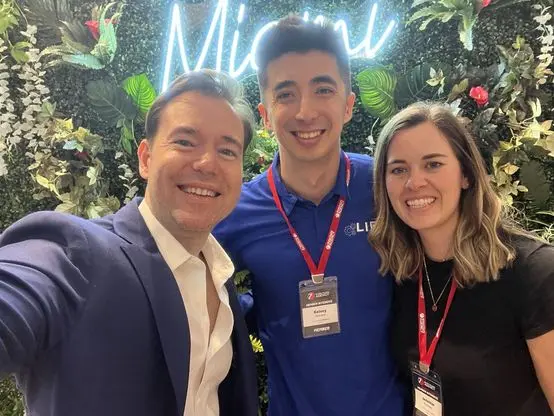
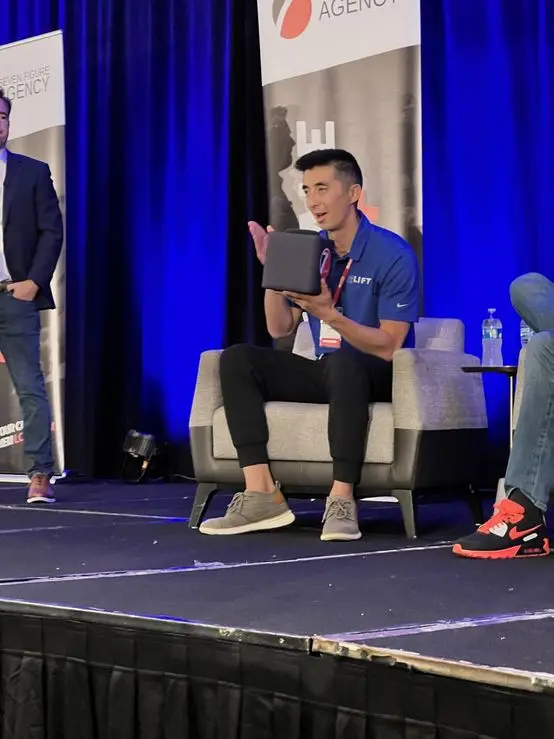

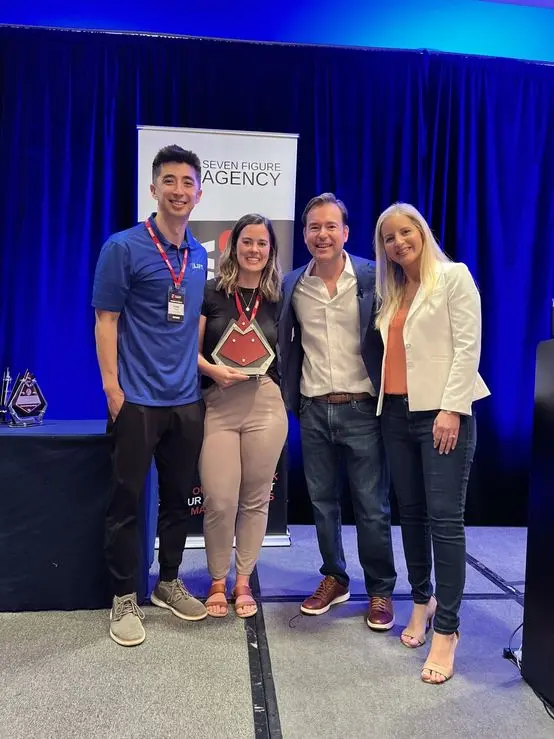
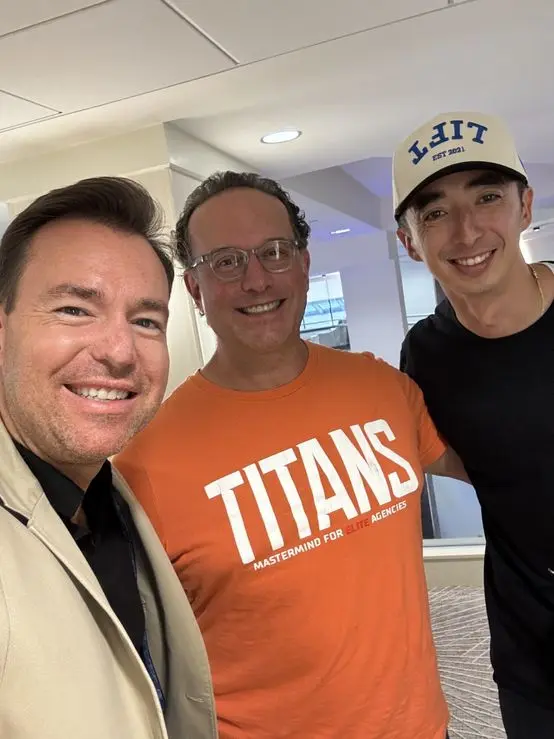
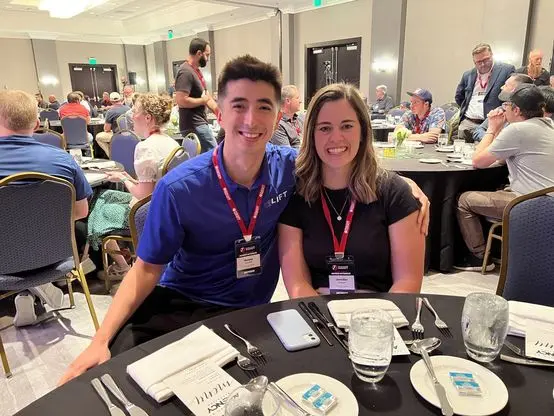
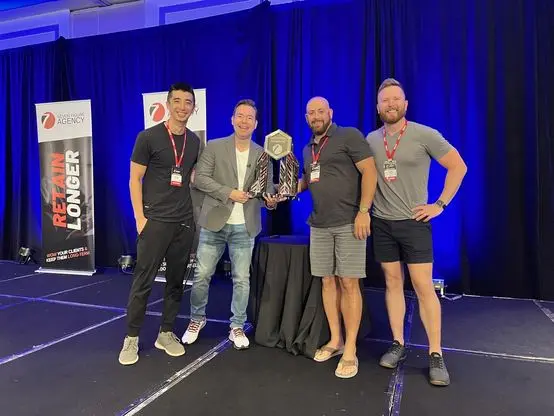


Editor’s Choice on TopMarketingAgencies.com
Lift Auto Repair Marketing is an Editor’s Choice pick in the Auto Repair category on TopMarketingAgencies.com, the editorial directory of the best niche marketing agencies in the country. Listings are editorial, not pay to play. Agencies are scored on niche depth, tenure in the specialty, client retention, verifiable results, and transparency, then re-scored every year. You can read the full profile on the Lift Auto Repair Marketing listing or see how the category stacks up on the top auto repair marketing agencies page.
Want a Growth Story Like This?
Kelsey and Jen turned a capped-out generalist agency into a $128K MRR niche business with a Facebook group, a monthly content cadence, and disciplined onboarding. The system they used is the one we teach.